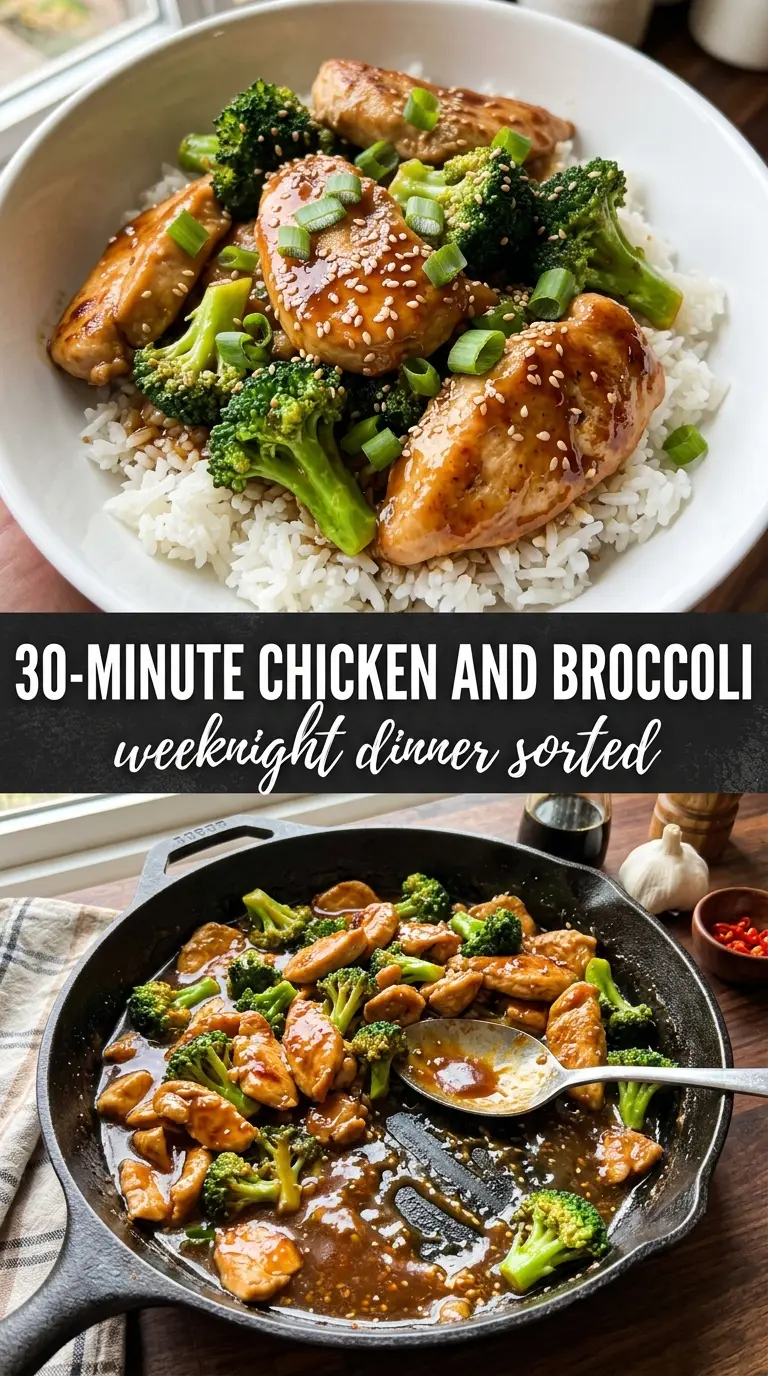
Glossy chicken and broccoli is one of those dinners that earns its keep fast. The sauce clings to every bite instead of pooling in the pan, the broccoli stays bright and crisp around the edges, and the whole thing hits that sweet spot between savory, garlicky, and just a little sticky over rice. It tastes like takeout in the best possible way, but it comes together with the kind of speed that makes it work on an ordinary weeknight.
The trick here is in the order. The chicken gets a light cornstarch coating before it ever touches the pan, which helps it brown and gives the sauce something to grip later. The broccoli goes in separately so it can stay vivid and tender-crisp instead of steaming into softness under the chicken. Then the sauce only needs a minute or two to thicken once it hits the hot pan, because cornstarch thickens fast when the heat is already there.
Below, I’ve included the small details that make this dish come out with that glossy, restaurant-style finish, plus a few smart swaps if you need to work with what’s already in the kitchen.
The sauce thickened up right away and coated the chicken instead of turning watery. My broccoli stayed crisp, and my husband went back for seconds before I even sat down.
Pin this 30-Minute Chicken and Broccoli for a fast soy-garlic dinner with glossy sauce and crisp-tender broccoli.
The Part That Keeps the Broccoli Crisp Instead of Soft
The biggest mistake in chicken and broccoli is letting the vegetables sit in the pan long enough to turn dull and limp. Broccoli needs a hot pan and a short run of time. Once the florets go in, they should turn bright green and pick up a little color on the edges, but they shouldn’t fully soften before the sauce arrives. The sauce finishes the job, and the broccoli ends up tender with some bite instead of collapsing into the chicken.
Coating the chicken with cornstarch before cooking pulls double duty. It helps the pieces sear instead of drying out, and it gives the sauce a slight gloss once everything comes together. If you skip it, the sauce still tastes good, but it won’t cling in that same takeout-style way. High heat matters here too, because a crowded or underheated pan steams the chicken and leaves you with pale pieces and thin sauce.
What Each Ingredient Is Actually Doing in the Pan
- Chicken breasts — Lean chicken breast works well here because the quick cooking and cornstarch coating keep it tender. Chicken thighs also work if you want a juicier bite; just cut them into even pieces so they cook at the same rate.
- Cornstarch — This is what gives the sauce body and helps the chicken brown. You need it both on the chicken and in the sauce, and that double use is what makes the final dish glossy instead of watery.
- Broccoli florets — Fresh broccoli holds up best because it can take the heat without falling apart. If you use frozen broccoli, thaw it first and pat it dry, or it will release too much water and thin the sauce.
- Soy sauce, oyster sauce, and hoisin — These three build the backbone of the sauce: salty, savory, and just a little sweet. Oyster sauce adds depth that soy sauce alone can’t give, while hoisin brings the rounder, darker sweetness that makes the sauce taste finished.
- Chicken broth — This loosens the sauce just enough to whisk cleanly and coat the pan evenly. Water works in a pinch, but the broth gives the sauce more body and a fuller savory taste.
- Sesame oil — Add it at the end of the sauce so the aroma stays intact. It should smell nutty, not toasted-bitter; if it has been sitting in a hot pan too long, that flavor fades fast.
Getting the Sauce Thick Before the Chicken Goes Back In
Coating and Searing the Chicken
Toss the chicken with salt, pepper, and cornstarch until the outside looks lightly dusty instead of wet. That thin coating helps the chicken take on color in the pan and stops the sauce from sliding off later. Cook it in a single layer in hot oil until the pieces are golden on the outside and no longer pink in the center. If the pan is crowded, the chicken steams before it browns, and you lose the texture this dish depends on.
Stir-Frying the Broccoli
Add the broccoli to the same pan and keep it moving for just a few minutes. You’re looking for bright green florets with lightly seared edges and stems that still have some snap. If the florets start to look muted or soft before the sauce goes in, the heat was too low or the pan was overloaded. A short, hard cook is what keeps the broccoli from turning mushy.
Blooming the Garlic and Ginger
Garlic and ginger only need about 30 seconds in the hot pan. You want them fragrant, not browned. If they sit too long, garlic turns sharp and bitter fast, and that bitterness carries through the whole sauce. As soon as the smell rises, pour in the whisked sauce so the aromatics get trapped in the liquid instead of scorching on the pan.
Finishing the Sauce and Tossing Everything Together
Once the sauce hits the pan, it should go from thin to glossy in a minute or two. Stir it constantly and watch for it to lightly coat the back of a spoon. If it stays watery, the heat is too low; if it turns pasty, it cooked too long after thickening. Return the chicken only after the sauce has thickened enough to cling, then toss just until every piece is lacquered and the pan looks glossy instead of soupy.
How to Adapt This for Different Pantries and Dinner Goals
Make It Gluten-Free
Use a gluten-free soy sauce or tamari and check that your oyster sauce and hoisin are labeled gluten-free. The flavor stays close to the original, but the sauce may taste a touch cleaner and less rounded depending on the brands you use.
Use Chicken Thighs for a Juicier Finish
Boneless skinless thighs stay more forgiving if you tend to cook chicken a little too long. They bring a richer bite and stay tender, but they do release a bit more fat, so keep the heat high and drain off extra grease if the pan looks oily before the sauce goes in.
Swap the Broccoli for Another Crisp Vegetable
Snap peas, green beans, or bell pepper strips all work in the same time frame. Keep the vegetable cut large enough to stay crisp, because small pieces will overcook before the sauce finishes thickening.
Stretch It Into a Bigger Dinner
This recipe doubles well, but cook the chicken in batches so the pan stays hot enough to brown it. If you try to cram everything in at once, the sauce gets thin and the broccoli softens before the pan can recover.
Storage and Reheating
- Refrigerator: Store leftovers in an airtight container for up to 4 days. The broccoli softens a little as it sits, but the sauce stays flavorful.
- Freezer: It freezes, but the broccoli gets softer after thawing, so I only freeze it if I’m okay with a less crisp texture. Freeze in a shallow container for up to 2 months.
- Reheating: Reheat gently in a skillet over medium-low heat with a splash of broth or water to loosen the sauce. The biggest mistake is blasting it on high heat, which tightens the chicken and makes the sauce sticky in the wrong way.
Answers to the Questions Worth Asking
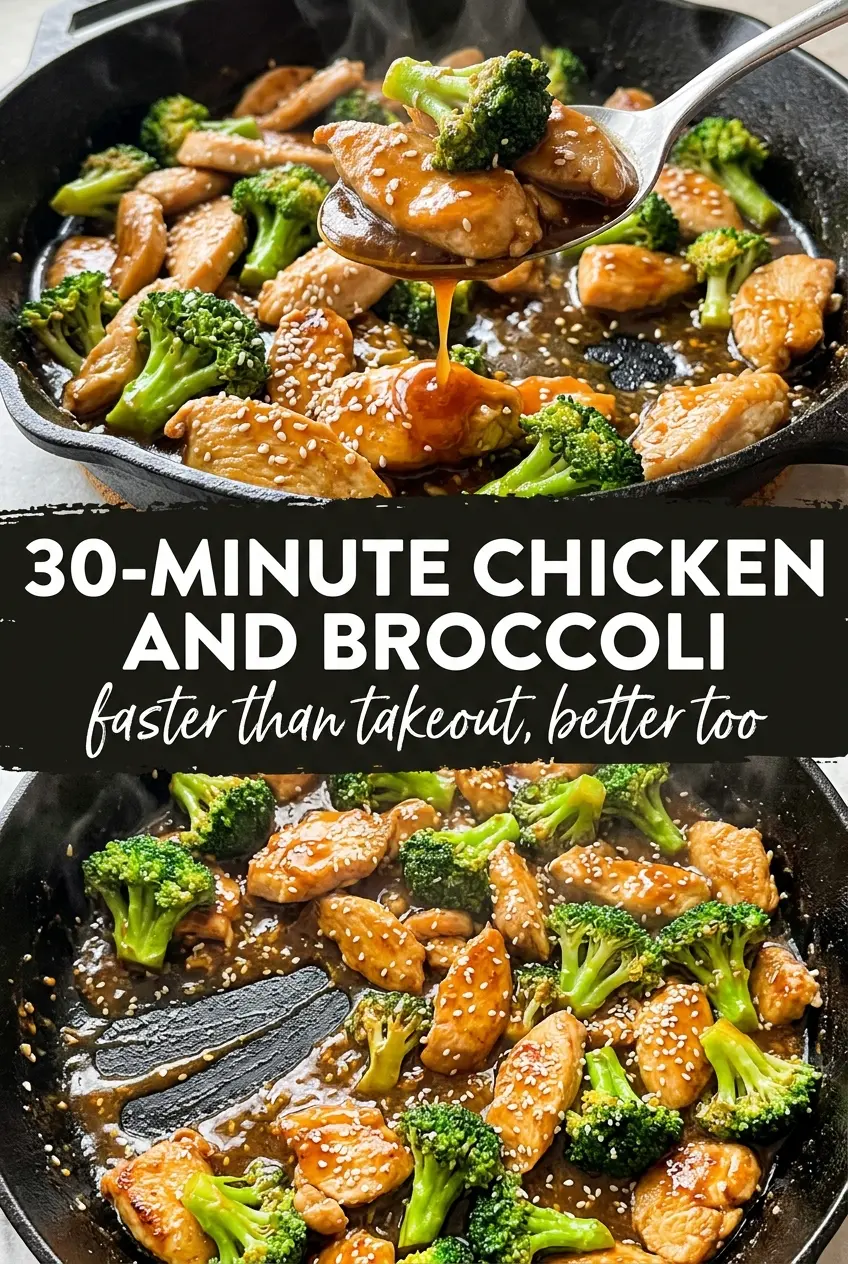
30-Minute Chicken and Broccoli
Ingredients
Equipment
Method
- Toss the chicken with salt, pepper, and cornstarch until coated. The coating should look dry and evenly speckled on every bite.
- Heat 1 tablespoon vegetable oil in a large wok or skillet over high heat, then add the chicken. Cook for 5-6 minutes, stirring occasionally, until golden and cooked through with no pink remaining in the center.
- Remove the cooked chicken to a plate and keep it warm while you cook the broccoli. Leave any browned bits in the pan for flavor.
- Add the remaining oil to the pan, then stir-fry the broccoli over high heat for 3-4 minutes. Cook until bright green and just tender-crisp with crisp edges and a vivid color.
- Stir-fry the garlic and ginger for 30 seconds, just until fragrant. Keep it moving so the aromatics don’t brown.
- Pour in the whisked sauce and cook for 1-2 minutes, stirring, until thickened. The sauce should turn glossy and look like a dark amber glaze.
- Return the chicken to the pan and toss to coat. Everything should be evenly glazed, with sauce clinging to chicken and broccoli.
- Serve the chicken and broccoli over rice and top with sesame seeds and green onions. The sauce should glisten in the light as it sits over the rice.