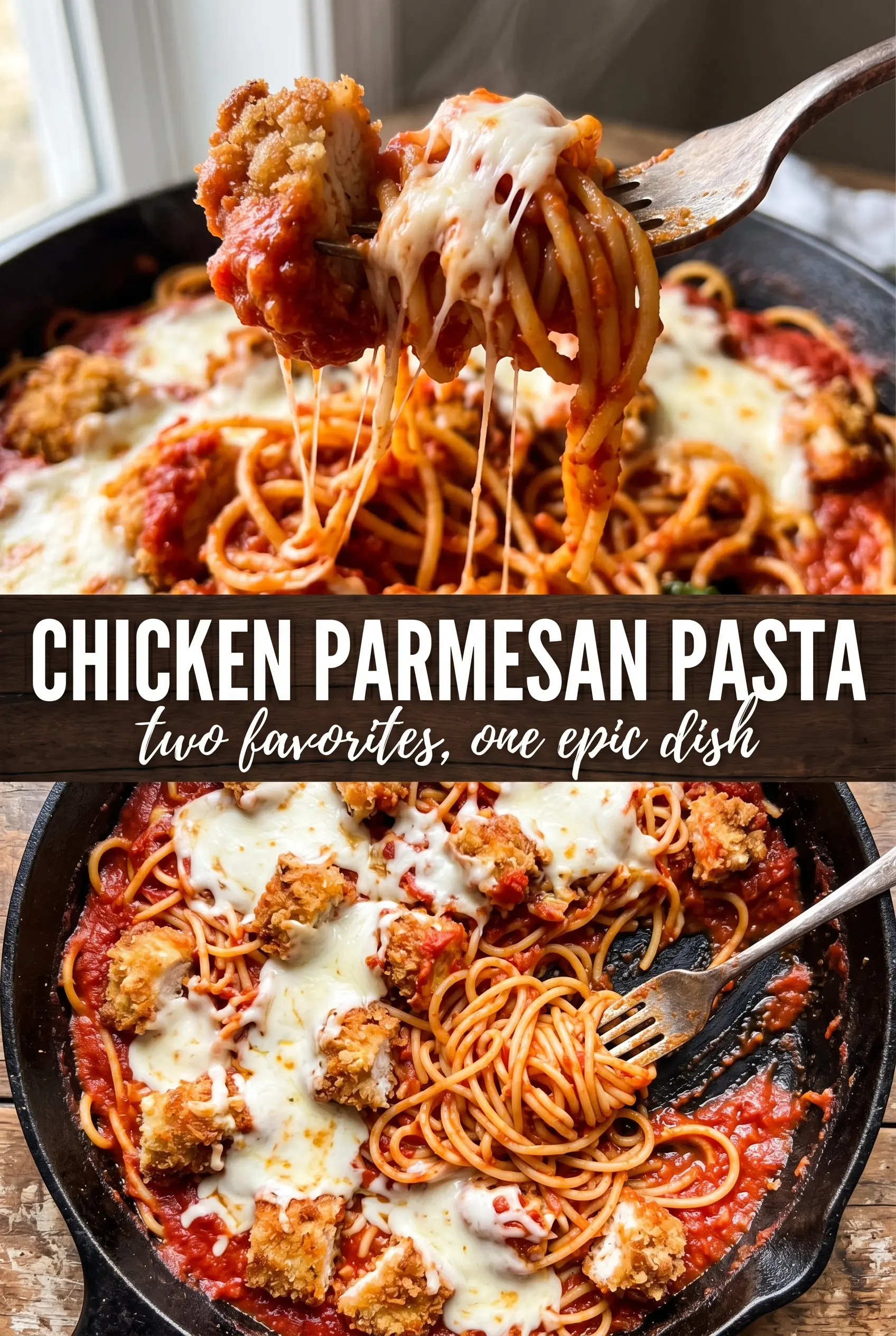
Golden breaded chicken, bubbling mozzarella, and penne coated in marinara make this chicken Parmesan pasta feel like the best parts of a restaurant dinner, only baked together in one dish. The chicken stays crisp enough to stand up to the sauce, and the pasta underneath picks up every bit of tomato, cheese, and drippings from the pan. It’s the kind of meal that comes out of the oven looking dramatic and still lands on the table with almost no fuss.
What makes this version work is the order. The chicken gets fully browned before it ever meets the sauce, which keeps the coating from turning soggy in the oven. The pasta is already cooked, so the bake is about melding flavors and melting cheese, not trying to finish three different things at once. A good marinara matters here because it’s carrying the whole dish; if the sauce tastes flat in the pan, it’ll taste flat after baking.
Below, I’ll walk through the part that protects the crust, the ingredient choices that matter most, and a few easy variations if you want to change up the pasta, the cheese, or the make-ahead plan.
The chicken stayed crisp on top even after baking, and the pasta underneath soaked up the sauce without turning mushy. I served it with garlic bread and there wasn’t a bite left.
Love that crispy-chicken, cheesy pasta finish? Save Chicken Parmesan Pasta to Pinterest for the nights when you want a baked dinner that still has real crunch.
The Part That Keeps the Chicken Crispy After Baking
The biggest trap in a dish like this is rushing the chicken into the sauce before it has a chance to set. Once breading meets marinara for too long, it goes soft fast. The fix is simple: pan-fry until the coating is deeply golden and the chicken is cooked through, then move it straight to the baking dish without stacking it in a bowl where steam can collect.
Another thing that matters here is heat control during the fry. Medium-high should give you steady browning without burning the breadcrumbs before the chicken cooks. If the pan is too hot, the coating darkens before the center is done; too cool, and the breading drinks up oil instead of crisping. You want a light sizzle when the chicken hits the pan and a crust that feels dry and firm before it goes into the oven.
What Each Ingredient Is Actually Doing in This Dish
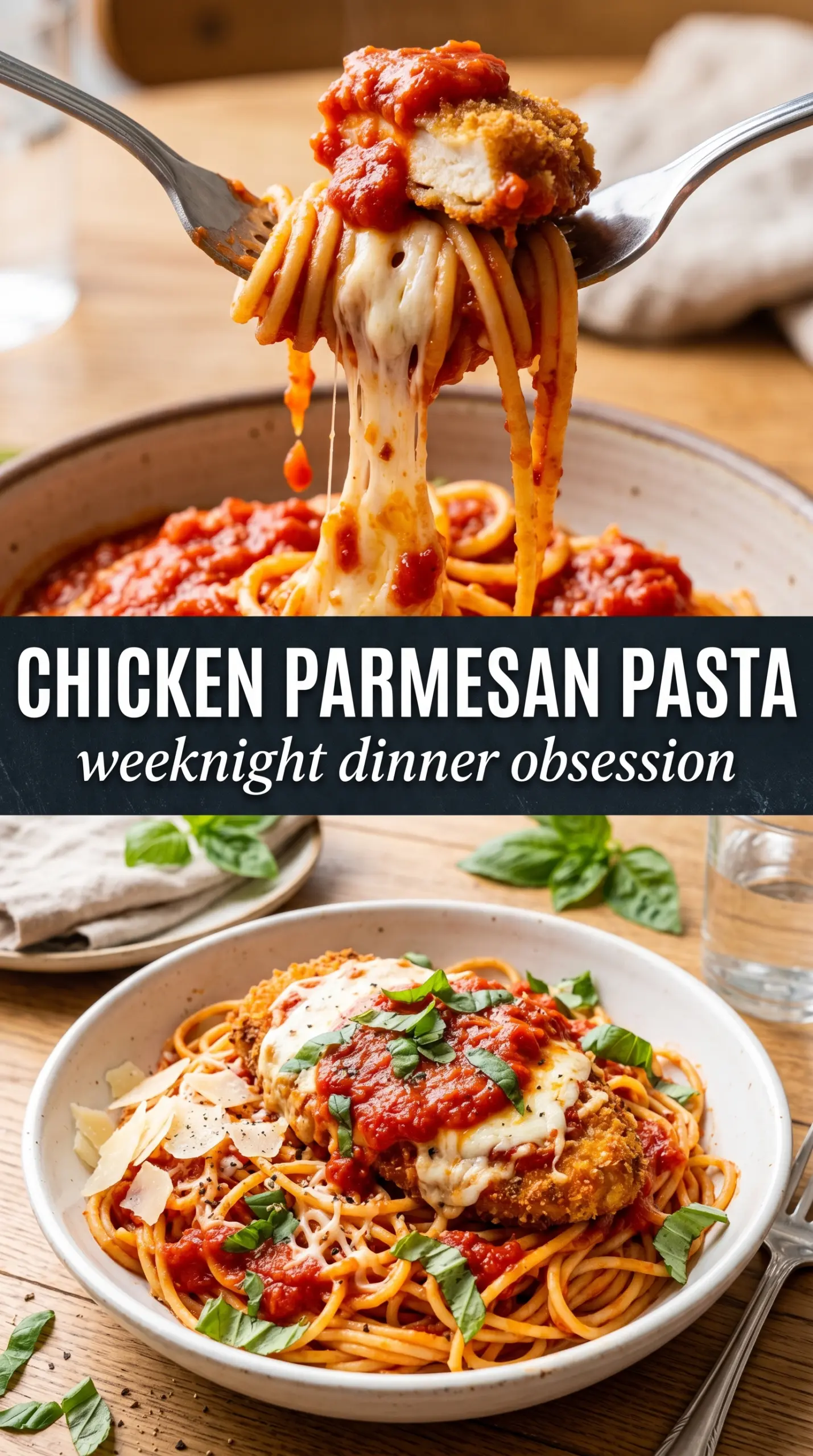
- Chicken breasts — Cutting them into bite-sized pieces helps them cook quickly and stay balanced against the pasta. If you cut them too large, the breading and the meat finish at different times. Thighs work too, but they bring a softer, richer result and won’t give you the same clean, crispy bite.
- Italian breadcrumbs — These give you the seasoned crust that makes the dish taste like chicken Parmesan instead of plain breaded chicken and pasta. Panko can work, but it bakes up lighter and less classic, so add extra Parmesan and a pinch of Italian seasoning if you swap it in.
- Parmesan cheese — The Parmesan in the coating adds salt and a nutty edge, while the Parmesan on top sharpens the whole bake. Freshly grated is worth it here because the pre-shredded stuff doesn’t melt as smoothly and can taste dusty.
- Marinara sauce — This is the backbone of the dish, so use one you’d actually eat on its own. A thin or bland sauce gets watered down by the pasta and cheese. If yours tastes sharp or acidic, simmer it for a few minutes before mixing it with the penne.
- Mozzarella — Shredded low-moisture mozzarella gives you that even melt and browned top. Fresh mozzarella can be used, but it releases more water and softens the crust faster, so the bake won’t hold its shape as well.
Building the Bake So the Cheese Melts and the Bottom Stays Saucy
Breading the Chicken
Set up your flour, eggs, and breadcrumb mixture in that order, then coat each piece fully so the crumbs have something dry to cling to. Shake off excess flour before the egg dip, or you’ll get a gummy layer instead of a crisp crust. The breadcrumb coating should look even and thick, with no wet patches showing through.
Frying Until Deeply Golden
Cook the chicken in a single layer and give it space. Crowding the pan drops the oil temperature and leaves the coating pale and greasy. You’re looking for a steady golden color and a crust that sounds crisp when you turn it; the chicken doesn’t need to be mahogany brown because it’s going back into the oven.
Assembling the Pasta Base
Toss the cooked penne with marinara before it goes into the baking dish so every piece is coated. If the pasta looks dry at this stage, it’ll stay dry after baking, so use enough sauce to coat generously. The mixture should spread easily in the pan without looking soupy; too much sauce will make the base loose and undermine the texture.
Finishing Under the Melted Cheese
Arrange the chicken on top of the pasta, then cover with mozzarella and the extra Parmesan. Bake until the cheese is melted, bubbling at the edges, and just starting to spot gold in the top layer. If the top browns before the center is hot, tent it loosely with foil for the last few minutes so the cheese doesn’t overdarken while the dish finishes heating through.
How to Adapt Chicken Parmesan Pasta for Different Nights
Gluten-Free Version with the Same Crispy Finish
Use a gluten-free flour blend for dredging and gluten-free breadcrumbs for the coating. The texture stays crisp if you fry the chicken until the crust is fully set before baking, though the breading may brown a little faster than standard breadcrumbs.
Make It a Little Lighter Without Losing the Parmesan Feel
Bake the breaded chicken pieces on a wire rack at high heat instead of pan-frying, then use the same pasta and sauce base. You’ll lose a little of the deep pan-fried richness, but the chicken still gets crisp and the final dish feels less heavy.
Swap the Pasta Shape When Penne Isn’t in the Pantry
Rigatoni, ziti, or rotini all work well because they hold sauce and keep their shape in the oven. Long noodles like spaghetti don’t give the same sturdy baked texture, so the dish turns sloppier instead of hearty.
Storage and Reheating
- Refrigerator: Keep leftovers covered for up to 4 days. The chicken crust softens as it sits, but the flavor holds up well.
- Freezer: It freezes, though the breadcrumb coating won’t stay crisp. Freeze in portions, tightly wrapped, for up to 2 months for the best texture.
- Reheating: Warm in a 350°F oven, covered loosely with foil at first, until hot in the center. The microwave will work in a pinch, but it softens the coating much more and can make the cheese rubbery.
Questions I Get Asked About This Recipe
Chicken Parmesan Pasta
Ingredients
Equipment
Method
- Dredge the chicken pieces in all-purpose flour, then dip them in the beaten eggs. Make sure each piece is fully coated for an even breading.
- Coat the egged chicken in a mixture of Italian breadcrumbs and grated Parmesan. Press lightly so the crumbs cling and look thicker on the surface.
- Pan-fry the breaded chicken in olive oil over medium-high heat for 3-4 minutes per side until golden and cooked through. Drain on paper towels so the coating stays crisp.
- Toss the cooked penne with marinara sauce, then pour into a greased 9x13 baking dish. Spread the pasta out so it forms an even layer.
- Arrange the crispy chicken pieces over the pasta in an even scatter. Leave some pasta peeking through so the chicken has a clear breaded texture.
- Top with shredded mozzarella and an additional sprinkle of grated Parmesan. Cover the surface completely so the cheese bakes into a unified layer.
- Bake at 375°F for 20-22 minutes, until the cheese is melted and golden. Garnish with fresh basil right after baking, while the mozzarella is bubbling.