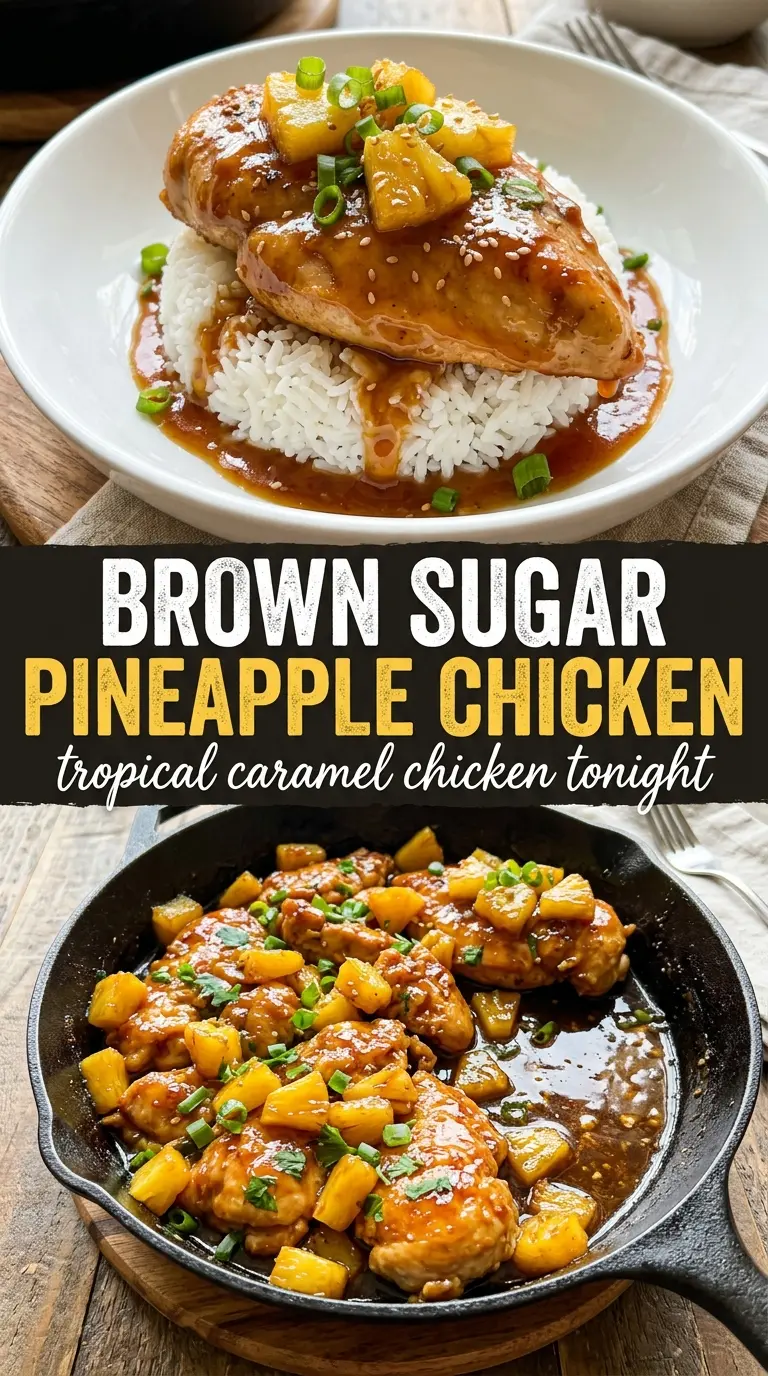
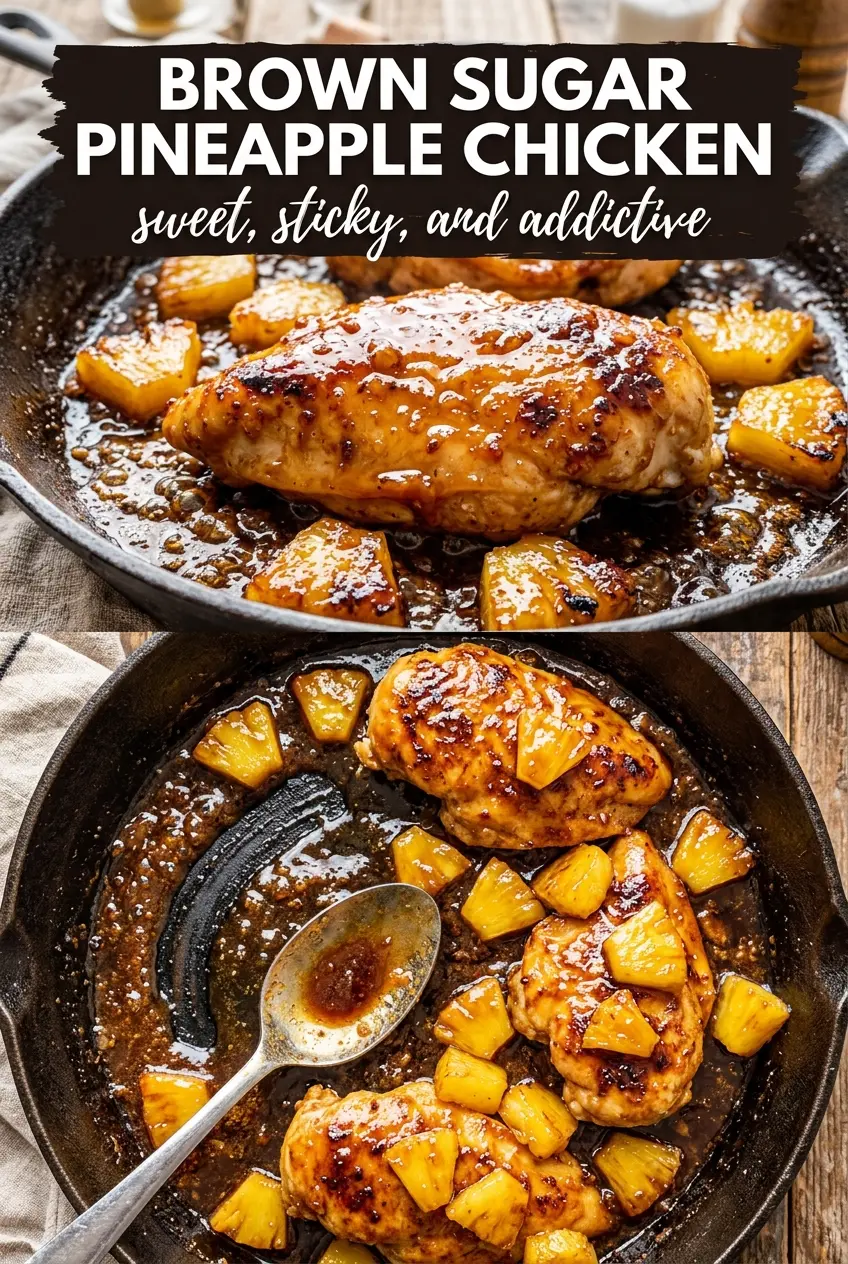
Sticky brown sugar pineapple chicken is the kind of skillet dinner that disappears fast because it hits all the right notes at once: caramelized edges on the chicken, a glossy glaze that clings instead of pooling, and bursts of pineapple that cut through the sweetness with a little tang. The sauce turns thick and shiny in the pan, coating every piece without feeling heavy, and the chicken stays juicy if you pull it at the right moment.
The trick is building the glaze in the same skillet after the chicken comes out. Those browned bits left behind do more for the sauce than an extra splash of seasoning ever could. Pineapple juice gives the glaze its backbone, brown sugar adds that sticky finish, and the cornstarch slurry is what takes it from thin and sugary to spoon-coating and glossy.
Below, you’ll find the exact cue I watch for when the glaze is ready, plus a few smart swaps if you want to make it gluten-free or stretch it into a full meal with vegetables.
The glaze thickened up perfectly and coated the chicken without turning gummy. I served it over jasmine rice and even my picky eater went back for seconds.
Like this brown sugar pineapple chicken? Save it to Pinterest for the nights when you want a sticky skillet dinner that tastes like it took a lot more effort than it did.
The Secret to a Sticky Glaze Without Burning the Sugar
Brown sugar and pineapple juice can turn from glossy to scorched fast if the pan runs too hot. The chicken is browned first, then removed, which gives you a little room to simmer the sauce without fighting raw meat at the same time. That matters here because the glaze needs a few minutes to thicken evenly, and the cornstarch only works cleanly when the liquid is at a gentle simmer, not a rolling boil.
The other thing that makes this version work is balance. Pineapple juice brings sweetness and acid, soy sauce adds salt and depth, and ketchup gives the glaze body plus a little color. If the sauce tastes flat, it’s usually because it didn’t simmer long enough for the sharp edges to mellow. Let it bubble until it looks syrupy and lightly coats the back of a spoon before the chicken goes back in.
What Each Ingredient Is Doing in the Pan
- Chicken breasts — Boneless, skinless breasts stay lean and take on the glaze well, but they dry out if overcooked. Pound them to an even thickness if one side is much thicker than the other; that gives you a better sear and keeps the middle from lagging behind.
- Pineapple juice — This is the backbone of the sauce. Bottled juice works fine here, but choose one without added sugar if you can, since the brown sugar already brings plenty of sweetness.
- Brown sugar — This is what gives the glaze that sticky, caramelized finish. Packed brown sugar dissolves into the juice and helps the sauce cling; coconut sugar can work in a pinch, but the flavor turns darker and less classic.
- Soy sauce — It keeps the glaze from tasting one-note sweet. Use tamari if you need a gluten-free version, and keep the amount the same so the sauce doesn’t get too salty.
- Cornstarch slurry — This is what turns the sauce from thin to glossy. Mix it with cold water first, then stir it into a simmering sauce; if you dump the dry cornstarch straight in, you’ll get clumps that never fully smooth out.
- Fresh ginger and garlic — These cut through the sweetness and give the glaze a sharper edge. Fresh is worth using here because the sauce is short-cooked, so dried spices won’t bring the same clean bite.
Getting the Chicken and Glaze to Finish at the Same Time
Searing the Chicken
Season the chicken well, then slide it into hot oil and leave it alone long enough to build color. If you move it too soon, the surface steams and sticks instead of forming that deep golden crust. Cook until the chicken is cooked through to 165°F, then pull it out right away so it doesn’t keep going while you build the sauce.
Building the Pineapple Base
Pour the pineapple juice, brown sugar, soy sauce, ketchup, garlic, and ginger into the same skillet. The pan will sizzle and loosen all the browned bits from the bottom, which is exactly what you want. Stir and let it come to a steady simmer so the sugar dissolves and the raw edge of the garlic mellows before the thickener goes in.
Turning It Into a True Glaze
Stir in the cornstarch slurry and keep the sauce moving as it cooks. Within a couple of minutes, it should shift from thin and foamy to glossy and spoon-coating. If it still looks watery, the sauce hasn’t simmered long enough for the cornstarch to activate fully; keep it on the heat another minute, then check again before adding the pineapple chunks.
Coating and Finishing
Return the chicken to the pan and spoon the glaze over the top until every piece is lacquered. Add the pineapple chunks near the end so they warm through without collapsing into mush. The final two minutes in the sauce let the chicken pick up flavor without overcooking, and that last coat of glaze is what makes the dish look as good as it tastes.
How to Adapt This Brown Sugar Pineapple Chicken for Your Table
Make it gluten-free
Swap the soy sauce for tamari or coconut aminos. Tamari gives you the closest match in saltiness and depth, while coconut aminos make the sauce a little sweeter and lighter, so you may want a small pinch of salt at the end.
Use chicken thighs instead of breasts
Boneless skinless thighs stay juicier and are more forgiving if your skillet runs hot. They need a few extra minutes to cook through, but they hold up beautifully in the glaze and give the dish a richer finish.
Add vegetables for a one-pan dinner
Toss in bell peppers, snap peas, or broccoli after the sauce thickens, then let them cook just until crisp-tender. Hard vegetables need a head start, so if you’re using broccoli, steam or blanch it first or it will stay stubbornly crunchy in the finished glaze.
Storage and Reheating
- Refrigerator: Store leftovers in an airtight container for up to 4 days. The glaze thickens as it chills, and the chicken stays best if you keep the sauce with it.
- Freezer: It freezes well for up to 2 months. Cool it completely first, then pack the chicken and sauce together so the meat doesn’t dry out during thawing.
- Reheating: Warm gently in a skillet over medium-low heat with a splash of water or pineapple juice. High heat can tighten the chicken and make the glaze sticky in the wrong way, so heat just until the sauce loosens and the chicken is warmed through.
Answers to the Questions Worth Asking
Brown Sugar Pineapple Chicken
Ingredients
Equipment
Method
- Season the chicken breasts with salt, pepper, garlic powder, and smoked paprika to taste, then marinate for 20 minutes for better flavor absorption.
- Heat olive oil in a large skillet over medium-high heat until shimmering, then sear chicken for 5-6 minutes per side until golden and cooked through to 165°F; remove to a plate with visible browned edges.
- Whisk pineapple juice, brown sugar, soy sauce, ketchup, garlic, and ginger in the same pan, scraping up browned bits, then bring to a simmer over medium heat.
- Stir in the cornstarch slurry and cook for 2-3 minutes until the sauce turns glossy and thick enough to coat a spoon, with amber bubbles.
- Add pineapple chunks to the glaze and cook briefly until they look slightly translucent at the edges, then return chicken to the pan.
- Turn the chicken in the sauce to coat all sides, then cook for 2 minutes so the glaze clings thickly with caramelized spots at the edges.
- Garnish with sesame seeds and sliced green onions, then serve immediately over steamed rice.