Juicy chicken breasts, a sticky balsamic glaze, and melted mozzarella make this dish feel like a caprese dinner with a little more staying power. The chicken stays tender because it gets a short marinade before it ever hits the pan, and the quick sear gives you the kind of browned edges that turn a baked chicken recipe from ordinary into something people remember.
The trick here is balance. Balsamic vinegar brings sharpness, honey smooths it out, and Dijon helps the marinade cling to the chicken instead of sliding off. The oven finish keeps the chicken from drying out, while the mozzarella and cherry tomatoes go in at the end so they soften and melt without turning watery.
Below, I’ve included the one timing detail that keeps the glaze from burning, plus a few smart swaps if you need to work with what’s in the fridge.
The chicken stayed juicy, the balsamic reduced into this glossy glaze, and the mozzarella melted without getting rubbery. I served it with rice and my husband said it tasted like something from a restaurant.
Save this balsamic baked chicken breast with mozzarella for a fast caprese-style dinner with juicy chicken and a glossy balsamic finish.
The Marinade Timing That Keeps Balsamic from Turning Bitter
Balsamic vinegar can go from glossy to harsh if it sits too long in a hot pan without enough fat or sweetness to balance it. That’s why this recipe uses a short marinate, then moves the chicken into the oven before the sugars in the honey have a chance to scorch. The marinade seasons the meat and helps it brown, but it isn’t meant to cook the chicken all the way through on the stovetop.
The other thing that matters is the reserved marinade. Once the chicken has been seared, that liquid gets a second chance in the oven, where it can reduce gently around the meat instead of burning on the burner. If your last balsamic chicken came out sharp or sticky in the wrong way, this is usually the difference.
- Short marinating time — Twenty minutes is enough to season the chicken without making the texture mushy.
- Honey — It softens the vinegar and helps the glaze turn shiny instead of thin and sharp.
- Dijon mustard — You won’t taste mustard; it helps emulsify the marinade so the oil and vinegar stay together.
- Reserved marinade — It turns into the base of the sauce in the oven, which gives you more flavor than brushing on glaze at the end.
What the Mozzarella, Tomatoes, and Glaze Are Each Doing Here
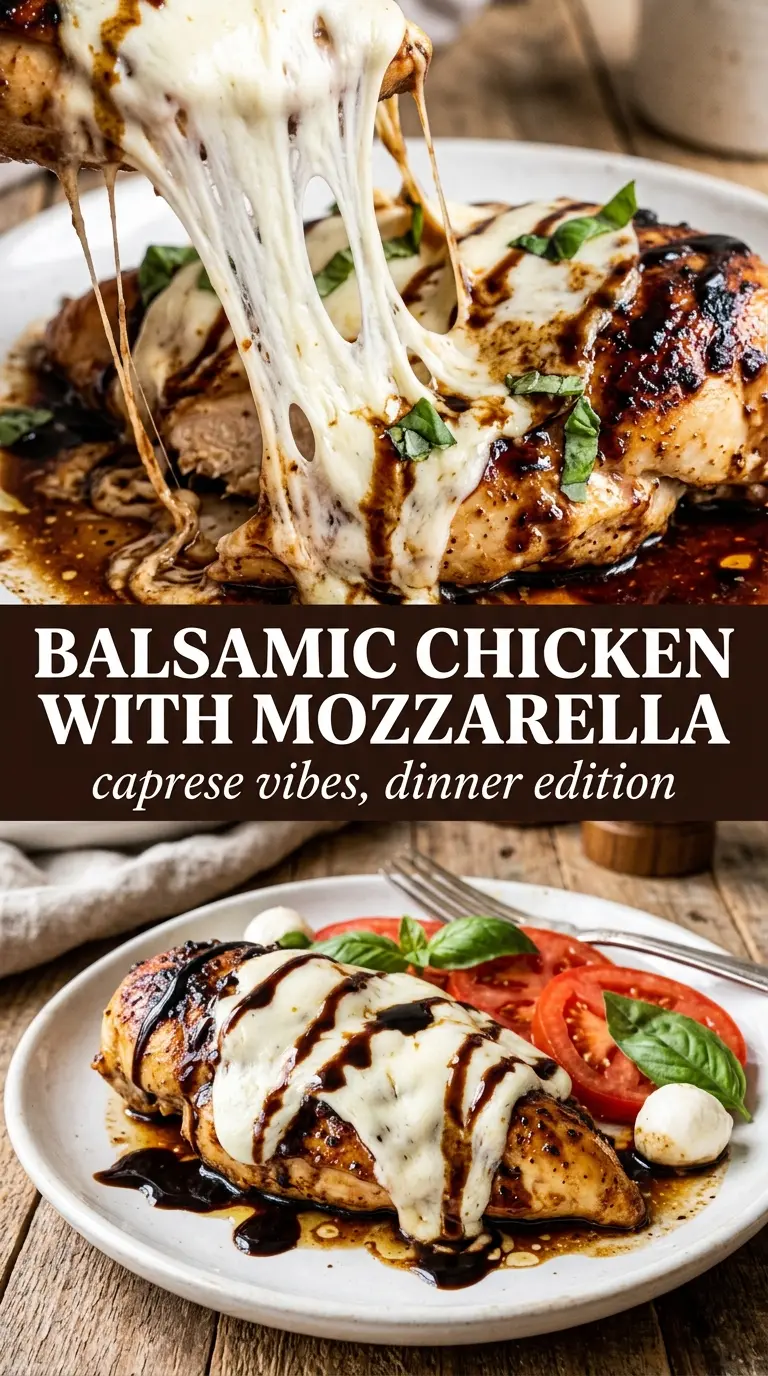
- Fresh mozzarella — Use the soft, milky kind that melts into long ribbons. Pre-shredded mozzarella won’t give you the same finish, and it tends to dry out before the chicken is done.
- Cherry tomatoes — Halved tomatoes soften fast in the oven and bring a little juice to the pan. Larger tomatoes release too much liquid and can make the topping watery.
- Balsamic glaze — This is the finishing move. Drizzle it after baking so you get a deep, sweet-tart hit without risking a burned reduction.
- Chicken breasts — If yours are thick on one end and thin on the other, pound them lightly for even cooking. Uneven breasts are the biggest reason baked chicken ends up dry at the edges and underdone in the center.
From Sear to Melt: The Part Where the Chicken Stays Juicy
Whisking the Marinade
Stir the balsamic vinegar, olive oil, honey, garlic, and Dijon until the mixture looks glossy and slightly thickened. Season the chicken well before it goes in; bland chicken stays bland, even under a good sauce. If the marinade separates, whisk again right before you use it. The oil and vinegar should look lightly combined, not broken into layers.
Getting the Sear Without Drying Out the Center
Heat the skillet over medium-high and lay the chicken in once the oil shimmers. You want a golden crust on both sides, not a dark char, because the oven still needs room to finish the job. If the pan smokes heavily, it’s too hot and the honey in the marinade will darken too fast. Three minutes per side is usually enough for average breasts, but the color is the real cue.
Finishing in the Oven
Transfer the skillet straight to the oven and spoon the remaining marinade over the chicken. Bake until the thickest part reaches 165°F. Don’t rely on color alone here; balsamic can make the outside look done before the center is ready. Pull it as soon as it hits temperature so the final cheese topping has a chance to melt without overcooking the meat.
The Mozzarella and Tomato Finish
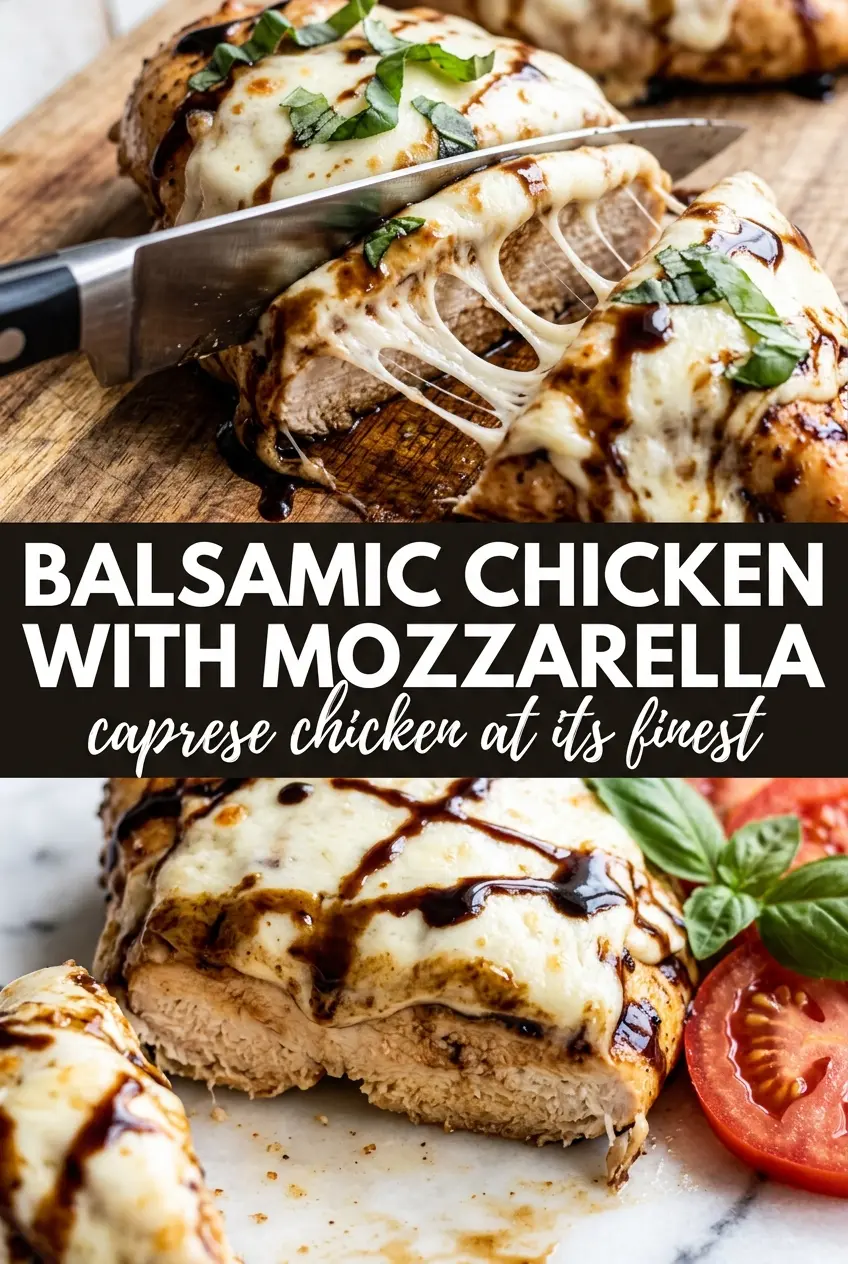
Once the chicken comes out, layer on the mozzarella slices and scatter the cherry tomatoes over the top. A few minutes back in the oven is enough to soften the cheese and warm the tomatoes through. Stop when the mozzarella is melted and glossy, not bubbling away into oil. Finish with basil and balsamic glaze after it leaves the oven so the herbs stay fresh and the glaze keeps its punch.
How to Adapt This for a Few Different Kitchens
Dairy-Free Version
Skip the mozzarella and finish with extra tomatoes and basil, or add a handful of dairy-free mozzarella if you have one that melts well. You’ll lose the creamy caprese-like top, but the balsamic chicken itself still works because the sauce carries the dish.
Gluten-Free as Written
This recipe is naturally gluten-free if your Dijon mustard and balsamic glaze are labeled gluten-free. That’s worth checking, because some store-bought glazes add thickeners or flavorings that can trip you up.
Using Chicken Thighs Instead
Boneless thighs work if you want a juicier, slightly richer result. They usually need a few extra minutes in the oven, and the internal temperature can climb a little higher before they dry out, so use a thermometer instead of guessing by time.
Storage and Reheating
- Refrigerator: Store leftovers for up to 3 days. The chicken stays flavorful, though the mozzarella will set up a little firmer once chilled.
- Freezer: Freeze the chicken without the basil and with the glaze added after reheating if possible. The tomatoes and mozzarella both lose texture after freezing, so this is better for meal prep than for serving as a finished dish.
- Reheating: Reheat gently in a covered oven-safe dish at 325°F until warmed through. High heat dries out the chicken fast and makes the cheese separate, so skip the microwave if you want the best texture.
Answers to the Questions Worth Asking
Balsamic Baked Chicken Breast with Mozzarella
Ingredients
Equipment
Method
- Whisk together balsamic vinegar, olive oil, honey, garlic, and Dijon, then season the chicken with salt, pepper, garlic powder, and Italian seasoning. Marinate for 20 minutes, reserving some of the mixture for later.
- Preheat the oven to 400°F, then sear the marinated chicken in an oven-safe skillet over medium-high heat for 3 minutes per side until golden.
- Transfer the chicken to the oven with the remaining marinade and bake 18-20 minutes, until the internal temperature reaches 165°F.
- Remove from the oven and top each breast with mozzarella slices and cherry tomatoes. Return to the oven for 4-5 minutes, until the cheese is melted and slightly bubbling.
- Drizzle with balsamic glaze and garnish with fresh basil leaves before serving.