Golden-roasted chicken thighs tucked into a Parmesan cream sauce are the kind of dinner that looks like it took far more effort than it did. The skin stays crisp where it peeks above the sauce, the spinach melts into the creamy base, and the sun-dried tomatoes bring the kind of concentrated sweetness that keeps each bite interesting. It’s rich without feeling heavy, and the whole pan lands on the table with that bubbling, savory look that makes people head straight for a spoon.
The part that makes this version work is the order. The chicken gets a hard sear first, which builds flavor and keeps the skin from going soft under the sauce. Then the sauce is made in the same skillet, so every browned bit left behind gets folded into the cream instead of washed away. That’s where the depth comes from. If you rush the simmer or add the cheese while the pan is too hot, the sauce can turn grainy, so the gentle finish matters.
Below, I’ve added the little details that keep the chicken juicy, the sauce smooth, and the spinach from disappearing into nothing. There’s also a handful of useful swaps and storage notes for the nights when you want to stretch this into leftovers.
The chicken skin stayed crisp even after baking, and the sauce thickened up beautifully around the spinach and tomatoes. I used the spoon test to check the sauce, and it coated the back just like you said. My husband asked if I could put this on the menu again next week.
Like this baked Tuscan chicken? Save it for the nights when you want crispy chicken thighs and a silky sun-dried tomato cream sauce in one pan.
Why the Chicken Stays Crispy Instead of Turning Soggy
This dish lives or dies on the sear. Chicken thighs with the skin left on need direct heat first, before the sauce enters the picture, or the skin steams and turns rubbery under the cream. A hot skillet gives you rendered fat, deep color, and a surface that can stand up to baking without collapsing.
The other trap is crowding the pan with too much sauce too early. Once the cream, Parmesan, and spinach go in, the chicken should be nestled back with the skin facing up so it stays exposed at the top. That keeps the skin above the liquid line and lets the oven finish the meat without undoing the crust you just built.
- Bone-in, skin-on chicken thighs — These hold up to searing and baking far better than boneless breasts. The bone adds insurance against drying out, and the skin protects the meat while adding the crispy top that makes the whole dish feel special.
- Sun-dried tomatoes in oil — Oil-packed tomatoes bring a deeper, rounder flavor than dry-packed ones. Drain them before slicing so the sauce doesn’t get greasy, but keep the oil if you want to use a little of it in place of part of the olive oil for extra tomato flavor.
- Parmesan — Freshly grated Parmesan melts into the sauce more smoothly than the shelf-stable stuff in a shaker. If that’s what you have, it will still work, but the sauce may be a little less silky.
- Heavy cream — This is what keeps the sauce stable in the oven. Half-and-half can split more easily here, especially after the cheese goes in, so heavy cream is the safer choice if you want a smooth finish.
- Fresh spinach — Add it right before baking so it just wilts instead of disappearing. Frozen spinach can work in a pinch, but squeeze it dry first or it will thin the sauce and mute the flavor.
What Each Ingredient Is Actually Doing in This Baked Chicken
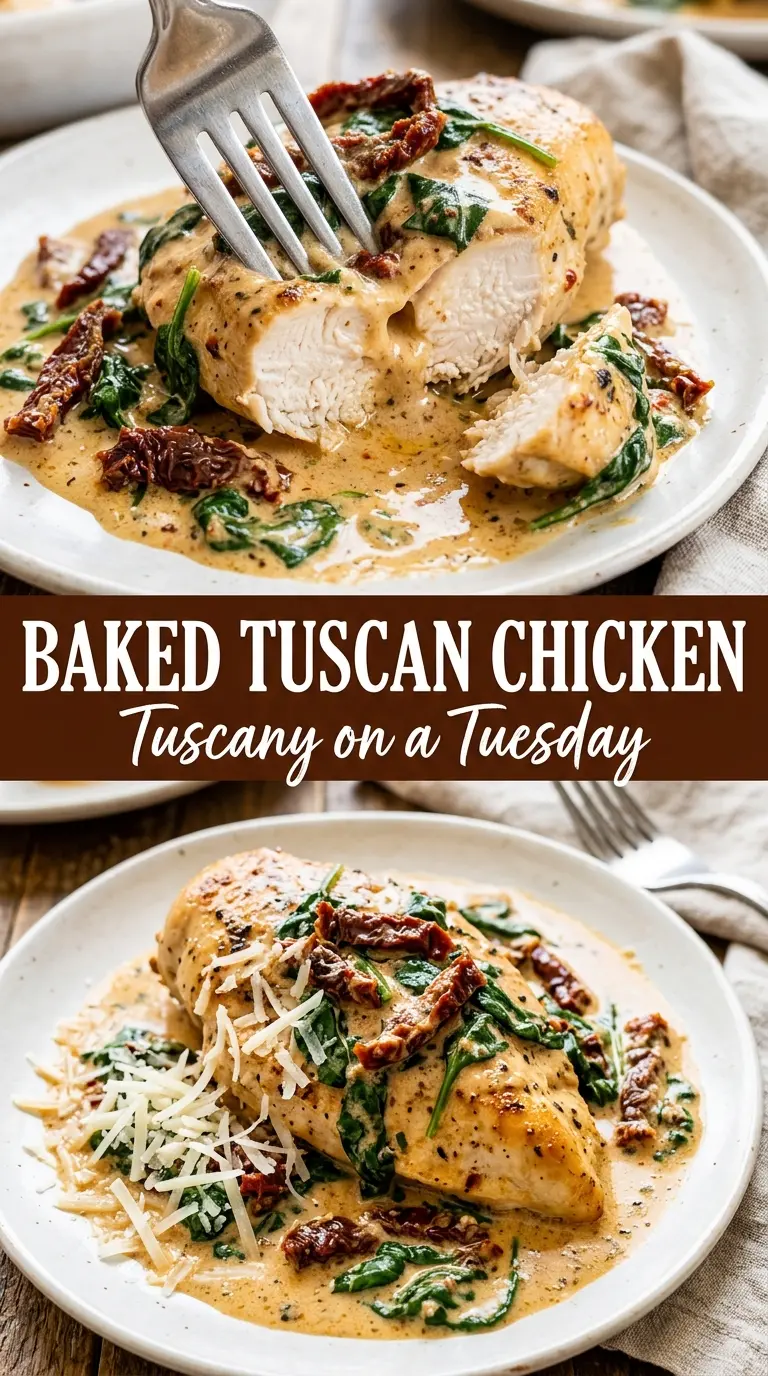
- Chicken breasts or thighs (the protein) — Let them sit at room temperature for 15 minutes before baking. This helps them cook evenly.
- Olive oil or butter (the cooking medium) — This prevents the chicken from drying out and carries herb and spice flavors.
- Garlic (the aromatic foundation) — Fresh minced or thin slices mellow and become sweet when baked. Don’t brown it or it turns bitter.
- Cream or sauce (the moisture keeper) — This prevents the chicken from drying out in the oven. Balanced sauce makes the difference between dry and juicy.
- Lemon or white wine (the brightness) — Acid prevents heavy cream sauces from tasting flat. Add it so flavors balance.
- Fresh herbs (basil, thyme, parsley) — These add complexity. Add some during cooking and some after so you get both cooked and fresh flavors.
- Cheese (optional richness) — Parmesan or feta adds creaminess and salt. Don’t overdo it or the dish becomes heavy.
- Proper oven temperature (375-400°F) — This temperature bakes chicken through without drying the edges. Use a thermometer for 165°F.
Building the Sauce in the Same Pan You Sear the Chicken In
Get the Skin Deeply Golden First
Season the chicken generously before it hits the skillet, then lay it skin-side down in hot olive oil and leave it alone long enough to brown. If it sticks at first, it’s not ready to flip. When the skin is properly seared, it releases more easily and the color is a deep golden brown, not pale tan. This first step gives the dish its best texture and keeps the final bake from feeling soft on top.
Wake Up the Garlic and Tomatoes
After the chicken comes out, the garlic goes in for just a short cook, about 30 seconds, until it smells fragrant but hasn’t browned. Then add the sliced sun-dried tomatoes and let them sizzle for a minute so they soften and release their flavor into the fat left in the pan. If the garlic starts to brown, pull the skillet off the heat for a moment; burnt garlic will take over the whole sauce.
Keep the Cream Gentle, Not Boiling
Pour in the broth first to loosen the browned bits, then stir in the cream, Parmesan, Italian seasoning, and red pepper flakes. Let the sauce come to a brief simmer, not a hard boil. That’s the difference between a smooth, velvety sauce and one that turns oily or grainy. Once the cheese has melted and the sauce lightly coats a spoon, fold in the spinach and return the chicken to the pan skin-side up.
Bake Until the Center Hits Temperature
Slide the skillet into the oven uncovered and bake until the chicken reaches 165°F in the thickest part. The sauce will bubble around the edges and thicken a little more as it bakes. If the top browns too quickly, the oven is running hot; cover the pan loosely with foil for the last few minutes, but only after the skin has already crisped to the color you want.
Three Practical Ways to Change the Dish Without Losing What Makes It Work
Dairy-Free Version With Coconut Cream
Use full-fat coconut cream in place of the heavy cream and skip the Parmesan, then add a little extra salt and a squeeze of lemon at the end to sharpen the flavor. The sauce won’t taste like classic Tuscan chicken anymore, but it will still be rich and hold together well. Use a dairy-free hard cheese substitute only if it melts smoothly; gritty shreds can make the sauce feel broken.
Boneless Chicken Thighs for Faster Baking
Boneless thighs cook faster and are easier to serve, but they won’t give you the same dramatic crisp skin. Sear them just long enough to brown the surface, then shorten the bake and start checking early so they stay juicy. This is the version to use when you want the same sauce with a little less oven time.
Lower-Carb Serving With Roasted Vegetables
The dish is already naturally low in carbs, but it’s especially good spooned over roasted cauliflower or zucchini if you want to skip pasta or bread. Keep the sauce a little thicker by simmering it just until it lightly coats the spoon before it goes into the oven. That way it clings to the vegetables instead of running to the bottom of the plate.
Storage and Reheating
- Refrigerator: Store leftovers in an airtight container for up to 3 days. The skin won’t stay crisp, but the sauce gets even more flavorful overnight.
- Freezer: The chicken itself freezes fine, but cream sauces can separate after thawing. If you need to freeze it, cool it completely and freeze in a tightly sealed container for up to 2 months, then expect a slight texture change.
- Reheating: Warm gently in a covered skillet over low heat or in a 325°F oven until heated through. High heat is the mistake here; it can split the sauce and dry out the chicken before the center is hot.
Answers to the Questions Worth Asking
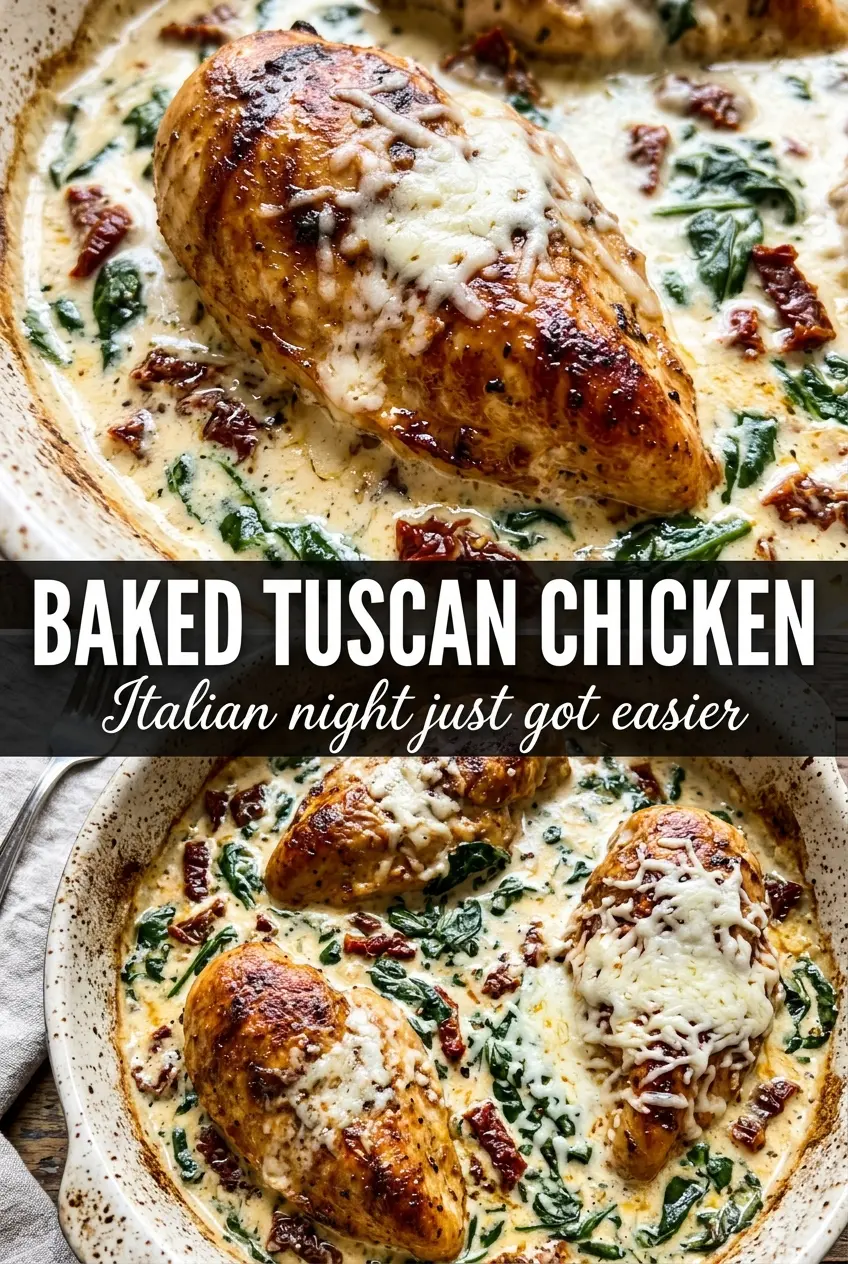
Baked Tuscan Chicken
Ingredients
Equipment
Method
- Preheat the oven to 400°F, then pat the chicken thighs dry and season them generously with salt, pepper, garlic powder, Italian seasoning, and smoked paprika. The seasoning should visibly coat the skin and top of each thigh.
- Heat olive oil in an oven-safe skillet over medium-high heat and sear the chicken skin-side down for 6-7 minutes until deeply golden. You should see crisping and browning on the skin before flipping.
- Flip the chicken and sear for 3 more minutes on the second side. The surface should be lightly browned but not fully cooked through.
- Reduce heat slightly and cook the minced garlic for 30 seconds until fragrant. Keep it moving so it doesn’t brown.
- Add the sliced sun-dried tomatoes and cook for 1 minute. You should smell the tomatoes and see them soften in the skillet.
- Deglaze with chicken broth, scraping up browned bits from the bottom of the skillet. The liquid should turn slightly darker and more flavorful.
- Stir in heavy cream, Parmesan cheese, Italian seasoning, and red pepper flakes, then simmer briefly until the sauce thickens a little. Look for bubbling and a glossy, creamy consistency.
- Stir in the fresh baby spinach until wilted. The spinach should collapse and blend into the sauce, turning deeper green.
- Nestle the chicken skin-side up into the sauce. Arrange them so the skin stays exposed for crisping while the sauce bubbles around.
- Bake uncovered for 18-20 minutes at 400°F until the internal temperature reaches 165°F. The sauce should be bubbling and the chicken skin should look golden.
- Garnish with fresh basil right before serving. Add it over the top so the dish looks vibrant with red tomatoes and green spinach.