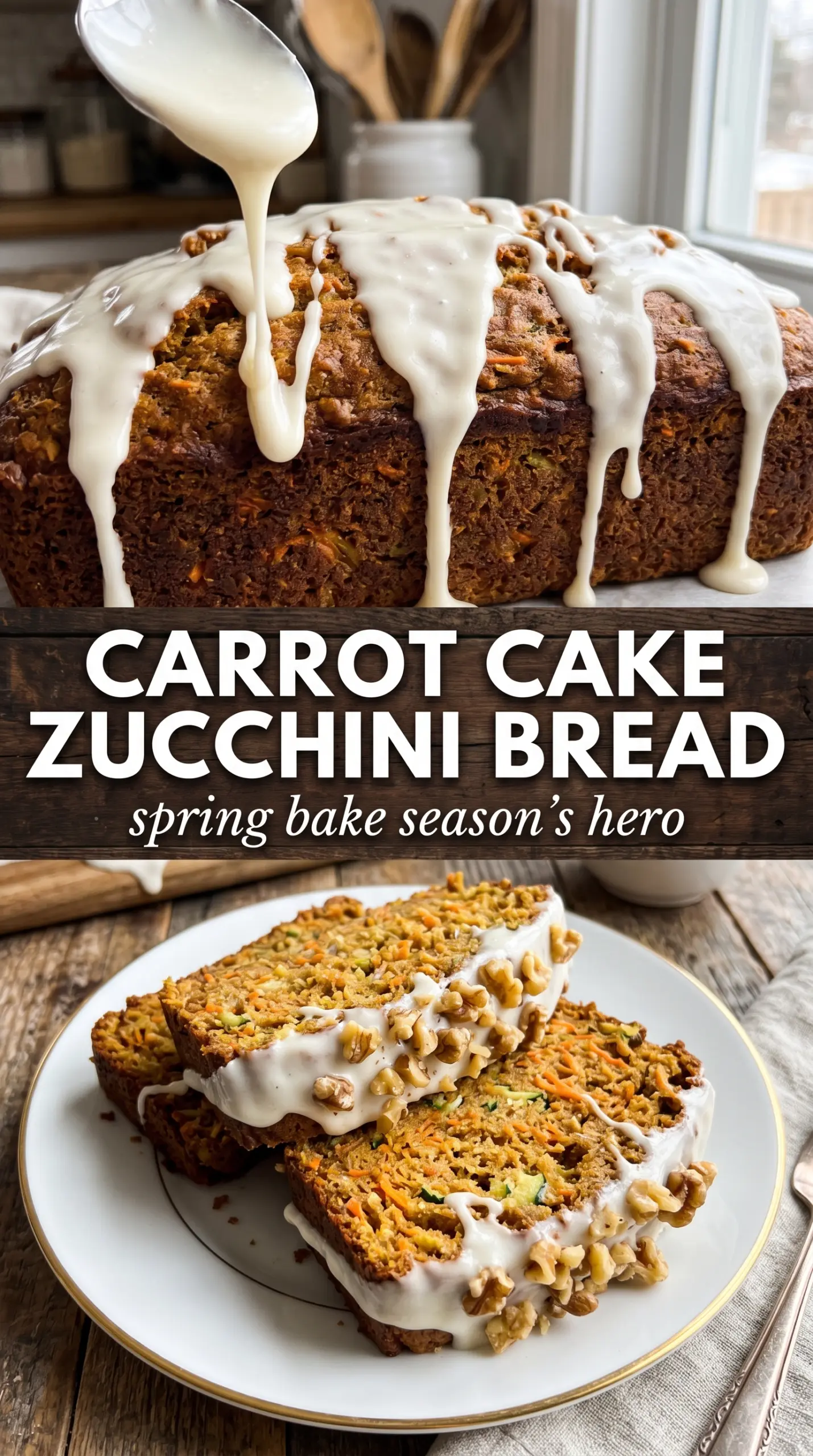
Carrot cake zucchini bread bakes up with a tender crumb, warm spice, and enough moisture to stay soft for days without turning heavy. The carrots bring sweetness and color, the zucchini disappears into the batter, and the cream cheese frosting on top turns a humble quick bread into something people cut into thick slices and linger over.
What makes this version work is balance. Zucchini adds moisture, but it has to be squeezed dry or the loaf turns gummy in the center. Greek yogurt helps keep the crumb plush without relying on extra oil, and the brown sugar gives the bread that deeper, almost caramel note you want in carrot cake. The spices are kept measured, not loud, so you still taste the vegetables and the tangy frosting instead of a generic spice bomb.
Below, I’ll walk through the small details that matter most: how dry the zucchini should be, how to avoid a dense loaf, and when the bread is cool enough to frost so the topping stays thick instead of melting off the sides.
The loaf came out so moist without being wet, and the frosting set up beautifully once it cooled. I used pecans and the cinnamon with the cream cheese frosting tasted like carrot cake in bread form.
Save this carrot cake zucchini bread for the day you want a soft spiced loaf with thick cream cheese frosting and no wasted zucchini.
The Zucchini Trick That Keeps This Loaf From Turning Heavy
The most common mistake with vegetable quick breads is treating grated zucchini like a dry ingredient. It isn’t. If you skip squeezing it out, the batter carries too much water into the loaf and the center bakes up dense before the edges are done. That’s the difference between a tender crumb and a soggy middle.
Carrots behave differently. They soften as they bake and blend into the loaf without watering it down, which is why you can use them a little more freely than zucchini. The goal here is a batter that looks thick, almost scoopable, with the vegetables evenly distributed and no shiny puddles at the bottom of the bowl.
- Zucchini — grate it fine and squeeze it dry in a towel. That step matters more than anything else in the batter.
- Carrots — use a fine grater so they melt into the loaf instead of staying crunchy. Bigger shreds can make slices fall apart.
- Greek yogurt — keeps the crumb soft and adds a little tang. Sour cream works too if that’s what you have.
- Brown sugar — adds moisture and a deeper flavor than white sugar. Light or dark brown sugar both work here.
Building the Batter Without Overmixing It
Flour, leaveners, and spices do the structural work first. Whisking them together evenly keeps you from biting into a pocket of baking soda or one bitter clump of nutmeg. The spice blend is restrained on purpose: cinnamon leads, while ginger and nutmeg stay in the background and make the loaf taste round instead of sharp.
The wet ingredients need to be mixed until the sugar dissolves and the batter looks smooth before the vegetables go in. That helps the eggs distribute evenly, which gives you a better rise. Once the flour is added, stop when you still see a few streaks. If you stir until the batter looks polished, you’ll develop too much gluten and the loaf will bake up tough around the edges.
The frosting belongs on a fully cooled loaf. Even a slightly warm bread will melt the cream cheese topping and slide it right off the sides. Beat the frosting until smooth and spread it in a thick layer; if it feels too loose, a little more powdered sugar will firm it up.
What to Change When You Want a Different Version
Make It Dairy-Free
Swap the Greek yogurt for an unsweetened dairy-free yogurt with some body, then use a dairy-free cream cheese for the frosting. The loaf stays moist, though the tang in the frosting may be a little softer than the original.
Skip the Frosting and Keep It Breakfast-Friendly
Leave the frosting off and serve the loaf plain or with a thin swipe of butter. Without the topping, the carrot and spice come forward more, and the bread keeps better for packing into lunch boxes or toasting later.
Add Nuts or Raisins for More Texture
Fold in pecans for a little crunch or raisins for extra sweetness. Keep the total add-ins modest so the loaf still slices cleanly; too many mix-ins can make the crumb fall apart.
Storage and Reheating
- Refrigerator: Store frosted slices in an airtight container for 4 to 5 days. The crumb stays soft, but the frosting firms up in the fridge.
- Freezer: Freeze the unfrosted loaf tightly wrapped for up to 2 months. Frost after thawing for the best texture.
- Reheating: Warm individual slices briefly in the microwave or toaster oven if you want the bread soft and the spices more fragrant. If the loaf is frosted, let it come to room temperature first so the topping doesn’t melt.
Answers to the Questions Worth Asking
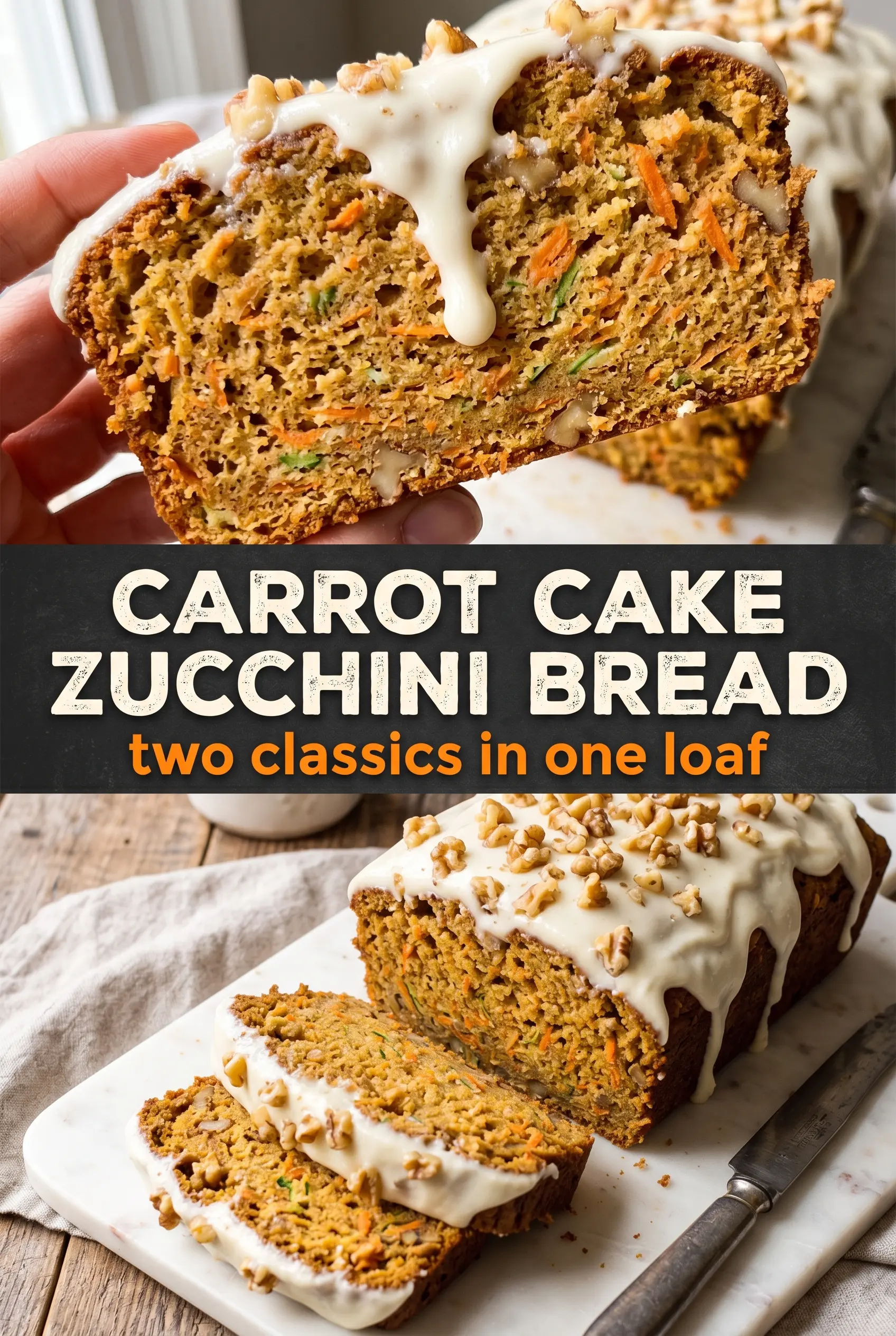
Carrot Cake Zucchini Bread
Ingredients
Equipment
Method
- Preheat the oven to 350°F and grease a 9x5 loaf pan.
- Whisk all-purpose flour, baking soda, baking powder, salt, and the spices (cinnamon, ginger, nutmeg) together.
- Beat brown sugar, eggs, vegetable oil, Greek yogurt, and vanilla extract until smooth.
- Stir in grated zucchini and finely grated carrots.
- Fold the dry ingredients into the wet mixture until just combined, then fold in raisins or pecans if using.
- Bake for 55–65 minutes, until a toothpick comes out clean and the top looks set.
- Cool the loaf completely before frosting for about 20 minutes so the frosting doesn’t melt.
- Beat cream cheese frosting ingredients (softened cream cheese, powdered sugar, vanilla, and milk) until smooth.
- Spread the cream cheese frosting generously over the cooled loaf, using a smooth layer or gentle swirls.