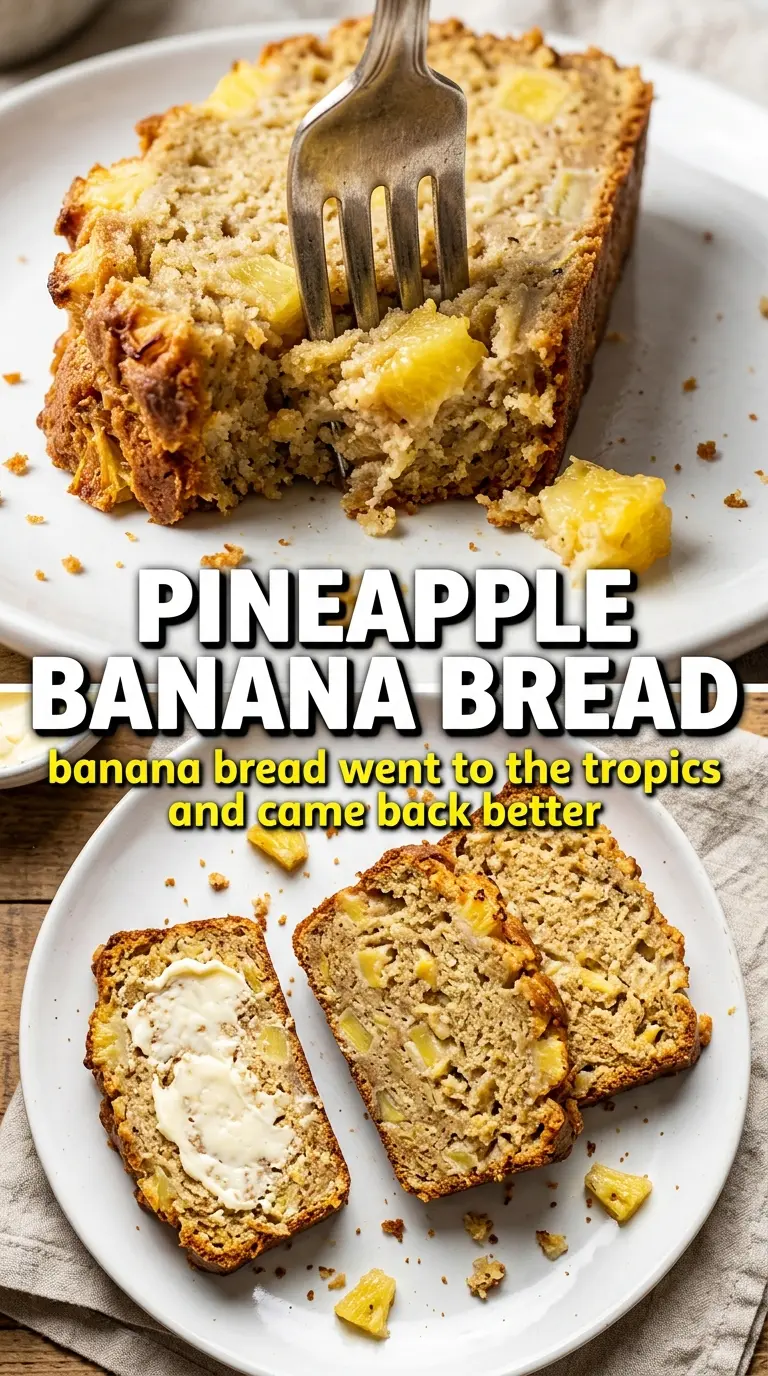
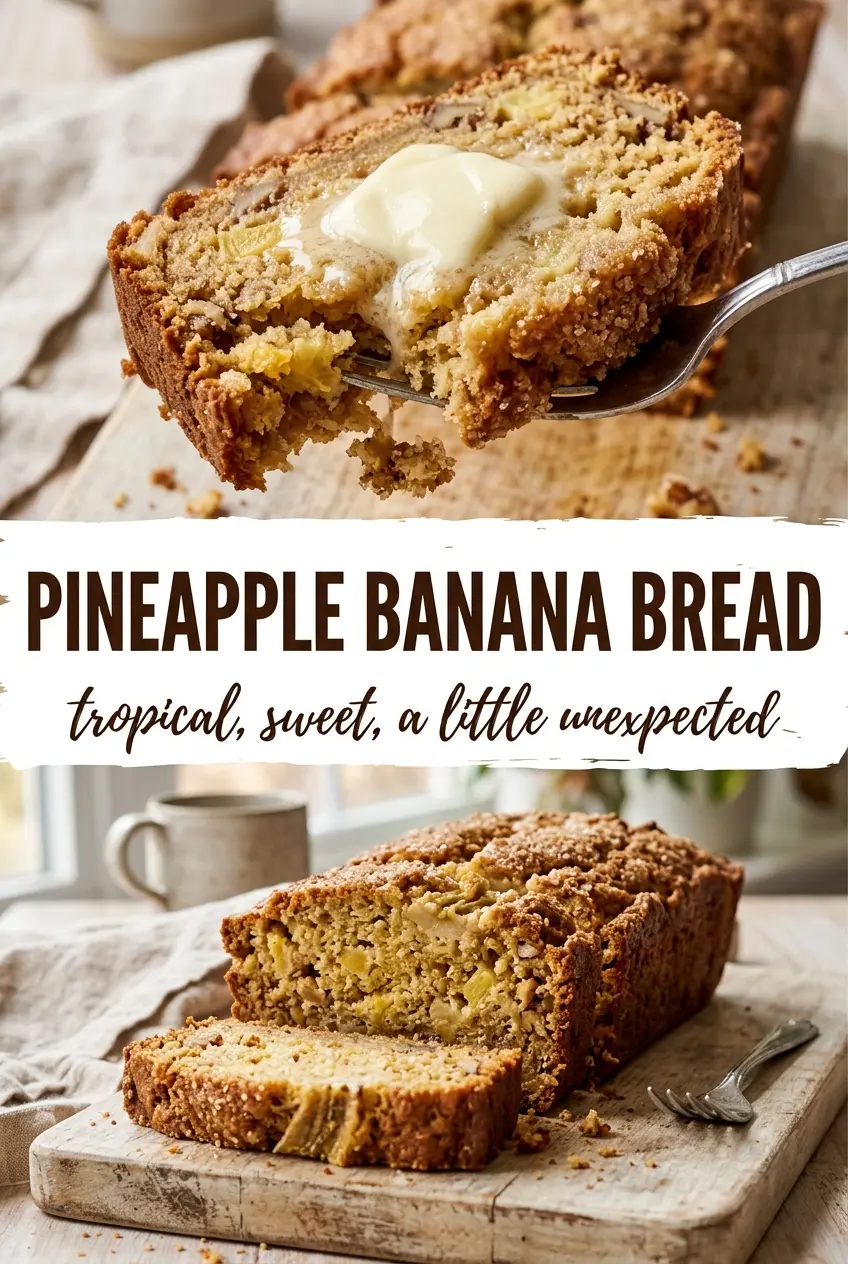
Golden pineapple banana bread lands with a soft, moist crumb and that sweet tropical aroma that fills the kitchen before the timer even goes off. The crushed pineapple keeps the loaf tender for days, while the banana brings enough body and warmth to keep it from tasting like a cake disguised as bread. What you get is a slice that stays dense in the best way: sturdy enough to cut cleanly, but still plush and a little chewy at the edges.
The detail that makes this version work is balance. The pineapple goes in drained, so the batter doesn’t turn watery, but a little reserved juice gets whisked into the wet ingredients for extra flavor without sacrificing structure. Butter keeps the crumb rich, baking soda gives the banana enough lift, and the pinch of baking powder helps the loaf rise evenly through the center instead of doming and cracking in a messy way.
Below you’ll find the exact mixing order that keeps the bread tender, plus a few ways to lean tropical if you want coconut or macadamias in the loaf. The cooling time matters here too, and I’ll tell you why before you slice into it too early and end up with a gummy middle.
The crumb stayed incredibly moist without falling apart, and draining the pineapple first was the key. I added the coconut and it baked up with the perfect little chew. My loaf needed the full 65 minutes and sliced clean after cooling.
Save this pineapple banana bread for the loaf that stays moist, sliceable, and full of tropical flavor for days.
The Pineapple Step That Keeps This Loaf from Turning Gummy
Pineapple banana bread gets into trouble when the fruit brings too much liquid into the batter. Crushed pineapple is great for flavor and moisture, but if you skip the draining step, the loaf can bake up heavy in the center and slice like wet cake. The goal is a tender crumb with enough structure to hold together after cooling.
That reserved pineapple juice is the part a lot of recipes waste. A couple of tablespoons add just enough bright fruit flavor to wake up the banana without flooding the batter. The bananas should be well mashed, but not perfectly smooth; a few small lumps disappear during baking and help keep the loaf from feeling pasty.
What Each Ingredient Is Actually Doing in This Loaf
- Ripe bananas — They provide sweetness, moisture, and the familiar banana bread backbone. The darker and softer they are, the better the flavor and texture.
- Crushed pineapple — This is the ingredient that gives the loaf its tropical edge and its extra-soft crumb. Drain it well, then press out a little more liquid if it still looks wet.
- Reserved pineapple juice — A small amount adds pineapple flavor without loosening the batter too much. If you don’t have enough juice, replace it with milk or plain yogurt, but the fruit flavor will be slightly softer.
- Butter — Melted butter gives richer flavor than oil and helps the bread bake up with a denser, more sliceable crumb. If you use coconut oil, expect a firmer loaf once cooled.
- Flour, baking soda, and baking powder — Baking soda reacts with the bananas and pineapple for lift, while baking powder gives the loaf extra insurance so it doesn’t sink in the middle. Too much mixing after the flour goes in will cancel out that lift.
- Shredded coconut or macadamias — Optional, but both add texture that fits the pineapple beautifully. Coconut makes the loaf sweeter and more tropical; macadamias add crunch and a buttery finish.
The Mixing Order That Keeps the Crumb Tender
Start with the Wet Ingredients
Whisk the melted butter, sugar, eggs, vanilla, pineapple juice, and mashed bananas until the mixture looks thick and glossy. At this stage, you want everything combined, not whipped airy. If the butter is too hot, it can scramble the eggs or melt the sugar unevenly, so let it cool for a minute before mixing.
Fold in the Pineapple at the Right Time
Stir in the drained crushed pineapple before the flour goes in. That distributes the fruit evenly so you don’t end up with wet pockets in one slice and dry crumbs in another. The batter may look a little loose at this point, and that’s normal.
Add the Dry Ingredients Last
Fold in the flour, baking soda, baking powder, and salt just until the streaks disappear. Stop as soon as the flour is absorbed; overmixing makes quick bread tight and tough instead of soft and tender. If you’re using coconut or macadamias, add them with the last few folds so they stay evenly distributed.
Bake Until the Center Sets
Pour the batter into a greased 9×5 loaf pan and bake at 350°F until the top is deeply golden and a toothpick comes out clean from the center. The loaf should feel firm on top, with only a slight spring when you press it gently. If the middle still looks shiny, keep baking; pineapple adds moisture and this bread often needs the full time.
Let It Cool Before Cutting
Cool the bread in the pan for 15 minutes before turning it out. That waiting time matters because the crumb is delicate while hot, and cutting too soon can make the center look underbaked even when it’s not. Let it finish cooling on a rack if you want clean slices.
How to Adapt This for Different Tastes and Pantries
Make It More Tropical with Coconut
Add the shredded coconut called for in the recipe, or even a little extra if you want a more pronounced coconut flavor. It gives the loaf a sweeter aroma and a slightly chewy texture that plays nicely with the pineapple. Toasting the coconut first will deepen the flavor, but it will also make the crumb feel a little drier.
Use Macadamias for a More Biscuit-Like Bite
Macadamia nuts bring a buttery crunch that keeps each slice from feeling too soft. Chop them fairly small so they don’t sink, and fold them in at the end. This version leans a little richer and less sweet, which works well if you like the pineapple to stay in the background.
Gluten-Free Version
Use a 1:1 gluten-free flour blend that includes xanthan gum. The loaf will still be moist, but it may need a few extra minutes in the oven and should cool completely before slicing. Without the gluten structure, the crumb is more delicate, so don’t rush it out of the pan.
Dairy-Free Swap
Replace the butter with melted coconut oil or a neutral vegetable oil. Coconut oil gives the bread a faint tropical note and a slightly firmer texture once chilled, while vegetable oil keeps it soft for longer. Either swap works because the pineapple already brings enough acidity and moisture to carry the loaf.
Storage and Reheating
- Refrigerator: Store in an airtight container for up to 5 days. The crumb stays moist, but the texture gets a little denser after chilling.
- Freezer: This loaf freezes well. Wrap slices or the whole cooled loaf tightly and freeze for up to 3 months.
- Reheating: Warm slices in a toaster oven or microwave just until barely warm. Overheating dries out the edges fast, so use short bursts if you’re reheating from frozen.
Answers to the Questions Worth Asking
Pineapple Banana Bread
Ingredients
Equipment
Method
- Preheat the oven to 350°F and grease a 9x5 loaf pan.
- Whisk the melted butter, sugar, eggs, vanilla, and reserved pineapple juice into the mashed bananas until combined.
- Stir in the drained crushed pineapple.
- Fold in the flour, baking soda, baking powder, and salt until just combined, then fold in shredded coconut or macadamia nuts if using.
- Pour the batter into the prepared pan and bake at 350°F for 60–70 minutes until deeply golden and a toothpick comes out clean.
- Cool in the pan for 15 minutes before turning out so the crumb sets and the loaf stays extra moist.