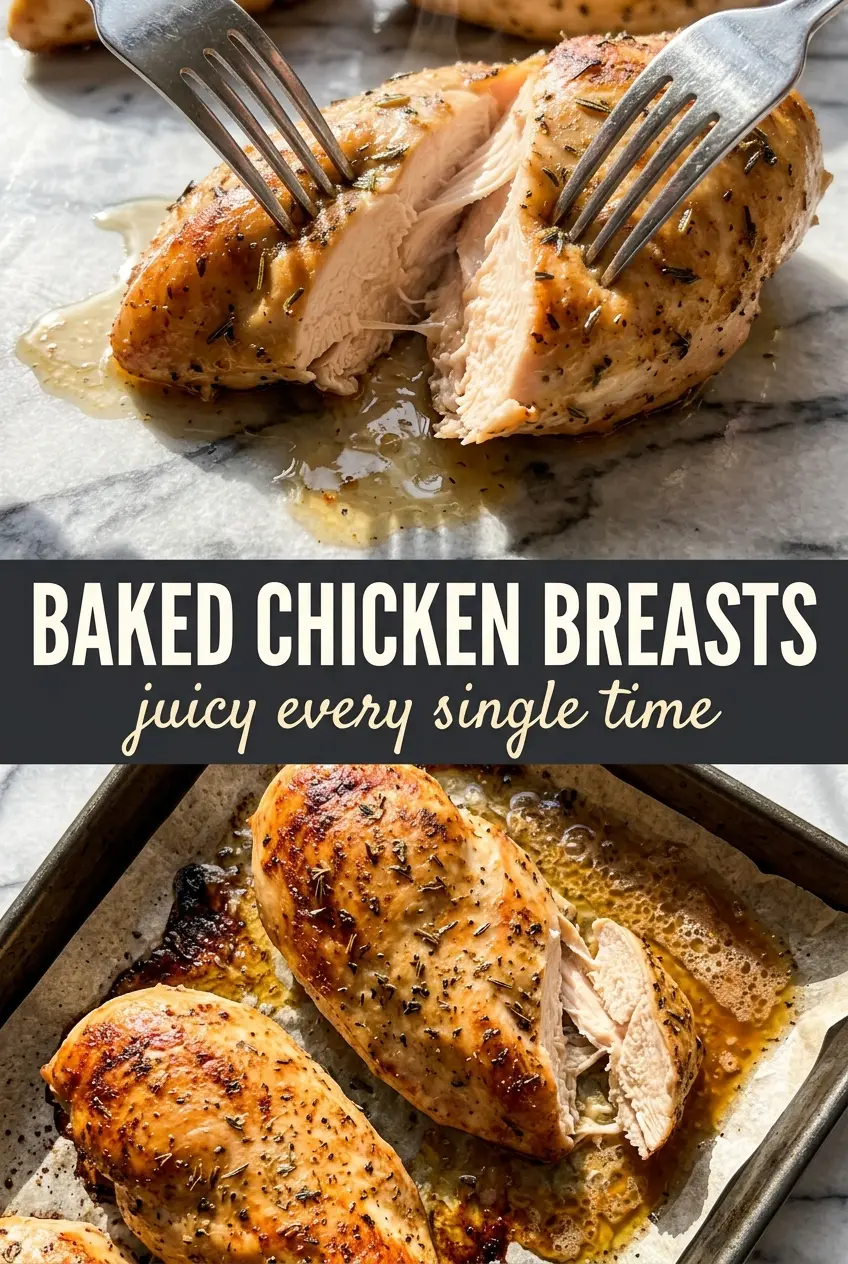
Juicy baked chicken breasts depend on two things most home cooks skip: even thickness and a hot enough oven to give the outside some color before the inside dries out. When those two pieces line up, the chicken comes out with a caramelized herb crust and a clean, tender slice instead of the bland, stringy result so many baked chicken breasts turn into.
This version keeps the seasoning straightforward, but the method matters. A quick pound to 3/4-inch thickness helps the breasts cook at the same pace, and olive oil carries the spices across the surface so they actually stick and brown. Garlic powder, onion powder, smoked paprika, and Italian seasoning build a savory crust without needing a marinade or a long rest.
Below, I’ll walk through the one timing window that matters most, plus a few simple swaps for different seasoning directions and how to keep leftovers from drying out.
The chicken stayed juicy all the way through, and the spice rub actually formed a little crust instead of sliding off in the pan. I pulled it at 165 and let it rest five minutes like you said, and it sliced beautifully.
Juicy baked chicken breasts with a golden herb crust are the kind of dinner worth pinning for busy nights.
Why Even Thickness Matters More Than the Seasoning
The biggest reason baked chicken breasts disappoint is uneven shape. The thin end is done before the thick end is even close, which leaves you choosing between dry edges and undercooked centers. Pounding the breasts to a uniform thickness gives you one clean cooking window, and that’s what keeps the meat juicy.
The oven temp matters too. At 425°F, the surface heats fast enough to brown the spice coating before the meat has time to dry out. If you go too low, the chicken spends too long in the oven and loses moisture before it ever picks up color.
- Even thickness — Pound thicker portions so each breast is about 3/4-inch thick. That keeps the whole piece cooking at the same pace.
- Olive oil — This helps the spices cling and encourages browning. A light coat is enough; too much oil softens the crust.
- Smoked paprika — This adds color and a deeper roasted note. Sweet paprika works in a pinch, but it won’t give the same warmth.
- Italian seasoning — This brings the herb side of the crust without needing fresh herbs in the rub. If yours is old and dusty, replace it; stale dried herbs taste flat fast.
What Each Ingredient Is Actually Doing in the Pan
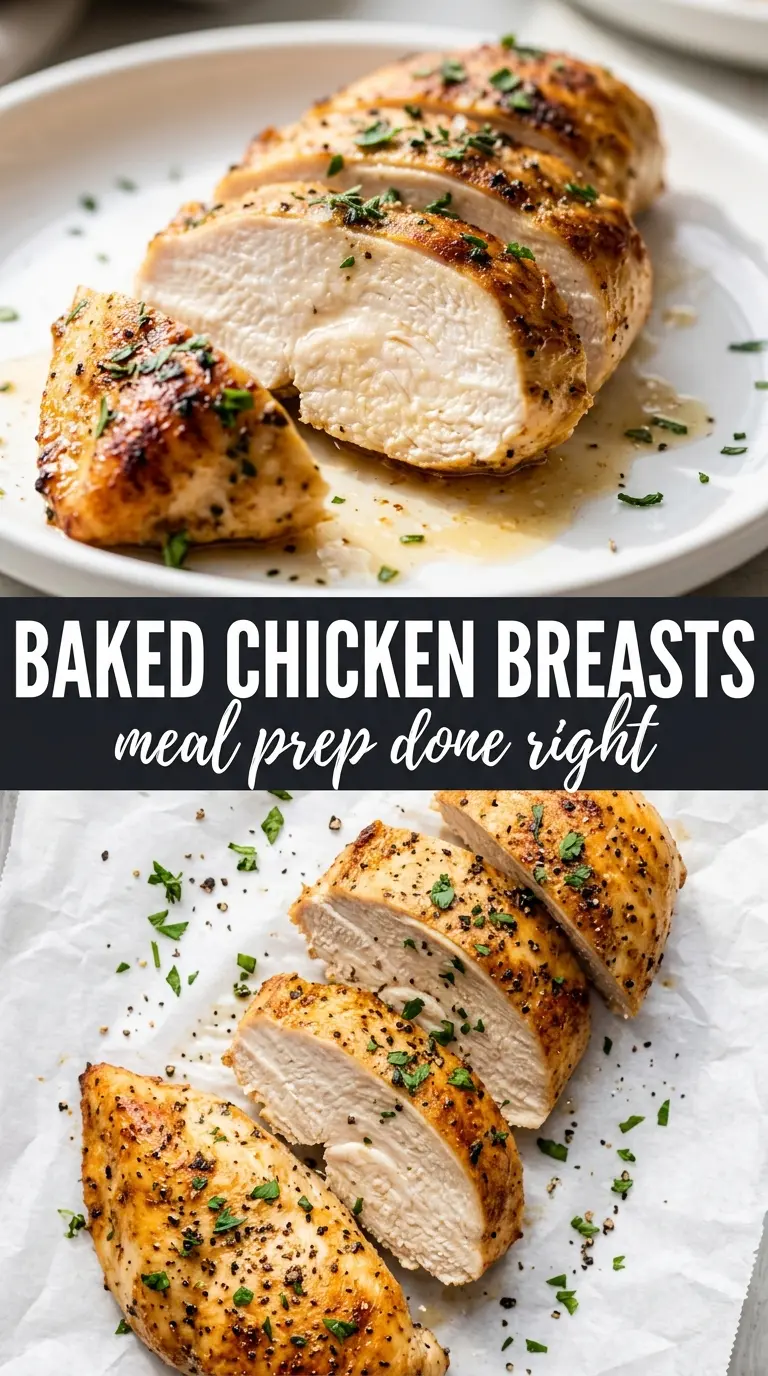
Chicken breasts are lean, which is why this recipe leans on technique instead of a long marinade. Boneless, skinless breasts cook quickly and evenly once they’re flattened to the same thickness, and that short bake time is part of what protects them from drying out.
Olive oil is the carrier for the seasoning. It helps the spice mixture spread in a thin layer and gives the surface enough fat to brown. If you only have another neutral oil, that works fine, but olive oil adds a little more depth.
Garlic powder, onion powder, smoked paprika, and Italian seasoning build a dry rub that survives high heat. Fresh garlic would scorch here, so the powder is the smarter move. Salt and black pepper do their job in the background, but they matter more than people think; underseasoned chicken tastes flat even when the texture is perfect.
Fresh parsley and lemon wedges finish the dish at the table. The parsley adds a fresh green note, and the lemon cuts through the richness of the oil and spice crust without making the chicken taste sour.
Getting the Chicken Out of the Oven at the Right Moment
Flattening for Even Cooking
Lay the chicken between sheets of parchment or plastic wrap and pound the thicker end until the breast looks even from end to end. You’re not trying to make it paper-thin; you’re trying to remove the tall hump that causes one side to overcook. If one breast is much larger than the others, give it a little extra attention so the pan finishes at the same time.
Seasoning the Surface
Brush both sides with olive oil before adding the spice mix. The oil creates the tacky surface the seasoning needs, and it helps the paprika and herbs toast instead of sitting in dry clumps. Rub the seasoning in with your fingers so every part of the chicken has an even coat, especially the rounded edges.
Watching for the Finish Line
Bake until the thickest part reaches 165°F and the tops look golden and fragrant. If the chicken hits temperature but the top still looks pale, give it another minute or two only if needed; overbaking is the fastest way to lose juices. Pull the dish from the oven and let the breasts rest for 5 minutes before slicing so the moisture settles back into the meat instead of running onto the cutting board.
How to Adjust This for Different Nights
Dairy-Free and Naturally Gluten-Free
This recipe already fits both needs as written. The seasoning mix contains no dairy or gluten, so the only thing to check is your spice labels if you’re cooking for someone with a sensitivity. Serve it with rice, potatoes, or vegetables and it stays just as simple.
Make It a Little Spicier
Add 1/4 to 1/2 teaspoon cayenne or a pinch of red pepper flakes to the rub. That gives the crust more heat without changing the baking time or drying out the chicken.
Swap the Herb Direction
Use smoked paprika with poultry seasoning instead of Italian seasoning for a more classic roast chicken flavor. The result tastes a little earthier and less Mediterranean, but the crust still browns the same way.
Storage and Reheating
- Refrigerator: Store in an airtight container for up to 4 days. The crust softens a little, but the chicken stays good for lunches and quick dinners.
- Freezer: It freezes well if you slice it first and wrap it tightly. Freeze up to 2 months, then thaw in the refrigerator overnight.
- Reheating: Reheat gently in a 300°F oven, covered loosely with foil, until just warmed through. The common mistake is blasting it in the microwave, which turns the lean meat dry and stringy fast.
Questions I Get Asked About This Recipe
Baked Chicken Breasts
Ingredients
Equipment
Method
- Preheat oven to 425°F and lightly grease a baking dish, so the chicken starts browning right away.
- Pound chicken breasts to an even 3/4-inch thickness if they vary in size for consistent cooking.
- Brush both sides of each chicken breast with olive oil to promote golden color.
- Mix garlic powder, onion powder, smoked paprika, Italian seasoning, salt, and cracked black pepper; rub evenly over both sides of each chicken.
- Bake for 18-22 minutes at 425°F until internal temperature reaches 165°F and the tops are golden; do not overbake to keep the center juicy.
- Rest the chicken for 5 minutes before slicing so juices settle, then garnish with fresh parsley and lemon wedges.