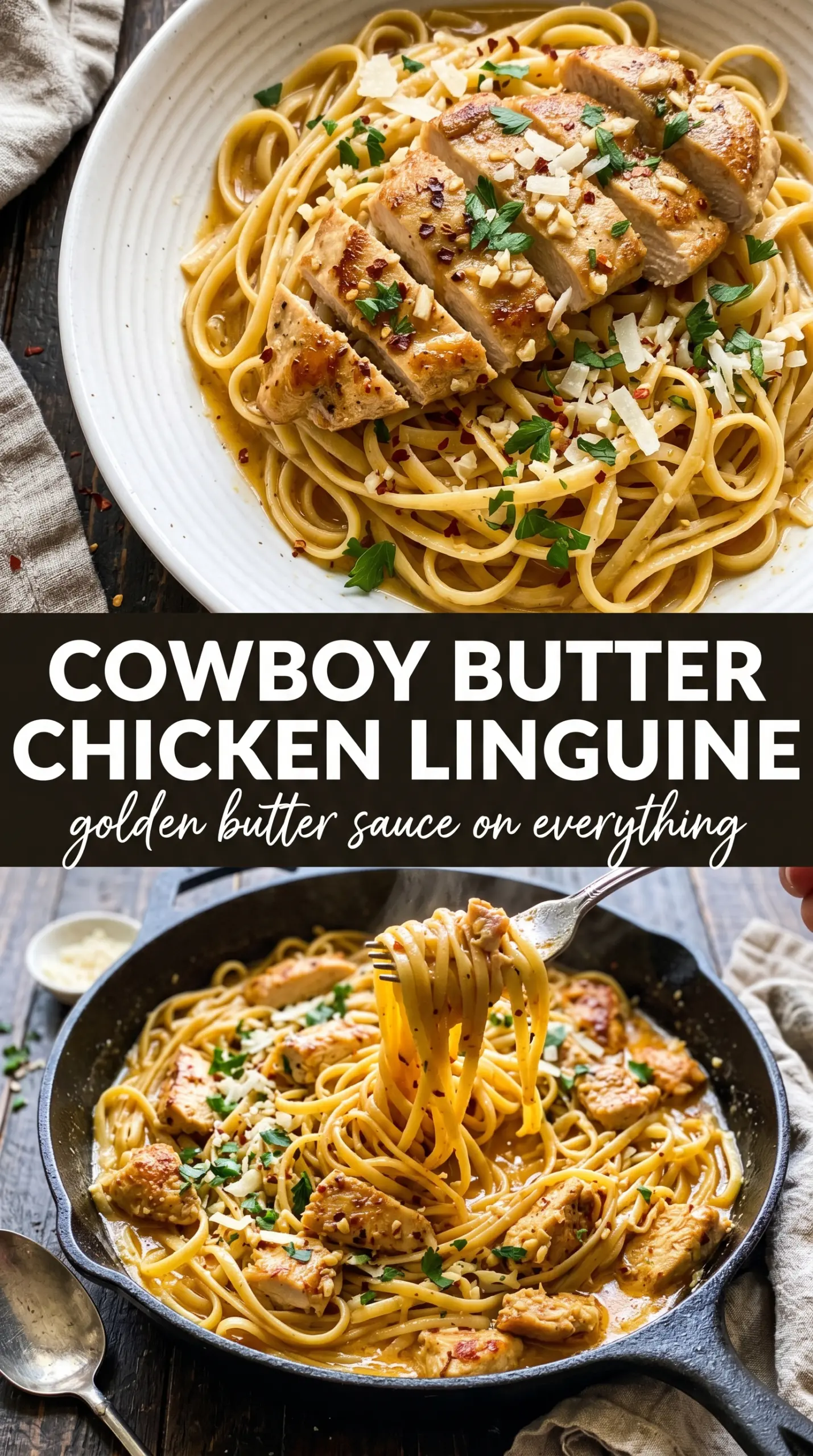
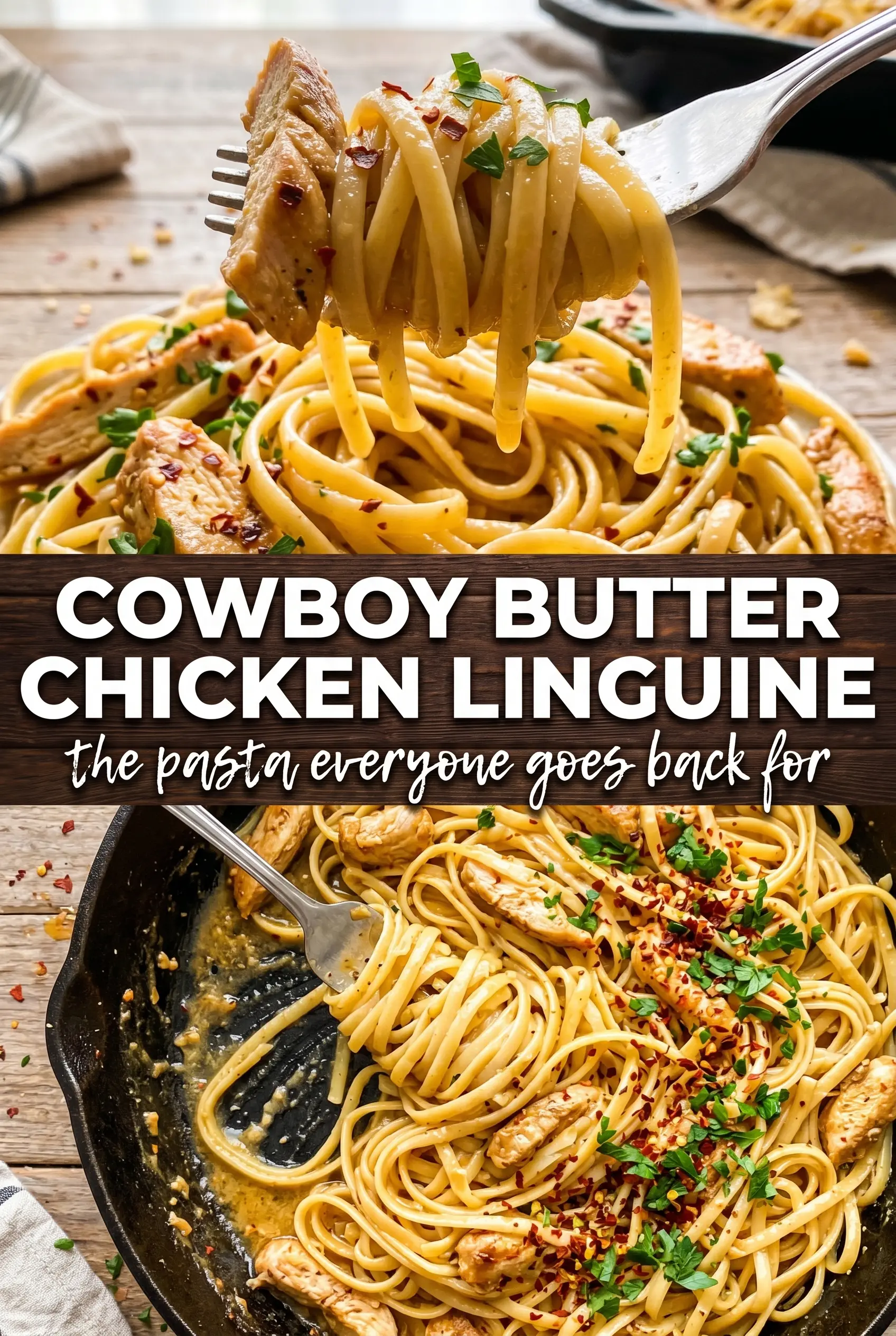
Bold cowboy butter clings to every strand of linguine here, with seared chicken tucked on top and just enough heat to keep each bite interesting. The sauce tastes punchy and fresh instead of heavy, which is what makes this pasta earn a repeat spot. You get buttery richness, lemon brightness, garlic, herbs, and a little Cajun edge all in one bowl.
The key is building the sauce in the same skillet you used for the chicken. Those browned bits left behind pull a lot of flavor into the butter, and the pasta water helps turn that butter into something that coats instead of pooling. The chicken cooks hot and fast, so it stays juicy while still getting a little char on the edges.
Below you’ll find the small details that matter most: how to keep the sauce smooth, when to use pasta water, and what to change if you want to dial the heat up or down.
The sauce coated the linguine perfectly and the lemon kept it from tasting heavy. I used the full cup of pasta water and it turned silky without getting greasy.
Save this cowboy butter chicken linguine for the night you want seared chicken, spicy butter sauce, and pasta that comes together fast.
The One Thing That Keeps Cowboy Butter From Turning Oily
Cowboy butter can break if it gets too hot after the butter goes in, especially once the lemon juice and mustard hit the pan. The fix is simple: keep the heat at medium, not high, and add the acid after the garlic and spices have had a chance to bloom. That short pause keeps the butter emulsified enough to cling to the pasta instead of separating into a slick on the bottom of the skillet.
The other thing that matters here is timing. The linguine should go into the sauce while it’s still hot from the pot, because warm pasta helps the butter coat each strand. If the sauce looks tight, pasta water loosens it; if it looks thin, a minute or two of tossing usually brings it back around.
- Butter — This is the base of the sauce, so use real butter rather than margarine. Unsalted gives you better control, but salted works if that’s what you have.
- Dijon mustard — It adds sharpness and helps the sauce hold together. Yellow mustard won’t give the same depth, but it can stand in if that’s all you’ve got.
- Smoked paprika and Cajun seasoning — These are what push the sauce into that bold, savory lane. Use a Cajun blend with salt in it, then back off on added salt until you taste the finished pasta.
- Lemon juice — Fresh lemon juice brightens the butter and keeps the dish from tasting flat. Bottled lemon juice works in a pinch, but the fresh version is cleaner and sharper.
- Pasta water — This is what turns the sauce from greasy to glossy. Don’t skip it, and add it a splash at a time until the sauce looks silky.
What Each Ingredient Is Actually Doing in This Chicken Recipe
- Chicken (the protein foundation) — Choose the right cut for the method. Thighs stay moister; breasts cook faster.
- Sauce or cooking liquid (the moisture keeper) — This prevents the chicken from drying out. Balance richness with acid.
- Aromatics (garlic, onion, ginger, herbs) — These add depth. Cook them with fat so they become part of the sauce rather than separate.
- Seasonings (salt, pepper, spices) — Don’t underseason. The chicken carries the entire flavor profile.
- Acid (lemon, vinegar, wine, tomato) — This brightens and balances heavy sauces. Add timing matters for flavor preservation.
- Fat (oil, butter, cream) — This keeps chicken moist and carries flavors. It’s also what makes the dish taste delicious.
- Fresh herbs or garnish (the finish) — These keep the dish from tasting one-dimensional. Add at the end so they stay fresh.
- Proper doneness (165°F internal temperature) — Use a thermometer. Overcooked chicken is dry; undercooked is unsafe.
Building the Sauce in the Same Pan That Cooked the Chicken
Getting the Chicken Charred, Not Steamed
Season the chicken strips before they hit the pan, then cook them in a single layer in hot olive oil. If the skillet is crowded, the chicken gives off liquid and steams instead of browning, which leaves you with pale pieces and less flavor in the pan. Pull the chicken once it’s cooked through and has browned edges; it’ll finish staying juicy while you build the sauce.
Pulling the Flavor Off the Bottom of the Skillet
When the butter goes in, let it melt and pick up the browned bits left behind from the chicken. Add the garlic and stir it for just about a minute until it smells fragrant, not raw. If the garlic starts to brown hard, the heat is too high and the sauce will taste bitter, so lower the burner before moving on.
Finishing the Pasta So It Coats Instead of Pools
Stir in the Dijon, paprika, red pepper flakes, and cayenne, then add the lemon juice and herbs. Toss the hot linguine directly in the skillet, adding pasta water little by little until the sauce turns glossy and clings to the noodles. The pasta should look lightly lacquered, not soupy; if there’s a puddle at the bottom, keep tossing for another minute before serving.
How to Change the Heat, the Protein, or the Pasta Shape
Make it dairy-free
Use a good vegan butter that melts cleanly and has a neutral flavor. The sauce won’t taste quite as rich, but the garlic, lemon, and spices still carry it. Keep the heat gentle because plant-based butter can separate faster than dairy butter.
Turn down the heat for kids or heat-sensitive eaters
Cut the red pepper flakes in half and skip the cayenne. You’ll still get the smoky, buttery flavor, just with a calmer finish. The lemon and parsley keep the sauce lively even without much heat.
Swap in chicken thighs
Boneless skinless thighs give you a richer bite and stay juicy even if they cook a minute longer. Cut them into even strips so they brown at the same rate as the breasts. The sauce doesn’t need any changes, but thighs do handle Cajun seasoning especially well.
Use a different pasta shape
Fettuccine, spaghetti, or penne all work. Long noodles give you the best silky coating, while short pasta traps more of the chicken and herbs in each bite. If you switch shapes, keep the pasta just shy of fully tender so it can finish in the sauce without turning soft.
Storage and Reheating
- Refrigerator: Store in an airtight container for up to 3 days. The sauce will tighten as it chills.
- Freezer: I don’t recommend freezing this pasta. Butter sauces and cooked pasta both lose their texture after thawing.
- Reheating: Rewarm gently in a skillet over low heat with a splash of water or broth. High heat is what makes the sauce split and the chicken dry out.
Answers to the Questions Worth Asking
Cowboy Butter Chicken Linguine
Ingredients
Equipment
Method
- Season the chicken strips with salt, pepper, and Cajun seasoning to taste. Heat olive oil in a large skillet over high heat and cook the chicken for 4-5 minutes until charred and cooked through, then remove.
- Melt butter in the same skillet over medium heat. Add minced garlic and cook for 1 minute, stirring to prevent browning.
- Stir in Dijon mustard, smoked paprika, red pepper flakes, and cayenne pepper. Cook for 30 seconds, stirring until fragrant and darkened slightly.
- Add fresh lemon juice, parsley, and chives. Toss the cooked linguine with the cowboy butter sauce, adding reserved pasta water as needed for a silky coating.
- Add the seared chicken strips back on top of the pasta. Serve immediately while the sauce is glossy and hot.