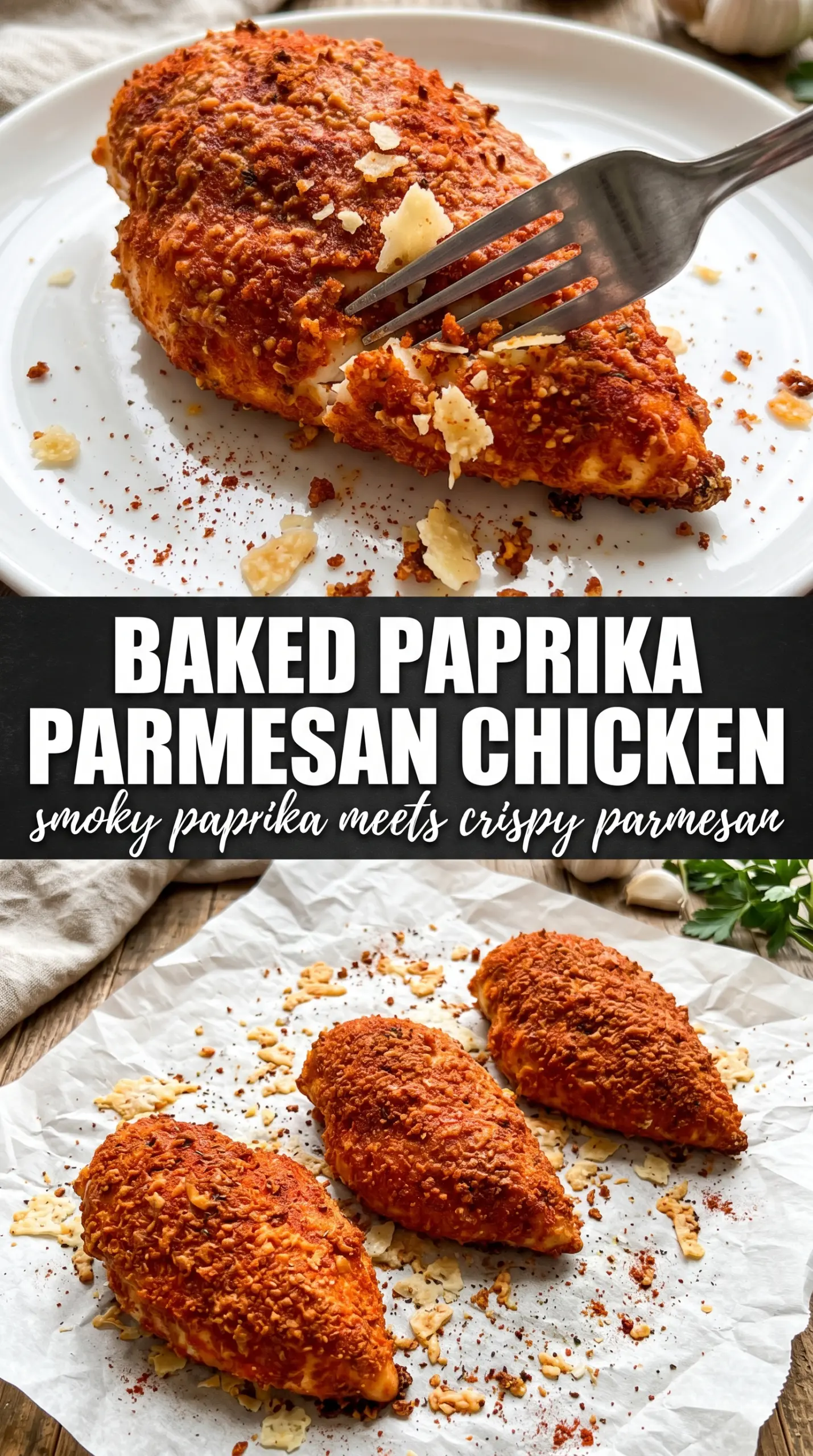
Baked paprika Parmesan chicken lands with the kind of crisp, savory crust that makes plain chicken breasts feel worth the effort. The smoked paprika gives the coating a deep orange-red color and a little edge of warmth, while the Parmesan turns nutty and browned in the oven instead of melting away into nothing. What comes out is juicy chicken under a crackly top that clings to every bite.
The trick is building the crust in two parts: the chicken gets brushed with seasoned oil first, then pressed into the Parmesan-panko mixture so the coating has something to grab. That layer of oil helps the spices bloom and keeps the chicken from drying out in the hot oven. Freshly grated Parmesan matters here because the pre-shredded kind tends to stay dusty and won’t brown as evenly.
Below, I’ll walk through the part that keeps the crust from sliding off, plus the small prep details that make this chicken cook evenly instead of drying at the edges.
The paprika crust turned this into something I’d serve to company, and the chicken stayed juicy at 25 minutes exactly. My husband kept talking about the crunchy Parmesan edges.
Save this baked paprika Parmesan chicken for nights when you want a crackly crust, smoky color, and juicy chicken without a long ingredient list.
The Part That Keeps the Crust Stuck to the Chicken
Most baked breaded chicken fails in one of two ways: the coating slides off, or it dries out before the crust has time to color. This version avoids both by treating the oil and seasoning mixture as the adhesive layer and by baking at a high enough temperature to brown the Parmesan before the chicken has a chance to overcook.
The other thing that matters is pressure. Once the chicken is brushed with the paprika oil, press the Parmesan-panko mix onto the top with your palm so it actually grips. A light sprinkle won’t hold. You want the coating to look a little packed and uneven, with some larger crumbs sitting on top for extra crunch.
- Chicken breasts — Boneless, skinless breasts work best here because they give you a broad surface for the crust. If one breast is much thicker than the others, pound it lightly so they finish at the same time.
- Smoked paprika — This is the main flavor driver, not just a color booster. Sweet paprika alone won’t give you the same depth, so keep the smoked version in the mix even if you reduce the amount a little.
- Freshly grated Parmesan — Freshly grated cheese melts and browns in a way the shelf-stable stuff can’t match. Pre-grated Parmesan usually contains anti-caking agents, which can make the crust drier and less cohesive.
- Panko breadcrumbs — Panko gives the top a lighter, sharper crunch than regular breadcrumbs. If you need gluten-free, use a gluten-free panko-style crumb; the texture stays close enough for this recipe.
What Each Ingredient Is Actually Doing in This Baked Chicken
- Chicken breasts (the protein) — Pat dry so they brown instead of steam. Even thickness ensures uniform cooking.
- Sauce or cooking liquid (the moisture keeper) — This prevents the chicken from drying out in the oven. Balance richness with acid.
- Garlic (the aromatic foundation) — Fresh minced garlic mellows and becomes sweet when baked. Don’t brown it or it turns bitter.
- Cream or wine (optional richness) — This adds luxury and moisture. Don’t let it boil hard or it can break and separate.
- Lemon or white wine (the brightness) — Acid prevents heavy sauces from tasting flat. Balance is essential.
- Fresh herbs (basil, thyme, parsley) — Add some during cooking and some after so you get both cooked and fresh flavors.
- Cheese (optional richness) — Parmesan or feta adds depth. Don’t overdo it or the dish becomes heavy.
- Proper oven temperature (375-400°F) — This temperature bakes chicken through without drying the edges. Use a thermometer for 165°F.
The 25 Minutes That Actually Matter
Mixing the Paprika Oil
Stir the olive oil with the smoked paprika, sweet paprika, garlic powder, onion powder, salt, and pepper until it looks like a loose red paste. That base should smell warm and a little sweet before it ever hits the chicken. If the paprika clumps, keep stirring for a few more seconds; those little pockets can burn in the oven and taste bitter.
Coating the Chicken Evenly
Brush the paprika oil over both sides of each chicken breast, but give the top side the more generous layer since that’s where the crust goes. The chicken should look glossy, not dripping. If the surface is dry in spots, the coating won’t stick there, so work the oil all the way to the edges.
Pressing on the Crust
Mix the Parmesan and panko, then press it firmly onto the oiled tops of the chicken breasts. Don’t just sprinkle it over. Use your fingers or the back of a spoon to compact it a little, then lift the chicken carefully onto the parchment-lined baking sheet so the coating stays put.
Baking Until the Top Turns Deep Gold
Bake at 425°F for 22 to 25 minutes, depending on thickness. You’re looking for a crust that’s golden-red with browned Parmesan at the edges and an internal temperature of 165°F in the thickest part. If the top is browning before the chicken is done, keep going; the crust should be crisp, not pale, and underbaked chicken is the one problem you don’t want to chase later.
Finishing With Lemon and Parsley
Let the chicken rest for a few minutes, then garnish with parsley and serve with lemon wedges. The lemon cuts through the richness of the Parmesan and wakes up the paprika without making the dish taste sharp. Slice too soon and the juices will run out, so give it a brief rest before cutting in.
Three Ways to Adjust the Crust Without Losing the Point
Gluten-Free Crust
Swap the panko for a gluten-free panko-style crumb. You’ll still get a crisp top, though the pieces may brown a touch faster, so start checking a few minutes early if your crumbs are fine rather than flaky.
Dairy-Free Version
Use a dairy-free Parmesan alternative that grates finely and has a dry texture. It won’t brown as deeply as real Parmesan, but the panko and paprika still give you a good crust if you press it on firmly.
Chicken Cutlets for Faster Cooking
If you want dinner on the table even faster, slice thicker chicken breasts into cutlets and reduce the bake time. The crust still works, but the thinner pieces need a closer eye because they can go from juicy to dry in a matter of minutes.
Storage and Reheating
- Refrigerator: Store leftovers in an airtight container for up to 3 days. The crust softens a bit, but the flavor stays strong.
- Freezer: It freezes well if you let the chicken cool completely first, then wrap each piece tightly. The coating won’t stay fully crisp after thawing, but it still reheats better than many breaded chicken recipes.
- Reheating: Warm in a 375°F oven until hot through, about 10 to 15 minutes. The oven brings the crust back to life much better than the microwave, which steams the coating and makes it soggy.
Answers to the Questions Worth Asking
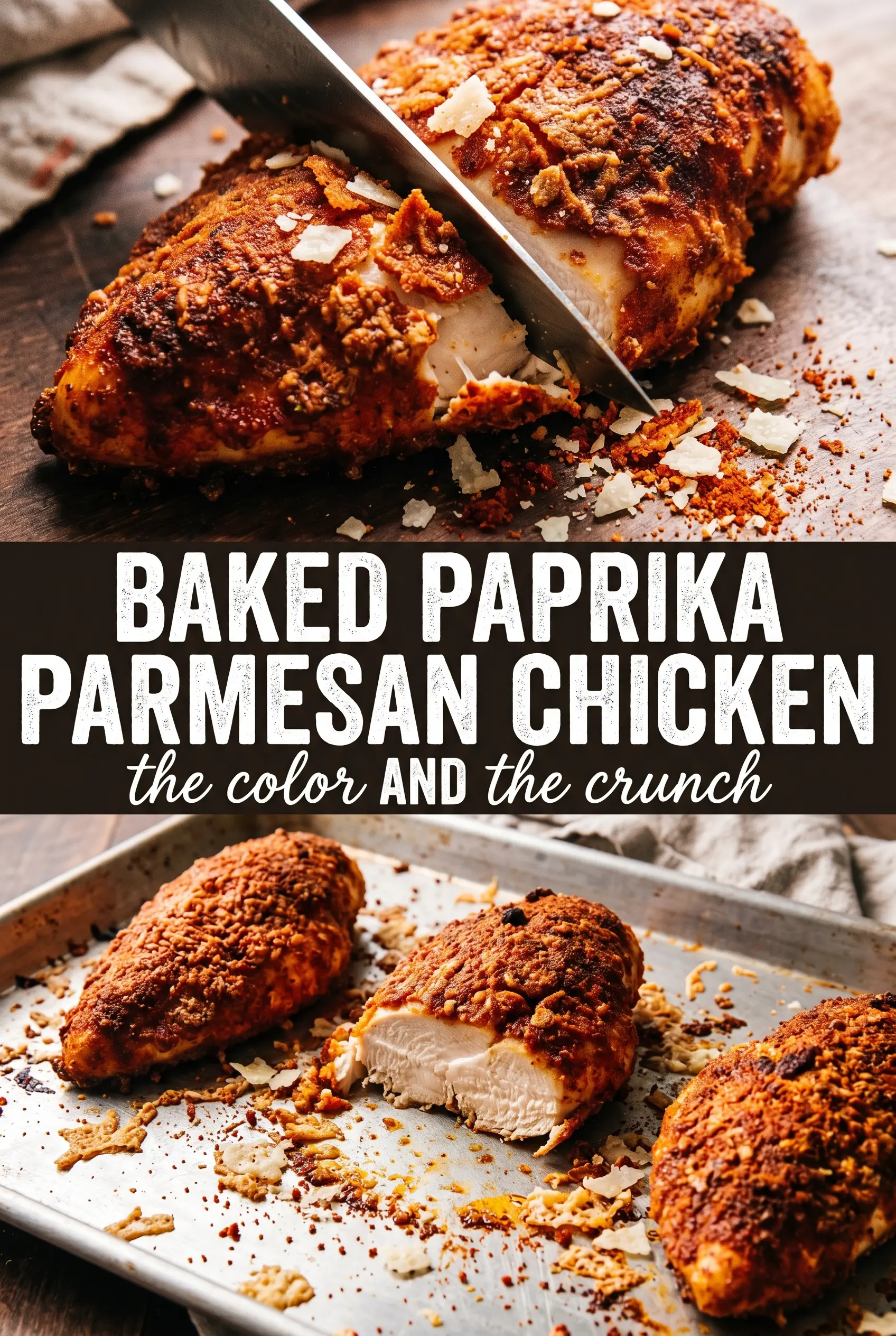
Baked Paprika Parmesan Chicken
Ingredients
Equipment
Method
- Preheat the oven to 425°F and line a sheet pan with parchment paper.
- In a bowl, mix olive oil with smoked paprika, sweet paprika, garlic powder, onion powder, salt, and pepper.
- Brush the paprika oil generously over both sides of each chicken breast.
- Combine Parmesan cheese and panko breadcrumbs, then press firmly onto the oiled chicken to coat the tops.
- Bake for 22-25 minutes, until the crust is golden-red and the internal temperature reaches 165°F.
- Garnish with fresh parsley and serve with lemon wedges.