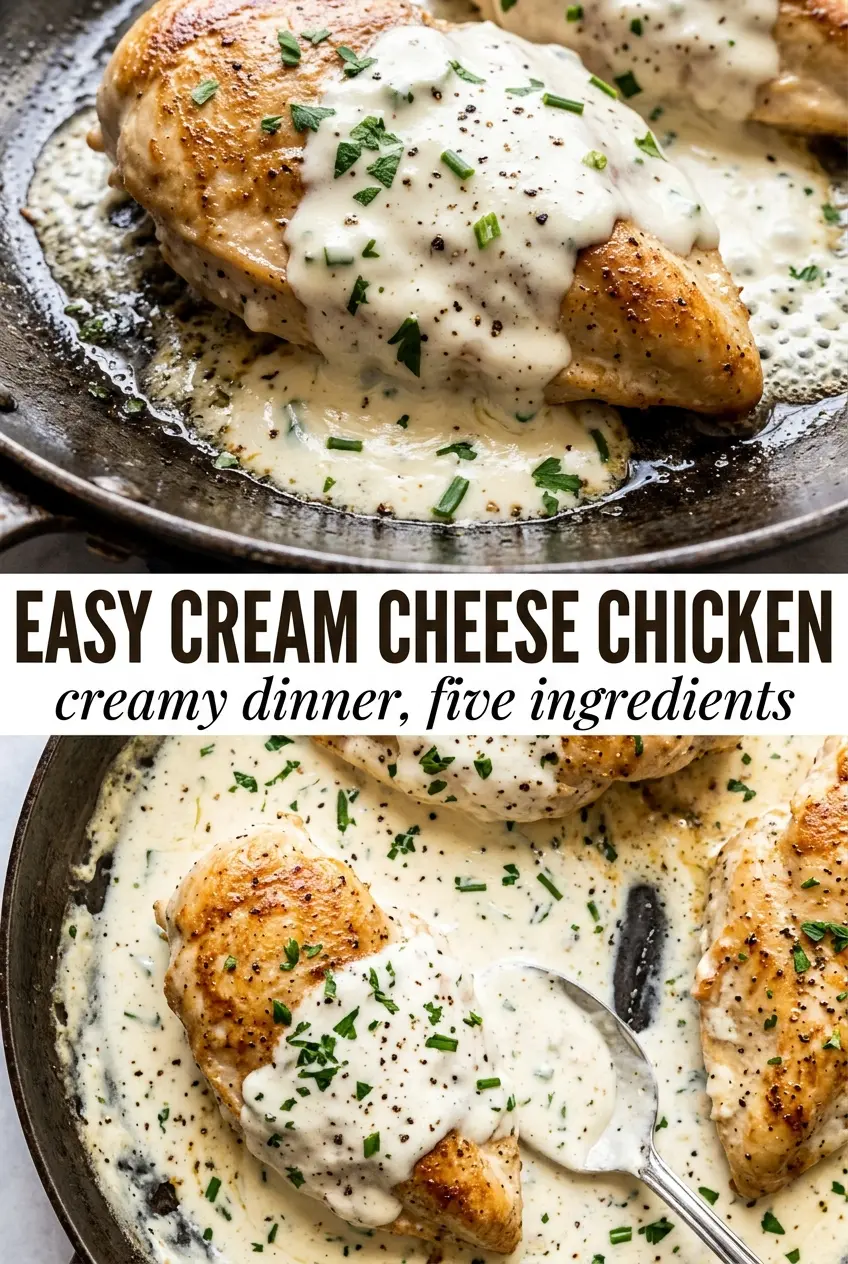
Juicy chicken breasts tucked into a tangy cream cheese sauce earn a permanent spot in the dinner rotation because the sauce clings instead of running off the plate. It’s rich, but the lemon juice and fresh herbs keep it from feeling heavy, and the chicken stays tender when it’s seared first and finished gently in the sauce.
The trick here is building the sauce in the same skillet you used for the chicken. Those browned bits on the bottom carry a lot of the flavor, and a splash of broth loosens them into the base of the sauce. Cream cheese melts best when it’s softened and added in cubes over medium-low heat, not dumped in all at once over a hot burner.
Below, I’m walking through the parts that matter most: how to keep the sauce smooth, what the lemon is doing here, and the small timing details that keep the chicken juicy instead of overcooked.
The sauce turned out thick and silky, and it stayed creamy even after I put the chicken back in. I added a little extra lemon zest at the end and it balanced the richness perfectly.
Save this easy cream cheese chicken for the nights when you want a silky skillet sauce and dinner on the table in about 30 minutes.
The Sauce Breaks When the Heat Is Too High
Most cream cheese chicken recipes go wrong at the same moment: the cream cheese goes into a pan that’s still too hot, and the sauce turns grainy before it ever gets a chance to smooth out. This version stays steady because the broth cools the pan down first, and the cream cheese is added after that in soft cubes so it can melt evenly.
The other mistake is boiling the sauce after the sour cream goes in. Sour cream is stable enough to enrich the sauce, but not if you hammer it with high heat. Keep the burner at medium-low once the dairy is in, and the sauce will thicken into a glossy coat instead of separating.
- Browned bits — They’re not just leftovers from searing. They’re the flavor base, and scraping them up with broth gives the sauce depth without needing extra ingredients.
- Cream cheese — Full-fat cream cheese melts into the smoothest sauce. Neufchâtel works in a pinch, but it’s a little looser and less rich.
- Sour cream — This adds the tang that keeps the sauce from tasting flat. Plain Greek yogurt can stand in, but it’s more likely to tighten if the pan is too hot.
- Lemon juice — Don’t skip it. That little hit of acid lifts the whole skillet and keeps the sauce from tasting heavy.
What Each Ingredient Is Doing in the Skillet

- Chicken breasts — Boneless, skinless breasts keep this quick, but they need even thickness so the outside doesn’t overcook before the center reaches 165°F. If one end is much thicker, pound it lightly before seasoning.
- Chicken broth — Use a broth you’d actually drink. It becomes the liquid backbone of the sauce, so weak broth makes the whole dish taste thin.
- Cream cheese — Let it soften first, then cut it into cubes. That small step makes a big difference in how fast and smoothly it melts.
- Sour cream — It gives the sauce its tangy finish and makes the texture velvety. If you only have heavy cream, the sauce will be smoother but less bright.
- Fresh chives and lemon zest — These finish the dish with freshness. They’re not garnish for show; they keep the sauce from eating like straight cream.
Getting the Chicken Seared Before the Sauce Goes In
Seasoning and Searing the Breasts
Pat the chicken dry before seasoning it. Moisture on the surface keeps it from browning, and this dish needs that golden crust because it’s where the skillet flavor starts. Cook the chicken over medium-high heat until it releases from the pan with some resistance and the first side is deeply browned, then flip and finish the second side. If the pan is crowded, the chicken steams instead of sears, and you lose the texture that helps this feel like a real dinner instead of just sauced chicken.
Making the Pan Sauce
Take the chicken out before you build the sauce. Add the garlic for just 30 seconds, long enough for it to smell fragrant but not long enough to brown, then pour in the broth and scrape every bit from the bottom of the pan. Add the cream cheese gradually and stir until there are no lumps left. If the sauce looks broken at first, keep stirring over low heat; it usually comes together once the cream cheese fully melts.
Finishing Without Overcooking
Return the chicken to the skillet only after the sauce is smooth. Spoon sauce over the tops and let the chicken warm through gently for a minute or two. You’re not cooking the chicken from raw at this point, just bringing everything together, so once the center reaches 165°F, pull it off the heat. The sauce should coat the back of a spoon and cling to the chicken instead of sliding away.
How to Adapt This for a Lighter Plate or a Different Pantry
Dairy-Free Version With Cashew Cream
Use a thick unsweetened cashew cream instead of the cream cheese and sour cream. The sauce won’t have the same tang, so add a little extra lemon juice and a pinch of salt to keep it lively. It’s still creamy, but the flavor lands softer and a little nuttier.
Chicken Thighs for a Richer Finish
Boneless, skinless thighs work well if you want a juicier result and don’t mind a slightly richer dish. They usually need a few extra minutes in the skillet, but they’re more forgiving if you’re worried about overcooking. The sauce clings to them just as well.
Gluten-Free Without Changing the Method
This recipe is naturally gluten-free as written as long as your broth is certified gluten-free. That’s one of the nice things about skillet cream sauces: you don’t need flour to get body when the cream cheese is doing the work.
Add Mushrooms or Spinach at the End
Sliced mushrooms can go in after the garlic and cook until they’ve released their moisture and started to brown. Spinach should be stirred in right at the end so it just wilts. Both additions work because the sauce is sturdy enough to hold them without getting watery.
Storage and Reheating
- Refrigerator: Store leftovers in an airtight container for up to 3 days. The sauce thickens as it chills, so it will look denser the next day.
- Freezer: I don’t recommend freezing this one. Cream cheese and sour cream sauces can turn grainy after thawing.
- Reheating: Warm it slowly in a skillet over low heat with a splash of broth to loosen the sauce. High heat is the mistake here; it can make the dairy separate before the chicken is heated through.
Answers to the Questions Worth Asking
Easy Cream Cheese Chicken
Ingredients
Equipment
Method
- Season the boneless skinless chicken breasts with salt, pepper, garlic powder, and onion powder, then heat the olive oil in a large skillet over medium-high heat. Place chicken in the skillet and sear until golden, about 5-6 minutes per side, until the internal temperature reaches 165°F; remove to a plate.
- In the same pan, cook the minced garlic for 30 seconds over medium heat, stirring until fragrant. Pour in the chicken broth and scrape up the browned bits from the bottom of the skillet.
- Add the cubed, softened cream cheese and stir over medium-low heat until fully melted and smooth. Keep the heat gentle so the sauce stays creamy.
- Stir in the sour cream, lemon juice, and Italian seasoning until the sauce is creamy and well combined. Do not boil after adding sour cream.
- Return the chicken breasts to the pan and spoon the tangy cream cheese sauce over each piece until coated.
- Garnish with fresh chives and lemon zest, then serve immediately while the sauce is thick and velvety.