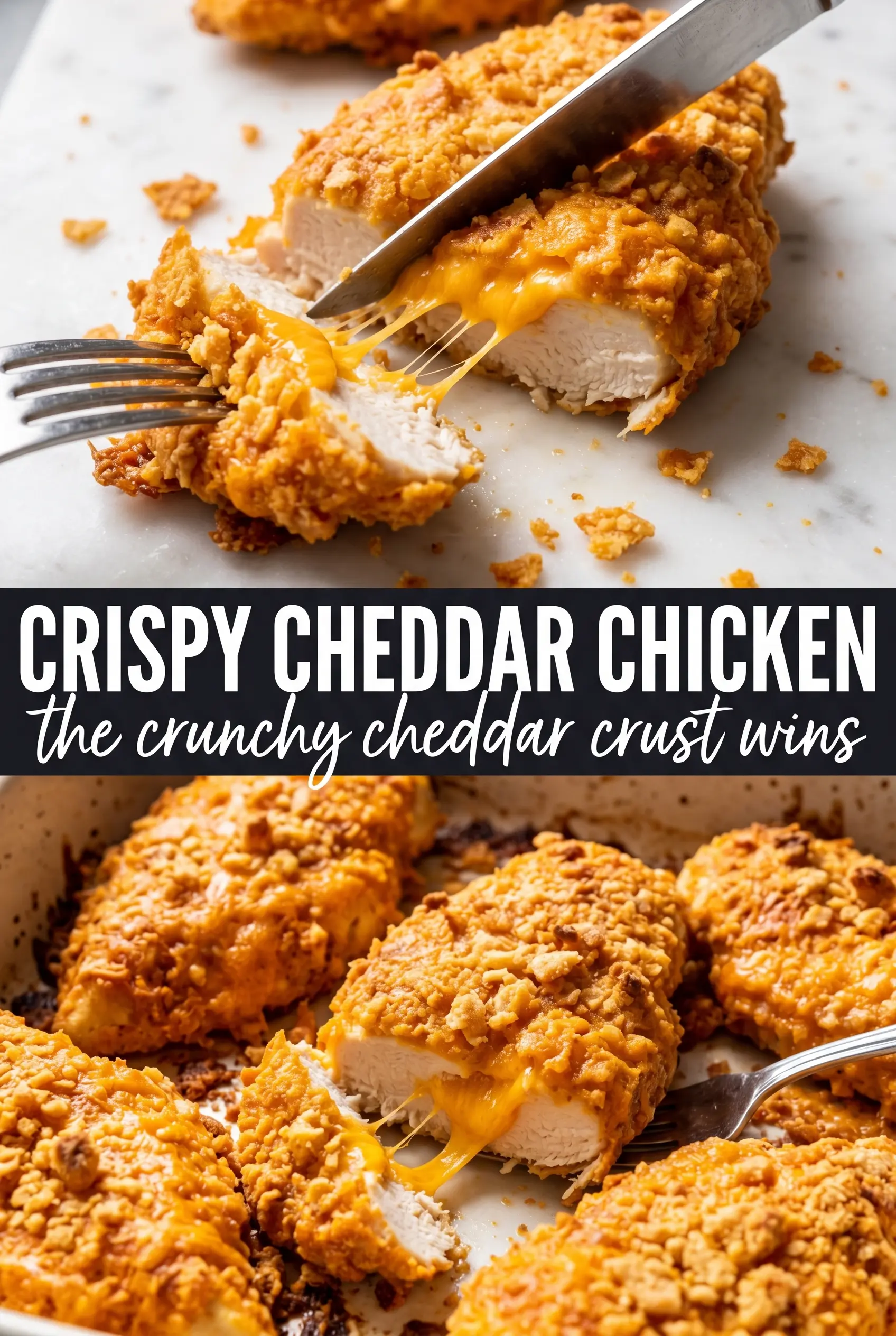
Thick, shatteringly crisp cheddar crust and juicy chicken are what keep this dish in the regular dinner rotation. The coating bakes into deep golden shards that crack when you cut in, and the sour cream underlayer keeps the chicken itself tender instead of dry. The cream sauce on the side ties it all together without softening that crust.
What makes this version work is the layering. The chicken gets coated in seasoned sour cream first, which helps the cheddar and cracker mixture stick and gives the crust something rich to cling to. Finely shredded sharp cheddar matters here because it melts and browns into lacey, crunchy bits; pre-shredded cheese can work, but it won’t melt as cleanly. The crackers add structure and salt, and the smoked paprika gives the crust a deeper, toastier edge than plain breadcrumbs would.
Below, I’ve included the small things that keep the crust crisp, plus the best swaps if you need to work with what’s in your kitchen. If you’ve ever had breaded chicken go soggy in the oven, the fix is in the coating and how firmly you press it on.
The cheddar crust baked up into little crunchy shards instead of turning greasy, and the chicken stayed juicy all the way through. I was nervous about the sour cream layer, but it kept everything moist without making the coating slide off.
Love the crunchy cheddar shell and creamy sauce? Save this Crispy Cheddar Chicken for the next night you want a baked chicken dinner with serious texture.
The Trick to Keeping the Cheddar Crust Crisp in the Oven
The biggest mistake with a dish like this is treating the topping like a loose breadcrumb coating. It needs to be pressed on firmly enough to form a real crust, and the chicken needs that sour cream layer underneath so the cheese mixture has something to grip. If the crust seems patchy before baking, it will bake patchy. The dry bits won’t magically fuse together in the oven.
Another thing that matters here is heat. At 375°F, the coating has time to brown and crisp before the chicken overcooks. If you crank the oven hotter, the cheddar can burn before the center reaches 165°F. If your chicken breasts are especially large, pound them a little for even thickness so the crust finishes at the same time the meat does.
What the Cheddar, Crackers, and Sour Cream Each Bring to the Pan
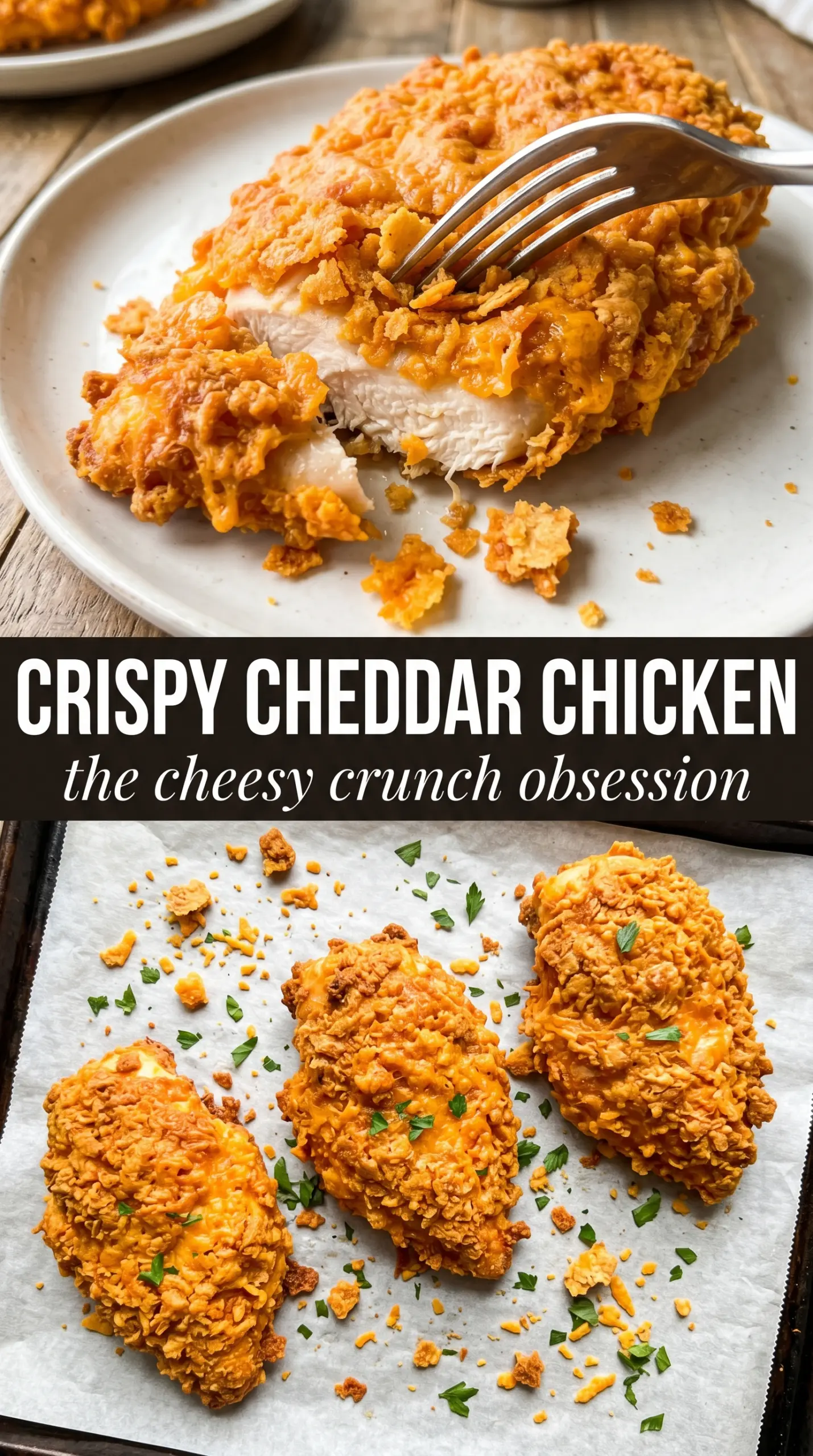
- Sharp cheddar — This is the star flavor and the source of those browned, lacy cheese shards. Freshly shredding it yourself gives you the best melt and the cleanest crust; bagged shreds often contain anti-caking starches that can dull the browning.
- Ritz crackers — They add buttery flavor and a lighter, crisper crunch than plain breadcrumbs. Crush them finely enough to coat evenly, but not into dust; a little texture helps the topping bake into real shards instead of a flat paste.
- Sour cream — It does two jobs: it seasons the chicken and acts like edible glue for the topping. Plain Greek yogurt can work in a pinch, but it brings a tangier finish and can set a little tighter in the oven.
- Smoked paprika — This doesn’t make the dish smoky in a loud way. It deepens the browned-cheese flavor and keeps the crust from tasting one-note.
- Cream of chicken soup — This makes the quick sauce without a long stovetop build. If you want to swap it, use another condensed cream soup, but keep the sour cream in the sauce so it stays silky and a little tangy.
How to Get the Coating to Stick, Brown, and Stay Crunchy
Coat the Chicken First, Then Build the Crust
Stir the sour cream with the garlic powder, onion powder, salt, and pepper until it looks smooth and well seasoned, then smear it over every side of the chicken. You want a thin, even layer, not a thick blanket that slides off in the pan. That layer is what keeps the chicken moist and helps the cheddar mixture cling. If you skip full coverage, the crust will fall off in dry patches while baking.
Press the Topping On Like You Mean It
Mix the cheddar, crushed crackers, and smoked paprika together before you start coating, then press that mixture firmly onto the sour cream-coated chicken. Use your hands and really pack it on so the crust forms a single layer. The topping should look shaggy but attached, not fluffy and loose. Any bare spots will bake up pale and thin, so go back and patch them before the pan goes in the oven.
Bake Until the Cheese Is Deeply Browned
Set the chicken in a greased 9×13 dish and bake until the crust is golden, browned at the edges, and the internal temperature hits 165°F. The chicken is done when the thickest part reads 165°F, but the crust should also look audibly crisp when you tap it with a fork. If the top looks finished before the center is done, lay a loose piece of foil over the dish for the last few minutes instead of increasing the heat.
Warm the Sauce Separately
Whisk the cream of chicken soup with sour cream in a small saucepan and warm it gently until smooth and pourable. Don’t let it boil hard or it can turn grainy and tight. Spoon it around the chicken, not over the crust, if you want to keep that topping crisp all the way to the table. A drizzle on the plate gives you the flavor without softening the best part.
How to Adapt This Crispy Cheddar Chicken Without Losing the Crunch
Gluten-Free Version
Swap the Ritz crackers for a gluten-free buttery cracker or gluten-free panko. The texture stays crisp, though the flavor will be a little less rich than Ritz, so the cheddar and paprika matter even more. Crush the crackers finely enough that they press onto the chicken instead of falling off in crumbs.
Dairy-Free Swap
Use a dairy-free sour cream and a good melting dairy-free cheddar alternative, then check the seasoning carefully because those substitutes can taste flatter than the original. The crust won’t brown quite the same way, but it will still bake into a crisp top if you press it on firmly and don’t overload the chicken with the sour cream layer.
Use Chicken Tenders Instead of Breasts
Chicken tenders work well if you want faster cooking and more crust per bite. Cut the bake time down and start checking early so they don’t dry out. Because tenders are thinner, the topping can brown before the meat is fully cooked, so watch the center temperature closely.
Storage and Reheating
- Refrigerator: Store leftovers for up to 3 days. The crust softens in the fridge, but the flavor holds up well.
- Freezer: It freezes, but the cracker topping loses some crispness. Freeze cooked portions tightly wrapped, then thaw in the refrigerator before reheating.
- Reheating: Reheat in a 350°F oven or air fryer until hot and the coating re-crisps. Skip the microwave if you can; it turns the crust limp and makes the cheddar coating greasy.
Questions I Get Asked About This Recipe
Crispy Cheddar Chicken
Ingredients
Equipment
Method
- Preheat oven to 375°F and grease a 9x13 baking dish, aiming for a nonstick finish. Set up the dish on a stable rack so the chicken bakes evenly.
- Whisk together sour cream, garlic powder, onion powder, salt, and pepper until smooth. Coat each chicken breast completely so the crumb topping adheres on all sides.
- Combine shredded cheddar, crushed Ritz crackers, and smoked paprika in a bowl. Press the mixture firmly over the sour cream-coated chicken on all sides to form a thick layer that bakes crisp.
- Place the chicken in the prepared dish and bake for 28-32 minutes at 375°F. Bake until the crust is golden and the internal temperature reaches 165°F, looking for deep browning at the edges.
- Whisk cream of chicken soup with sour cream, then warm in a small saucepan until loosened and pourable. Drizzle around the chicken while it’s hot so the base stays juicy.
- Garnish with fresh parsley. Finish immediately for the best crackly cheddar crust.