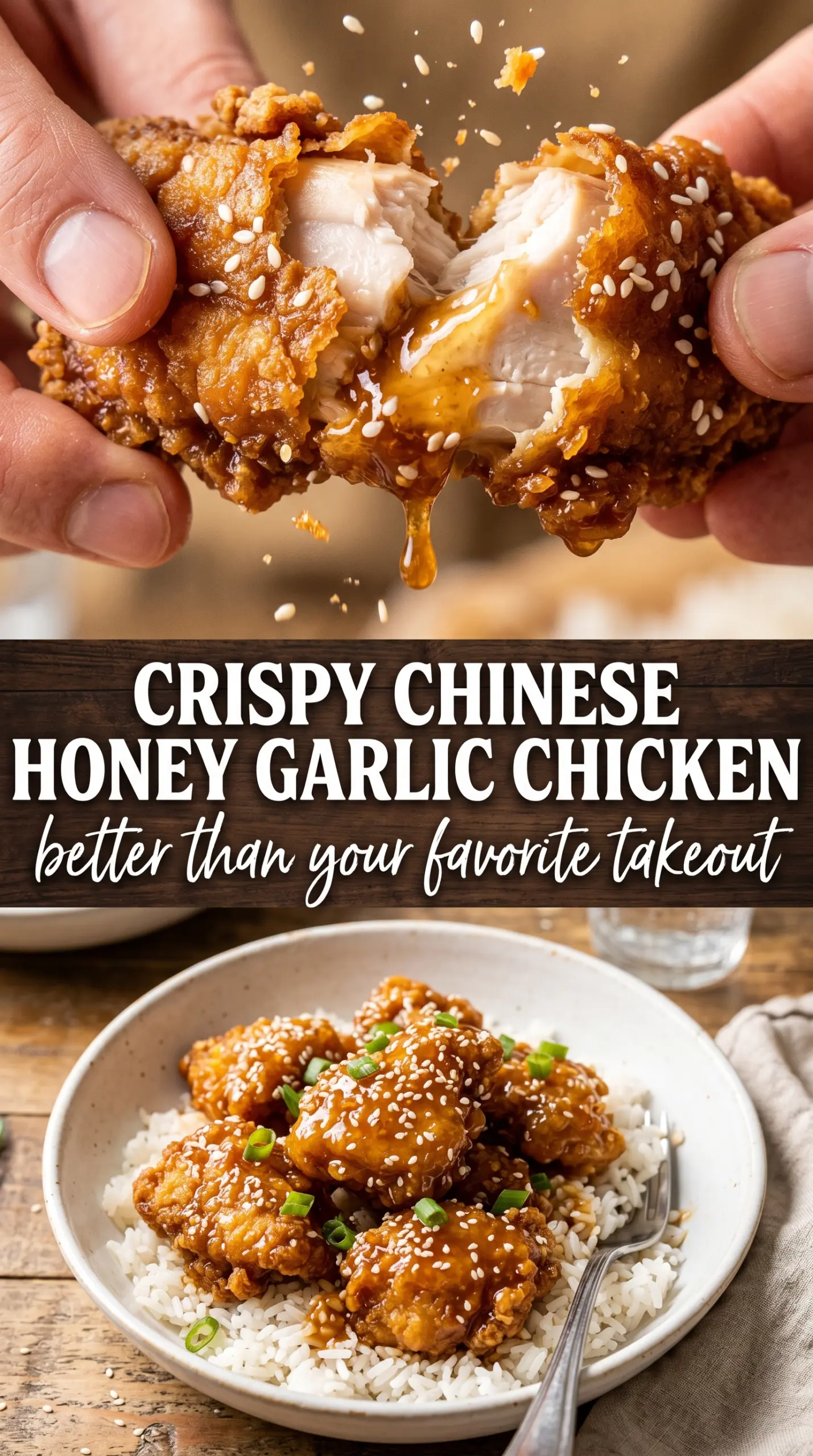
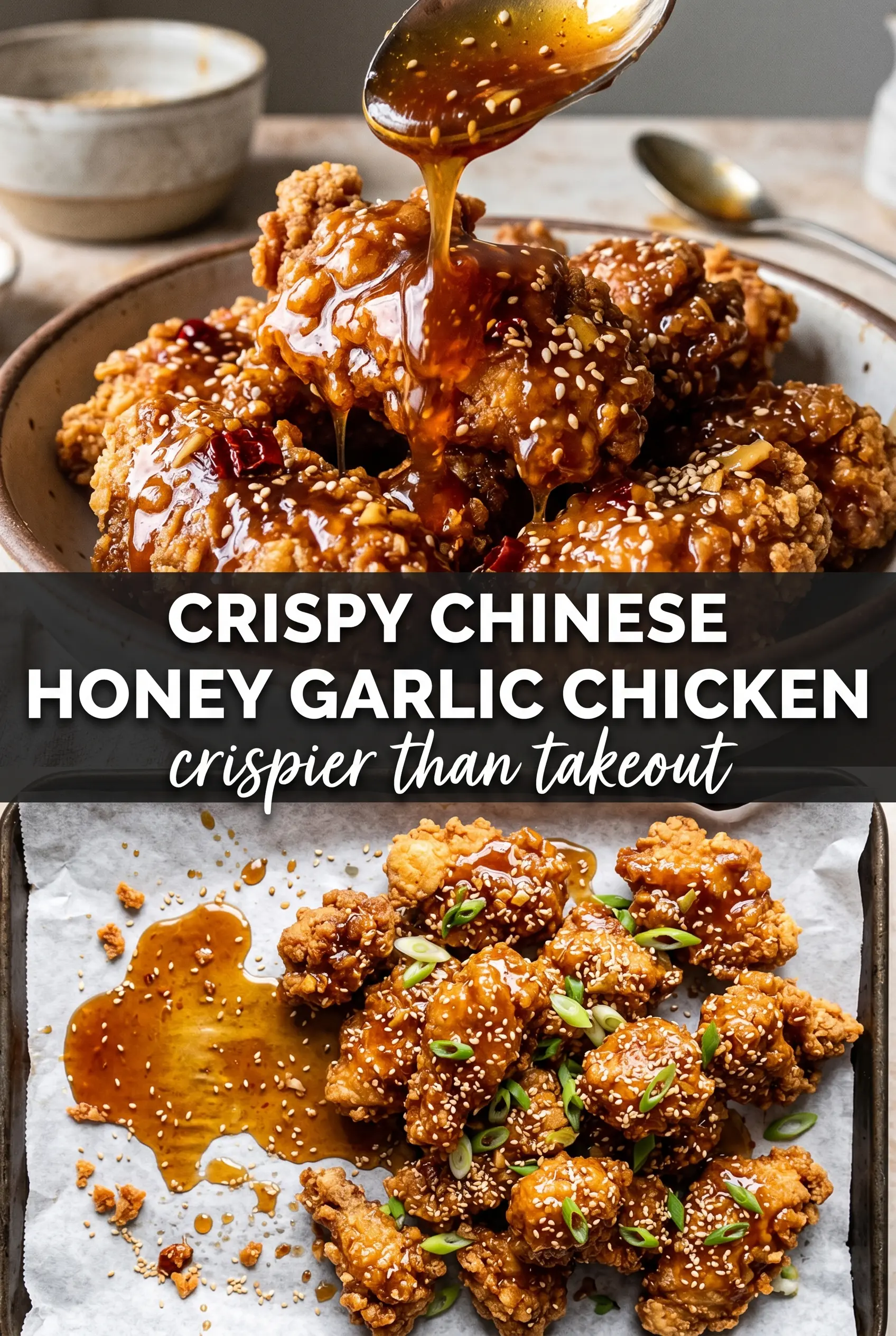
Shatteringly crisp chicken coated in a sticky honey garlic glaze has a way of disappearing from the table fast. The chicken stays crunchy under the sauce for just long enough to get glossy and lacquered, with little caramelized edges that taste like takeout done better at home. Pile it over rice and you’ve got the kind of dinner people remember.
The trick is in the coating and the sauce timing. Cornstarch lightens the dredge and helps build that brittle crust, while a quick fry at the right temperature keeps the chicken juicy instead of greasy. The sauce needs a short simmer before the slurry goes in, then just enough heat to turn thick and shiny without losing the clean garlic bite.
Below, I’ll show you how to keep the chicken crisp, how to avoid a gummy sauce, and the small swaps that still keep the whole dish balanced.
The chicken stayed crisp even after I tossed it in the sauce, and the glaze thickened up into that sticky takeout-style coating my husband kept sneaking from the pan.
Crispy Chinese Honey Garlic Chicken is the sticky, shatter-crisp dinner to pin for your next better-than-takeout night.
The Crunch Dies When the Sauce Is Too Hot
Most honey garlic chicken goes soft because the sauce gets poured over the chicken and left there while everything sits. That’s the wrong sequence if you want real crunch. Fry the chicken until the coating is deeply golden, then move fast: sauce, toss, serve. The coating should be crisp enough to sound dry when you tap it with a spoon, and the sauce should be thick enough to cling without pooling in the bowl.
- Cornstarch — This is what gives the crust that brittle, almost glassy finish. All flour alone turns heavier and less crisp. The cornstarch also helps the sauce cling later, which is why the coating still tastes substantial after tossing.
- Chicken thighs — Thighs stay juicier than breast meat during frying, and they’re more forgiving if your oil temperature dips between batches. If you want to use breast meat, cut it into even pieces and shorten the fry time by a minute or so, or it can dry out fast.
- White pepper — It adds a quiet heat that belongs in Chinese-American takeout flavors. Black pepper works in a pinch, but it reads sharper and can show up as little dark flecks in the coating.
- Rice vinegar — The sauce needs this to keep the honey from tasting flat. Don’t swap in balsamic or a strong apple cider vinegar; the flavor gets muddy. Plain white vinegar works if that’s what you have, but use a touch less because it’s more aggressive.
- Sesame oil — Add it off the heat at the end. If it cooks hard in the pan, the aroma fades and you lose the nutty finish that makes the sauce taste complete.
What Each Ingredient Is Actually Doing in This Glazed Chicken
- Chicken (the protein base) — Even-sized pieces cook uniformly. Thighs stay moister than breasts under high heat.
- Honey (the glaze sweetness) — This caramelizes on the chicken and creates shine. Don’t add too early or it burns before the chicken cooks.
- Garlic (the savory depth) — Fresh minced or sliced, it adds complexity. Cook with oil first to bloom the flavors.
- Soy sauce or tamari (the salt and umami) — This gives the glaze depth and keeps it from being just sweet. Balance with acid.
- Ginger (the warmth) — Fresh ginger adds brightness and heat. Mince finely so it distributes evenly.
- Rice vinegar or lime juice (the brightness) — This prevents the glaze from tasting one-dimensional. Add at the end to preserve freshness.
- Oil for cooking (the cook and carrier) — This helps the chicken brown and the glaze adhere. High heat creates a nice sear.
- Sesame seeds or fresh herbs (the finish) — These add texture and keep the dish from feeling incomplete. Add right before serving.
Frying, Simmering, and Tossing Without Losing the Bite
Coating the Chicken Evenly
Beat the egg first, then dredge each piece of chicken through the flour and cornstarch mixture until every surface is coated. The egg gives the dry coating something to grab, which is what keeps the crust from slipping off in the oil. Shake off the excess before frying; thick clumps turn pasty instead of crisp. The coating should look dusty and textured, not wet or gummy.
Frying in Hot Oil
Bring the oil to 375°F and fry in batches so the temperature doesn’t crash. If the oil drops too low, the chicken drinks it up and turns heavy instead of crisp. You’re looking for a deep golden color and a steady, lively sizzle. Pull the chicken as soon as it’s cooked through; overfrying means the crust gets dark before the inside is done.
Building the Honey Garlic Sauce
Combine the honey, soy sauce, garlic, and rice vinegar in a saucepan and bring it to a simmer before adding the slurry. That quick simmer wakes up the garlic and gives the sauce a more rounded flavor. Once the cornstarch slurry goes in, stir until the sauce turns glossy and thick enough to coat the back of a spoon. If it goes gluey, it cooked too long after thickening; take it off the heat as soon as it looks shiny and pourable.
Finishing the Dish Fast
Stir in the sesame oil off the heat, then toss the chicken right away while the sauce is still hot and fluid. You want every piece coated, not drowned. Serve it immediately over rice with sesame seeds and green onions so the first bite still has contrast between the crisp crust and the sticky glaze. If it sits too long, even a good crust softens, so this is a move-fast dish.
What to Change When You Want a Different Result
Gluten-Free Version
Use a gluten-free all-purpose flour blend in place of the flour, and swap the soy sauce for tamari. The crust stays crisp if the blend contains starches, though it may brown a little faster, so watch the frying color closely.
Less Sweet, More Tangy Sauce
Reduce the honey slightly and add an extra splash of rice vinegar. That gives you a brighter glaze with less candy-like finish, but the sauce won’t cling quite as thickly, so don’t cut the cornstarch slurry.
Baked Instead of Fried
You can bake the coated chicken on a well-oiled rack at a hot oven temperature until crisp and cooked through, then toss it with the sauce. The texture won’t be as shatteringly crisp as frying, but it still gives you a lighter version with a good coating.
How to Store and Reheat Leftovers
- Refrigerator: Store leftovers in an airtight container for up to 3 days. The coating softens once sauced, but the flavor holds up well.
- Freezer: The fried chicken pieces freeze better before saucing. Freeze them in a single layer, then warm and toss with fresh sauce for the best texture.
- Reheating: Reheat in a 375°F oven or air fryer until hot and crisp again. The microwave turns the coating limp and makes the sauce separate, which is the fastest way to lose what makes this dish special.
Answers to the Questions Worth Asking
Crispy Chinese Honey Garlic Chicken
Ingredients
Equipment
Method
- Whisk together cornstarch, all-purpose flour, garlic powder, salt, and white pepper in a bowl.
- Dip the bite-sized chicken pieces in the beaten egg, then dredge in the flour mixture until evenly coated.
- Heat vegetable oil in a skillet to 375°F, maintaining a steady temperature as you fry.
- Fry the chicken in batches for 5-6 minutes until deep golden and cooked through, then drain on a rack or paper towels.
- Combine honey, soy sauce, minced garlic, and rice vinegar in a saucepan and bring to a simmer.
- Stir in the cornstarch slurry and cook 2-3 minutes, stirring until the sauce thickens and turns glossy.
- Remove from the heat and stir in sesame oil.
- Toss the crispy chicken in the honey garlic sauce until fully coated and the surface looks sticky and shiny.
- Serve over steamed rice and top with sesame seeds and green onions.