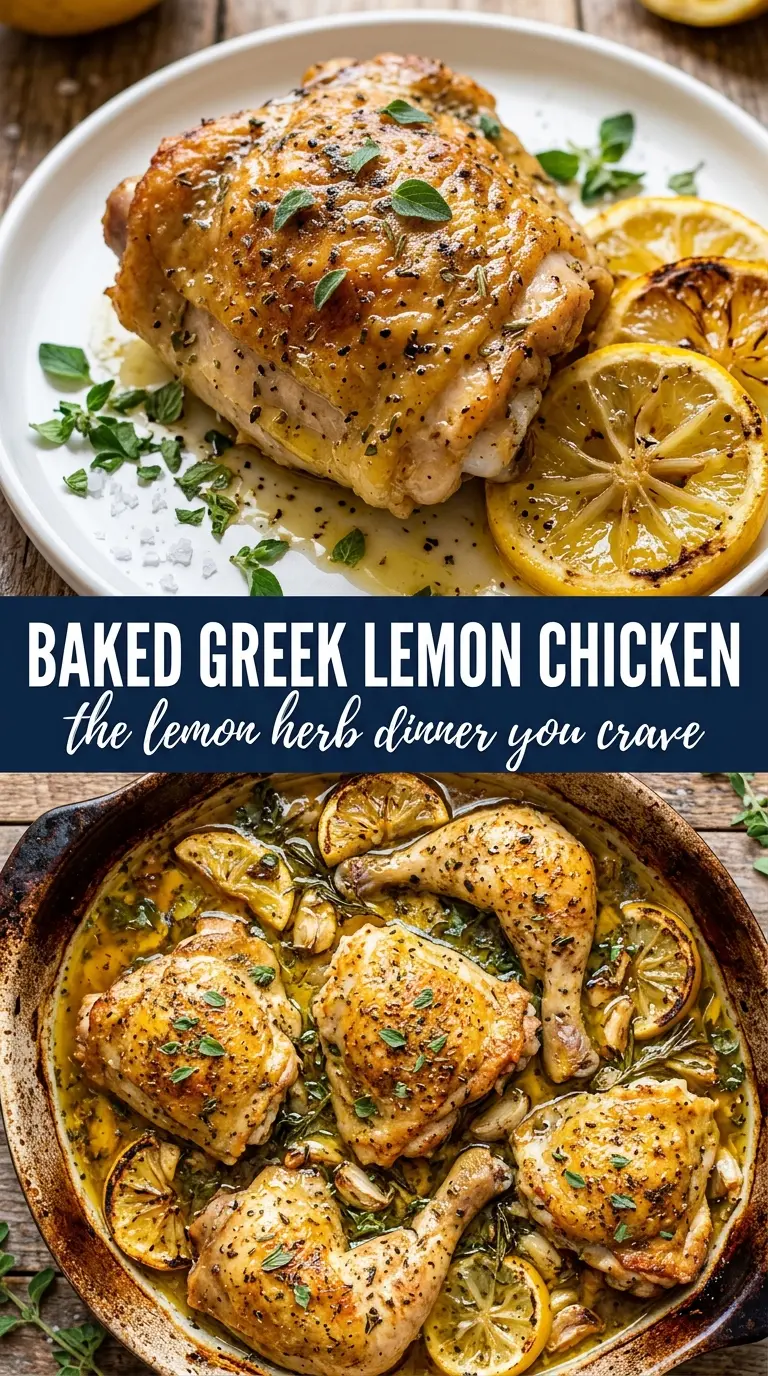
Golden baked Greek lemon chicken earns its place on the table because the skin turns deeply bronzed while the meat stays juicy and the pan drippings pick up garlic, oregano, and lemon in all the right ways. The chicken roasts in a hot oven, so the outside actually browns instead of steaming, and the broth underneath keeps the juices in the pan from drying out before the meat is cooked through.
The marinade does the heavy lifting here. Lemon juice brings brightness, olive oil carries the herbs, and a little smoked paprika gives the chicken a warmer color without turning the dish into barbecue by accident. Thin lemon slices go into the pan, not just for looks, but because they soften and caramelize in the drippings, which gives you a sauce-like finish without any extra work.
Below, I’ve included the timing cue that matters most, the ingredient swap that keeps the chicken from tasting flat, and the small adjustment that helps the skin stay crisp even after basting.
The lemon-herb marinade soaked into the chicken beautifully, and the pan juices turned into the best part of dinner. My skin came out crisp, not soggy, even after I basted it halfway through.
Save this baked Greek lemon chicken for the night you want crisp skin, caramelized lemon slices, and a pan sauce that tastes like it took much longer than it did.
The One Move That Keeps the Chicken Juicy and the Skin Crisp
The biggest mistake with lemon chicken is crowding too much liquid around the meat before it goes into the oven. That turns the chicken skin soft before it ever has a chance to brown. Here, the broth stays in the pan, not over the top of the chicken, so the oven can do two jobs at once: crisp the skin and turn the drippings into something worth spooning over every bite.
The other thing that matters is the roast temperature. At 425°F, the fat renders, the skin tightens, and the lemon slices soften into caramelized edges instead of just drying out. If your chicken looks pale at 35 minutes, keep going until the skin is a deep golden color and the juices run clear near the bone.
- Bone-in chicken pieces — These give you better flavor and a more forgiving cook than boneless breasts. Skin-on pieces are best if you want that roasted finish.
- Fresh lemon juice and zest — Juice gives brightness, but zest is what makes the lemon flavor taste round instead of sharp. Bottled juice works in a pinch, but it tastes flatter.
- Olive oil — This helps the herbs cling and keeps the marinade from feeling thin. Use a decent one here since it’s one of the main flavors.
- Chicken broth — Don’t swap this for plain water unless you have to. Broth gives the pan juices more body and keeps the final spoonfuls from tasting washed out.
What Each Ingredient Is Actually Doing in This Baked Chicken
- Chicken breasts (the protein) — Pat dry so they brown instead of steam. Even thickness ensures uniform cooking.
- Sauce or cooking liquid (the moisture keeper) — This prevents the chicken from drying out in the oven. Balance richness with acid.
- Garlic (the aromatic foundation) — Fresh minced garlic mellows and becomes sweet when baked. Don’t brown it or it turns bitter.
- Cream or wine (optional richness) — This adds luxury and moisture. Don’t let it boil hard or it can break and separate.
- Lemon or white wine (the brightness) — Acid prevents heavy sauces from tasting flat. Balance is essential.
- Fresh herbs (basil, thyme, parsley) — Add some during cooking and some after so you get both cooked and fresh flavors.
- Cheese (optional richness) — Parmesan or feta adds depth. Don’t overdo it or the dish becomes heavy.
- Proper oven temperature (375-400°F) — This temperature bakes chicken through without drying the edges. Use a thermometer for 165°F.
How to Roast It So the Pan Drippings Turn Into Sauce
Building the Marinade
Whisk the olive oil, lemon juice, zest, garlic, oregano, thyme, smoked paprika, salt, and pepper until the mixture looks slightly emulsified and smells sharp and herbaceous. Coat the chicken well and let it sit for at least 30 minutes so the surface picks up flavor. Longer than that is fine, but don’t let it sit for hours in the acid or the texture can get a little soft on the outside.
Arranging the Pan
Set the chicken skin-side up in a large roasting pan or baking dish and keep the pieces in a single layer. Pour the broth around the chicken, not over it, and tuck the lemon slices beneath and between the pieces so they can caramelize in the hot fat. If the pan is packed too tightly, the chicken steams and the skin loses its edge.
Roasting and Basting
Roast until the skin is deeply golden and the thickest pieces register 165°F at the bone. About halfway through, spoon a little of the pan juice over the chicken, but don’t drown the skin. A light baste adds color and flavor; too much liquid just softens the crust you worked to build.
Finishing with the Drippings
Let the chicken rest a few minutes, then spoon the caramelized drippings over the top before serving. That final spoonful is where the lemon slices, garlic, broth, and rendered chicken fat come together. Fresh oregano at the end wakes everything up and keeps the dish from tasting heavy.
How to Adapt This for Different Dinners and Diets
Use all chicken thighs for extra-rich meat
Thighs stay juicier and handle the high heat well, so this is the best swap if you want a more forgiving roast. The flavor gets a little richer, and the cooking time may run slightly shorter if the pieces are smaller.
Make it dairy-free and naturally gluten-free
As written, this dish already fits both of those needs. Serve it with potatoes, rice, or a crisp salad and you’ve got a complete meal without changing a thing.
Add potatoes to turn it into a one-pan dinner
Chunked Yukon Gold or baby potatoes can go into the pan with the broth and chicken. They soak up the lemon-garlic drippings and roast at the same pace, but cut them small enough that they’re tender by the time the chicken is done.
Swap the dried herbs for fresh when you have them
Use about three times as much fresh oregano and thyme as dried, then add most of it near the end so it stays bright. Fresh herbs taste cleaner, but dried herbs hold up better in the marinade, which is why I still like the original mix for weeknights.
Storage and Reheating
- Refrigerator: Store leftovers in an airtight container for up to 4 days. The skin softens a bit, but the flavor holds up well.
- Freezer: Freeze the chicken and drippings together for up to 2 months. Thaw overnight in the fridge so the lemon flavor doesn’t turn harsh from rushed reheating.
- Reheating: Warm covered in a 325°F oven until heated through, then uncover for the last few minutes to bring back some texture. The mistake to avoid is blasting it in the microwave, which makes the skin rubbery and dries out the edges.
Answers to the Questions Worth Asking
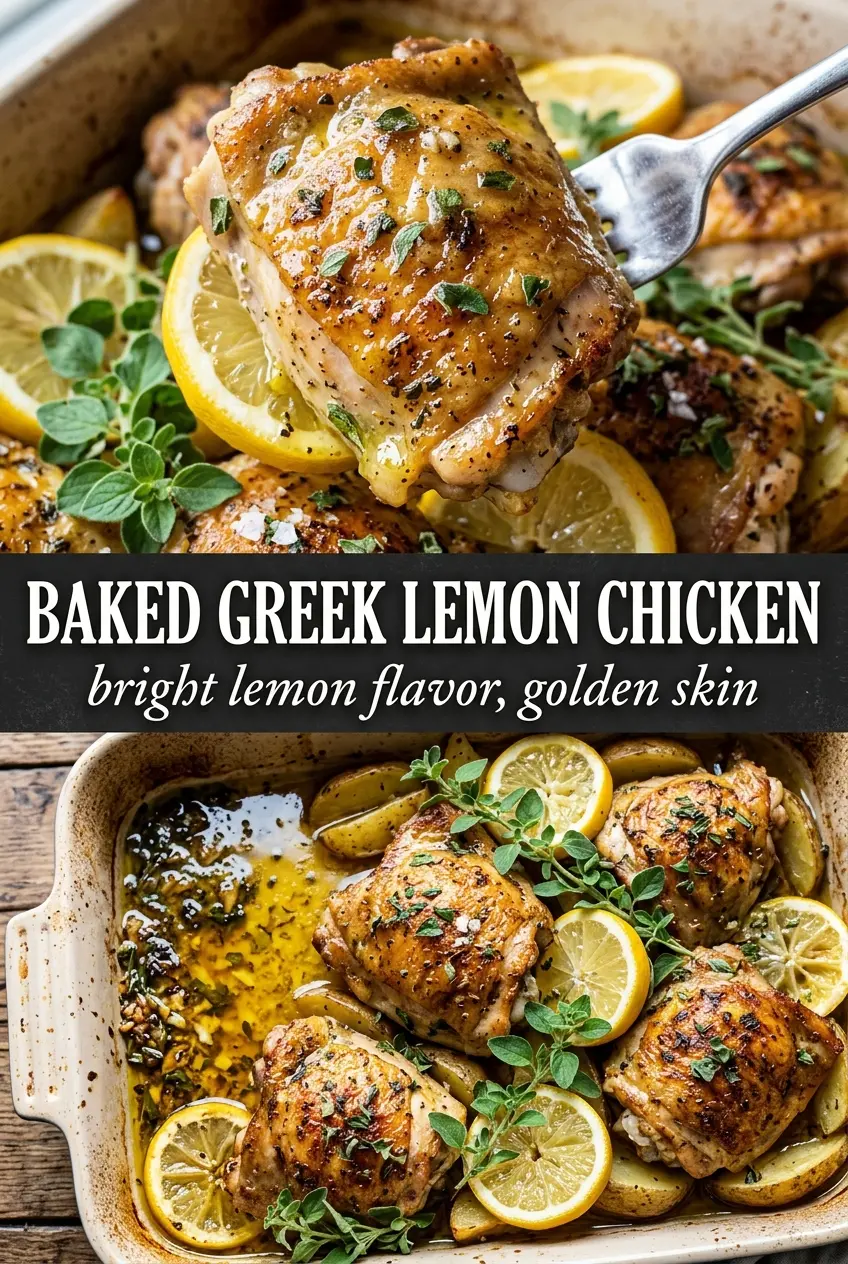
Baked Greek Lemon Chicken
Ingredients
Equipment
Method
- Whisk olive oil, lemon juice, lemon zest, garlic, dried oregano, dried thyme, smoked paprika, salt, and cracked black pepper until evenly combined. The mixture should look glossy and fragrant with visible herb flecks.
- Add the chicken to the marinade and coat thoroughly, then marinate for at least 30 minutes. Keep it at refrigerator temperature so the chicken stays cold while it absorbs the flavors.
- Preheat the oven to 425°F, then arrange the marinated chicken skin-side up in a large roasting pan or baking dish. Position the pieces with space around them so the skin browns rather than steams.
- Pour the chicken broth around the chicken, then tuck the lemon slices around and under the pieces. The lemon should be partially visible so it can caramelize in the drippings.
- Roast for 40-45 minutes, basting with the pan juices once halfway through. Roast until the skin is deeply golden and the internal temperature reaches 165°F, about the final 10 minutes for best browning.
- Spoon the caramelized pan drippings over the chicken before serving. This adds a glossy finish and concentrates the lemon-oregano flavor.
- Garnish with fresh oregano just before serving. Sprinkle lightly so the green flecks stay bright against the golden skin.