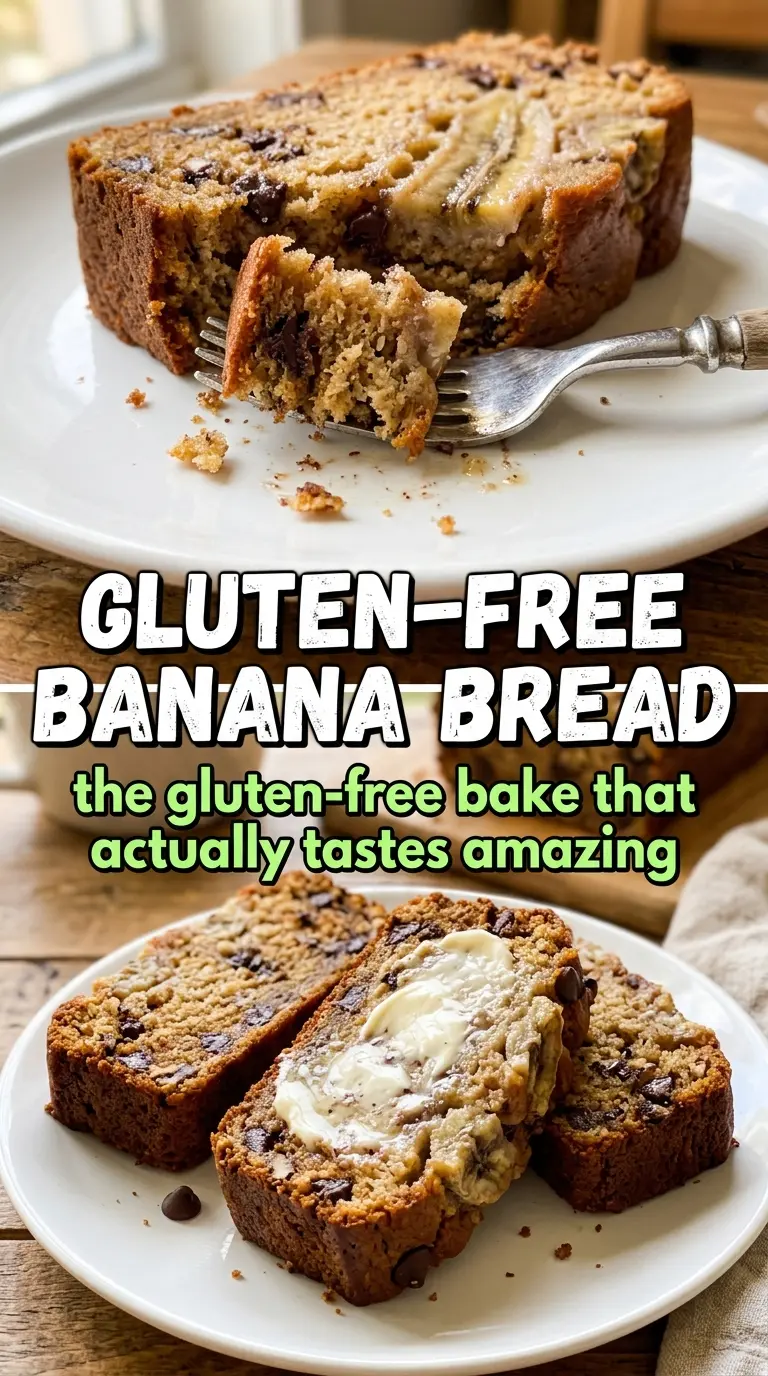
Golden banana bread that slices cleanly and stays tender for days is hard to beat, especially when it doesn’t come with the dry, crumbly texture so many gluten-free loaves fall into. This version has a deep banana flavor, a clean browned crust, and a moist crumb that holds together without needing a stack of specialty flours. It’s the kind of loaf you cut into once, then keep coming back to for “just one more” slice.
The trick is leaning on almond flour for richness and moisture, then using a small amount of tapioca starch to give the loaf enough structure to stay light instead of heavy. The banana-to-flour ratio also matters here. The batter looks looser than a standard banana bread batter, and that’s exactly what you want. Gluten-free quick breads often seem underbaked when they’re actually just not cooled long enough to set, so patience at the end matters as much as the mixing.
Below, I’ve included the detail that keeps this loaf from collapsing in the middle, plus a few swaps that work when you need dairy-free, nut-free, or slightly sweeter results.
The loaf came out so moist and the middle set up perfectly after cooling. I usually end up with gummy gluten-free banana bread, but this one sliced cleanly and the almond flour gave it a great texture.
Save this gluten-free banana bread for the days when you want a moist almond flour loaf with a clean golden crust.
The Reason This Loaf Stays Moist Without Turning Dense
The biggest mistake in gluten-free banana bread is treating it like a standard wheat loaf. Almond flour behaves differently. It brings fat and tenderness, but it won’t give you the same structure that gluten does, so the loaf needs help from eggs and a little tapioca starch to hold together without becoming heavy. If you skip that support, the center can sink or bake up gummy.
The other thing that trips people up is overbaking it out of fear. Almond flour browns faster than wheat flour, which can make the top look done before the middle has fully set. That’s why the foil tent matters here. It protects the crust while the loaf finishes baking through. Pull it when the center is set and a tester comes out clean or with a few moist crumbs, not wet batter.
- Almond flour — This is the backbone of the loaf. Use finely ground blanched almond flour, not almond meal, or the texture turns coarse and the crumb gets gritty.
- Tapioca starch or arrowroot — This adds just enough lift and elasticity to keep the bread from feeling like baked banana pudding. Cornstarch can work in a pinch, but the result is a little less tender.
- Eggs — These provide the structure that gluten would normally handle. There isn’t a great replacement here if you want the same sliceable texture, which is why this recipe works best as written for egg-eaters.
- Coconut oil or butter — Either one works. Butter gives a slightly richer flavor; coconut oil keeps it dairy-free. Both should be melted, not hot, so they blend smoothly without cooking the eggs.
- Very ripe bananas — The browner the better. Underripe bananas don’t mash smoothly and won’t give you the sweetness or moisture this loaf depends on.
What Each Ingredient Is Actually Doing in This Banana Bread
- Bananas (the moisture and sweetness) — Use very ripe bananas for maximum sweetness and moisture. Overripe bananas are actually better here.
- Flour (the structure) — Don’t overmix or the bread becomes tough. Mix just until dry ingredients are incorporated.
- Sugar (the sweetness) — Ripe bananas are already sweet, so you might reduce sugar slightly. Adjust to taste.
- Butter or oil (the richness) — This creates tender crumb and carries flavors. Room temperature butter creams better.
- Eggs (the binder and lift) — These hold everything together and help the bread rise. Use room temperature eggs.
- Leavening (baking soda or powder) — This creates rise. Too much makes it taste bitter.
- Vanilla extract (the flavor enhancer) — This brings out the banana flavor. Use quality vanilla extract.
- Optional mix-ins (nuts, chocolate, or dried fruit) — These add texture and prevent the bread from being one-dimensional.
Mixing It So the Middle Sets and the Crust Doesn’t Burn
Start With the Wet Ingredients
Mash the bananas until mostly smooth, then whisk them with the eggs, melted oil, honey, and vanilla. You want the mixture glossy and even, with no streaks of egg white left behind. If the oil is too hot, it can scramble the eggs; let it cool for a minute before you add it. This base should look loose and a little frothy, not thick like cake batter.
Fold in the Dry Ingredients
Add the almond flour, tapioca starch, baking soda, cinnamon, and salt, then stir just until no dry pockets remain. Don’t beat it hard. Almond flour batter can look a bit grainy even when it’s mixed correctly, so go by the absence of dry flour rather than trying to make it silky. The batter will be wetter than a standard loaf batter, and that’s a good sign.
Bake Until the Center Is Set, Not Just Brown
Pour the batter into a parchment-lined loaf pan and bake at 350°F. Start checking around 50 minutes, because the top can brown ahead of the center. If the loaf is getting dark early, lay foil loosely over the top so the crust doesn’t overcook while the inside finishes. The loaf is done when the top is deep golden, the edges have pulled slightly from the pan, and a toothpick comes out clean or with a few moist crumbs.
Cool It All the Way Down
This is the part people rush, and it’s where gluten-free banana bread often goes wrong. Let the loaf cool completely in the pan so the crumb can finish setting. If you slice it too soon, it can seem underbaked and gummy even when the oven time was perfect. Once fully cool, it lifts out cleanly and cuts into neat slices instead of crumbling apart.
How to Adapt This Gluten-Free Banana Bread for Different Needs
Dairy-Free Loaf
Use coconut oil instead of butter and the loaf stays fully dairy-free without changing the texture. The coconut flavor is faint once it bakes, but if you want a more neutral finish, use refined coconut oil. The loaf still bakes up moist and tender.
Slightly Sweeter Banana Bread
Use maple syrup for a rounder flavor or honey for a more classic banana bread sweetness. You can add another tablespoon if your bananas are only moderately ripe, but don’t push it too far or the loaf starts baking up too wet. Extra sweetener softens the crumb a little.
Banana Bread With Add-Ins
Fold in chocolate chips, chopped walnuts, or pecans after the batter comes together. Keep the total add-ins to about 3/4 cup so the loaf still rises and slices cleanly. Too many mix-ins weigh down the center.
Storage and Reheating
- Refrigerator: Store tightly wrapped for up to 5 days. The crumb stays moist, though the chilled slices firm up a bit.
- Freezer: This freezes well. Slice first, wrap each piece, and freeze for up to 3 months so you can thaw one piece at a time.
- Reheating: Warm slices in a toaster oven or low oven until just heated through. Don’t blast it in the microwave for too long or the almond flour crumb can turn rubbery.
Answers to the Questions Worth Asking
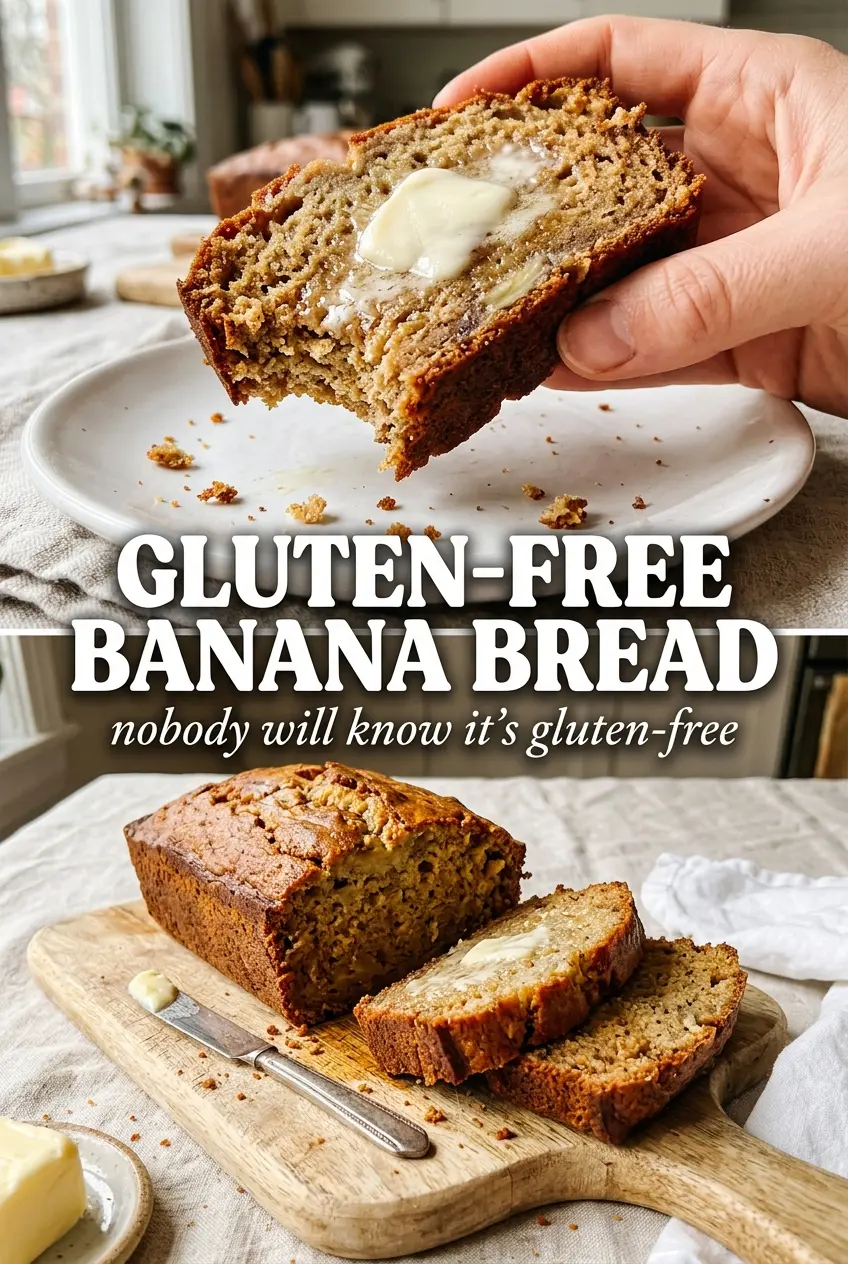
Gluten-Free Banana Bread
Ingredients
Equipment
Method
- Preheat the oven to 350°F and line a 9x5 loaf pan with parchment paper.
- Bake in the center rack so the loaf cooks evenly and the crust develops a deep golden color.
- Whisk mashed bananas, eggs, melted oil, honey, and vanilla together until smooth.
- Stir in almond flour, tapioca starch, baking soda, cinnamon, and salt until fully combined, scraping the bottom and sides to eliminate dry pockets.
- Pour the batter into the prepared pan; it will be wetter than traditional banana bread, so level the top gently.
- Bake at 350°F for 55–65 minutes until the top is deeply golden and a toothpick comes out clean.
- Check at 50 minutes and tent loosely with foil if browning is too fast while the center finishes baking.
- Cool completely in the pan before slicing, since gluten-free breads need full cooling time to set.