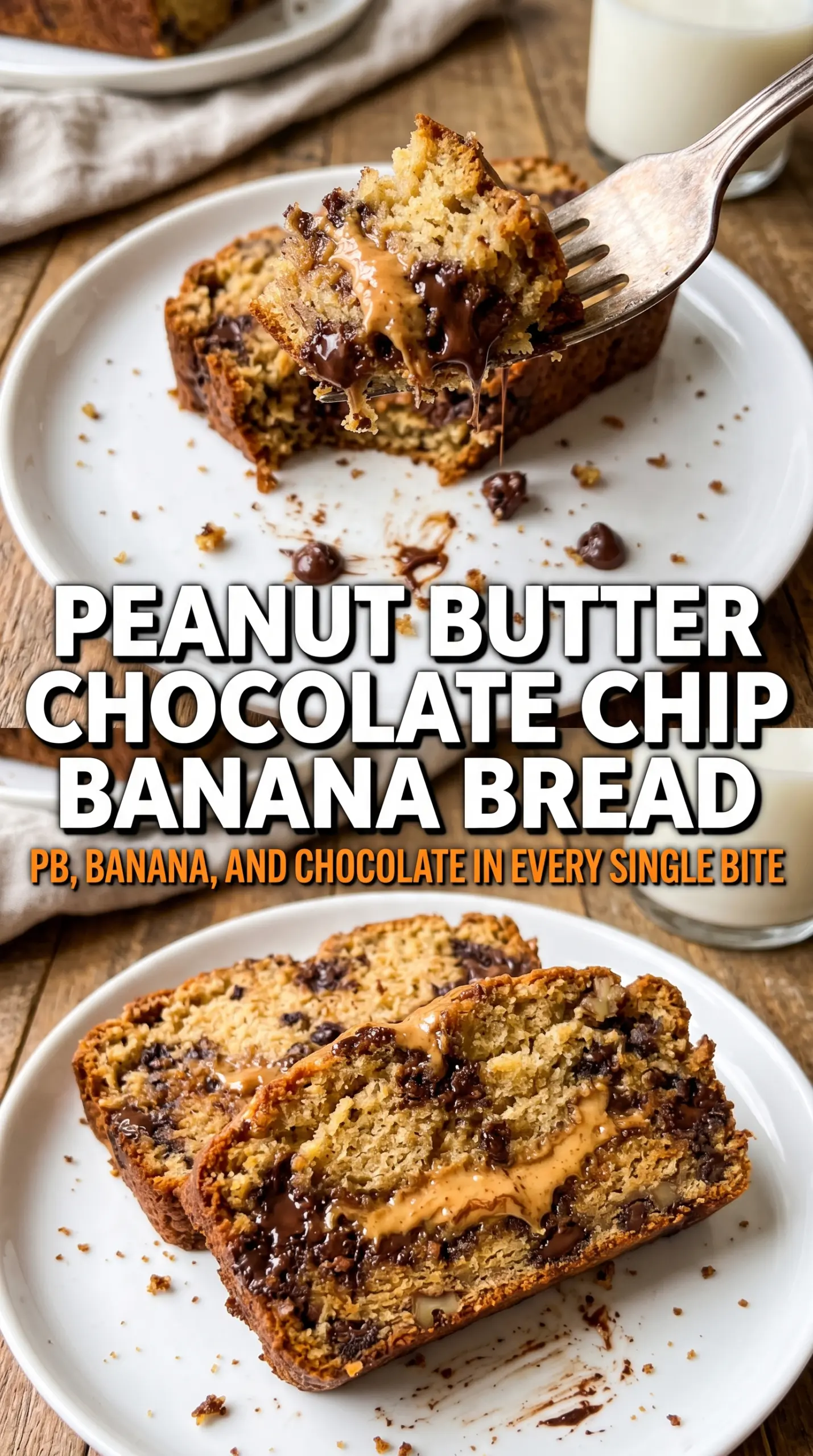
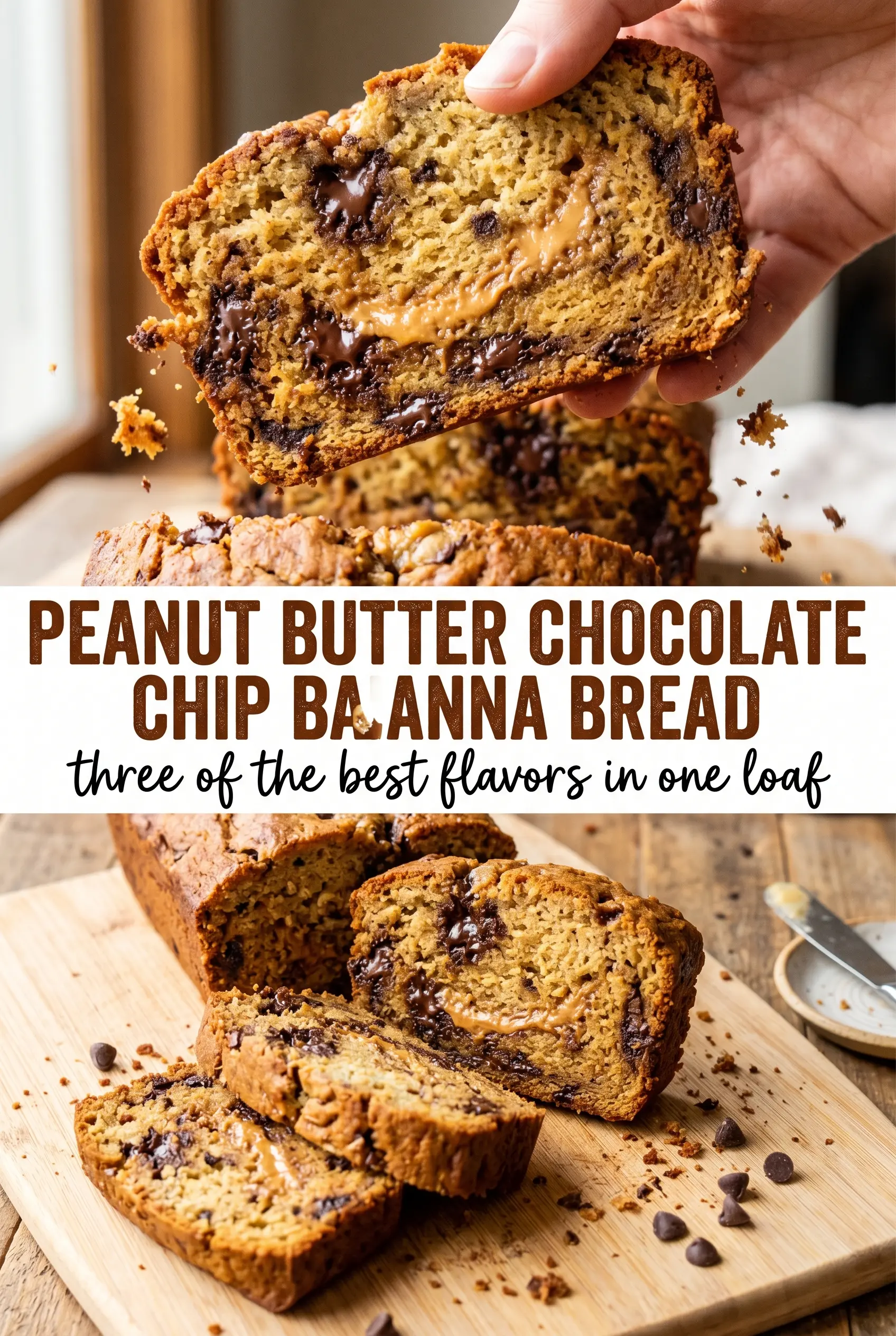
Peanut butter chocolate chip banana bread has the kind of soft, rich crumb that makes a plain loaf feel unnecessary. The bananas keep it moist, the peanut butter adds depth without turning it heavy, and the chocolate chips melt into little pockets that stay gooey long after the loaf cools. A good slice should hold together cleanly, but still give a little when you press it.
What makes this version work is the balance. There’s enough peanut butter in the batter to flavor every bite, but not so much that the loaf turns dense or greasy. The melted butter keeps the texture tender, while the mashed bananas bring sweetness and moisture so the bread doesn’t dry out during its long bake. The extra swirl on top isn’t just for looks either; it creates those salty, creamy streaks that make each slice taste bakery-worthy.
Below, I’ve included the part that matters most: how to keep the loaf from baking up gummy in the center, how to get that peanut butter swirl to sit on top instead of disappearing, and the swaps that still give you a solid loaf when you’re working with what’s in the pantry.
The peanut butter stayed swirled on top and the chocolate chips melted into the middle without sinking. I baked it the full 65 minutes and it came out moist but not gummy. My kids ate half the loaf before it cooled.
Save this peanut butter chocolate chip banana bread for the days when you want a soft loaf with a peanut butter swirl and melty chocolate in every slice.
The Trick to Keeping the Peanut Butter Swirl on Top Instead of Losing It
Once peanut butter gets mixed too deeply into banana bread batter, it disappears into the loaf and you lose the contrast that makes this recipe worth baking. The batter is already fairly thick, so the swirl has to be added last and kept loose enough to streak through the top without sinking all the way down. A spoonful here and there is better than one big blob in the center.
The other thing that matters is oven temperature. Banana bread needs time to set in the middle, and if the heat runs too high, the edges brown before the center is ready. That’s how you end up with a loaf that looks done but still smears on the knife. Bake until the top is deeply golden and a toothpick comes out with a few moist crumbs, not wet batter.
- Ripe bananas — Use bananas with plenty of brown spotting. They mash smoothly and bring the sweetness and moisture this loaf depends on. Under-ripe bananas won’t give you the same flavor or soft crumb.
- Creamy peanut butter — Standard creamy peanut butter works best here because it blends into the batter without getting grainy. Natural peanut butter can work, but stir it until fully smooth first or the oil separation will make the batter uneven.
- Butter — Melted butter gives the loaf a richer, more bakery-style texture than oil alone. It also helps the chocolate chips and peanut butter flavor land with a little more depth. If you need a dairy-free swap, use a neutral oil in the same amount, knowing the crumb will be a touch less flavorful.
- Chocolate chips — Dark or semi-sweet chips both work. Dark chips give the loaf a less sweet finish and stand up better against the peanut butter. If you only have milk chocolate, use it, but the loaf will read sweeter.
- Extra peanut butter for swirling — This is what creates the top layer people notice first. Warm it just enough so it dollops easily, but don’t thin it out too much or it will run straight into the batter instead of sitting on top.
What Each Ingredient Is Actually Doing in This Banana Bread
- Bananas (the moisture and sweetness) — Use very ripe bananas for maximum sweetness and moisture. Overripe bananas are actually better here.
- Flour (the structure) — Don’t overmix or the bread becomes tough. Mix just until dry ingredients are incorporated.
- Sugar (the sweetness) — Ripe bananas are already sweet, so you might reduce sugar slightly. Adjust to taste.
- Butter or oil (the richness) — This creates tender crumb and carries flavors. Room temperature butter creams better.
- Eggs (the binder and lift) — These hold everything together and help the bread rise. Use room temperature eggs.
- Leavening (baking soda or powder) — This creates rise. Too much makes it taste bitter.
- Vanilla extract (the flavor enhancer) — This brings out the banana flavor. Use quality vanilla extract.
- Optional mix-ins (nuts, chocolate, or dried fruit) — These add texture and prevent the bread from being one-dimensional.
How to Build the Batter So It Stays Tender and Not Gummy
Start with the Wet Ingredients
Whisk the mashed bananas, peanut butter, melted butter, sugar, eggs, and vanilla until the mixture looks smooth and glossy. This step matters because the peanut butter needs to be fully dispersed before the flour goes in; if you leave streaks now, they’ll turn into pockets later. The batter should look thick but pourable, with no obvious banana chunks unless you want a more rustic texture.
Fold the Dry Ingredients Just Until They Disappear
Add the flour, baking soda, and salt, then fold gently until the last streaks of flour vanish. Overmixing tightens the crumb and gives you a loaf that bakes up dense instead of soft. Stop as soon as the batter looks uniform, then add the chocolate chips and fold only enough to spread them through the batter.
Swirl, Bake, and Check the Center the Right Way
Spoon the batter into a greased 9×5 loaf pan, then dollop the extra peanut butter across the top and drag a knife through it a few times. You want visible streaks, not a fully blended top. Bake at 350°F until the loaf is deep golden and a tester comes out with a few moist crumbs. If the top is browning too quickly before the center is done, tent it loosely with foil for the last stretch of baking.
Make It Dairy-Free
Swap the butter for neutral oil in the same amount. You’ll lose a little of the buttery aroma, but the loaf will still stay moist and slice nicely. Use a peanut butter with a smooth texture so the batter doesn’t separate.
Use Natural Peanut Butter
Natural peanut butter works if it’s stirred completely smooth first. It gives a more pronounced roasted peanut flavor, but the loaf can bake up a little less rich because natural versions usually have less added sugar and stabilizer. If it looks oily or separated, keep stirring before measuring.
Make It Less Sweet
Use dark chocolate chips instead of semi-sweet and cut the sugar slightly if your bananas are very ripe. The loaf will taste more peanut-forward and less dessert-like, which works well for breakfast. Don’t cut the sugar too much or the texture starts to dry out.
Storage and Reheating
- Refrigerator: Store tightly wrapped for up to 4 days. The loaf will firm up a bit in the fridge, especially because of the peanut butter.
- Freezer: Freezes well. Wrap the fully cooled loaf or individual slices in plastic and then foil, and freeze for up to 2 months.
- Reheating: Warm slices in the microwave for 10 to 15 seconds or in a toaster oven until just heated through. Too much heat dries out the crumb and makes the chocolate chips stiff instead of soft.
Questions I Get Asked About This Recipe
Peanut Butter Chocolate Chip Banana Bread
Ingredients
Equipment
Method
- Preheat the oven to 350°F and grease a 9x5 loaf pan.
- Whisk mashed bananas, peanut butter, melted butter, sugar, eggs, and vanilla together until smooth and combined.
- Fold in flour, baking soda, and salt until just combined, then fold in chocolate chips.
- Pour the batter into the pan and dollop the extra peanut butter across the top—swirl with a knife.
- Bake for 60–70 minutes until deeply golden and a toothpick comes out with just a few moist crumbs.
- Cool in the pan for 15 minutes before turning out.
- Slice only when fully cooled for clean slices and a set peanut butter swirl.