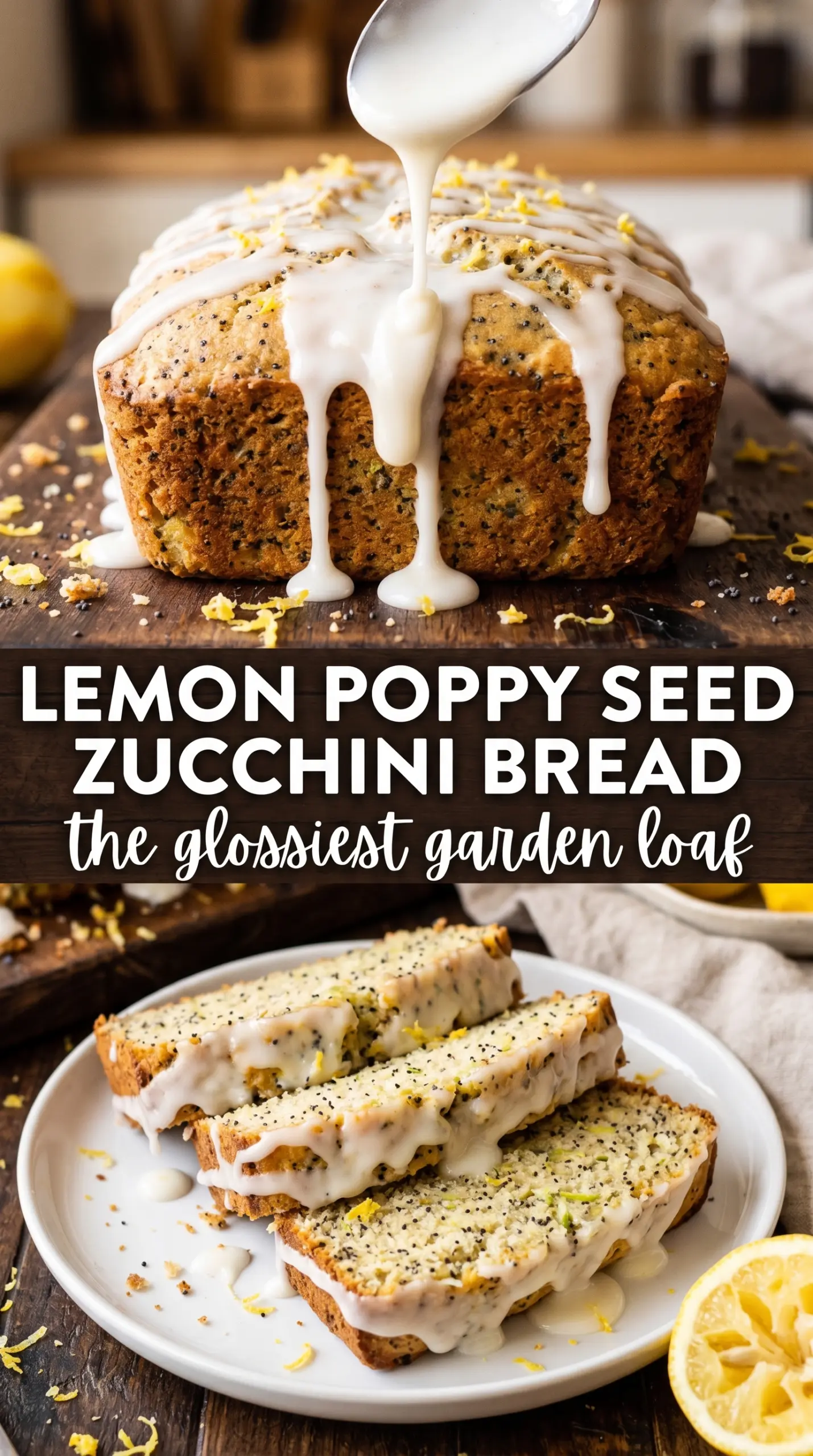
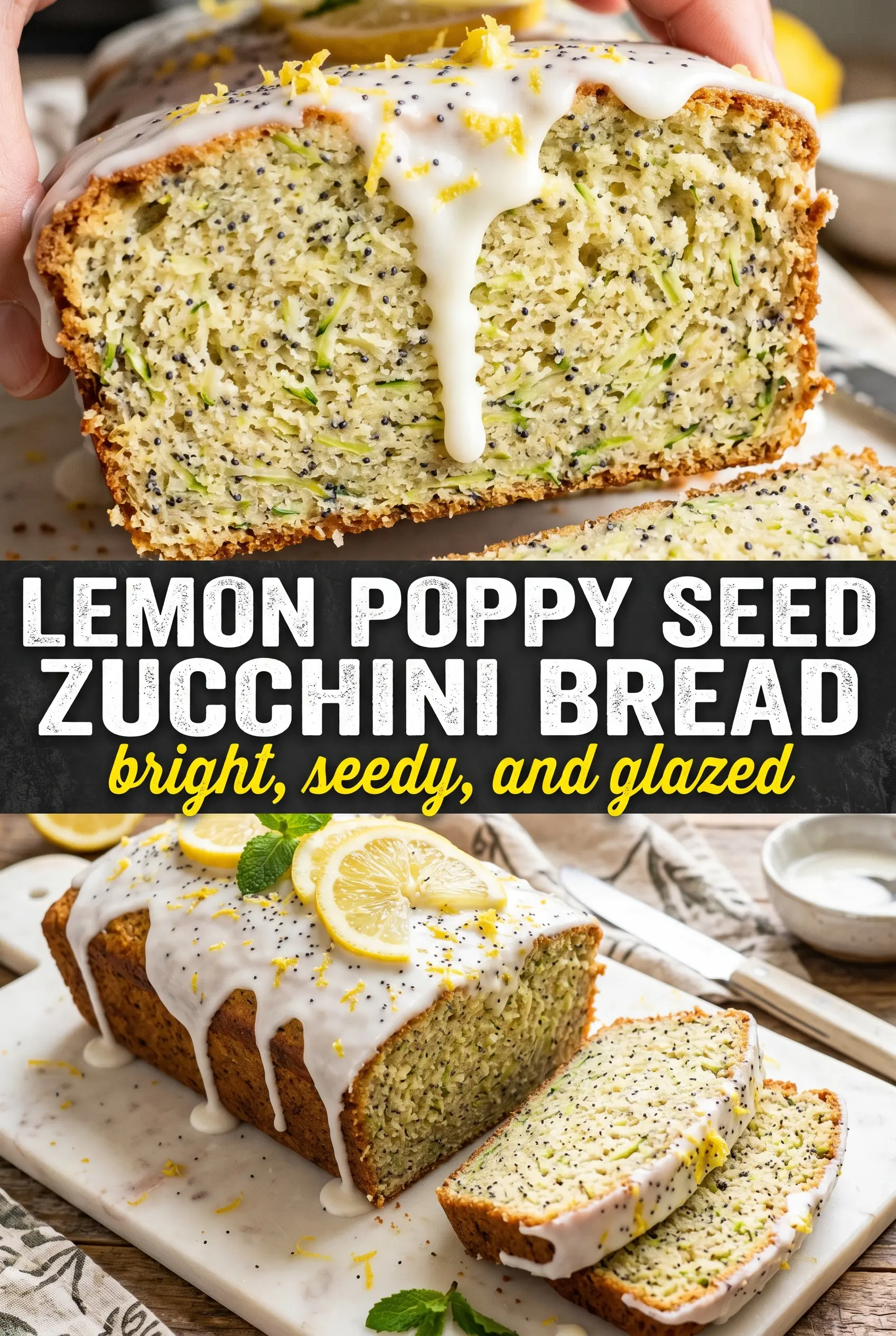
Lemon poppy seed zucchini bread has a way of tasting brighter than it has any right to. The crumb stays soft and tender from the yogurt and zucchini, while the lemon zest and juice keep every slice awake instead of heavy. The poppy seeds add just enough crunch to keep the loaf interesting, and the glaze on top pulls the whole thing into breakfast territory without making it feel like dessert wearing a disguise.
The detail that matters most here is the zucchini prep. It has to be grated fine and squeezed dry, or the loaf turns damp in the middle and loses that clean, even crumb. The other thing that keeps this recipe steady is the balance of fat and acidity: oil gives a soft texture, yogurt adds structure, and lemon juice keeps the flavor sharp enough to cut through the sweetness.
Below, you’ll find the small technique choices that keep the loaf from sinking, plus a few smart swaps if you need to adjust for what’s in your kitchen.
The glaze soaked into the top just enough, and the loaf stayed incredibly moist without being dense. My daughter kept picking out the little poppy seeds and called it “the lemon confetti bread.”
This lemon poppy seed zucchini bread is the kind of loaf that disappears slice by slice, especially once the glossy glaze sets on top.
The Reason This Loaf Stays Tender Without Turning Wet
Zucchini bread fails in one of two ways: it dries out, or it turns gummy in the center. This version avoids both by treating the zucchini as moisture support, not the main event. Once it’s grated, it gets squeezed dry enough to stop excess water from pooling in the batter, but not so aggressively that it loses all softness.
The yogurt does important work here too. It gives the crumb a little tang and keeps the loaf from feeling heavy, especially because lemon juice is already bringing acid to the batter. If you’ve ever had quick bread with a tight, almost rubbery texture, it was probably overmixed or overloaded with liquid. This batter should still look a little rough when the dry ingredients go in.
- Zucchini — Grate it fine and squeeze it in a clean towel or several layers of paper towel. You want it dry enough that it doesn’t drip, but still soft and pliable. Don’t pack it into the measuring cup after squeezing or you’ll add too much back in.
- Greek yogurt — Full-fat yogurt gives the best texture, but plain regular yogurt works in a pinch. Sour cream is the closest swap if that’s what you have; it brings the same moisture and tang, just with a slightly richer finish.
- Lemon zest and juice — The zest carries the real lemon flavor. Juice sharpens it. If you only use juice, the loaf tastes flat. If your lemons are small, zest three instead of two and keep the juice amount the same.
- Poppy seeds — They’re not just decoration here. They add a little crunch and help this read as a true poppy seed loaf instead of plain lemon bread. Stir them into the dry ingredients so they distribute evenly without sinking.
What Each Ingredient Is Actually Doing in This Zucchini Bread
- Zucchini (the moisture keeper) — Grate finely and squeeze out excess moisture. The remaining moisture adds tenderness without making it soggy.
- Flour (the structure base) — Don’t overmix or the bread becomes tough. Mix just until dry ingredients are incorporated.
- Sugar (the sweetness and browning) — This tenderizes the bread and helps create browning. Adjust based on other ingredients.
- Oil or butter (the richness) — This creates tender crumb. Oil makes moister breads; butter makes them richer.
- Eggs (the binder) — These hold everything together and add structure. Use room temperature eggs for better incorporation.
- Leavening (baking powder or soda) — This creates rise and light crumb. Too much makes it taste bitter.
- Spices (cinnamon, nutmeg, or allspice) — These warm up the zucchini flavor. Layer spices so no single one overpowers.
- Optional mix-ins (nuts, chocolate, or dried fruit) — These add texture and flavor. Don’t overfill or the batter becomes dense.
Building the Batter So the Loaf Rises Evenly
Mix the wet ingredients until they look smooth
Beat the sugar, eggs, oil, yogurt, zest, lemon juice, and vanilla until the mixture looks glossy and unified. You don’t need to whip air into it, but you do want the sugar to start dissolving so the crumb bakes up even. If the mixture looks streaky here, keep stirring before adding the zucchini.
Fold in the zucchini before the flour
The zucchini goes in next so it can disperse through the batter before the flour tightens everything up. Once it’s stirred in, the batter will loosen slightly, which is exactly what you want. If you skip this order, the zucchini tends to clump in one part of the loaf and create a soggy seam.
Add the dry ingredients just until the flour disappears
Stir the flour mixture in with a light hand and stop as soon as no dry streaks remain. Overmixing develops too much gluten and gives quick bread a chewy, tunneled crumb instead of a soft one. A few small lumps are better than a batter that’s been beaten smooth.
Bake until the center springs back
Pour the batter into a greased 9×5 loaf pan and bake at 350°F until a toothpick comes out clean, usually 50 to 58 minutes. The top should be deeply golden and split naturally down the center. If the loaf is browning too fast before the middle is done, tent it loosely with foil for the last 10 to 15 minutes.
Three Ways to Make This Loaf Fit What You Have
Dairy-Free Version
Swap the Greek yogurt for an unsweetened plain dairy-free yogurt with some body, like almond or coconut-based yogurt. The loaf will still bake up tender, though it may be a touch less rich than the original. Use a neutral oil so the lemon stays front and center.
Gluten-Free Adjustment
A good 1:1 gluten-free flour blend can work here if it already includes xanthan gum. The loaf may need a few extra minutes in the oven, and the crumb will be a little more delicate when warm. Let it cool fully before slicing or it can crumble.
Make It More Citrus-Forward
Add an extra teaspoon of lemon zest to the batter and another half teaspoon to the glaze. That changes the loaf from lightly lemony to bright and unmistakable without thinning the batter. Don’t add much more juice or the structure gets loose.
Storage and Reheating
- Refrigerator: Store covered for up to 4 days. The glaze will soak in a little, which actually helps the flavor, but the top loses some shine after day one.
- Freezer: Freeze slices or the whole loaf tightly wrapped for up to 2 months. Skip the glaze before freezing if possible and add it after thawing for the best texture.
- Reheating: Warm slices for 10 to 15 seconds in the microwave or a few minutes in a low oven. The common mistake is heating it too long, which dries out the crumb and makes the glaze sticky instead of soft.
Answers to the Questions Worth Asking
Lemon Poppy Seed Zucchini Bread
Ingredients
Equipment
Method
- Preheat oven to 350°F and grease a 9x5 loaf pan. Aim for an even coating so the loaf releases cleanly.
- Whisk flour, baking soda, baking powder, salt, and poppy seeds together. Whisk until the mixture is evenly speckled with poppy seeds.
- Beat granulated sugar, eggs, vegetable oil, Greek yogurt, lemon zest, fresh lemon juice, and vanilla extract until smooth. The batter should look glossy and fully combined.
- Stir in grated squeezed zucchini. Fold until the zucchini is evenly distributed with no dry pockets.
- Fold dry ingredients into wet until just combined. Stop as soon as you don’t see flour streaks to keep the crumb tender.
- Pour batter into the prepared loaf pan. Tap the pan lightly to settle the batter into the corners.
- Bake at 350°F for 50–58 minutes, until a toothpick comes out clean. Look for a golden top and edges pulling slightly from the pan.
- Cool 15 minutes in the pan. The loaf should firm up enough to hold the glaze without running off completely.
- Whisk powdered sugar with 2–3 tablespoons lemon juice and 1 teaspoon lemon zest until smooth. Adjust with an extra splash of lemon juice until the glaze pours in a thick ribbon.
- Pour glaze generously over the warm loaf. Finish with visible poppy seeds and glossy glaze pooling lightly across the top.