Sour cream banana bread baked in a bundt pan has a different kind of presence than a standard loaf. The crumb stays tender and moist for days, but the real payoff is the shape: those ridges hold onto the cream cheese glaze, and every slice looks like it came from a bakery case instead of a quick home bake. It’s the kind of banana bread people cut into while it’s still slightly warm, then go back for a second piece after they tell themselves they only wanted “a taste.”
The sour cream does the heavy lifting here. It adds richness without making the batter heavy, and it keeps the bananas from drying out in a larger pan with more surface area than a loaf. The bundt pan also changes the bake in a good way, but only if you grease every crease and groove like it matters — because it does. Miss a spot and the prettiest part of the cake stays behind in the pan.
Below, I’ll walk through the small details that keep this banana bundt soft, tall, and easy to release cleanly. The glaze is straightforward, but there’s a right time to put it on if you want those thick drips instead of a thin soak.
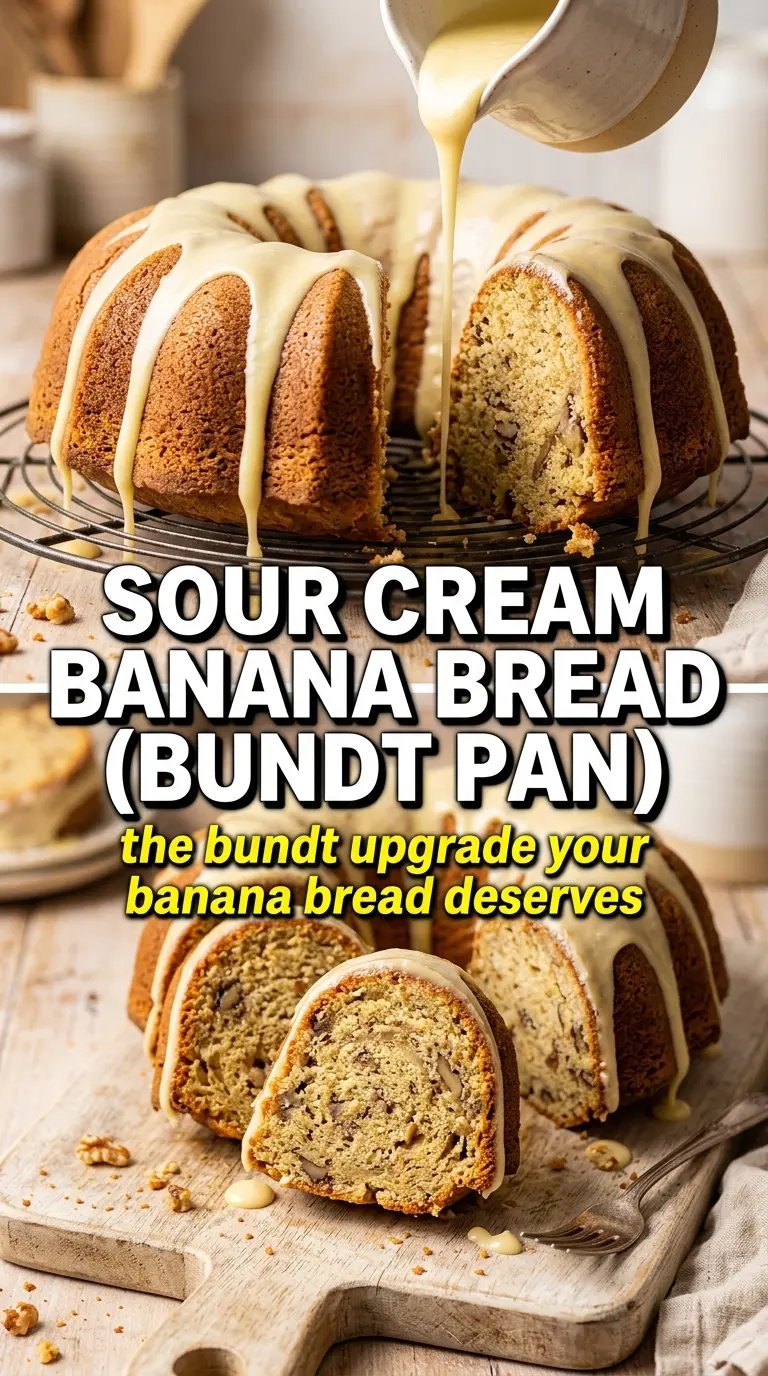
The crumb stayed unbelievably moist, and the cream cheese glaze settled into every ridge instead of running off the sides. I baked it for 55 minutes and it came out clean with that deep golden top everyone kept picking at first.
Like this glazed sour cream banana bread? Save it to Pinterest for the days when you want a bakery-style bundt with a soft crumb and thick cream cheese glaze.
The Mistake That Ruins Bundt Banana Bread Before It Starts
The biggest failure point with a banana bundt is releasing it too soon or greasing it too lightly. A bundt pan has all those curves and grooves, which means the batter clings in places where a loaf pan would let go cleanly. If you rush the unmolding, the loaf can tear along the top or leave half its crust behind in the pan. The 20-minute rest after baking matters because the cake firms up just enough to hold its shape, but it still unmolds before the sugars glue themselves to the pan.
Overmixing causes a second problem. Once the flour goes in, the batter only needs to be folded until the dry spots disappear. Stirring it hard builds gluten and turns a tender banana cake into something tighter and less moist. This batter should look thick and spoonable, with a few streaks disappearing at the end rather than a fully whipped, smooth mixture.
- Bananas — Use bananas that are deeply spotted and soft enough to mash easily. The darker the peel, the more flavor you get, and the more natural sweetness the bread has without needing extra sugar.
- Sour cream — This is what keeps the crumb plush. Plain Greek yogurt works in a pinch, but sour cream gives a softer, richer result and a less tangy finish.
- Butter — Softened butter creams with the sugar and gives the cake structure. Don’t swap in melted butter here unless you want a denser texture.
- Flour — All-purpose flour is the right choice for this. Cake flour makes the crumb too delicate for a bundt, while bread flour will make it chewy.
- Cream cheese — Use full-fat cream cheese for the glaze so it thickens properly and sets with that classic glossy finish.
What Each Ingredient Is Actually Doing in This Banana Bread
- Bananas (the moisture and sweetness) — Use very ripe bananas for maximum sweetness and moisture. Overripe bananas are actually better here.
- Flour (the structure) — Don’t overmix or the bread becomes tough. Mix just until dry ingredients are incorporated.
- Sugar (the sweetness) — Ripe bananas are already sweet, so you might reduce sugar slightly. Adjust to taste.
- Butter or oil (the richness) — This creates tender crumb and carries flavors. Room temperature butter creams better.
- Eggs (the binder and lift) — These hold everything together and help the bread rise. Use room temperature eggs.
- Leavening (baking soda or powder) — This creates rise. Too much makes it taste bitter.
- Vanilla extract (the flavor enhancer) — This brings out the banana flavor. Use quality vanilla extract.
- Optional mix-ins (nuts, chocolate, or dried fruit) — These add texture and prevent the bread from being one-dimensional.
Building the Batter and Baking It Into a Clean-Release Bundt
Creaming the Base
Beat the softened butter and sugar until the mixture turns pale and fluffy. That step adds air, which helps the cake rise and keeps the crumb from feeling heavy. Add the eggs one at a time so the batter stays smooth, then mix in the vanilla. If the eggs go in all at once and the mixture looks curdled, keep going for a minute; it usually comes back together once the dry ingredients are added.
Adding the Bananas and Sour Cream
Stir in the mashed bananas and sour cream until the batter looks thick and speckled. This is where the moisture comes from, so don’t worry if the mixture looks looser than a classic cake batter. The bananas should be mashed well, but a few small lumps are fine and give the finished bread little pockets of flavor.
Finishing the Batter Without Toughening It
Fold in the flour, baking soda, baking powder, cinnamon, and salt just until combined. Stop as soon as the flour disappears, because overmixing is what turns banana bread dense and rubbery. Pour the batter into a thoroughly greased and floured 10-cup bundt pan, then tap it once on the counter to knock out any trapped air pockets. The top should bake into a deep golden dome, and a toothpick should come out clean from the thickest part, not the very edge.
Cooling, Unmolding, and Glazing
Let the bread cool in the pan for 20 minutes before turning it out. That window is long enough for the structure to set and short enough that the sugars won’t weld themselves to the pan. Once it’s fully cool, beat the glaze ingredients until smooth and thick enough to ribbon off a spoon, then drizzle it over the ridges so it settles into every curve instead of slipping straight off the sides.
How to Adapt This Banana Bundt Without Losing the Texture
Make It Dairy-Free
Use a dairy-free butter and swap the sour cream for an unsweetened thick coconut yogurt or plain dairy-free yogurt. The crumb will still stay tender, though the flavor will be a little less rich and the glaze won’t have the same tang unless you use a dairy-free cream cheese substitute.
Turn It Into a Loaf Instead
This batter can be baked in two standard loaf pans if you don’t have a bundt pan. The texture stays the same, but the bake time drops and the presentation becomes more straightforward; you’ll lose the dramatic ridges, but you gain easier slicing and a little less risk of sticking.
Skip the Glaze for Breakfast
The bread is rich enough to stand on its own if you want it for breakfast instead of dessert. Leave off the cream cheese glaze and dust the cooled bundt lightly with powdered sugar, which keeps the banana flavor front and center and makes the slices easier to pack or toast.
Storage and Reheating
- Refrigerator: Store covered for up to 5 days. The crumb stays moist, though the glaze firms up and loses some shine.
- Freezer: Freeze slices or the whole unglazed bundt tightly wrapped for up to 2 months. Add the glaze after thawing for the cleanest look and best texture.
- Reheating: Warm individual slices in the microwave for 10 to 15 seconds, just until the butter softens and the crumb loosens. Don’t overheat it or the bread dries out fast and the glaze melts into a puddle.
Answers to the Questions Worth Asking
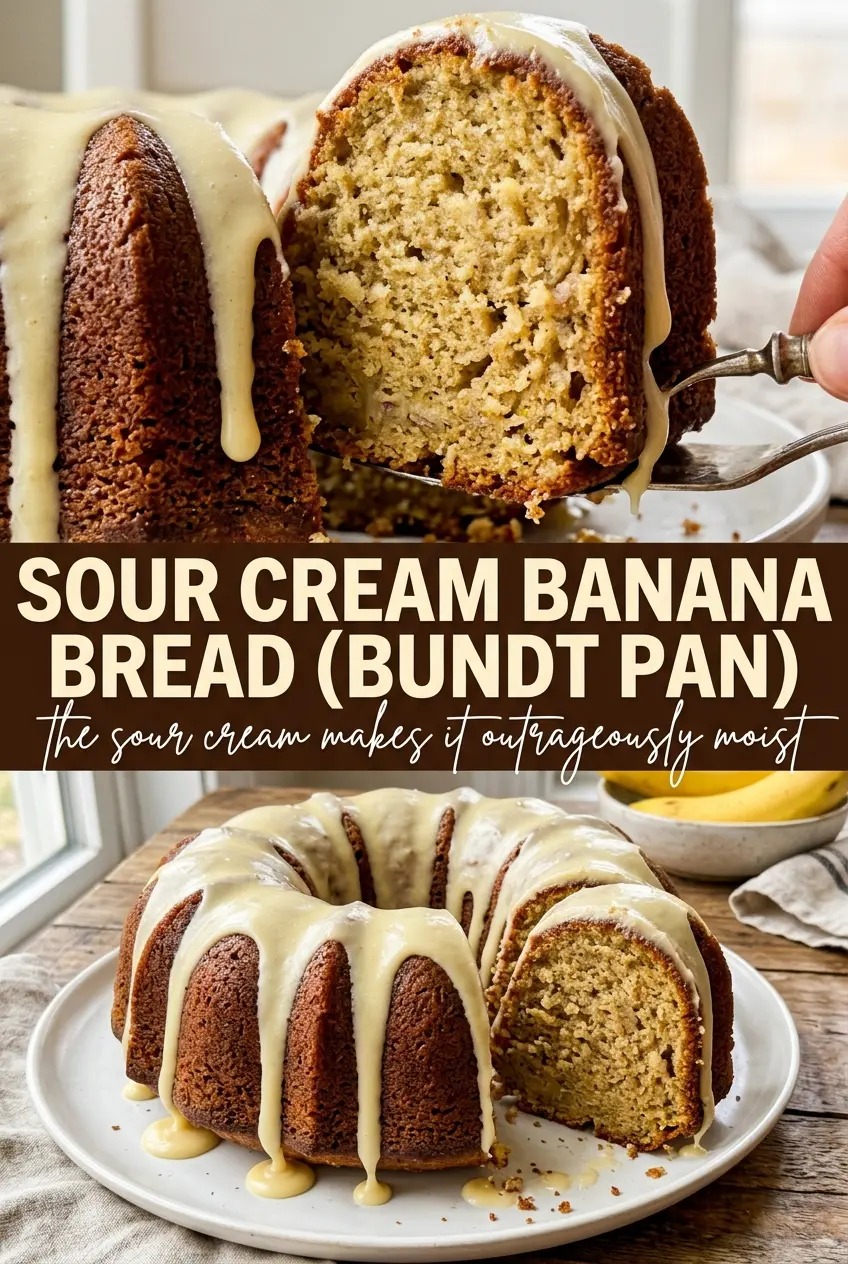
Sour Cream Banana Bread (Bundt Pan) with Cream Cheese Glaze
Ingredients
Equipment
Method
- Preheat oven to 350°F, then thoroughly grease and flour a 10-cup bundt pan so every crevice is coated.
- Beat the softened butter and sugar until light and fluffy, 2–3 minutes, then add eggs one at a time and mix in vanilla.
- Stir in mashed bananas and sour cream until the batter looks uniform in color.
- Fold in flour, baking soda, baking powder, cinnamon, and salt until just combined—stop mixing as soon as no dry streaks remain.
- Pour batter into the bundt pan and bake for 50–60 minutes, until a toothpick comes out clean and the top is deeply golden.
- Cool the loaf in the pan for 20 minutes, then invert onto a rack and let cool fully before glazing.
- Whisk softened cream cheese, powdered sugar, milk, and vanilla until smooth and thick, then glaze over the cooled bundt so it cascades down the ridges.