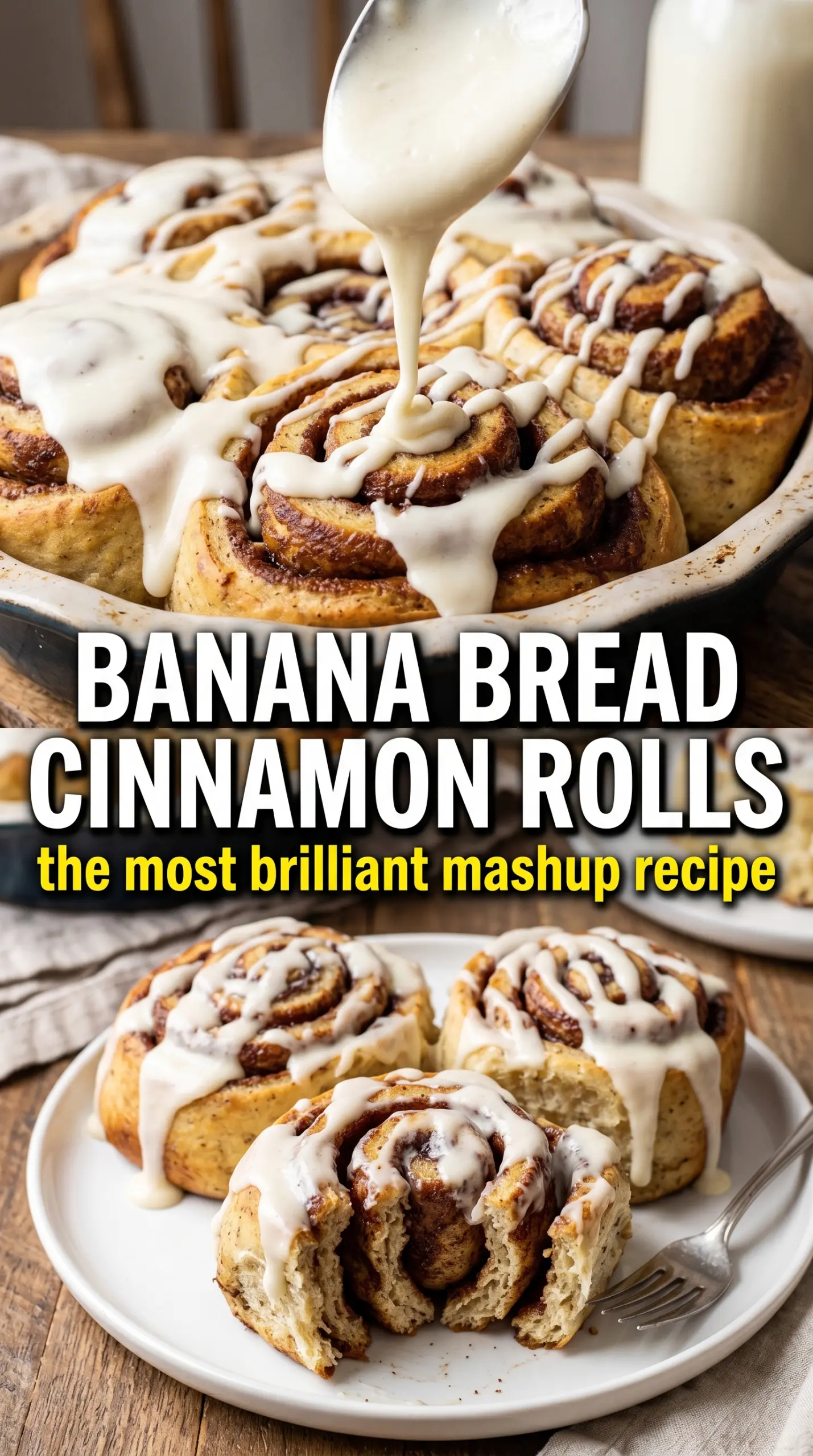
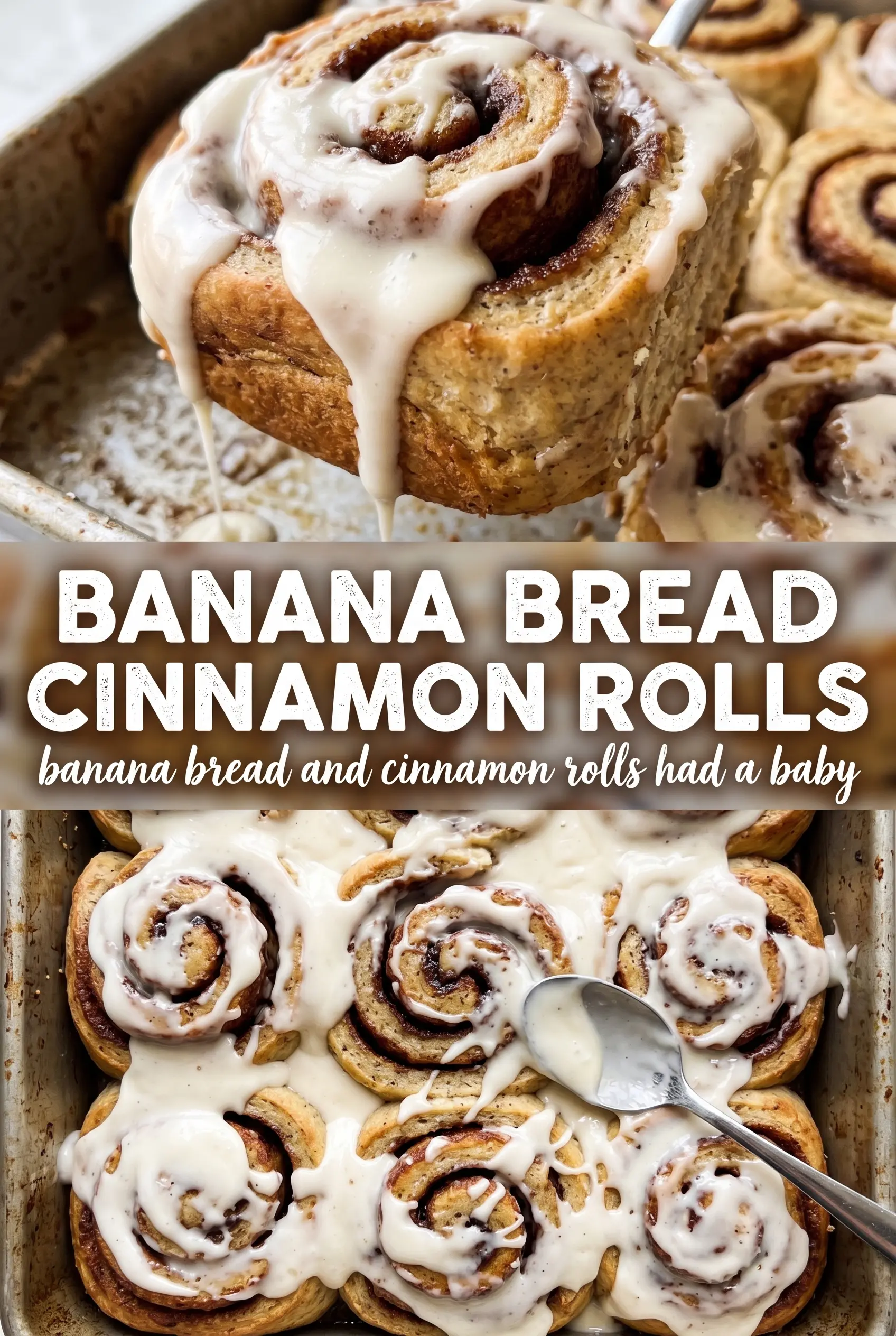
Pillowy banana bread cinnamon rolls hit that rare middle ground between breakfast pastry and bakery-style comfort food. The dough bakes up soft and tender with just enough banana in it to taste familiar, but not so much that it turns heavy or gummy. Once the rolls come out of the oven, the browned butter cream cheese frosting melts into every spiral and settles into the seams, which is exactly what makes the whole pan disappear fast.
The trick here is treating the banana as part of the dough, not as extra moisture to be ignored. Ripe bananas bring sweetness and a soft crumb, but they also make the dough stickier than a standard cinnamon roll dough, so the kneading and rising matter. A warm, not hot, milk mixture helps the yeast wake up without fighting the banana, and the second rise gives the rolls enough lift to bake into neat, fluffy spirals instead of dense swirls.
Below, I’ve included the visual cues that matter most when you’re rolling, slicing, and baking these so you don’t end up with squashed centers or dry edges. The brown butter frosting is worth the extra minute, too. It gives the rolls a nutty finish that tastes like banana bread went to brunch.
The dough rose beautifully and baked up super soft, and the browned butter frosting made the whole pan taste like banana bread and cinnamon rolls at the same time. My husband ate two while they were still warm.
These banana bread cinnamon rolls bake up soft, swirled, and perfect for a gooey frosting melt.
The Dough Needs Banana, Not Banana Pudding
Banana bread cinnamon rolls fail when the dough turns wet and slack before it ever gets a chance to rise. The bananas belong here for flavor and tenderness, but they can’t take over the structure. If your bananas are extra large or overly mushy, the dough can get sticky enough that people keep adding flour until the rolls bake up dry and tight.
The goal is a soft dough that still clears the bowl and holds a smooth, elastic feel after kneading. You want the banana flavor in the background, not a raw fruit taste in the finished roll. That balance is what keeps these from reading like underbaked bread with cinnamon sugar on top.
- Ripe bananas — Use bananas with plenty of brown spots for the strongest flavor. If yours are huge, mash them and measure roughly 3/4 cup to keep the dough from getting too loose.
- Instant yeast — It starts working quickly and doesn’t need proofing beyond the first rest with warm milk and sugar. If you only have active dry yeast, let it sit a few extra minutes until foamy before adding the rest of the dough ingredients.
- Softened butter — This enriches the dough and keeps the crumb tender. Melted butter changes the texture too much here and can make the dough greasy.
- All-purpose flour — This gives you enough structure without making the rolls bready. Add only enough for the dough to become workable; too much flour is the fastest way to lose that plush, bakery-style texture.
What Each Ingredient Is Actually Doing in This Banana Bread
- Bananas (the moisture and sweetness) — Use very ripe bananas for maximum sweetness and moisture. Overripe bananas are actually better here.
- Flour (the structure) — Don’t overmix or the bread becomes tough. Mix just until dry ingredients are incorporated.
- Sugar (the sweetness) — Ripe bananas are already sweet, so you might reduce sugar slightly. Adjust to taste.
- Butter or oil (the richness) — This creates tender crumb and carries flavors. Room temperature butter creams better.
- Eggs (the binder and lift) — These hold everything together and help the bread rise. Use room temperature eggs.
- Leavening (baking soda or powder) — This creates rise. Too much makes it taste bitter.
- Vanilla extract (the flavor enhancer) — This brings out the banana flavor. Use quality vanilla extract.
- Optional mix-ins (nuts, chocolate, or dried fruit) — These add texture and prevent the bread from being one-dimensional.
The 25 Minutes That Turn Dough Into Rolls
Waking Up the Yeast
Stir the warm milk, yeast, and sugar together and leave it alone for about 5 minutes. The mixture should look slightly foamy and smell bready, not sharp or sour. If the milk is too hot, the yeast can stall or die, and if it’s too cold, the dough will just take forever to rise.
Building the Banana Dough
Add the mashed bananas, butter, egg, flour, and salt, then knead until the dough turns smooth and elastic. It will start out sticky, and that’s normal, but it should become soft and tacky rather than gluey. Stop adding flour once the dough is manageable; a stiff dough won’t puff up into tender spirals.
Rolling, Filling, and Slicing
Roll the dough into a 12×18 rectangle, spread the butter edge to edge, and scatter the brown sugar and cinnamon in an even layer. Roll from the long side so you get more turns in each slice and tighter swirls in the pan. When you cut the log, use a sharp knife or unflavored dental floss; a dull blade squeezes the spirals flat and can push the filling out.
Baking Until the Centers Set
Let the sliced rolls rise again in the pan until they look puffy and have started to crowd each other. Bake until the tops are golden and the centers look set, not doughy or wet. If the rolls brown too quickly before the middle is done, tent the pan loosely with foil for the last few minutes.
How to Adapt These Rolls Without Losing the Soft Swirl
Dairy-Free Version
Use a thick, unsweetened non-dairy milk and replace the butter and cream cheese with plant-based versions that are meant for baking. The rolls will still be soft, though the frosting will taste a little less tangy and a little more mellow.
Make Them Ahead for Breakfast
Shape the rolls, place them in the pan, and refrigerate overnight after the second rise has started. In the morning, let them sit at room temperature until puffy, then bake as directed. This gives you fresh rolls without doing the kneading before coffee.
Sweeter, More Banana-Bread-Like Filling
Add a pinch of nutmeg or a tablespoon of finely chopped toasted walnuts to the filling. The walnuts bring a little crunch and make the rolls lean closer to banana bread, while nutmeg pushes the warm spice note without making the filling taste crowded.
Freezer-Friendly for Another Day
Bake the rolls, cool them completely, and freeze them unfrosted. Wrap them well so they don’t dry out, then thaw and warm before frosting. Freezing them after frosting makes the topping separate and turn grainy when it thaws.
Storage and Reheating
- Refrigerator: Store in an airtight container for 3 days. The rolls will firm up a little, but the banana keeps them softer than most cinnamon rolls.
- Freezer: Freeze unfrosted rolls for up to 2 months. Frosting is best made fresh after reheating.
- Reheating: Warm individual rolls in the microwave for 15 to 20 seconds or cover a pan and heat at 300°F until just warm. Long reheating dries out the edges and makes the frosting separate.
Questions I Get Asked About This Recipe
Banana Bread Cinnamon Rolls
Ingredients
Equipment
Method
- Mix warm milk, instant yeast, and sugar in a bowl, then let sit 5 minutes until foamy.
- Stir in mashed bananas, softened butter, and egg, then add all-purpose flour and salt.
- Knead until smooth and elastic, about 8–10 minutes, then shape into a ball.
- Place dough in a lightly greased bowl, cover, and let rise 1 hour until doubled.
- Roll the dough into a 12x18 rectangle on a lightly floured surface.
- Spread softened butter evenly over the dough.
- Sprinkle brown sugar and cinnamon evenly over the butter.
- Roll up tightly from the long edge and pinch the seam to seal.
- Slice into 12 rolls and place them in a greased 9x13 pan, cut sides up.
- Cover and let rise 30 minutes until puffy and nearly doubled.
- Bake at 375°F for 20–25 minutes until the tops are golden.
- Beat browned butter, softened cream cheese, powdered sugar, milk, and vanilla until smooth.
- Spread frosting over the warm rolls immediately so it melts into the swirls.