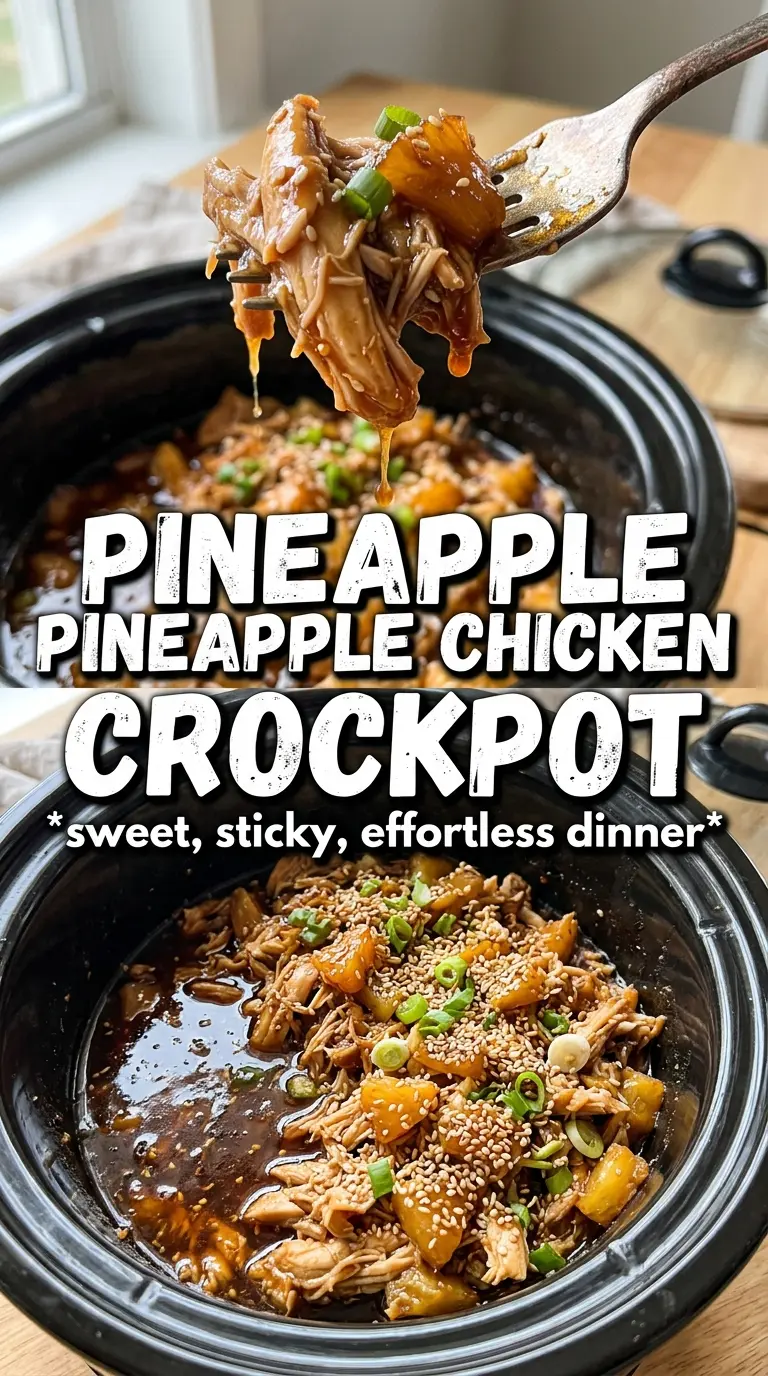
Pineapple-glazed chicken from the slow cooker hits that sweet-savory balance that keeps people coming back for seconds. The sauce turns glossy and spoonable, the chicken stays tender enough to shred without falling into strings, and the pineapple chunks soften just enough to soak up the soy, ginger, and garlic without disappearing into the pot.
What makes this version work is the order of operations. The pineapple juice goes right into the sauce, which gives you built-in sweetness and helps the brown sugar dissolve cleanly. The cornstarch slurry gets added at the end, after the chicken is shredded, so the sauce thickens properly instead of thinning out from a long cook and never quite recovering. That last step is what gives the finished dish that sticky, teriyaki-style coating people expect.
Below you’ll find the timing that keeps the chicken juicy, the ingredient swaps that still taste balanced, and the small reheating trick that keeps the sauce from turning loose the next day.
The sauce thickened up beautifully at the end, and the pineapple stayed bright instead of turning mushy. I served it over rice, and my husband asked if we could put it on next week’s menu too.
Like this sweet Hawaiian crockpot chicken? Save it to Pinterest for the nights when you want tender slow-cooked chicken with glossy pineapple sauce and almost no cleanup.
The Trick to Keeping the Sauce Thick Instead of Watery
Slow cookers trap moisture, which is great for tender chicken and terrible for a sauce that’s supposed to cling. The main mistake here is adding the thickener too early or expecting the pot to reduce on its own. It won’t. The liquid barely evaporates, so the sauce needs a separate finishing step with cornstarch after the chicken comes out and before it goes back in.
Using pineapple chunks with their juice matters because that juice brings both flavor and enough liquid to build the sauce without reaching for extra broth. The brown sugar and soy sauce balance each other, but the vinegar keeps the sauce from tasting flat or cloying. If the sauce tastes sharp before cooking, that’s normal; the slow cooker mellows it out and the final thickening step brings everything into focus.
What Each Ingredient Is Actually Doing in the Pot
- Chicken thighs — Thighs stay juicy through the long cook and shred into soft, meaty pieces. Chicken breast can work, but it dries out faster and needs closer attention on the short end of the cook time.
- Pineapple chunks with juice — This is the backbone of the dish. The juice sweetens and loosens the sauce, while the fruit gives you those soft, saucy bites at the end. Fresh pineapple won’t give you the same built-in liquid unless you add extra juice.
- Soy sauce — This gives the recipe its savory edge and keeps the sugar from taking over. Use regular soy sauce for the intended salt level; low-sodium works if that’s what you keep, but the sauce may need a small pinch of salt at the end.
- Brown sugar — It deepens the sweetness and helps the sauce turn glossy. Packed brown sugar matters here because a loose measure makes the sauce taste thinner and less rich.
- Cornstarch slurry — This is what turns the thin cooking liquid into a spoon-coating sauce. Mix it with cold water first so it disperses cleanly; if you dump dry cornstarch into the hot pot, you’ll get little lumps that never fully disappear.
How to Build the Slow Cooker Layers So the Chicken Stays Tender
Starting with the Chicken
Lay the chicken thighs in the slow cooker first so they sit directly in the sauce as it heats. That keeps the meat from drying out at the edges and helps it cook evenly. If the pieces are stacked too tightly, stir once before cooking so the top pieces get coated, but don’t overwork it. The chicken should look opaque and very soft when it’s done, not stringy or tight.
Mixing the Sauce Until It’s Fully Dissolved
Whisk the pineapple juice, soy sauce, brown sugar, garlic, vinegar, ginger, and red pepper flakes until the sugar disappears as much as possible. If you see a lot of grains at the bottom of the bowl, keep whisking; undissolved sugar can leave the sauce tasting uneven. Pour the mixture over the chicken, then scatter the pineapple on top so it keeps some shape during the cook instead of breaking down completely.
Finishing with the Slurry
When the chicken shreds easily, pull it out before thickening the sauce. Whisk the cornstarch and cold water together until smooth, then stir it into the hot liquid and cook on high for about 15 minutes. The sauce should turn glossy and lightly thickened, not paste-like. If it still looks thin, give it a few more minutes; the thickening happens as the starch fully heats through.
Bringing the Chicken Back to the Sauce
Return the shredded chicken to the pot and stir until every piece is coated. This last toss matters because shredded chicken drinks up sauce fast, and you want it to land glossy, not dry. Let it sit for a couple of minutes before serving so the sauce settles into the meat and the flavor evens out.
Three Ways to Adjust It Without Losing the Sweet-Savory Balance
Make it gluten-free with tamari
Swap the soy sauce for tamari or a certified gluten-free soy sauce in the same amount. The flavor stays close to the original, but tamari often tastes a little rounder and less sharp. Keep the rest of the recipe the same.
Use chicken breast for a leaner version
Chicken breast works, but it needs less time and a little more attention. Start checking early, since overcooked breast turns dry fast in the slow cooker. Cut the cook time back and shred as soon as it turns opaque and pulls apart cleanly.
Turn down the sweetness
If you prefer a less sweet sauce, reduce the brown sugar a little and add a splash more vinegar at the end. That shifts the sauce toward tangy instead of candy-sweet without breaking the overall balance. Don’t cut the sugar too hard or the glaze loses its body.
Storage and Reheating
- Refrigerator: Store in an airtight container for up to 4 days. The sauce thickens as it chills, so it may look tighter the next day.
- Freezer: It freezes well for up to 2 months. Let it cool completely, portion it with sauce, and freeze flat for easier thawing.
- Reheating: Reheat gently on the stove or in the microwave with a splash of water if needed. Heat just until hot so the chicken stays tender; boiling it hard can make the sauce separate and the meat stringy.
Questions I Get Asked About This Recipe
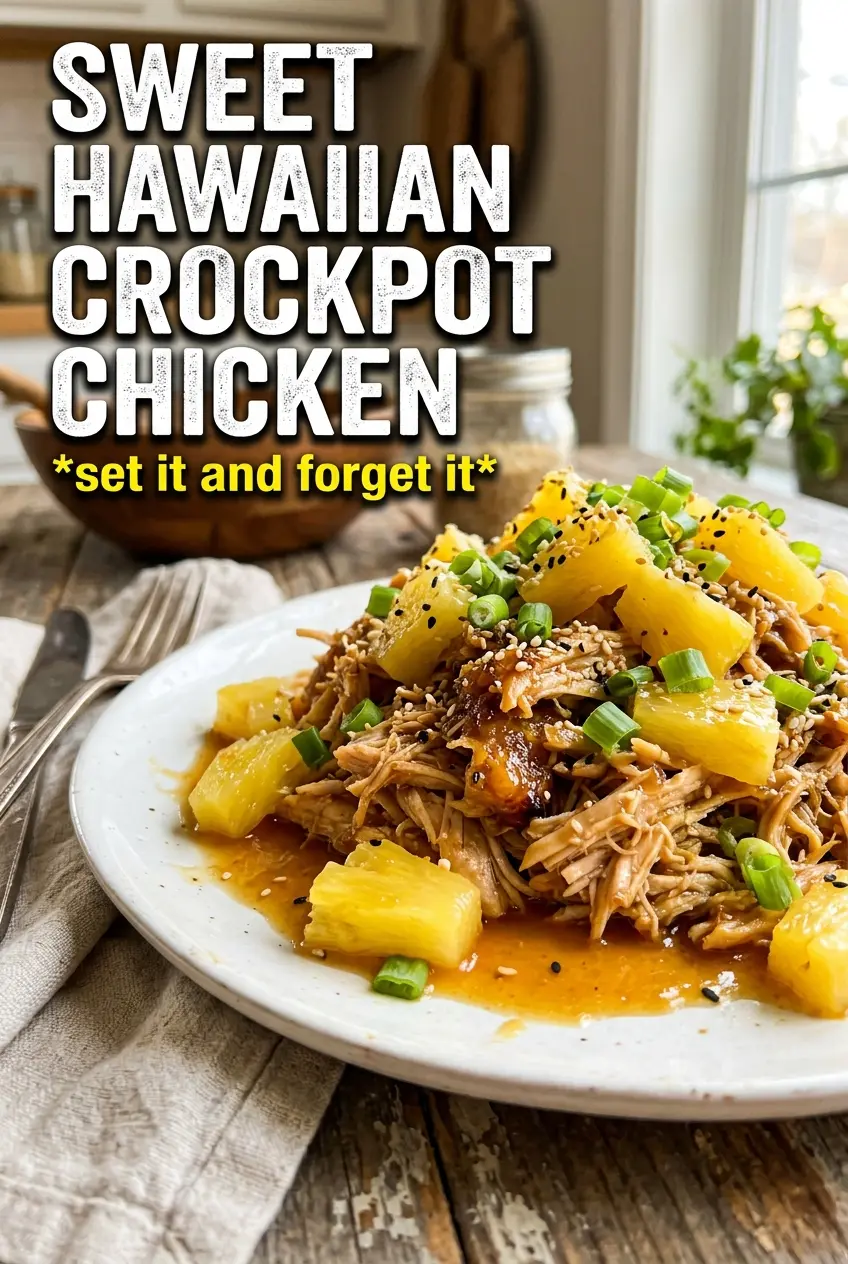
Sweet Hawaiian Crockpot Chicken
Ingredients
Equipment
Method
- Place the boneless skinless chicken thighs in the slow cooker.
- Whisk together the pineapple juice, soy sauce, brown sugar, garlic, apple cider vinegar, ground ginger, and red pepper flakes until the sugar dissolves.
- Pour the sauce over the chicken and scatter the pineapple chunks on top.
- Cook on low for 4–5 hours or high for 2–3 hours until the chicken is very tender (visible juices should look thick and syrupy around the edges).
- Remove the chicken and shred into large pieces, keeping the sauce in the slow cooker.
- Whisk the cornstarch and cold water together, then stir into the slow cooker and cook on high for 15 minutes until the sauce thickens (it should coat the back of a spoon).
- Return the shredded chicken to the sauce and stir to coat well.
- Serve the chicken over cooked white rice and top with green onions and sesame seeds for garnish.