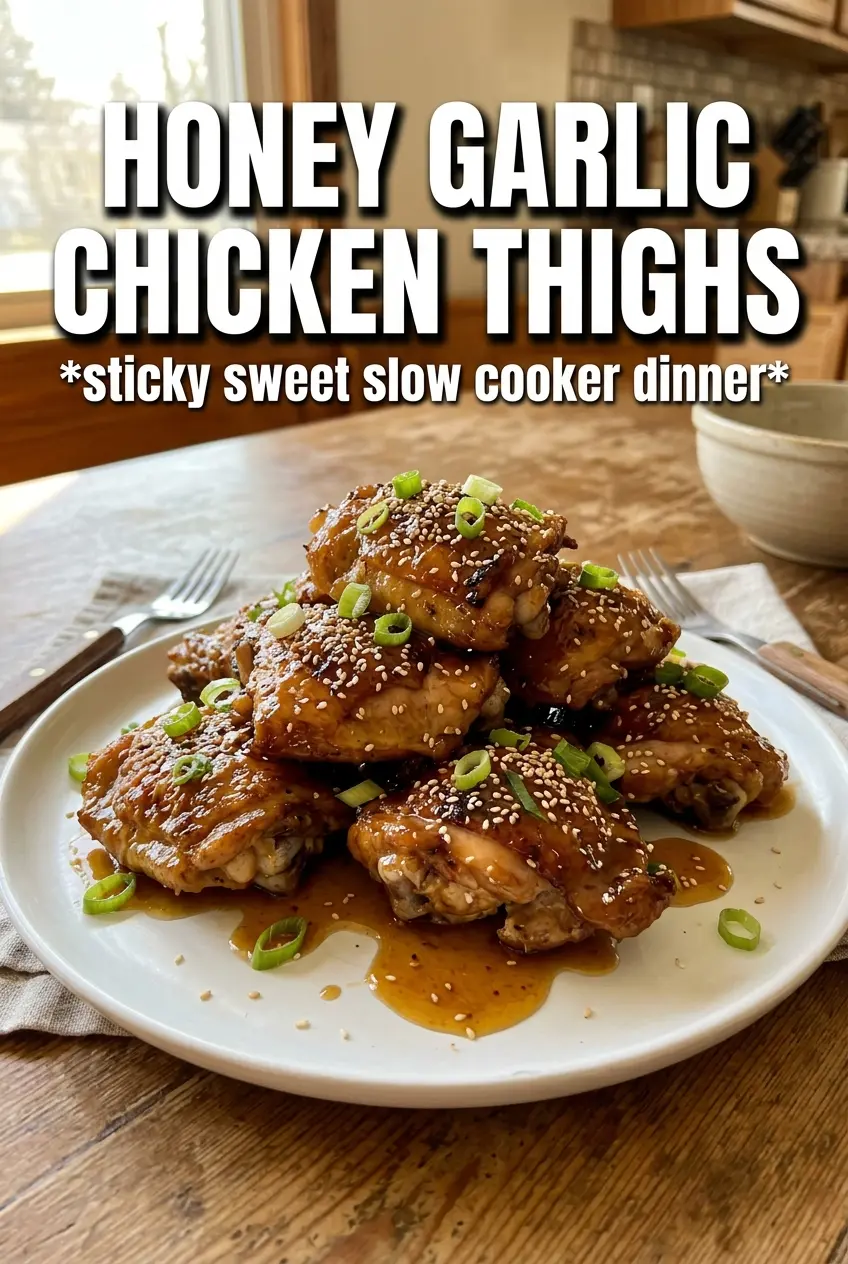
Sticky, glossy honey garlic chicken thighs are the kind of slow cooker dinner that earns repeat status fast. The sauce turns syrupy and clings to every bite, while the chicken stays tender enough to pull apart with a fork but still holds its shape on the plate. When it’s finished with sesame seeds and green onions, it tastes like something that took more effort than it did.
The trick here is starting with bone-in, skin-on thighs and letting them cook gently in the sauce before thickening the liquid at the end. Honey gives body, soy sauce brings salt and depth, and a little ketchup plus vinegar keeps the glaze from tasting flat or one-note. The cornstarch slurry goes in after the chicken comes out, which keeps the sauce smooth and glossy instead of muddy or thin.
Below, I’ll walk through the part that matters most: how to get the sauce thick enough to coat the chicken without turning gluey, plus the one optional finish that gives the skin a better edge if you want it.
The sauce thickened up beautifully and coated the chicken instead of pooling at the bottom. I did the broil at the end and the skin got that sticky edge my husband kept talking about.
Save these honey garlic slow cooker chicken thighs for a sticky, no-fuss dinner with a glossy sauce that clings to every bite.
The Sauce Stays Glossy When You Thicken It After the Chicken Comes Out
The biggest mistake with slow cooker honey garlic chicken is trying to fix the sauce before the chicken is done. In the crockpot, the liquid keeps building with steam and juices, so if you add cornstarch too early, it can go from thin to gummy by the time dinner is ready. Pull the chicken out first, then thicken the sauce on its own so you can stop exactly when it turns shiny and coatable.
Bone-in, skin-on thighs handle the long cook better than boneless pieces. They stay juicy even after five hours, and the skin adds richness to the sauce while the meat simmers underneath. If the sauce tastes a little sharp at the end, that’s usually the vinegar speaking; it should mellow once it thickens and gets spooned over the chicken.
What Each Ingredient Is Actually Doing in This Dish

- Bone-in, skin-on chicken thighs — These give you the most forgiving texture in a slow cooker. Boneless thighs work in a pinch, but they’ll cook faster and won’t bring the same richness to the sauce.
- Honey — This is what makes the glaze stick and shine. Use regular honey, not a strongly flavored specialty honey, unless you want that flavor to lead the whole dish.
- Soy sauce — It gives salt, color, and the savory backbone that keeps the glaze from tasting like candy. Low-sodium soy sauce works well if you want a little more control over the final salt level.
- Garlic, ketchup, apple cider vinegar, and ginger — These build the actual sauce around the honey. The ketchup rounds out the sweetness, the vinegar keeps it bright, and the ginger keeps it from tasting heavy.
- Cornstarch slurry — Cold water matters here. If the water is warm, the cornstarch can clump before it hits the sauce. Stir it in at the end and give it time on high until the glaze turns smooth and slightly thick.
How to Build the Glaze Without Breaking It
Layer the Chicken Skin-Side Up
Set the thighs in the slow cooker skin-side up so the skin isn’t sitting directly in the liquid the whole time. It won’t stay crisp in the cooker, but this helps it keep some shape and avoids a stringy, overcooked texture. The chicken should nestle into the sauce, not disappear under a flood of liquid.
Whisk the Sauce Until the Honey Disappears
Mix the honey, soy sauce, garlic, ketchup, vinegar, ginger, red pepper flakes, and pepper until the mixture looks even and loose. If you can still see streaks of honey at the bottom of the bowl, keep whisking; those pockets don’t distribute well once they hit the slow cooker. The sauce should pour easily and coat the back of a spoon in a thin layer.
Cook Until the Meat Is Tender, Not Falling Apart
Low for 5 to 6 hours gives the best balance of tenderness and structure. High works when you need it faster, but start checking early because thighs can go from juicy to shredded if they overcook. You’re looking for meat that pulls apart easily at the bone and registers done without drying at the edges.
Thicken the Sauce After Removing the Chicken
Whisk the cornstarch and cold water together until smooth, then stir it into the sauce and cook on high for about 15 minutes. Don’t rush this with extra cornstarch; that’s how you end up with a paste instead of a glaze. The sauce is ready when it looks glossy, lightly thickened, and clings to a spoon instead of running off like broth.
Broil for a Better Finish
The broiler step is optional, but it’s the fastest way to give the skin a little bite and deepen the edges of the glaze. Keep the chicken close enough to caramelize, not burn, and watch it the whole time because honey goes from browned to scorched fast. A few minutes is plenty.
Make It Gluten-Free With Tamari
Swap the soy sauce for tamari in the same amount. You’ll keep the same salty, savory backbone without changing the texture of the glaze. Just check that your ketchup and cornstarch are certified gluten-free if you need the whole dish to stay strict.
Use Boneless Thighs for Faster Cooking
Boneless thighs shave off some time and are easier to serve, but they don’t hold up quite as well to the long cook. Start checking them closer to the 2.5-hour mark on high or around 4 hours on low so they stay juicy. You’ll lose a little richness from the bone, but the sauce still carries the dish.
Make It Spicier Without Changing the Texture
Increase the red pepper flakes or add a small spoonful of chili garlic sauce to the whisked sauce. That adds heat without thinning the glaze, which is the mistake people make when they pour in hot sauce and then wonder why the finish is watery. The sweetness of the honey will soften the burn a little, but the heat will still show through.
Storage and Reheating
- Refrigerator: Store leftovers in an airtight container for up to 4 days. The sauce thickens more as it chills, which is normal.
- Freezer: This freezes well for up to 2 months. Freeze the chicken with the sauce in a sealed container, then thaw overnight in the fridge before reheating.
- Reheating: Warm gently on the stove or in the microwave with a splash of water to loosen the glaze. High heat can make the sauce seize and turn sticky in the wrong way.
Answers to the Questions Worth Asking
Honey Garlic Slow Cooker Chicken Thighs
Ingredients
Equipment
Method
- Place the chicken thighs skin-side up in the slow cooker.
- Whisk together honey, soy sauce, garlic, ketchup, apple cider vinegar, ground ginger, red pepper flakes, and black pepper until smooth.
- Pour the sauce over the chicken thighs so they’re coated as evenly as possible.
- Cook on low for 5–6 hours, or on high for 2.5–3 hours, until the chicken is cooked through and tender, with the sauce looking darker and bubbling at the edges.
- Remove the chicken and set aside, keeping it warm.
- Whisk cornstarch with cold water, stir it into the sauce, then cook on high for 15 minutes until thickened and glossy.
- Optional: broil the chicken for 3–4 minutes to caramelize the skin before serving, until browned spots appear.
- Spoon the thickened honey garlic sauce over the chicken and garnish with sesame seeds and green onions.