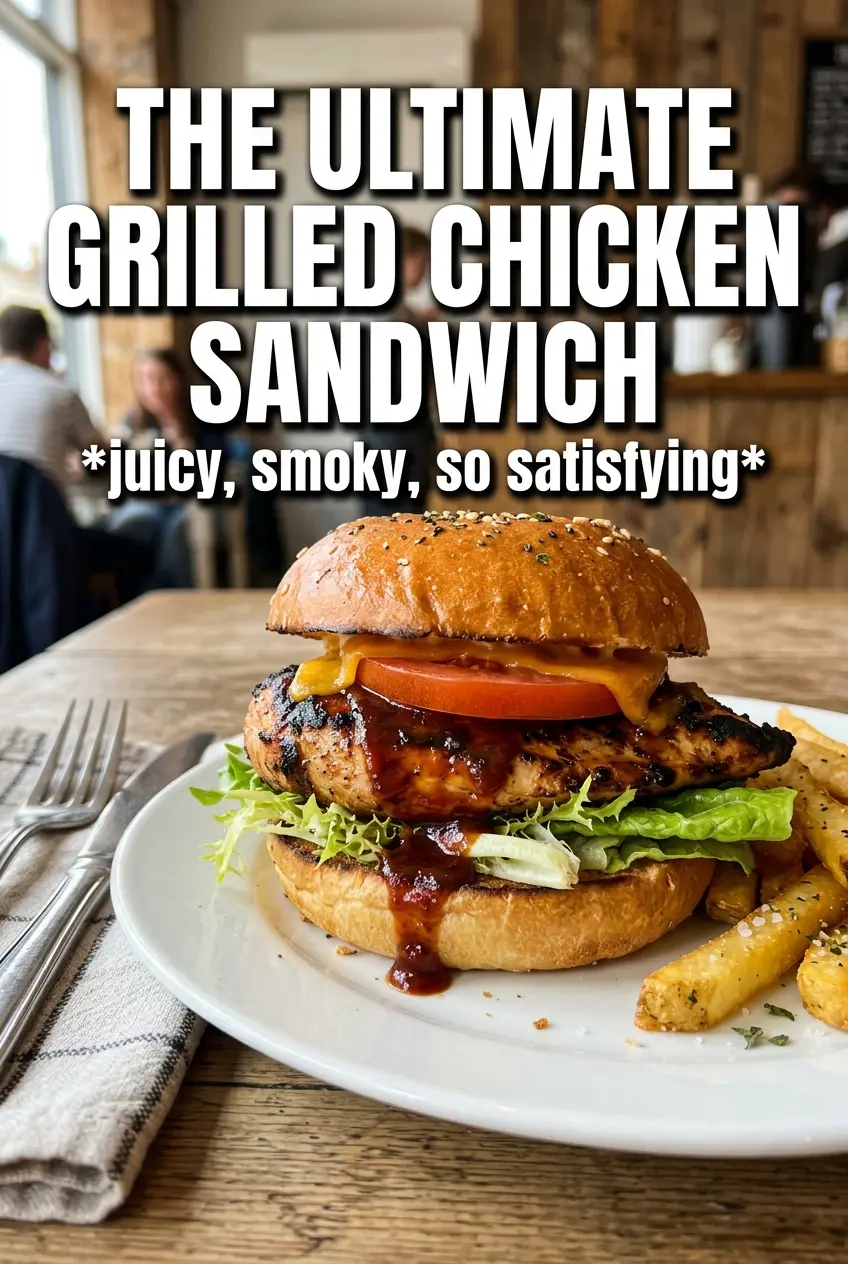
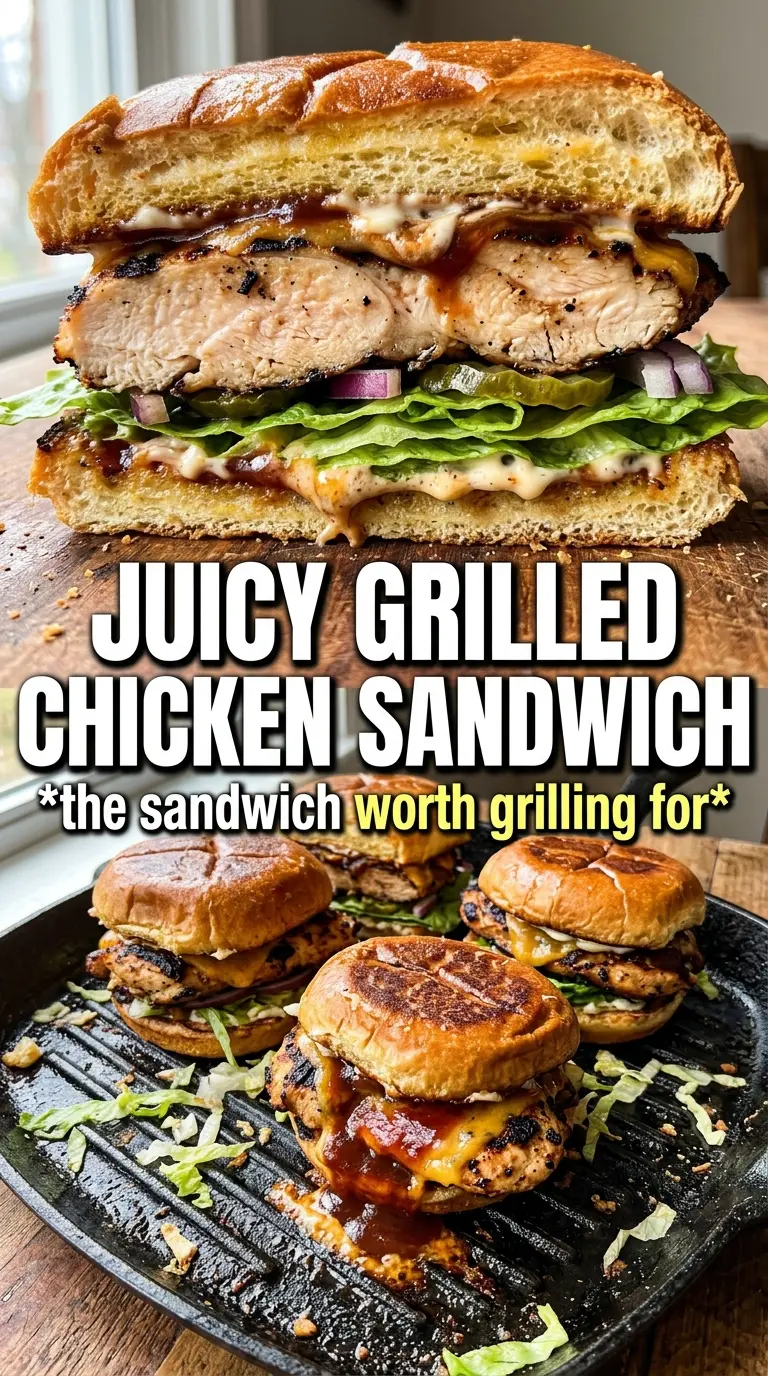
Juicy grilled chicken, melted provolone, crisp lettuce, and a tangy-sweet special sauce turn a simple sandwich into the kind of lunch or dinner people remember. The toasted brioche bun holds up against the sauce without getting soggy, and the chicken stays tender because it’s pounded even before it hits the grill. Every bite gets a little smoke, a little crunch, and that rich, creamy finish that ties it all together.
The trick here is in the details that most grilled chicken sandwiches skip. Pounding the chicken to an even thickness keeps the cook time short and prevents dry edges, while the lemon-garlic marinade seasons the meat all the way through instead of just sitting on the surface. The sauce matters too: Dijon gives it backbone, honey rounds it out, and just enough lemon keeps it from tasting heavy.
Below you’ll find the little timing cues that keep the cheese melty and the chicken juicy, plus a few easy swaps if you need to work with what’s in the fridge.
The chicken stayed unbelievably juicy, and the special sauce was spot-on with the toasted brioche. I marinated it for 30 minutes like the recipe said, and the sandwich came out better than the ones from our favorite diner.
Save this grilled chicken sandwich for the days when you want juicy grilled chicken, melty cheese, and that creamy special sauce in one stacked-up bite.
The Part That Keeps the Chicken Juicy on the Grill
Pounding the chicken to an even 1/2-inch thickness is what keeps this sandwich from turning into a dry, uneven disappointment. Thick ends need longer heat, and by the time the center is done, the thinner edges are already overcooked. Even thickness gives you the same doneness across the whole breast, which means you can grill fast and still land at 165F without guessing.
The other important piece is the short marinade. Olive oil carries the seasonings, lemon juice brightens the meat, and garlic plus Italian seasoning give the chicken enough backbone to stand up to the sauce and cheese. Thirty minutes is enough here; much longer and the lemon starts to work against the texture instead of helping it.
- Chicken breasts — Boneless, skinless breasts work best because they grill quickly and slice cleanly for a stacked sandwich. If one side is much thicker than the other, pound it first instead of trying to compensate on the grill.
- Brioche buns — These bring a little sweetness and enough structure to hold the chicken, cheese, and sauce. Toast them until the cut sides are lightly crisp so the sandwich doesn’t collapse under the sauce.
- Provolone or Swiss — Provolone melts softly and tastes mild enough not to compete with the sauce. Swiss works too if you want a slightly nuttier edge.
- Special sauce — Mayo gives body, Dijon gives sharpness, honey smooths it out, and lemon keeps it lively. Don’t swap in plain mustard here; you’ll lose the creamy balance that makes the sandwich taste finished.
What Each Ingredient Is Actually Doing in This Recipe
- Primary ingredient (the star) — Quality matters most. Choose the best you can find.
- Cooking medium (oil, butter, or broth) — This carries flavors and prevents dryness.
- Seasonings (salt, pepper, spices, herbs) — Layer flavors so nothing overpowers. Build depth gradually.
- Aromatics (garlic, onion, herbs) — Cook with fat to bloom flavors. Become the foundation.
- Supporting ingredients — Complement the main ingredient without overpowering it.
- Sauce or liquid (if applicable) — Brings flavors together. Balance richness with acid.
- Acid (lemon, vinegar, wine, or other) — Brightens and prevents flat-tasting results.
- Final finish (garnish, glaze, or sauce) — Prevents one-dimensional taste and adds visual appeal.
Grilling, Melting, and Building Without Losing the Juices
Marinating and Prepping the Sauce
Whisk the special sauce together first and let it chill while the chicken marinates. That resting time helps the garlic powder soften and the honey dissolve into the mayo, so the sauce tastes blended instead of streaky. Pat the chicken dry before it hits the grill so the surface can brown instead of steaming. If the chicken goes on wet, the marinade slides off and the grill marks never really form.
Getting the Grill Marks and the Right Internal Temp
Grill the chicken over medium-high heat for 5 to 6 minutes per side, depending on thickness and your grill’s heat. You want strong grill marks, some caramelization at the edges, and juices that run clear when the breast is nearly done. Pull it the moment the thickest part hits 165F. If you wait for the chicken to look fully dry on the grill, it’s already gone too far.
Melting the Cheese at the Last Minute
Lay the cheese on the chicken during the final minute and close the grill lid. That trapped heat melts the cheese without pushing the chicken past done. Don’t add the cheese too early or it can slide off and overcook into a greasy layer instead of melting into the meat. You want it soft, glossy, and just starting to slump over the edges.
Stacking the Sandwich So It Holds Together
Spread the sauce on both toasted bun halves, then build in this order: lettuce, chicken, tomato, red onion, top bun. The lettuce under the chicken gives you a little moisture barrier, and the tomato stays fresher when it isn’t sitting directly on the bottom bun. Slice and serve right away while the bun is warm and the cheese still stretches a little.
Ways to Adjust the Sandwich Without Losing What Makes It Work
Make it dairy-free
Skip the cheese and use a dairy-free mayo for the sauce. The sandwich still tastes complete because the grilled chicken carries the main flavor, and the sauce keeps the richness you’d normally get from the cheese. A dairy-free sliced cheese can work too, but it won’t melt as cleanly as provolone.
Gluten-free version
Use gluten-free buns that are sturdy enough to toast without crumbling. The rest of the recipe is naturally gluten-free as written, so the main job is choosing a bun with enough structure to handle the sauce and juicy chicken.
Swap the cheese for a sharper finish
Cheddar gives the sandwich a stronger, saltier bite, while pepper jack adds heat. Both melt well, but they change the balance of the sandwich enough that the sauce tastes a little sweeter by comparison. That’s not bad — just expect a bolder result.
Storage and Reheating
- Refrigerator: Store the chicken, sauce, and toppings separately for up to 3 days. The chicken stays juicy; the buns and lettuce don’t.
- Freezer: Freeze the cooked chicken only for up to 2 months. Wrap it tightly and thaw in the fridge before reheating.
- Reheating: Warm the chicken gently in a skillet over low heat or in the oven at 325F until hot. High heat dries it out fast, so don’t blast it in the microwave unless you’re willing to lose that grilled texture.