Golden, herb-roasted chicken thighs with blistered cherry tomatoes, briny olives, and soft feta are the kind of dinner that looks like you worked harder than you did. The skin turns crisp at the edges while the lemon, garlic, and oregano soak into the meat, and every bite tastes bright without being sharp. It’s the sort of pan you set on the table and people immediately start reaching for the tomatoes before the chicken is even carved.
What makes this version work is the balance. Chicken thighs bring enough fat to stay juicy in a hot oven, while the lemon juice and zest keep the marinade lively instead of heavy. The tomatoes collapse into a little pan sauce as they roast, the olives add salt and depth, and the feta goes on at the end so it softens without disappearing. That last broil matters: it gives the cheese a little edge instead of melting it into the background.
Below you’ll find the small details that keep the chicken crisp, the easiest swap if you need a different cheese, and the one mistake that can turn this into a soggy pan instead of a proper roast.
The chicken skin turned crisp even with the tomatoes and olives in the pan, and the lemon-garlic juices underneath were perfect spooned over rice. My husband went back for seconds and asked if I could make it again next week.
Save these Mediterranean chicken thighs for the night you want crisp skin, lemony pan juices, and one baking dish that does the whole job.
The Trick to Keeping the Skin Crisp Under All Those Juicy Tomatoes
Roasting chicken thighs in a crowded pan can go wrong fast. If the vegetables sit directly on top of the skin or the oven runs too cool, the chicken steams instead of browns, and you lose the best part of the dish. The fix here is simple: start the chicken skin-side up in a hot oven, give it a head start before adding the olives, and keep the feta out until the end.
That order matters because each ingredient behaves differently. Cherry tomatoes release moisture as they burst, which is great for the pan juices but not great for crisping if they’re piled too early. Olives can wait until the final stretch since they don’t need much heat, and feta only needs a brief broil to soften and pick up color. The result is a roast with contrast — crisp skin, jammy tomatoes, and salty, creamy pockets on top.
What the Olive Oil, Lemon, and Feta Are Each Doing Here
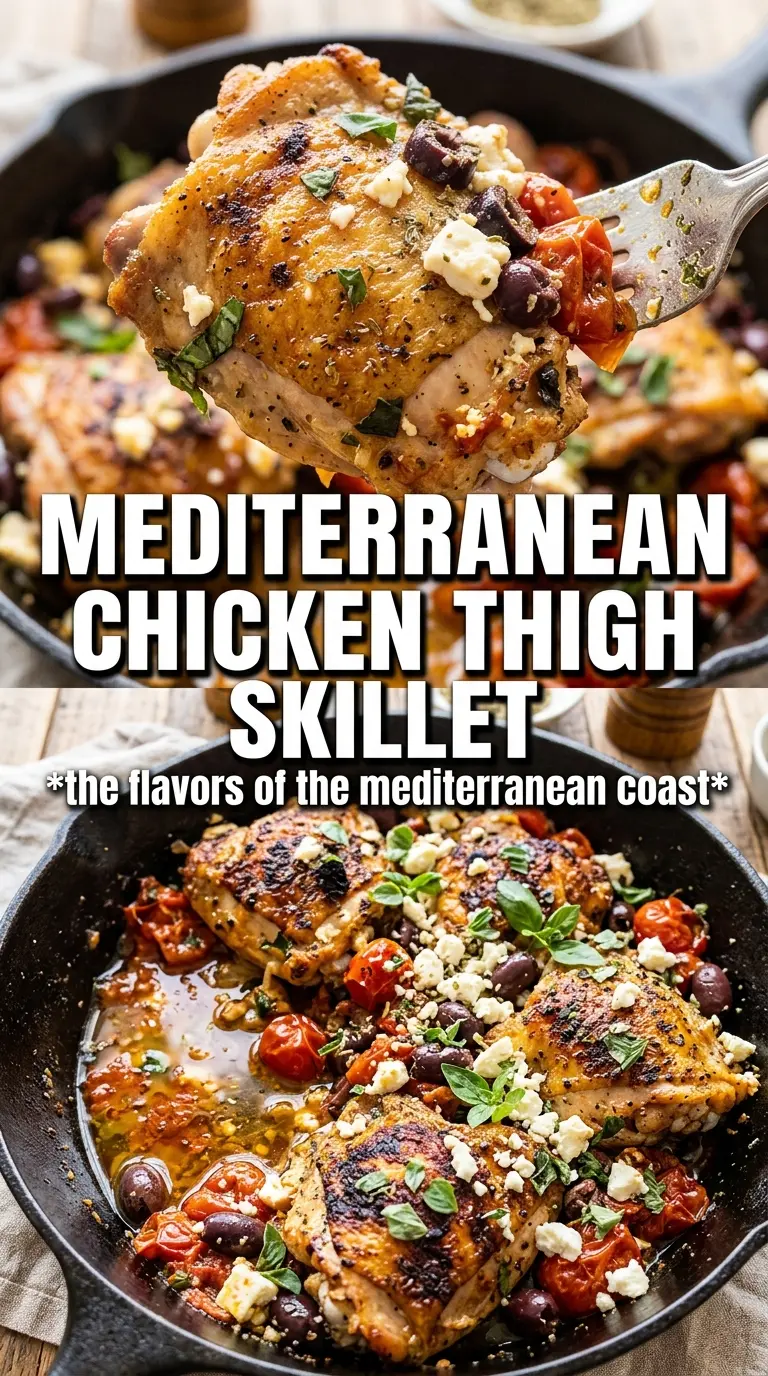
- Chicken thighs — Bone-in, skin-on thighs stay juicy in a hot oven and give you a better crust than boneless pieces. If you use boneless thighs, shorten the bake time and expect less draping, less dramatic browning, and a little less pan flavor.
- Olive oil — This carries the lemon, garlic, and herbs across the chicken and helps the skin brown. A good extra-virgin oil is worth using here because the flavor stays in the final pan juices.
- Lemon juice and zest — The juice brings acidity, but the zest is where the bright lemon aroma lives. Don’t skip the zest; without it, the marinade tastes flatter and more one-note.
- Feta — Use a block if you can and crumble it yourself. Pre-crumbled feta works, but it’s drier and usually less creamy once it hits the heat.
- Cherry tomatoes and kalamata olives — These are the built-in sauce. The tomatoes burst and soften while the olives bring salt and depth, so the pan ends up tasting layered instead of just lemony.
- Garlic, oregano, and thyme — These are the backbone of the marinade. Dried herbs are fine here because they stand up to roasting; fresh herbs would lose some of their punch before the chicken is done.
Building the Pan in the Right Order
Whisking the Marinade
Start by whisking the olive oil, lemon juice, lemon zest, garlic, oregano, and thyme until it looks slightly cloudy and unified. That means the garlic and herbs are suspended well enough to coat the chicken instead of sliding off. If the mixture looks separated, keep whisking for a few more seconds before adding the thighs. The chicken needs to sit in that mixture for 30 minutes, not hours, because the lemon is bright enough to season the meat without turning the surface mushy.
Giving the Chicken a Head Start
Arrange the thighs skin-side up in the baking dish and pour any remaining marinade over the top. Tuck the lemon slices and cherry tomatoes around the edges, not directly under the chicken, so the skin can still render and brown. Roast at 425°F until the skin starts to turn golden and the edges look taut, about 25 minutes. If the pan looks watery at this point, keep roasting; the moisture needs time to cook off before the olives go in.
Finishing With Olives and Feta
Scatter the olives around the chicken for the final stretch so they warm through without losing their shape. After another 10 minutes, the thighs should register done and the tomatoes should be soft and split. Crumble the feta over the hot pan and broil just long enough for the edges to soften and pick up a little color, usually about 3 minutes. Watch that last step closely; feta can go from lightly bronzed to dry in a blink.
Letting the Juices Settle
Finish with fresh parsley and give the chicken a short rest before serving. That pause keeps the juices in the meat instead of running out when you cut in. If you serve it straight from the oven, the texture still tastes good, but the first slice will spill more liquid than you want. A few minutes of rest makes the pan juices settle into something you can spoon over rice, potatoes, or bread.
How to Make This Mediterranean Chicken Thighs Recipe Fit Your Table
Dairy-Free Version
Skip the feta and finish with extra parsley and a few more olives. You lose the creamy, salty finish, but the dish stays bright and satisfying because the lemon, tomatoes, and olive oil already carry plenty of flavor.
Boneless Chicken Thighs
Boneless thighs work if that’s what you have, but they cook faster and won’t give you the same crisp skin. Start checking them earlier, and expect a softer, saucier result rather than a sharply roasted one.
No Kalamata Olives
Use another briny olive, or leave them out and add a pinch of extra salt at the end. The olives contribute a salty, savory contrast, so the dish will taste cleaner and a little less layered without them.
What to Serve It With
This is best with something that can catch the pan juices: rice, couscous, roasted potatoes, or a thick slice of crusty bread. You want a side that soaks up the lemony oil and tomato juices instead of competing with them.
Storage and Reheating
- Refrigerator: Store leftovers in an airtight container for up to 4 days. The skin softens as it sits, but the flavor deepens.
- Freezer: It freezes, though the tomatoes and feta soften more after thawing. Freeze the chicken and pan juices in a sealed container for up to 2 months for the best texture.
- Reheating: Reheat covered at 325°F until warmed through, then uncover for a few minutes to wake up the skin. The biggest mistake is blasting it in the microwave, which turns the chicken rubbery and the feta grainy.
Questions I Get Asked About This Recipe

Mediterranean Chicken Thighs
Ingredients
Equipment
Method
- Whisk olive oil, lemon juice, lemon zest, garlic, oregano, and thyme in a bowl until combined and fragrant.
- Marinate the chicken for 30 minutes while the oven preheats to 425F.
- Place chicken skin-side up in a baking dish and tuck lemon slices and cherry tomatoes around the thighs.
- Bake at 425F for 25 minutes, until the skin begins to golden and the tomatoes start to blister at the edges.
- Scatter kalamata olives around the chicken, then bake at 425F for 10 more minutes.
- Crumble feta over the top and broil for 3 minutes, until the feta softens and lightly browns.
- Garnish with fresh parsley and serve hot.