Slow cooker corned beef and cabbage turns a tough brisket into slices that pull apart cleanly with a fork, while the potatoes, carrots, and cabbage soak up the savory broth around it. The best part is the balance: the beef stays deeply seasoned, the vegetables soften without collapsing, and the cabbage keeps enough structure to feel like part of the meal instead of an afterthought.
What makes this version work is the order. The root vegetables go in first because they can handle the full cook time, while the cabbage waits until the end so it stays tender instead of turning dull and swampy. Rinsing the brisket before it goes into the slow cooker keeps the final broth from tasting too salty, and a small hit of apple cider vinegar helps brighten the rich meat without making it taste sharp.
Below, I’ve included the timing that keeps the cabbage from overcooking, plus a few swaps and storage notes if you want to stretch the meal into leftovers.
The brisket came out sliceable but still tender, and the cabbage held its shape instead of disappearing into the broth. My husband kept spooning the potatoes through the mustard at the table.
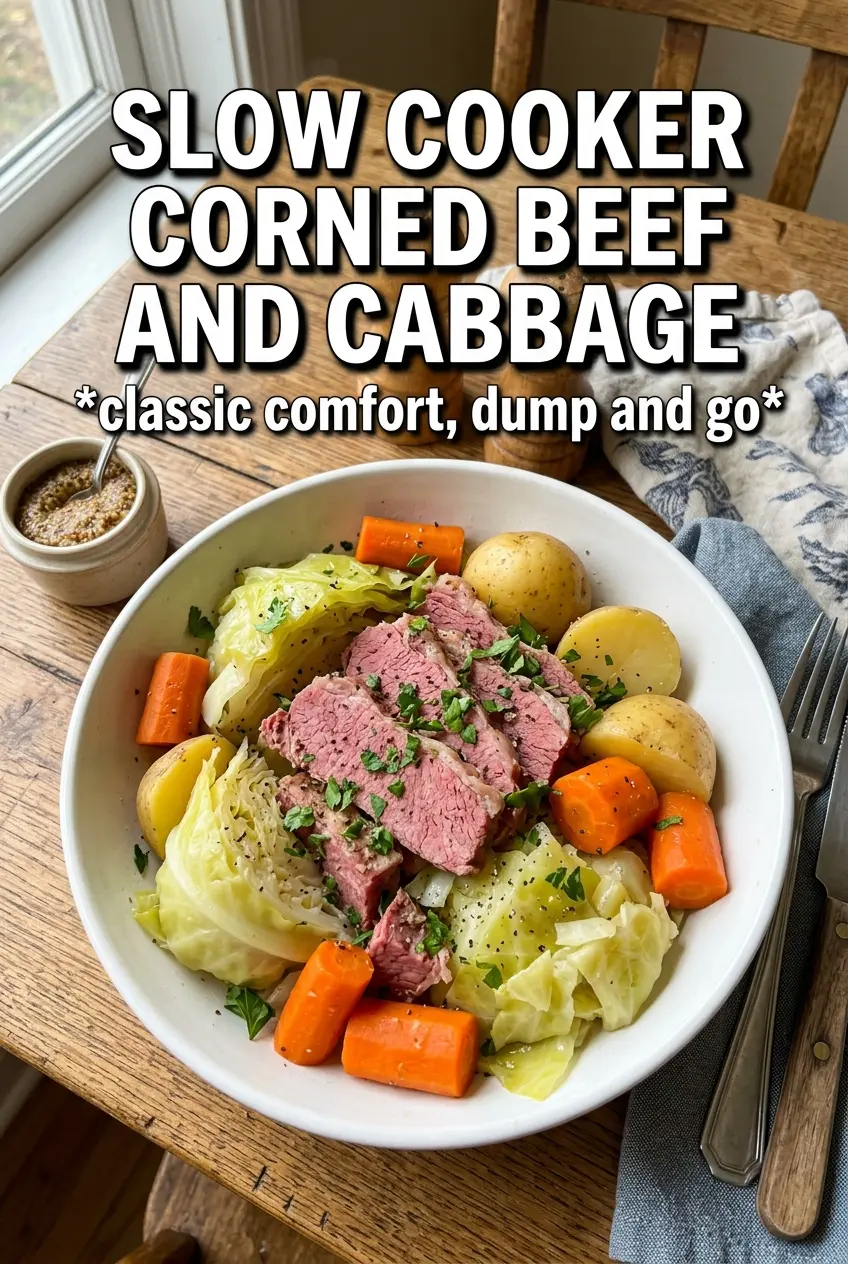
Slow Cooker Corned Beef and Cabbage with tender brisket, buttery potatoes, and mustard-ready slices
The Detail That Keeps the Brisket Tender Instead of Dry
Corned beef already starts out seasoned and cured, so the mistake most people make is treating it like a pot roast and cooking it too hot. Low heat is the whole game here. A slow cooker gives the brisket time to relax into tenderness without squeezing out all its juices, and cooking fat-side up helps the rendered fat baste the meat as it cooks.
The other thing that matters is restraint with the vegetables. If the cabbage goes in from the start, it loses its shape and tastes flat. Adding it later keeps the wedges intact and gives you that soft-but-still-defined texture that makes the plate look complete.
What Each Ingredient Is Doing in the Pot
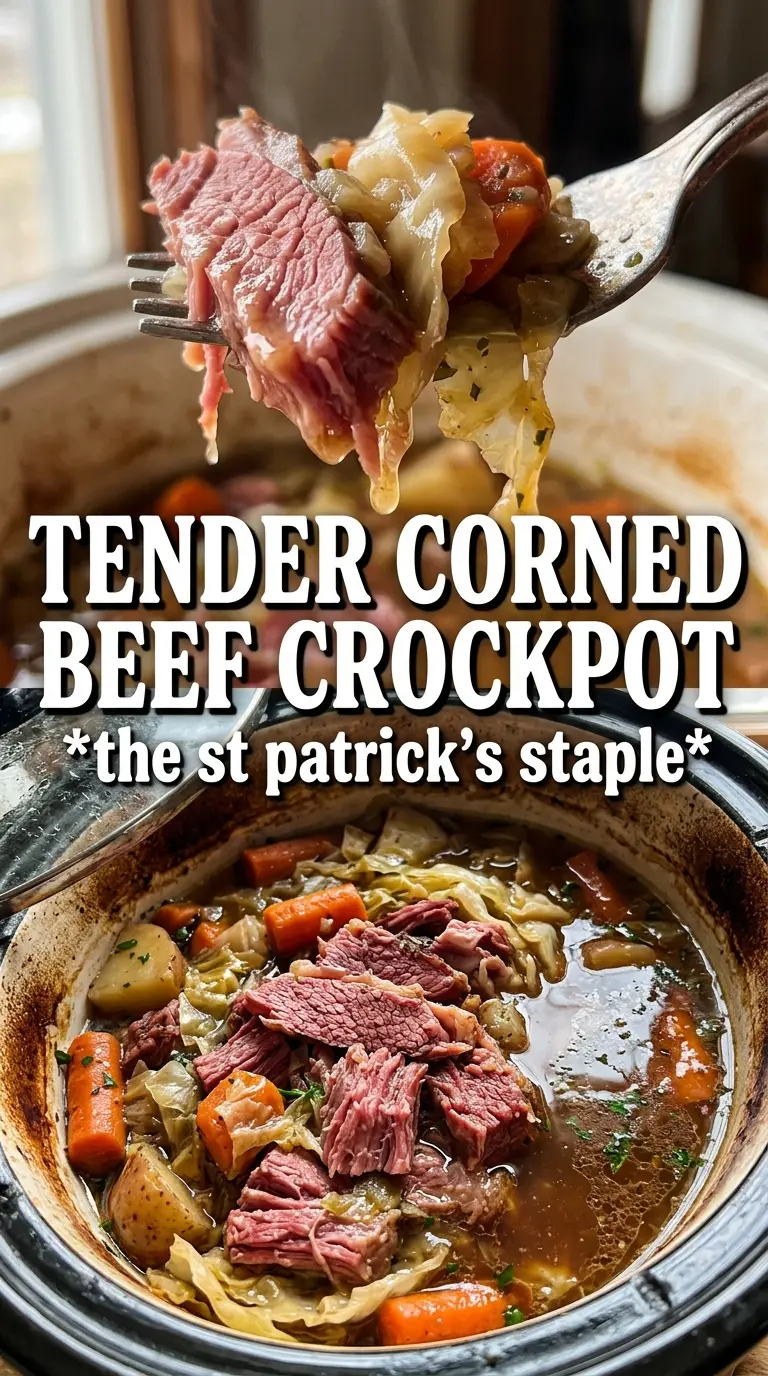
- Flat-cut corned beef brisket — This is the cut that softens well over long, gentle heat and slices neatly across the grain. Keep the spice packet; it carries the classic corned beef flavor. If yours is very salty, rinsing it under cold water makes a big difference in the final broth.
- Yukon Gold potatoes — They hold their shape better than russets and get creamy instead of mealy. Quarter them so they finish tender at the same time as the carrots. Red potatoes also work if that’s what you have.
- Green cabbage — This is added late on purpose. Wedges stay intact better than chopped cabbage, and the core helps each piece hold together. Savoy cabbage can work, but it softens a little faster.
- Beef broth, vinegar, and brown sugar — The broth gives the cooker enough liquid to braise rather than steam, the vinegar brightens the richness, and the brown sugar rounds out the saltiness. Don’t skip all three; they each pull in a different direction.
- Onion and garlic — These build a savory base underneath the brisket and vegetables. Smashed garlic gives a gentler background flavor than minced garlic, which can turn harsh over a long cook.
Building the Slow Cooker So Nothing Turns Mushy
Layering the vegetables first
Start with the potatoes, carrots, and onion at the bottom of the slow cooker. They sit in the liquid longest and need that head start to become tender by the time the brisket is ready. If you put the meat on the bottom, the vegetables can end up overcooked before the brisket has softened enough.
Setting the brisket in place
Rinse the corned beef under cold water, then lay it fat-side up over the vegetables. That fat layer helps protect the meat during the long cook and keeps the top from drying out. Sprinkle the spice packet and brown sugar over the brisket, then pour the broth and vinegar around it so the seasoning stays on the meat instead of washing off right away.
Adding the cabbage at the end
Cook the brisket on low for 8 to 9 hours, then press the cabbage wedges into the liquid for the last 2 hours. The cabbage should be tender at the core but still hold a wedge shape. If it goes in too early, the edges go limp and the flavor turns muddy.
Resting and slicing cleanly
Pull the brisket out and let it rest for 10 minutes before slicing. That pause keeps the juices from flooding out onto the board. Slice against the grain, and if the meat seems stringy, it usually means the knife followed the grain instead of cutting across it.
Ways to Adjust the Pot Without Losing the Point
Make it a little less salty
Rinse the brisket well before cooking and use low-sodium beef broth. That keeps the cured meat flavor without making the broth taste heavy or aggressive. If you still want more punch at the table, let the mustard do the work.
Turn it gluten-free
This recipe is naturally close to gluten-free as long as your broth and spice packet are certified gluten-free. Check the label on both, since packaged corned beef seasoning can vary by brand. The texture and cook time stay the same.
Swap in what you have for the vegetables
Parsnips or turnips can stand in for part of the potatoes if you want a little more earthiness. Just keep the pieces large enough that they don’t dissolve during the long cook. Avoid delicate vegetables like zucchini; they’ll disappear.
Storage and Reheating
- Refrigerator: Store the beef and vegetables in an airtight container for up to 4 days. The cabbage softens a little more as it sits, but the flavor deepens.
- Freezer: The sliced beef freezes well for up to 2 months, though the potatoes and cabbage lose some texture. Freeze the meat in broth if you can, and treat the vegetables as a bonus for short-term leftovers.
- Reheating: Reheat gently on the stovetop over low heat with a splash of broth, or in the microwave at medium power. High heat dries out the brisket fast, so warm it just until heated through.
Questions I Get Asked About This Recipe
Slow Cooker Corned Beef and Cabbage
Ingredients
Equipment
Method
- Place the quartered potatoes, carrots, and onion in the bottom of the slow cooker in an even layer, leaving some space between pieces so liquid can reach all sides.
- Add the smashed garlic, then pour the beef broth and apple cider vinegar over the vegetables so they’re mostly submerged.
- Rinse the corned beef brisket under cold water, then place it fat-side up on top of the vegetables so the fat helps keep the meat moist.
- Sprinkle the included spice packet and brown sugar over the brisket so the surface starts seasoning as it cooks.
- Cook on low for 8–9 hours, until the brisket is very tender and you can press it with a fork.
- During the last 2 hours of cooking, add the cabbage wedges and press them into the liquid so they soften and pick up the cooking juices.
- Remove the brisket from the slow cooker and let it rest for 10 minutes so the juices redistribute.
- Slice the brisket against the grain and serve it with the vegetables, then add whole grain mustard on the side.