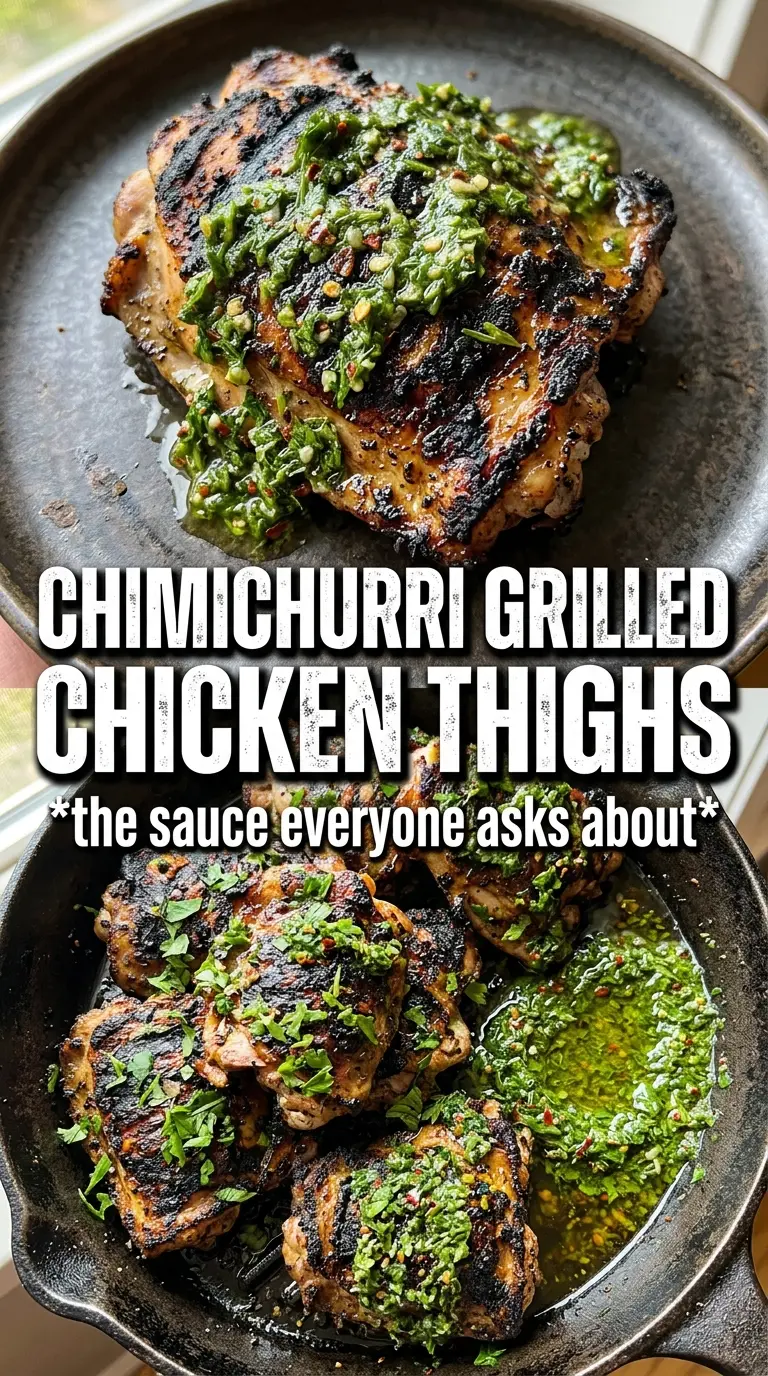
Chimichurri chicken thighs land with the kind of contrast that keeps them on repeat: crackly, charred skin on the outside and juicy dark meat underneath, all cut through with a bright herb sauce that wakes up every bite. The first spoonful of chimichurri hits the hot chicken and loosens into the pan juices, so you get both fresh and savory in the same mouthful.
Bone-in, skin-on thighs are the right cut here because they stay tender over the grill and give you enough fat for that deep browning on the skin. The chimichurri does double duty, too — a little goes into the marinade to season the meat, then the rest stays fresh for serving so the herbs keep their sharp edge instead of cooking down into something flat.
Below, I’ve included the small timing details that matter most, plus the one thing that keeps the sauce from turning muddy before it ever reaches the plate.
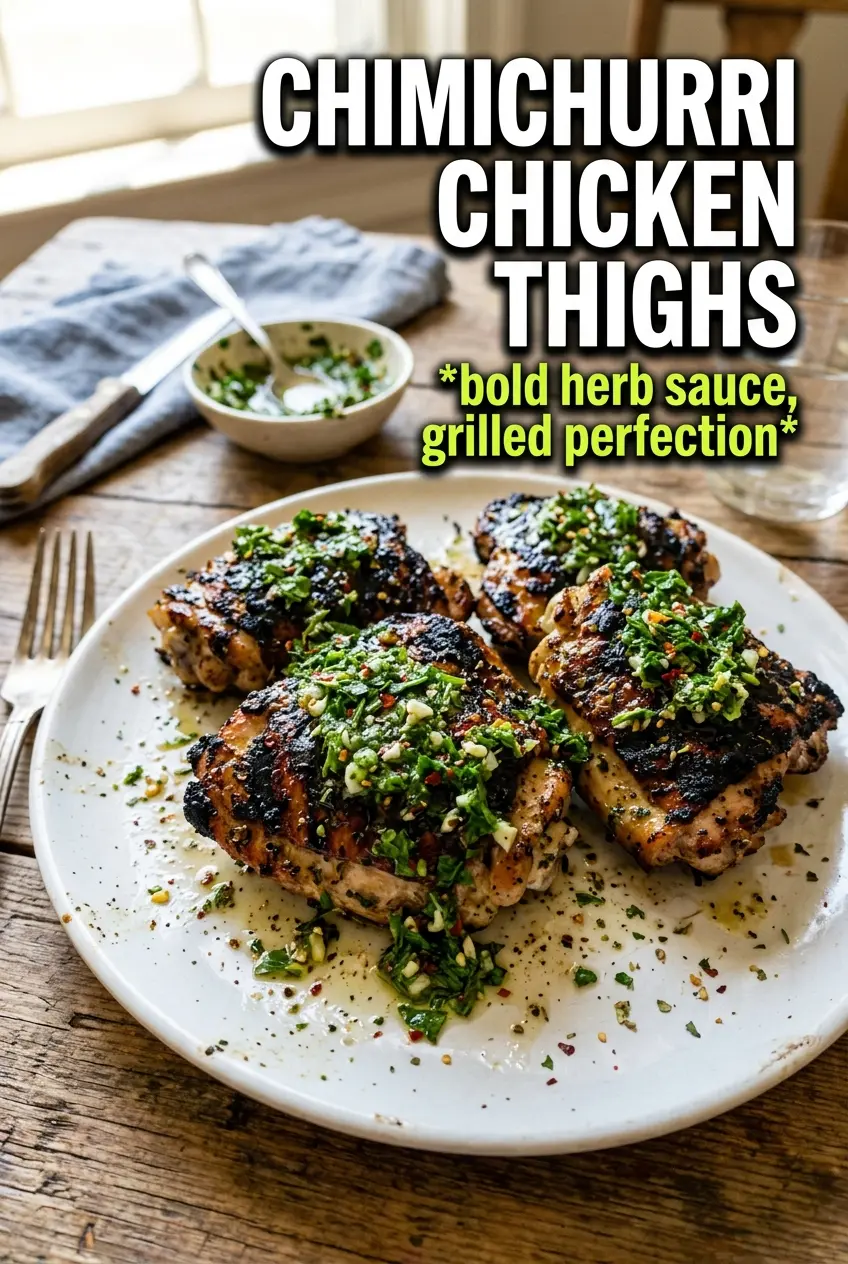
The skin got beautifully crisp on the grill, and I loved that the chimichurri stayed bright and chunky instead of turning oily or bitter.
Chimichurri chicken thighs with charred skin and a bright, chunky herb sauce are the kind of grill dinner worth keeping close at hand.
The Trick to Keeping Chimichurri Bright Instead of Muddy
The biggest mistake with chimichurri chicken is letting the sauce sit too long with the meat before serving. Chimichurri is at its best when it still tastes fresh, sharp, and a little rough around the edges, which is why the recipe uses part of it as a short marinade and saves the rest for the end. If you pour all of it on early, the herbs dull out and the garlic can turn harsh.
Chicken thighs also forgive the kind of heat that dries out leaner cuts. You can cook them long enough to build real char on the skin without losing the juiciness inside, as long as you let the grill do the work and avoid moving them around before the skin releases cleanly.
- Short marinating time — Thirty minutes is enough to season the meat without pulling moisture out of the herbs. Longer isn’t better here.
- Fresh sauce at the end — The reserved chimichurri keeps its color and bite, which is what gives the dish its punch.
- Skin-on thighs — The fat renders and helps the skin crisp. Boneless thighs can work, but they won’t give you the same texture.
What Each Ingredient Is Actually Doing in This Recipe
- Primary ingredient (the star) — Quality matters most. Choose the best you can find.
- Cooking medium (oil, butter, or broth) — This carries flavors and prevents dryness.
- Seasonings (salt, pepper, spices, herbs) — Layer flavors so nothing overpowers. Build depth gradually.
- Aromatics (garlic, onion, herbs) — Cook with fat to bloom flavors. Become the foundation.
- Supporting ingredients — Complement the main ingredient without overpowering it.
- Sauce or liquid (if applicable) — Brings flavors together. Balance richness with acid.
- Acid (lemon, vinegar, wine, or other) — Brightens and prevents flat-tasting results.
- Final finish (garnish, glaze, or sauce) — Prevents one-dimensional taste and adds visual appeal.
What the Parsley and Oil Are Doing in the Sauce
Flat-leaf parsley is the backbone of the chimichurri. It brings the clean, grassy flavor and the vivid green color, and curly parsley won’t give you the same taste or texture. Cilantro is optional, but if you like a more aromatic, slightly citrusy edge, it rounds the sauce out without taking it over.
Olive oil carries the herbs and vinegar and gives the sauce its pourable texture. Use a good-tasting oil here because there’s nowhere for a dull one to hide. Red wine vinegar sharpens everything and keeps the sauce from tasting heavy. If you need a swap, sherry vinegar is the closest stand-in; lemon juice works in a pinch, but it changes the profile and makes the sauce taste brighter and less classic.
Garlic should be pulsed, not puréed into a paste. A little texture keeps the sauce from tasting harsh. If your food processor makes it too smooth, stop early and finish by hand so the chimichurri still has that loose, spoonable bite.
Getting the Skin Crisp Before the Sauce Goes On
Building the Chimichurri First
Start with the sauce so it has time to sit while you work on the chicken. Pulse the parsley, cilantro if using, and garlic just until chopped, then drizzle in the olive oil and vinegar and stop when the mixture looks chunky and loose. If you overblend, the herbs can turn pasty and bitter instead of lively.
Coating and Resting the Chicken
Rub the thighs with olive oil, salt, and pepper, then work in just two tablespoons of the chimichurri. That light coating seasons the meat without drowning the skin, which matters because a wet surface steams instead of browns. The 30-minute rest is enough to help the flavors sink in without softening the skin too much.
Grilling for Deep Char
Place the thighs skin-side down over medium-high heat and leave them alone until the skin is crisp and deeply marked, usually 8 to 10 minutes. If they stick, they’re not ready to turn yet. Flip once and finish on the second side until the thickest part reaches 175°F; thighs need a little more time than breast meat to become tender.
Finishing While the Chicken Is Still Hot
Let the chicken rest for 5 minutes, then spoon the reserved chimichurri generously over the top. That pause keeps the juices inside the meat, and the hot chicken wakes up the sauce without cooking it. If you add the sauce straight from the bowl to the plate and then let the chicken sit too long, the skin loses some of its crispness.
Three Ways to Make This Grill Dinner Fit Your Table
Dairy-Free and Gluten-Free as Written
This recipe already fits both of those needs without any changes. The main thing to watch is cross-contamination on the grill if you’re serving it with bread or other gluten-containing sides.
No Cilantro Version
Leave out the cilantro and increase the parsley a little if you want to keep the sauce fully parsley-forward. The result is cleaner and more classic, with less herbal complexity but the same sharp, garlicky bite.
Oven-Broiled Back-Up
If grilling isn’t an option, broil the thighs skin-side up on a foil-lined sheet pan, then finish until the skin is crisp and the chicken reaches temperature. You’ll lose a little of the smoky grill flavor, but you’ll keep the charred edges and juicy center.
Storage and Reheating
- Refrigerator: Store the chicken and chimichurri separately for up to 4 days. The sauce will loosen and darken a bit, but it still tastes great.
- Freezer: Freeze the cooked chicken for up to 2 months. The chimichurri doesn’t freeze as well because the fresh herbs lose their texture, so make that fresh when you’re ready to serve.
- Reheating: Warm the chicken gently in a low oven or covered skillet until heated through. High heat dries out the meat and turns the skin leathery, so keep the reheating slow and use fresh sauce after warming.
Answers to the Questions Worth Asking
Chimichurri Chicken Thighs
Ingredients
Equipment
Method
- Pulse parsley, cilantro (if using), and garlic in a food processor until finely chopped and still chunky, then drizzle in 1/2 cup olive oil while pulsing.
- Add red wine vinegar, red pepper flakes, salt, and black pepper, then blend just until combined, keeping the texture chunky.
- Rub chicken thighs all over with 2 tablespoons olive oil, 1 teaspoon salt, and 1/2 teaspoon black pepper to evenly coat the skin.
- Coat the thighs with 2 tablespoons chimichurri, then marinate for 30 minutes.
- Preheat the grill to medium-high heat, keeping the grates hot for crisping the skin.
- Grill thighs skin-side down for 8-10 minutes until the skin is crispy and deeply charred.
- Flip the thighs and grill for 8-10 more minutes until the internal temperature reaches 175F.
- Rest the chicken for 5 minutes so juices redistribute and the skin stays crisp.
- Spoon fresh chimichurri generously over the top of the warm thighs so it pools around the chicken.