Seared chicken thighs and golden potato cubes in garlic parmesan cream sauce hit that sweet spot between comforting and sturdy. The chicken stays juicy, the potatoes soak up the sauce without turning mushy, and the whole skillet finishes with a glossy, spoon-coating cream sauce that clings to every bite. It’s the kind of dinner that feels a little richer than an ordinary weeknight pan meal, but it still comes together with straightforward steps and familiar ingredients.
What makes this version work is the order. The chicken gets a hard sear first, which builds flavor in the pan and leaves enough fat behind to help the potatoes brown. Then the garlic, broth, cream, and parmesan go in after the potatoes have had a chance to pick up color, so the sauce starts with depth instead of tasting flat. The oven does the final stretch of the cooking, which keeps the chicken from overcooking on the stove while the potatoes turn tender all the way through.
Below, I’ve included the little details that matter most: how to keep the sauce smooth, what to do if your potatoes are slow to soften, and a few simple swaps if you need to adapt the dish for what’s already in your kitchen.
The sauce turned out silky and thick, and the potatoes picked up all that garlic-parmesan flavor instead of getting soggy. I used thighs like you suggested and they stayed juicy right through the bake.
Like this creamy one-pan chicken and potatoes? Save it to Pinterest for the nights when you want a rich skillet dinner with almost no cleanup.
The Moment Most Cream Sauces Go Grainy
The sauce stays smooth here because the heat is controlled at the right point. Parmesan does not like a hard boil, and heavy cream does not need one to thicken. If the pan is too hot when the cheese goes in, the sauce can turn sandy or separate instead of turning silky and spoonable.
The other thing that matters is the order of operations in the skillet. Browning the chicken first leaves flavorful drippings behind, and those browned bits loosen into the sauce once the broth goes in. That is where the depth comes from. The potatoes also need that first sauté in butter so they start cooking before they ever meet the oven.
- Don’t rush the cheese. Stir the parmesan in off the hottest part of the burner if the sauce is moving too fast. It should melt into the cream in a smooth stream, not clump on contact.
- Give the potatoes a head start. A five-minute sauté helps the cubes brown at the edges and keeps them from tasting steamed after baking.
- Use the oven to finish, not rescue. The skillet should already smell rich and look lightly thickened before it goes into the oven.
What Each Ingredient Is Actually Doing In This Skillet
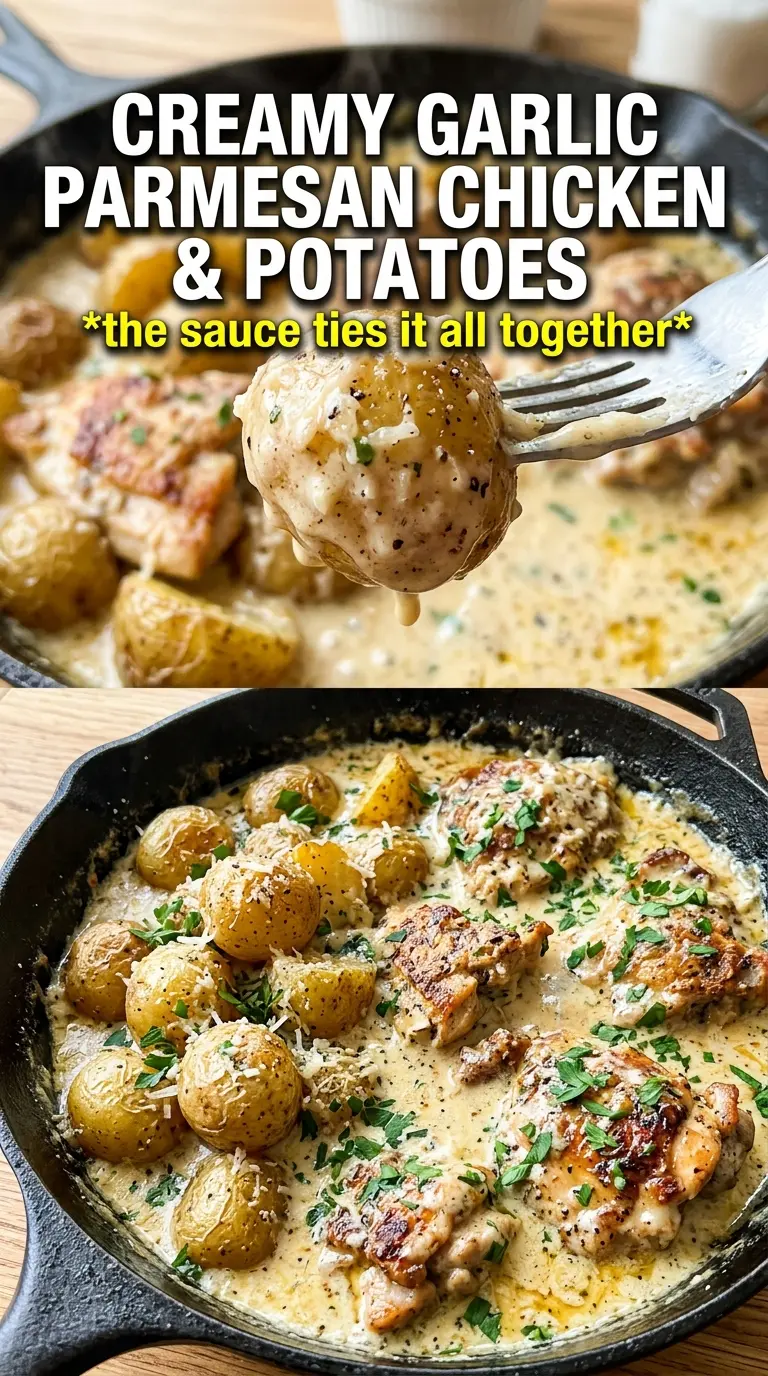
- Chicken thighs — Bone-in thighs stay juicier than breasts through the long bake, and the skin gives you the best sear. If you use boneless thighs, shorten the oven time and watch for doneness earlier.
- Yukon gold potatoes — These hold their shape and turn creamy inside, which matters because they sit in the sauce for a while. Russets tend to break down too much here.
- Heavy cream — This is what gives the sauce body without curdling as easily as milk. Half-and-half will work in a pinch, but the sauce will be thinner and less rich.
- Parmesan — Use finely grated parmesan so it melts evenly. Pre-shredded cheese often contains anti-caking agents that make the sauce less smooth.
- Chicken broth — It loosens the sauce and pulls flavor from the browned bits in the pan. Water will thin things out, but it won’t give the same savory base.
- Garlic and garlic powder — The fresh garlic gives the sauce its punch, while the garlic powder seasons the chicken right from the start. That layered seasoning makes the final dish taste built, not dumped together.
Building The Skillet So The Potatoes Cook Through
Seasoning and Searing the Chicken
Season the chicken well before it ever hits the pan. When the skin goes into the hot olive oil, you want an immediate sizzle and a deep golden color developing in about six minutes. If the heat is too low, the skin will just sit there and render without browning, which leaves you with pale chicken and less flavor in the pan.
Starting the Potatoes in Butter
After the chicken comes out, the potatoes go into the same skillet with butter. They should pick up some color at the edges and start to soften before the garlic goes in. If the pan looks dry, add the butter rather than more oil; butter gives the potatoes a better flavor and helps the garlic bloom without turning harsh.
Making the Cream Sauce
Pour in the broth first and stir up the browned bits from the bottom. Then add the cream and parmesan and keep the heat steady, not aggressive. The sauce will look loose at first, then turn slightly thicker and glossier as the cheese melts. If it seems too thin, give it another minute or two before judging it; parmesan needs a little time to thicken the sauce naturally.
Baking Until the Chicken and Potatoes Finish Together
Set the chicken skin-side up so the top stays crisp while the lower part finishes in the sauce. The potatoes are done when a knife slides in easily with no resistance. If the chicken is cooked but the potatoes still feel firm, cover the skillet loosely and give it a few more minutes instead of cranking up the heat, which can split the sauce.
How to Adapt This Chicken and Potatoes With Garlic Parmesan Cream Sauce
Use boneless chicken thighs for a faster bake
Boneless thighs work well if you want a shorter cook time, and they still stay tender in the sauce. Cut the oven time back and start checking early, because they cook faster and can dry out if you leave them in as long as bone-in thighs.
Make it gluten-free without changing the texture
This recipe is naturally gluten-free as written, as long as your broth is certified gluten-free. The sauce gets its body from cream and parmesan, not flour, so you do not need a starch slurry or roux to hold it together.
Swap in boneless skinless chicken breasts
Chicken breasts can work, but they need a shorter bake and a little more attention so they do not turn dry. Pound them to an even thickness and pull the skillet as soon as the center reaches doneness, because breasts overcook faster than thighs in a creamy sauce.
Lighter cream sauce option
Half-and-half can replace the heavy cream if you want a lighter finish, but the sauce will be thinner and a little less stable. Keep the heat lower and don’t let it boil hard, or the texture can turn grainy before the cheese has a chance to melt cleanly.
Storage and Reheating
- Refrigerator: Store in an airtight container for up to 3 days. The sauce will thicken as it chills, and the potatoes will soften a little.
- Freezer: I don’t recommend freezing this one. Cream sauces with parmesan can separate when thawed, and the potatoes change texture.
- Reheating: Rewarm gently on the stove over low heat or in the oven covered with foil. Add a splash of broth or cream if the sauce has tightened up, and avoid high heat so the sauce does not split.
Answers to the Questions Worth Asking
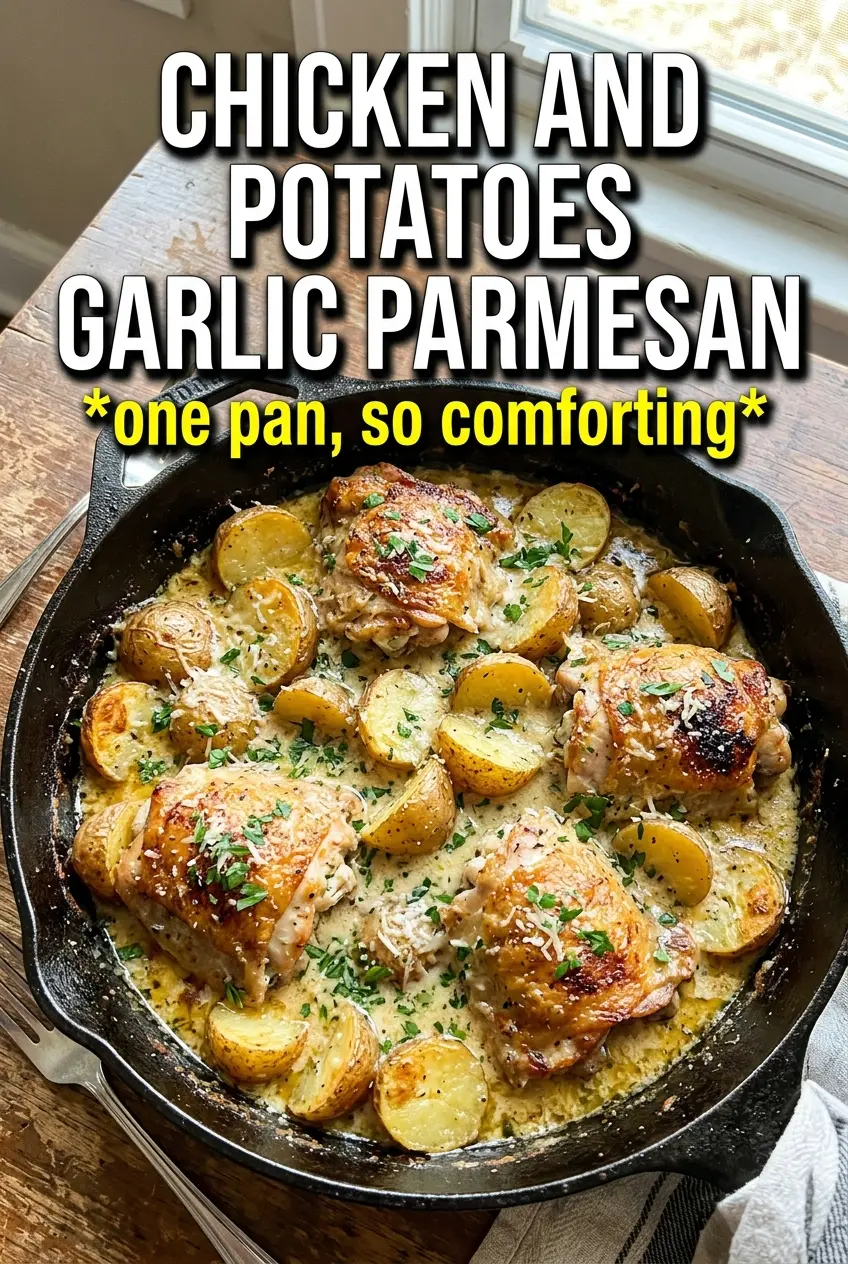
Chicken And Potatoes With Garlic Parmesan Cream Sauce
Ingredients
Equipment
Method
- Preheat oven to 400°F. Season chicken thighs with salt, pepper, and garlic powder.
- Heat olive oil in a large oven-safe skillet over medium-high heat. Sear chicken skin-side down for 6 minutes until golden, then remove to a plate.
- In the same skillet, sauté potato cubes in butter over medium heat for 5 minutes. Add garlic and cook for 1 minute.
- Pour in chicken broth and cream, then stir in parmesan and Italian seasoning. Cook until the sauce begins to thicken.
- Nestle chicken skin-side up into the potatoes and sauce. Bake for 30–35 minutes, until chicken is cooked through and potatoes are tender.
- Garnish with fresh parsley and extra parmesan. Rest 2 minutes before serving so the sauce clings to the potatoes.