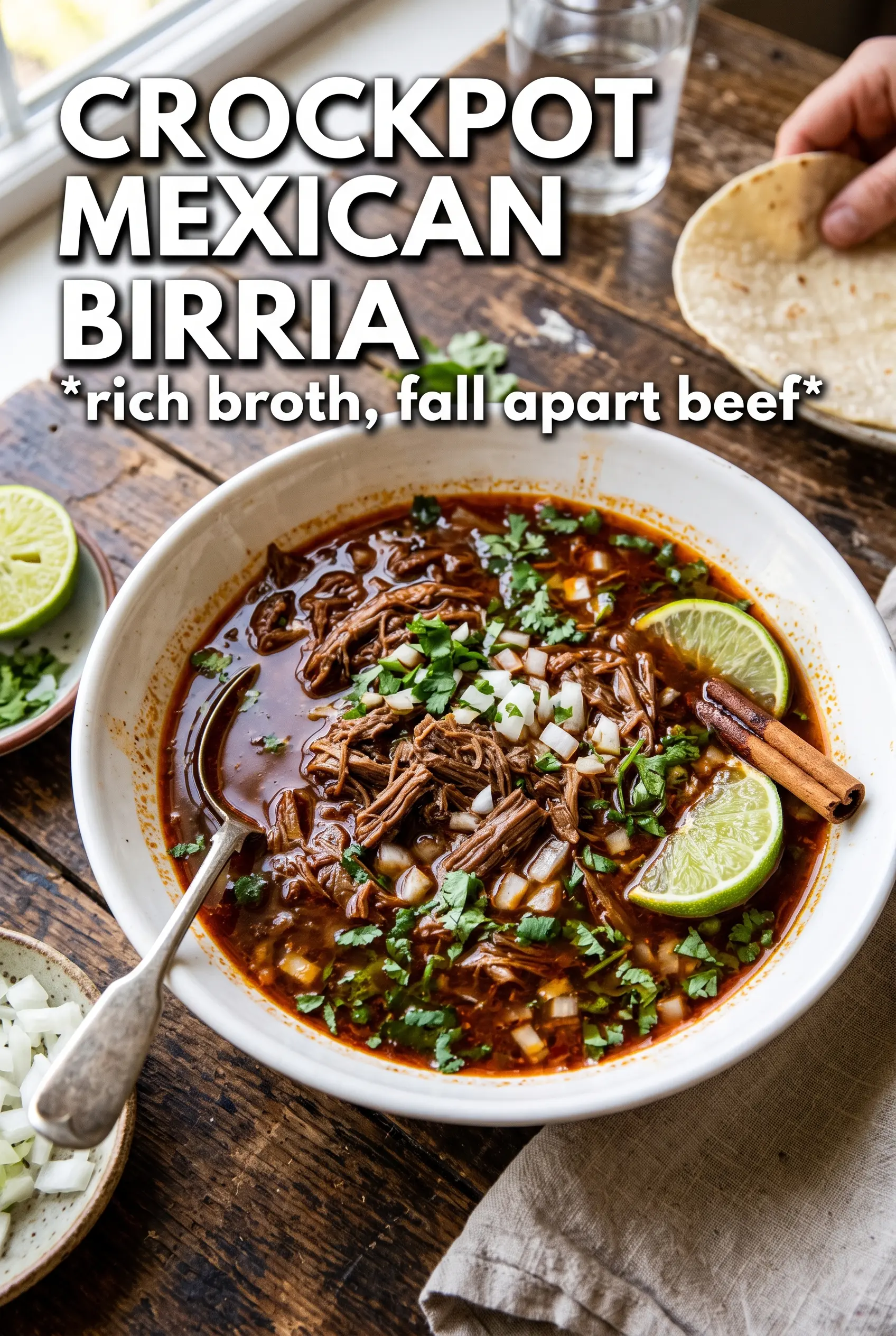
Slow-simmered beef birria turns rich, smoky, and deeply savory in the crockpot, with meat that shreds into juicy strands and a consommé that tastes like it cooked all day because it did. The tortillas crisp up in the rendered fat, the cheese melts into the folds, and every dip into that brick-red broth brings the whole thing together.
What makes this version work is the chile blend. Guajillo brings clean red chile flavor, ancho adds fruitiness, and pasilla gives a darker, earthier note that keeps the sauce from tasting flat. Toasting the chiles first wakes them up, but the real payoff comes from blending them until completely smooth so the sauce turns silky instead of gritty.
Below, I’ve included the small details that matter: how to keep the sauce balanced, how to skim the fat for the best dipping, and a few swaps if you need to work with what’s already in the pantry.
The consommé was silky and the beef shredded without any fight. I dipped the tortillas in the fat like you suggested and they crisped up beautifully without getting greasy.
Love the crispy birria tacos and dark consommé? Save this Crockpot Mexican Birria for the next time you want a slow-cooked dinner that tastes restaurant-worthy.
The Reason Birria Stays Rich Instead of Turning Flat
The mistake that ruins a lot of birria is rushing the chile base. If the chiles don’t get toasted first, the sauce can taste dull and muddy instead of layered. If they’re blended before they’re softened enough, you’ll get a grainy consommé that never turns silky, no matter how long it cooks.
The other thing that matters here is balance. Beef chuck has enough fat and connective tissue to stand up to eight hours in the slow cooker, but it still needs acid and spice to keep the broth from tasting heavy. That little bit of vinegar brightens the sauce, while the cinnamon and bay leaf round it out without making it taste like dessert.
- Toasting the dried chiles wakes up their oils and deepens the flavor fast. Thirty seconds per side is enough; any longer and they’ll turn bitter.
- Fire-roasted tomatoes give the sauce body and a subtle charred sweetness that regular tomatoes don’t quite match.
- Beef chuck roast is the cut that gives you those tender, shreddable strands. Leaner beef will dry out before the consommé gets its full flavor.
What Each Ingredient Is Doing in the Pot

- Guajillo chiles bring the clean, red chile backbone. If you only have guajillo, the birria will still work, but the flavor will be a little less deep than with the full chile blend.
- Ancho chiles add sweetness and a soft raisin-like note that keeps the sauce from tasting sharp.
- Pasilla chiles give the consommé its darker, earthier edge. That’s the flavor that makes birria taste slow-cooked and complex.
- Beef broth helps the blender move and gives the sauce a head start on richness. A good boxed broth is fine here because the chiles do most of the heavy lifting.
- Apple cider vinegar keeps the broth from tasting heavy. Don’t skip it; the acidity is what makes the fat taste savory instead of greasy.
- Oaxaca cheese or mozzarella both melt well, but Oaxaca gives you that stretchier, more traditional pull. Mozzarella is the easy substitute when that’s what you’ve got.
Building the Birria So the Broth Stays Smooth
Toast and soak the chiles
Set the dried chiles in a dry skillet over medium heat and turn them just until they smell fragrant. If they blister too fast or darken too much, they’ll turn bitter and the bitterness will carry all the way through the pot. Soak them in hot water until they’re soft enough to tear easily, which makes the blender do its job without leaving flecks behind.
Blend the sauce until it looks like paint
Blend the softened chiles with the tomatoes, onion, garlic, broth, vinegar, and spices until the mixture is completely smooth. Stop and scrape down the blender if you need to; any little bits left behind show up in the consommé later. If your blender is struggling, add a splash more broth instead of forcing it thicker than it can handle.
Cook low and let the beef collapse
Pour the sauce over the beef in the slow cooker with the cinnamon stick and bay leaves, then cook on low until the meat pulls apart without resistance. The broth should be gently bubbling at the edges, not boiling hard, or the meat can tighten up before it gets tender. When it’s done, the beef should shred with two forks and the sauce should look deep red and glossy.
Skim the fat before you crisp the tortillas
Once the beef is out, skim the fat from the surface of the consommé and save it in a separate bowl. That fat is what gives the tortillas their golden crust and those crisp, stained edges. If you cook the tacos in plain oil instead, they’ll fry up, but they won’t taste like birria.
How to Adapt This for Different Kitchens and Different Eaters
Dairy-Free Birria Tacos
Leave out the cheese and pile the tacos with beef, onion, and cilantro only. You still get the full birria experience because the real flavor lives in the chile broth and the crisped tortilla.
No Pasilla Chiles
Use an extra ancho chile if pasilla isn’t available. The sauce will be a little softer and less dark, but it’ll still have that rounded, smoky depth birria needs.
Make It Ahead for Faster Taco Night
Cook the beef and sauce a day ahead, then chill it overnight. The fat rises and firms up on top, which makes skimming easier and gives you an even better dipping broth the next day.
Storage and Reheating
- Refrigerator: Store the beef and consommé separately for up to 4 days. The broth will thicken as it chills and the fat will set on top.
- Freezer: Freezes well for up to 3 months. Pack the beef and broth in separate containers if you can, so the texture stays cleaner when thawed.
- Reheating: Reheat the consommé gently on the stove until hot, then warm the beef in a little broth so it doesn’t dry out. Don’t boil it hard or the shredded meat can turn stringy.