Golden chicken thighs over creamy orzo make this Tuscan chicken and orzo skillet feel like a full dinner without the extra pans. The orzo turns silky as it cooks in the broth and cream, then picks up the sweetness from sun-dried tomatoes, the sharp edge of parmesan, and the freshness of spinach. The chicken finishes right on top, so every bite gets that rich pan sauce and a little bit of the seared crust.
What makes this version work is the order. The chicken gets a hard sear first, which builds flavor in the skillet, then the onion, garlic, and sun-dried tomatoes go in after so they soften without burning. Toasting the orzo for a minute before adding the liquid gives the pasta a deeper, nuttier flavor and helps it hold its shape instead of turning mushy. The result is creamy, but not heavy, with enough texture to keep each bite interesting.
Below you’ll find the timing that keeps the orzo tender and the chicken juicy, plus a few smart swaps if you need to adjust for what you have on hand. Once you’ve made it once, this is the kind of skillet dinner that starts showing up in your regular rotation fast.
The orzo turned out creamy without getting gluey, and the sun-dried tomatoes gave the sauce a rich, sweet bite. I loved that the chicken finished right in the skillet and stayed juicy.
Save this Tuscan chicken and orzo skillet for the nights when you want a creamy one-pan dinner with golden chicken and no extra cleanup.
The Trick to Keeping the Orzo Creamy, Not Clumpy
The biggest mistake with skillet orzo is treating it like plain pasta. It needs enough liquid to simmer gently, and it needs to be stirred often enough to keep the starch moving through the pan. If the heat is too high, the cream can reduce before the orzo is tender, which leaves you with a thick, sticky base and hard pasta in the middle.
This skillet stays balanced because the orzo cooks in a mix of broth and cream, which gives it both flavor and enough liquid to finish properly. The parmesan goes in near the end, after the heat drops a little, so it melts into the sauce instead of turning grainy. That small detail makes the difference between a smooth, spoonable dinner and one that seizes up in the pan.
What Each Ingredient Is Doing in the Pan
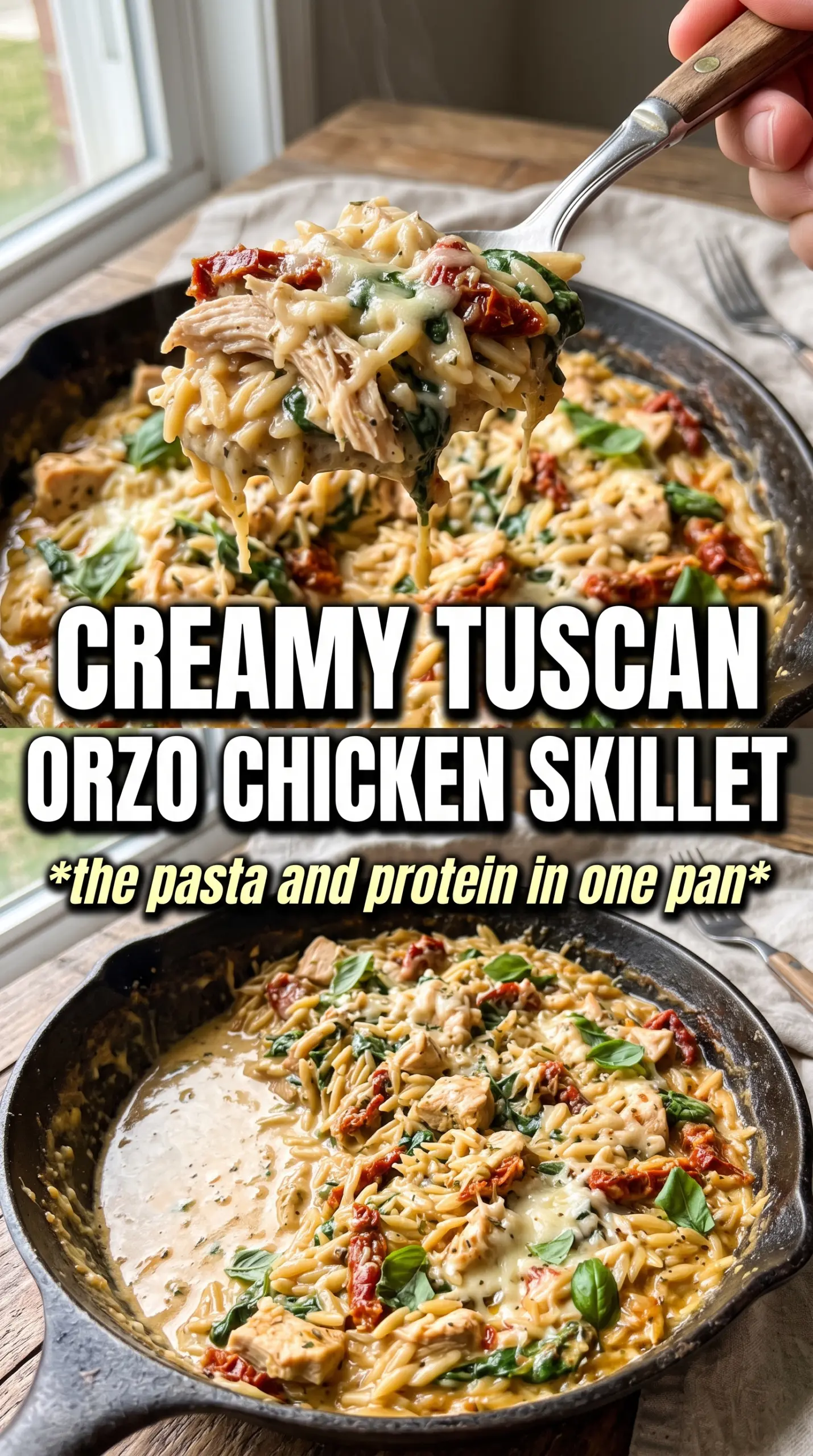
- Chicken thighs — Thighs stay juicy through the final covered simmer, which matters here because they finish cooking on top of the orzo. Chicken breast can work, but it dries out faster and needs a shorter finish time.
- Orzo — This pasta acts like rice and pasta at the same time, soaking up the sauce while keeping a little bite. Regular pasta shapes won’t give you the same creamy skillet texture.
- Sun-dried tomatoes — They bring concentrated sweetness and acidity that cuts through the cream. Use the chopped kind packed in oil or drained well if they’re very oily; either way, don’t skip the chopping or you’ll get uneven bites.
- Heavy cream — This is what gives the sauce its lush texture. Half-and-half can work in a pinch, but it makes the sauce looser and a little less stable.
- Parmesan — Freshly grated parmesan melts more smoothly than the shelf-stable pre-shredded kind, which can stay sandy in the sauce. If you want the cleanest finish, grate it yourself.
- Spinach — It folds in at the end and softens just enough to disappear into the sauce without turning dull or overcooked. Add it earlier and it loses its color and fresh taste.
How to Build the Skillet Without Losing the Sear
Seasoning and Searing the Chicken
Coat the chicken thighs with paprika, Italian seasoning, salt, and pepper before they hit the pan. The skillet should be hot enough that the chicken sizzles right away; that sound is your cue that the surface is browning instead of steaming. Give it time to develop a deep golden crust before turning it. If the chicken sticks hard, it usually needs another minute or two to release naturally.
Softening the Aromatics
Once the chicken comes out, the onion goes in first so it can soften and pick up the browned bits in the pan. Garlic and sun-dried tomatoes follow after the onion has lost its raw edge, because garlic burns fast and turns bitter. You’re looking for the garlic to smell fragrant and the tomatoes to look glossy and slightly darker around the edges.
Cooking the Orzo in the Sauce
Add the orzo and stir it for a minute before pouring in the broth and cream. That quick toast keeps the pasta from tasting flat and helps it hold up in the sauce. Keep the simmer gentle; if the mixture boils hard, the liquid can evaporate too fast and the orzo will cook unevenly. Stir occasionally so nothing settles and scorches on the bottom.
Finishing With Cheese and Greens
When the orzo is nearly tender, stir in the parmesan and spinach. The heat from the skillet is enough to melt the cheese and wilt the greens without overcooking them. If the sauce looks too thick at this point, add a splash of broth to loosen it before the chicken goes back in. Nestle the chicken on top, cover the pan, and let it finish until the juices run clear and the center reaches temperature.
How to Adapt This Skillet When You Need a Different Finish
Gluten-Free Version
Use a gluten-free orzo-style pasta if you can find one, and watch it closely because some brands soften faster than wheat orzo. If the package recommends a different liquid ratio, follow that cue and keep the simmer gentle so the pasta doesn’t break apart.
Dairy-Free Skillet
Swap the heavy cream for full-fat coconut milk or an unsweetened dairy-free cooking cream, and skip the parmesan or use a dairy-free alternative. The sauce will be a little less sharp and more mellow, but it still turns creamy enough to coat the orzo.
Chicken Breast Instead of Thighs
Chicken breast works if that’s what you have, but cut the covered finish short and check it early. Breast meat dries out faster than thighs, so pull it as soon as it reaches doneness and let it rest on top of the orzo instead of cooking much longer.
Make It Meatless
Skip the chicken and use vegetable broth, then add sautéed mushrooms or white beans for body. You lose the seared meat flavor, so lean harder on the sun-dried tomatoes, parmesan, and a good browning on the vegetables to keep the dish satisfying.
Storage and Reheating
- Refrigerator: Store leftovers in an airtight container for up to 3 days. The orzo will thicken as it sits, which is normal.
- Freezer: This dish doesn’t freeze well because the cream sauce can separate and the orzo turns soft after thawing.
- Reheating: Warm it gently on the stove or in the microwave with a splash of broth or water. High heat is what makes the sauce seize and the chicken dry out, so reheat slowly and stir once or twice.
Questions I Get Asked About This Recipe
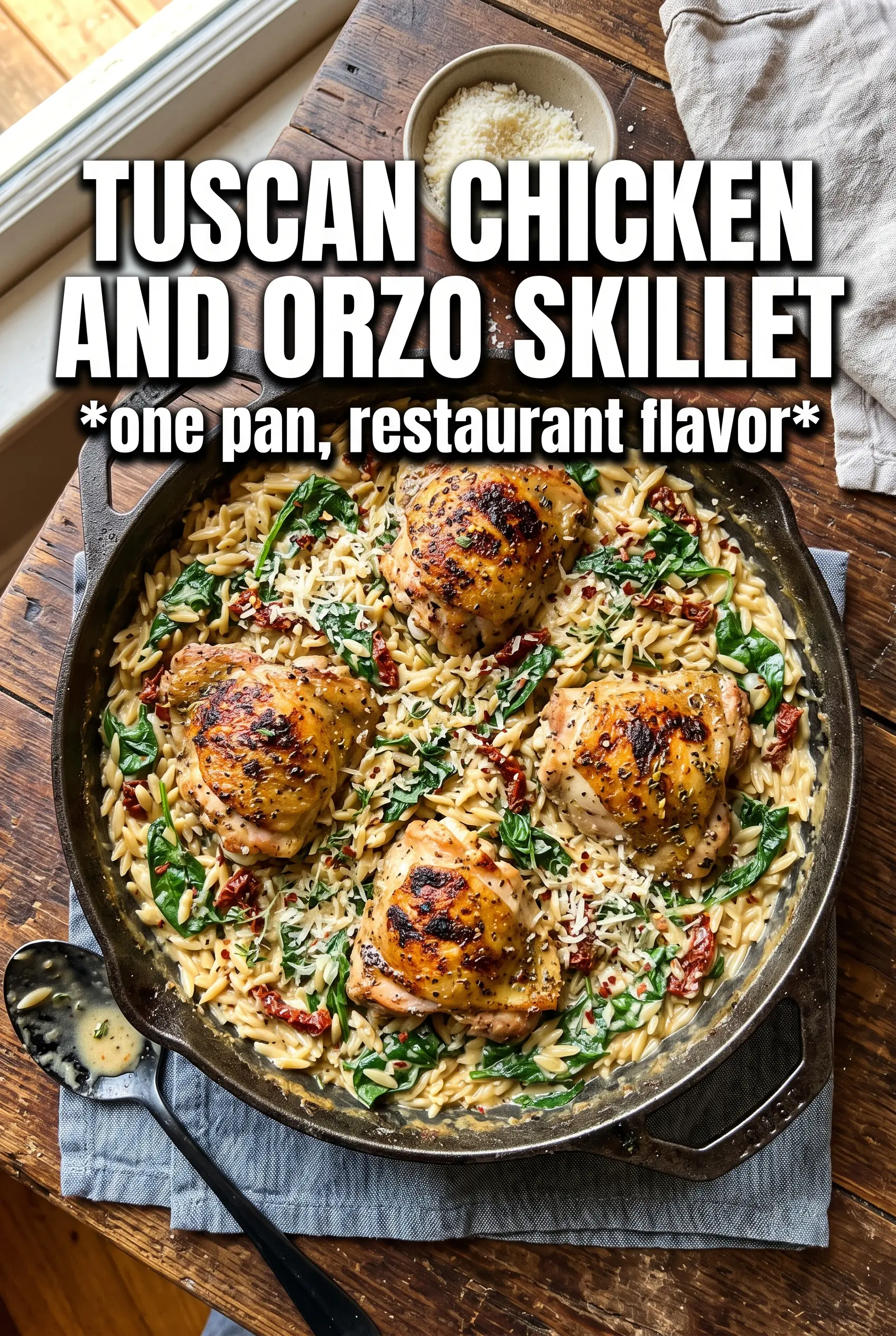
Tuscan Chicken And Orzo Skillet
Ingredients
Equipment
Method
- Season the boneless chicken thighs with smoked paprika, Italian seasoning, salt, and pepper. Pat to an even coating so seasoning stays on the surface.
- Heat olive oil in a large skillet over medium-high heat, then sear the chicken thighs 5-6 minutes per side until golden. Remove to a plate when they release easily and are browned on both sides.
- Sauté the onion for 3 minutes until softened. Add the minced garlic and chopped sun-dried tomatoes and cook 2 minutes, stirring so the tomatoes warm through.
- Add the orzo pasta and toast briefly, then pour in the chicken broth and heavy cream. Stir to fully combine, scraping any browned bits from the bottom.
- Simmer for 10 minutes, stirring occasionally, until the orzo is nearly tender. Keep the liquid at a gentle bubbling for even cooking.
- Stir in the parmesan and baby spinach and cook until the spinach wilts. The sauce should thicken and look creamy as the parmesan melts.
- Nestle the chicken thighs back on top, cover, and cook 5 more minutes until the chicken is cooked through. Use the cover to steam the top and finish the center without drying the sauce.
- Garnish with fresh basil for serving. Serve hot straight from the skillet.