Sticky, bronzed baked honey mustard chicken thighs are the kind of dinner that lands on the table looking like you worked a lot harder than you did. The glaze turns glossy in the oven, the edges caramelize into little savory-sweet patches, and the chicken stays juicy underneath that tangy coating. It’s the sort of dish that gets scraped clean from the pan before anyone reaches for seconds of anything else.
The trick is in the balance: enough Dijon to keep the honey from turning cloying, enough whole grain mustard to give the sauce texture and little pops of sharpness, and just enough oil to help the glaze cling instead of sliding off. Baking the thighs skin-side up at high heat gives you a better shot at real color, and the short broil at the end pushes the top into that deep lacquered finish without drying out the meat. Thighs are forgiving, but the glaze still needs the right treatment.
Below, I’ve covered the part that matters most — how to get the sauce to caramelize without burning, which mustard matters more than you think, and a few smart swaps if you need to work with what’s already in the fridge.
The glaze browned beautifully and stayed on the chicken instead of pooling in the dish. I used the broiler for just two minutes and the skin turned sticky and crisp without drying out the thighs.
Save these honey mustard chicken thighs for a fast oven dinner with a sticky glaze and crisp, caramelized edges.
The Reason the Glaze Sticks Instead of Sliding Off
Honey mustard chicken can go wrong in a very specific way: the sauce looks great in the bowl, then ends up puddled in the pan while the chicken bakes underneath a thin, dull coating. That happens when the glaze is too loose or the chicken goes into a pan that’s too crowded. This version solves both problems by keeping the glaze thick enough to cling and by giving the thighs enough space for the heat to hit the skin and start browning right away.
Bone-in, skin-on thighs matter here because they bring fat, structure, and a better surface for caramelization. Boneless chicken will cook faster, but it won’t give you the same contrast between sticky glaze and crisped edges. The other thing that matters is the oven temperature: 425°F is hot enough to encourage browning before the honey has a chance to burn.
- Thighs with skin on — They hold up to the heat and give the glaze something worth clinging to. Boneless thighs still work, but you’ll lose some of the crackly edges.
- Dijon mustard — This is the backbone of the sauce. It brings sharpness and body, and there isn’t a substitute that gives the same clean bite.
- Whole grain mustard — Those little mustard seeds add texture and keep the glaze from tasting one-note. If you only have Dijon, the chicken still works; the sauce just comes out smoother.
What Each Ingredient Is Doing in the Pan
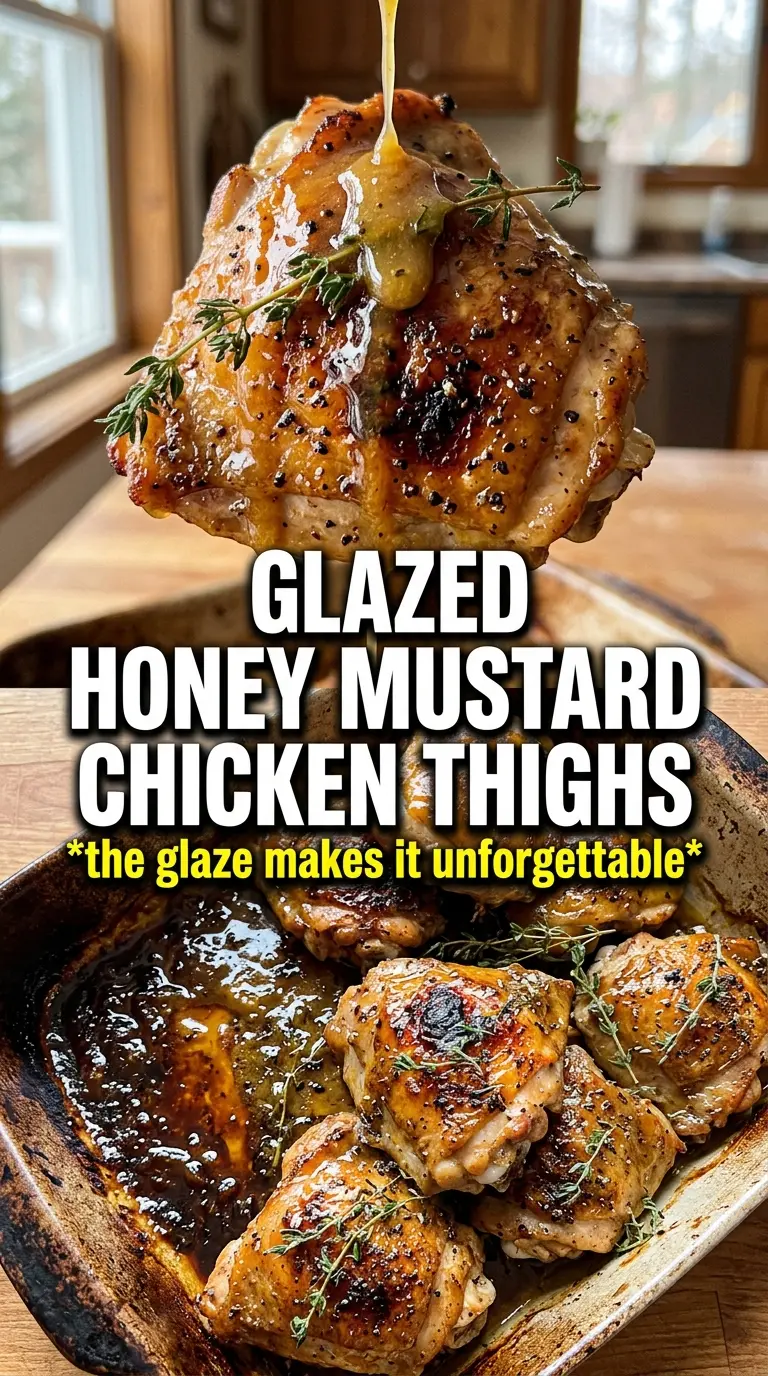
- Olive oil — It helps the glaze spread evenly and keeps the honey from tightening up too fast in the oven. You don’t need a fancy bottle here, just something with decent flavor.
- Garlic and lemon juice — Garlic gives the glaze a savory edge, and lemon keeps the sweetness from flattening out. Fresh lemon juice matters more than bottled because the flavor is brighter and less harsh.
- Fresh thyme — Thyme gives the dish a woodsy note that plays nicely with mustard. Dried thyme can work in a pinch, but use less because it’s more concentrated.
- Honey — This is what gives you that sticky, burnished finish. Don’t increase it too much or the glaze can scorch before the chicken is done.
How to Get the Chicken Browned Before the Glaze Burns
Whisk the glaze until it’s fully smooth
Combine the Dijon, honey, whole grain mustard, olive oil, garlic, lemon juice, thyme, salt, and pepper until the mixture looks glossy and unified. If the honey sits in streaks or the oil looks separated, keep whisking; an uneven glaze won’t coat the chicken evenly. This is the moment that decides whether the sauce clings in one clean layer or slides off in patches.
Coat the thighs generously
Arrange the chicken in a baking dish with a little room around each piece, then spoon or brush the glaze over the top and into the creases of the skin. Don’t drown the bottom of the pan with extra sauce. The surface on top is what should caramelize, while the chicken underneath bastes gently in its own juices.
Bake until the edges darken
At 425°F, the thighs should take about 30 to 35 minutes, depending on size. You’re looking for deep golden color, bubbling glaze, and juices that run clear when the thickest part is pierced. If the glaze looks pale after the chicken is cooked through, the chicken probably needed a little more space or a hotter start in the oven.
Use the broiler for the final finish
Broil for 2 to 3 minutes at the end, but stay close. Honey can go from bronzed to bitter in a flash, especially if your pan is near the top element. Pull the dish the second the glaze looks lacquered and sticky with a few darkened spots at the edges.
Ways to Adjust This When You Need to Work With What You Have
Use boneless thighs for a faster dinner
Boneless thighs cook faster and are easier to slice for serving, but they won’t get quite the same crisp skin or rich roasted flavor. Start checking them earlier, around 22 to 25 minutes, so the glaze doesn’t overcook while the meat catches up.
Make it dairy-free without changing a thing
This recipe is naturally dairy-free as written, which is one reason it’s such an easy weeknight main. The glaze still comes out rich and glossy because the oil carries the mustard and honey together.
Swap the thyme for rosemary or tarragon
Rosemary gives the chicken a piney, more savory edge, while tarragon pushes it in a slightly sweeter, more delicate direction. Either one works, but use a light hand so the herbs don’t cover up the mustard.
Add a little heat if you like a sharper finish
A pinch of cayenne or a little crushed red pepper gives the glaze a slow burn that cuts through the honey. It doesn’t change the texture, just keeps the sauce from leaning too sweet.
Storage and Reheating
- Refrigerator: Store leftovers in an airtight container for up to 4 days. The glaze will set up a little thicker as it chills.
- Freezer: Freeze the cooked chicken for up to 2 months. Wrap tightly and thaw overnight in the fridge so the sauce doesn’t separate as much.
- Reheating: Reheat covered in a 325°F oven until hot, or warm gently in a skillet with a spoonful of water to loosen the glaze. High heat dries out the thighs and can turn the honey bitter.
Answers to the Questions Worth Asking
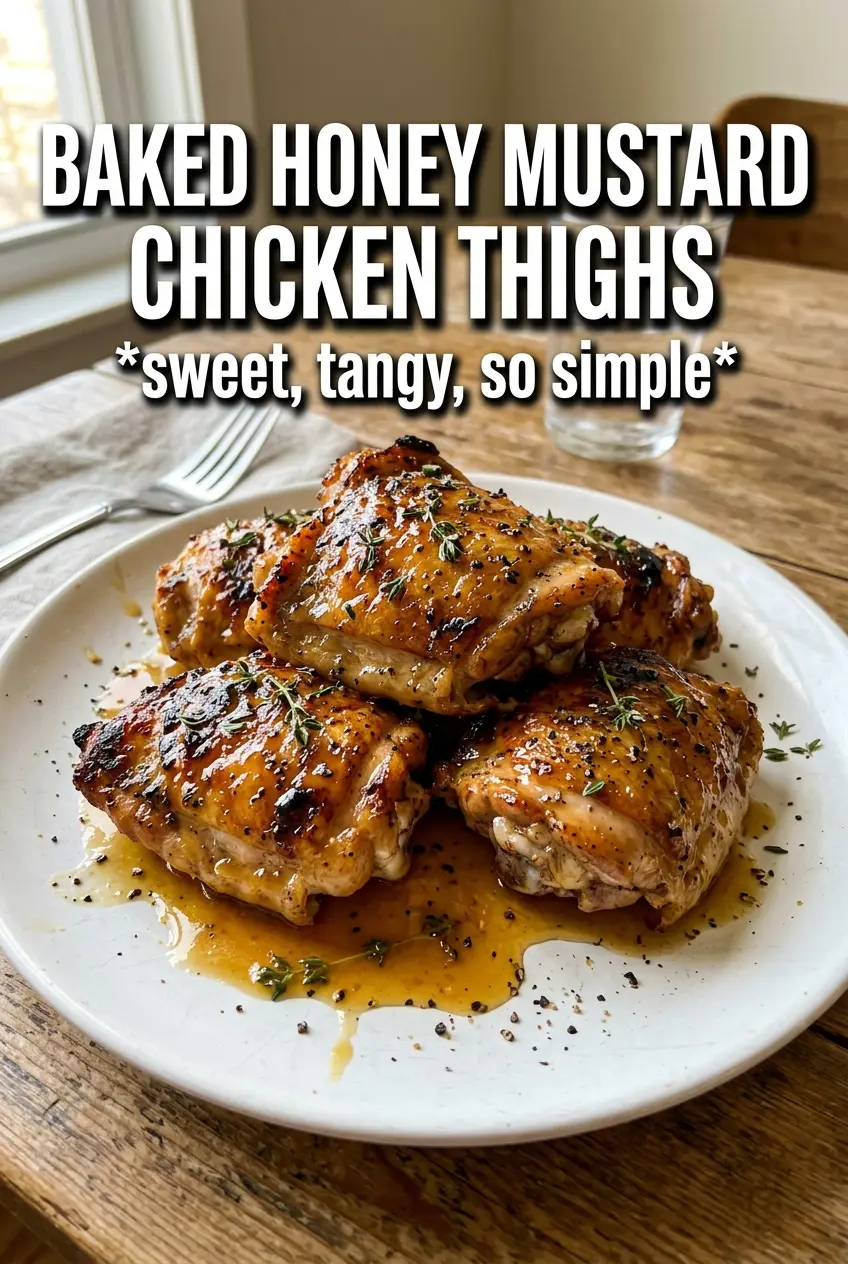
Baked Honey Mustard Chicken Thighs
Ingredients
Equipment
Method
- Preheat oven to 425F, then arrange the chicken thighs in a baking dish.
- Whisk Dijon mustard, honey, whole grain mustard, olive oil, garlic, lemon juice, fresh thyme leaves, salt, and black pepper until smooth.
- Coat chicken thighs generously with the honey mustard mixture, covering the skin evenly.
- Bake for 30–35 minutes at 425F until the glaze is deeply caramelized and the internal temperature reaches 165F.
- Broil for 2–3 minutes to push extra caramelization to the glaze.
- Garnish with fresh thyme and serve hot.