Lasagna soup with bow tie pasta gives you the same cozy, tomato-rich comfort as a baked pan of lasagna, but in a bowl that comes together fast and stays weeknight-friendly. The broth turns savory and a little rich from the sausage, the tomatoes cook down into a bold sauce, and the farfalle catches all those little bits in every ridge and fold. The best part is the cheese dollop melting into the hot soup, turning each spoonful into something creamy, tangy, and deeply satisfying.
This version works because the tomato paste gets cooked before the broth goes in, which wakes up its flavor instead of leaving it flat. I also like using bow tie pasta here because it holds up well and gives the soup a little more body, though it does drink up broth as it sits. That means you get to control the texture instead of ending up with a pot that’s either watery or too thick.
Below, I’ll show you the small timing details that keep the pasta tender, how to keep the soup brothy for leftovers, and the one cheese mixture that makes it taste like lasagna without any layering.
The broth was rich, the pasta stayed perfectly tender, and the ricotta-mozzarella dollop melted into the soup instead of disappearing. I added an extra splash of broth the next day and it tasted just as good.
Save this lasagna soup with bow tie pasta for the nights when you want a tomatoey, sausage-filled bowl that tastes like baked lasagna with less work.
The Trick to Keeping the Soup Brothy Instead of Starchy
The pasta is the part that can throw this whole soup off. Farfalle looks sturdy, but it still keeps cooking in the hot broth and keeps soaking it up after the pot comes off the stove. If you cook it until it is soft in the pot, it will be mushy by the time everyone sits down. Pull it when it’s just al dente, with a little bite in the center, and plan on adding a splash of broth if the soup sits for more than a few minutes.
The other thing that matters is the tomato base. Cooking the tomato paste with the onion and garlic for a couple of minutes deepens the flavor and takes away that raw, canned edge. That step gives the soup the round, slow-cooked taste people expect from lasagna without needing an hour on the stove.
- Italian sausage — This brings the main seasoning, fat, and richness. Mild sausage keeps it kid-friendly; hot sausage adds more bite without changing the method.
- Tomato paste — This is the concentrated backbone of the broth. Don’t skip the brief cooking step, or the soup can taste flat.
- Farfalle — It holds sauce in the folds and gives the soup a little chew. If you use a different pasta, pick one with enough structure to stay intact in broth.
- Ricotta, mozzarella, and parmesan — The dollop turns each bowl into something lasagna-like. Whole-milk ricotta gives the creamiest texture, but part-skim will work if that’s what you have.
Building the Tomato Base Before the Pasta Goes In
Brown the sausage first
Cook the sausage in a large pot until it loses its pink color and starts to pick up browned bits on the bottom. Those browned bits matter; they season the broth later. Drain off excess fat if there’s a lot, but leave enough behind to cook the onion and garlic without sticking.
Wake up the aromatics and tomato paste
Add the diced onion and cook it until it softens and turns translucent, then stir in the garlic and tomato paste. The tomato paste needs that short cooking time to darken a shade and smell a little sweeter. If it goes in and out too fast, the soup can taste sharp instead of full.
Simmer the broth before adding pasta
Stir in the crushed tomatoes, diced tomatoes, broth, seasoning, basil, and red pepper flakes, then bring the pot to a steady boil. Once it’s bubbling, the soup should smell savory and a little sweet from the tomatoes. This is the point where you can taste for salt before the pasta goes in, because the noodles will mute the seasoning slightly as they cook.
Cook the farfalle to the right bite
Add the pasta and cook just until it is al dente, usually 8 to 10 minutes depending on the brand. Stir it a few times so it doesn’t stick to the bottom or clump together. If the pot looks too thick before the pasta is done, add broth in small splashes until it loosens back into a spoonable soup.
What Each Ingredient Is Actually Doing in This Bowl
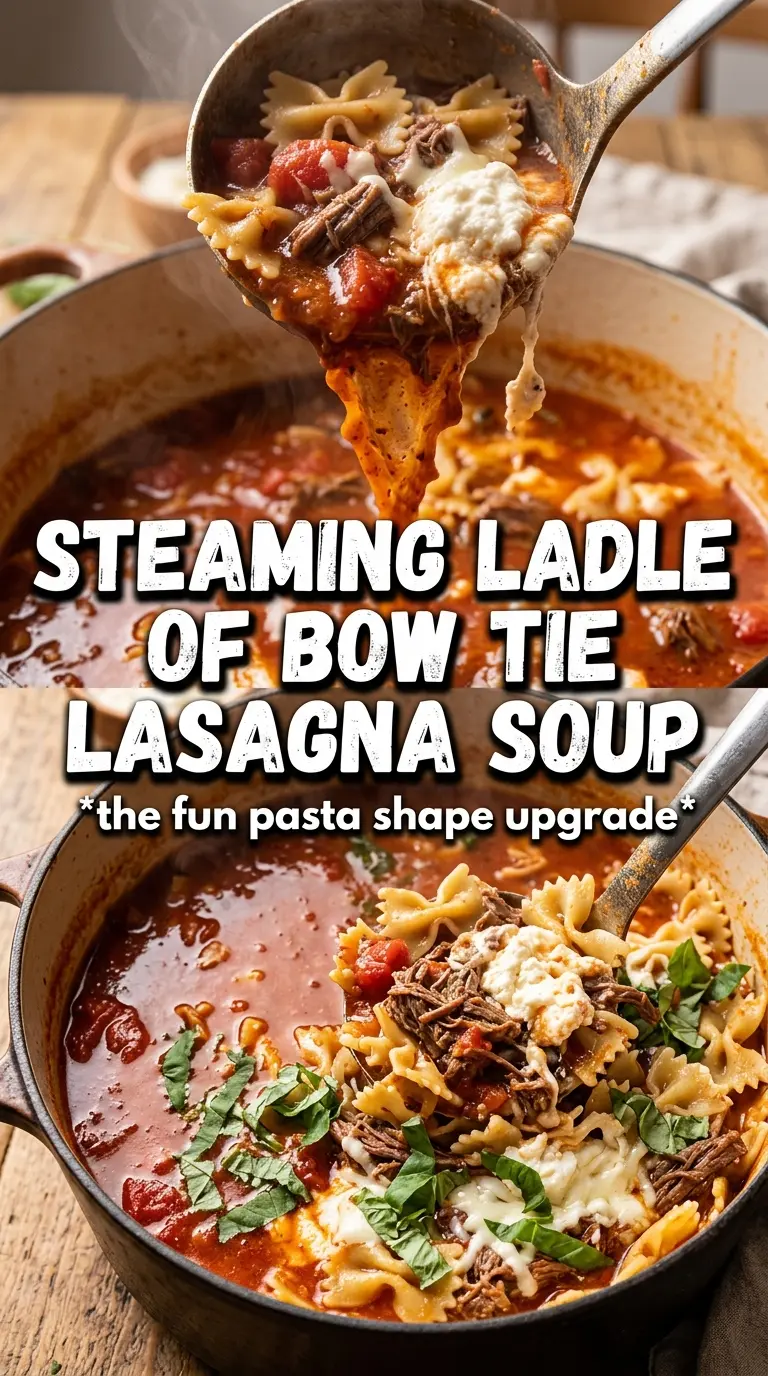
- Crushed tomatoes — These give the soup its body and a smooth, spoonable texture. They work better than using only diced tomatoes because they make the broth feel more like sauce.
- Diced tomatoes — These add little bursts of tomato and a bit of texture. The mix of crushed and diced keeps the soup from tasting one-note.
- Chicken broth — This stretches the tomato base into soup and balances the acidity. Homemade broth is nice, but a good boxed broth works fine here.
- Dried basil and Italian seasoning — These build the lasagna-like herb note without making you reach for ten jars. If your Italian seasoning is old and dusty, replace it; stale dried herbs taste flat fast.
- Cheese dollop — Mixing the cheeses together before serving keeps the ricotta from tasting grainy and gives you that creamy, melted topping in every bowl. Fresh basil on top adds the last bright note.
Ways to Tweak This Soup Without Losing What Makes It Work
Make it lighter with ground turkey
Swap the Italian sausage for ground turkey and add an extra pinch of Italian seasoning plus a small drizzle of olive oil for richness. You lose some of the built-in pork flavor, but the soup still works if you season the meat well and let the tomato paste brown properly.
Make it dairy-free
Skip the cheese dollop and finish each bowl with chopped basil and a little olive oil. The soup itself is already dairy-free, so this is an easy adjustment that keeps the broth bold and the texture clean.
Use gluten-free pasta
Replace the farfalle with a gluten-free short pasta and watch the cook time closely, because some versions soften fast and then fall apart in the broth. Pull it a minute early if you know it will keep sitting in the pot.
Keep leftovers from thickening too much
If you know you’ll have leftovers, cook the pasta separately and add it to each bowl when serving. That keeps the soup brothy for days instead of turning the noodles into sponges.
Storage and Reheating
- Refrigerator: Store in an airtight container for up to 4 days. The pasta will absorb more broth as it sits, so expect a thicker soup.
- Freezer: The broth freezes well, but the pasta gets soft after thawing. For best results, freeze the soup without the pasta and cook fresh farfalle when serving.
- Reheating: Warm it gently on the stove over medium-low heat with extra broth until it loosens back up. High heat can make the pasta fall apart and can dull the cheese topping if you add it too early.
Answers to the Questions Worth Asking
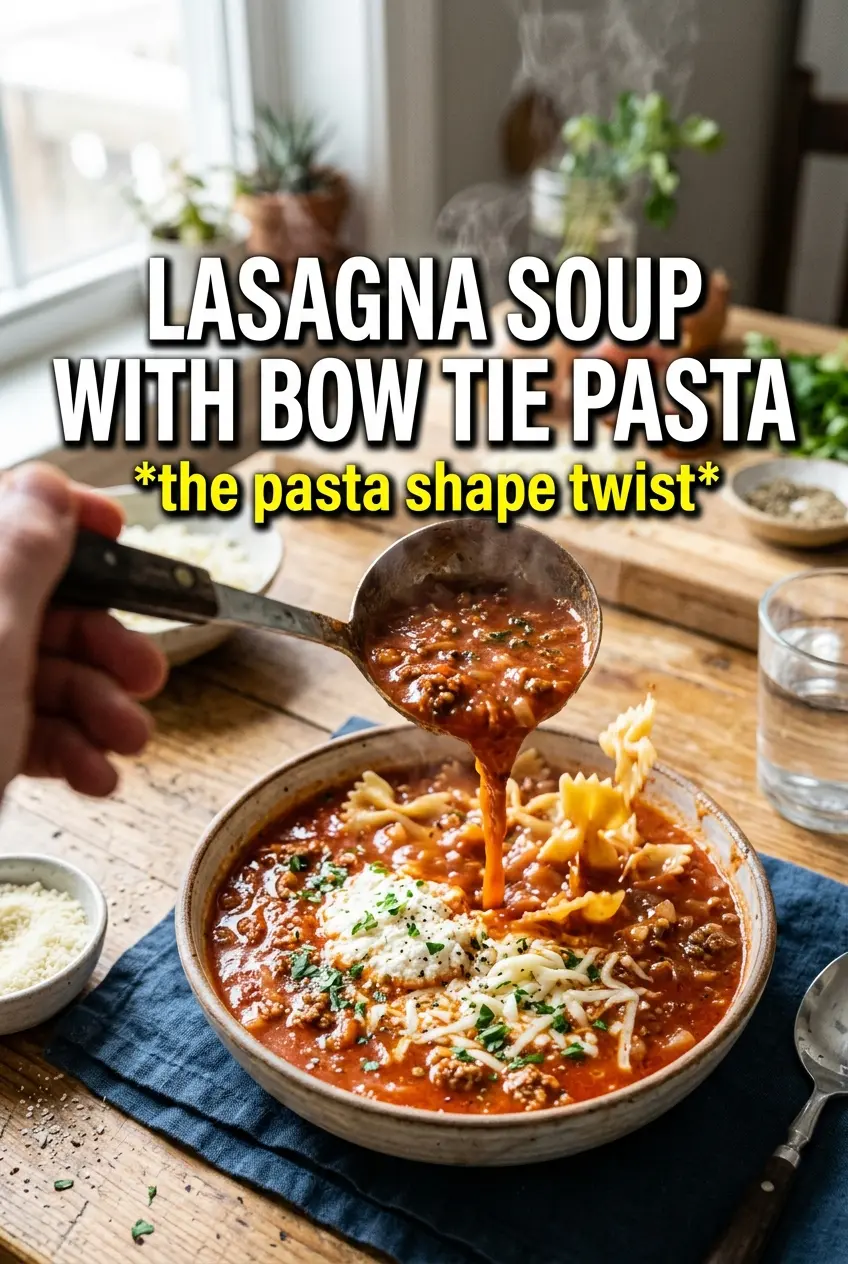
Lasagna Soup With Bow Tie Pasta
Ingredients
Equipment
Method
- Brown the Italian sausage in a large pot over medium-high heat until browned, then drain the fat.
- Sauté the diced onion for 3 minutes, stirring, until softened.
- Add the minced garlic and tomato paste and cook for 2 minutes, stirring until fragrant.
- Add the crushed tomatoes, diced tomatoes, chicken broth, Italian seasoning, dried basil, and red pepper flakes, then bring the mixture to a boil.
- Add the farfalle and cook for 8 to 10 minutes until the pasta is al dente.
- Season with salt and pepper to taste.
- Mix the ricotta, shredded mozzarella, and parmesan until well combined.
- Serve the soup in bowls and top each bowl with a generous spoonful of the cheese dollop; garnish with fresh basil.
- If the soup thickens too much while the pasta cooks, add extra chicken broth and simmer briefly to loosen the texture.