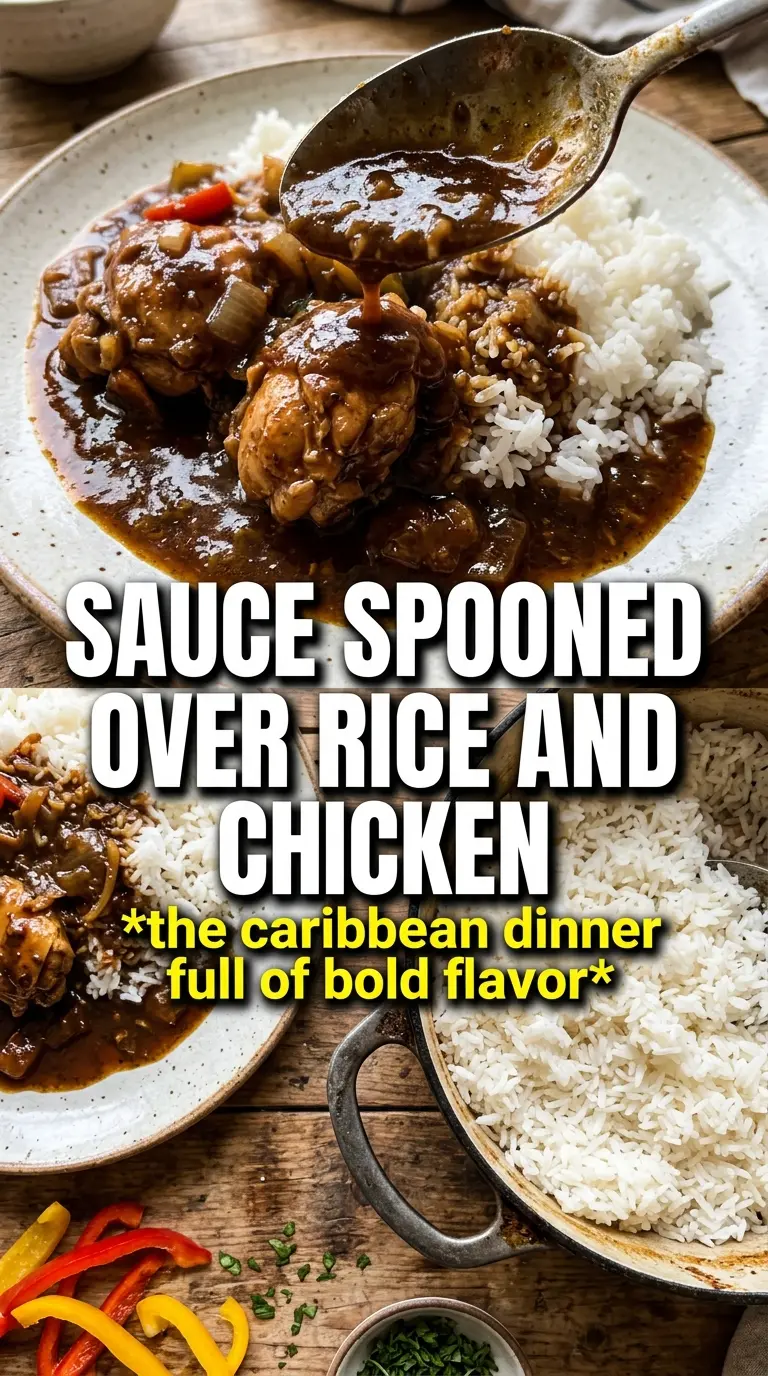
Brown stew chicken lands on the table with deep mahogany gravy, tender chicken, and that savory-sweet edge that keeps pulling your fork back for another bite. The sauce clings to the meat instead of running thin across the plate, and the peppers and onions soften just enough to melt into the broth without losing their shape completely.
What makes this version work is the layering. The chicken gets a proper marinade first, which seasons the meat all the way through, then the sugar is caramelized before the chicken goes in so the stew starts with color and depth instead of relying on a long simmer alone. That little bit of browning sauce in the marinade helps the finished pot take on that classic Jamaican look and flavor without needing a complicated ingredient list.
Below, I’ve included the timing that matters most, the ingredient swaps that still keep the stew on track, and the one part of the process you don’t want to rush if you want the gravy to taste rich instead of flat.
The gravy turned out glossy and thick, and the chicken was fall-apart tender after just under an hour. I used the scotch bonnet like you suggested and the heat balanced the sweetness of the caramel perfectly.
Save this Brown Stew Chicken for the nights when you want that rich Jamaican gravy and tender chicken thighs without a long ingredient list.
The Caramel Step That Gives Brown Stew Chicken Its Depth
If the color in your pot looks pale, the stew will taste flat no matter how long it simmers. The sugar needs to go into the hot oil and move quickly from clear to deep amber before the chicken goes in. That caramel gives the broth its signature color and a layered sweetness that balances the heat and thyme.
The other thing people miss is the browning on the chicken itself. You want deep gold edges, not a gray simmered look, because that first sear adds body to the gravy. If the pan looks crowded, brown the chicken in batches. Steaming chicken in a packed pan leaves you with soft skin and thin-tasting sauce.
- Bone-in chicken thighs and drumsticks — These stay juicy through the simmer and give the broth more flavor than boneless pieces. Thighs alone work, but the drumsticks add a little extra richness.
- Browning sauce — This helps the marinade and gravy get that classic dark color fast. If you don’t have it, you can still brown the sugar properly, but the finished dish won’t look quite as deep.
- Scotch bonnet or habanero — This is optional, but even a little heat makes the sweet caramel and savory broth taste more complete. Leave it minced for more kick, or keep it whole while simmering if you want the flavor without the full burn.
- Fresh thyme — Dried thyme works in the marinade, but fresh thyme at the end lifts the whole pot. It gives the finished stew that fresh herbal note that keeps the gravy from tasting heavy.
What Each Ingredient Is Actually Doing in This Recipe
- Primary ingredient (the star) — Quality matters most. Choose the best you can find.
- Cooking medium (oil, butter, or broth) — This carries flavors and prevents dryness.
- Seasonings (salt, pepper, spices, herbs) — Layer flavors so nothing overpowers. Build depth gradually.
- Aromatics (garlic, onion, herbs) — Cook with fat to bloom flavors. Become the foundation.
- Supporting ingredients — Complement the main ingredient without overpowering it.
- Sauce or liquid (if applicable) — Brings flavors together. Balance richness with acid.
- Acid (lemon, vinegar, wine, or other) — Brightens and prevents flat-tasting results.
- Final finish (garnish, glaze, or sauce) — Prevents one-dimensional taste and adds visual appeal.
Building the Gravy in the Same Pan
Marinating for Flavor That Reaches the Bone
Mix the chicken with the browning sauce, all-purpose seasoning, garlic powder, onion powder, dried thyme, salt, and pepper, then let it sit for at least 2 hours. Overnight is even better if you have the time. The meat should look stained and well coated, not dry with seasoning dust sitting on the surface. If you rush this step, the stew still works, but the flavor stays on the outside instead of sinking into the chicken.
Caramelizing the Sugar Without Burning It
Heat the oil in a Dutch oven or large skillet, then add the sugar and watch it closely as it melts. Stir or swirl just enough to keep it moving until it turns a deep golden brown, then move fast with the chicken. If it goes too dark and starts smelling acrid, dump it and start again, because burnt caramel will make the whole pot bitter.
Browning the Chicken Before the Simmer
Lay the marinated chicken into the caramel oil and brown it on all sides until you see deep color and some sticky bits forming in the pan. You’re not cooking it through here; you’re building flavor and color. The chicken should sizzle steadily. If the heat is too low, the pieces will steam and the gravy won’t develop that rich, dark base.
Cooking the Vegetables Into the Sauce
Sauté the onion, bell peppers, garlic, green onions, and scotch bonnet for about 4 minutes, just until they soften and start to smell sweet. They should still have some shape when the broth goes in. That little bit of texture keeps the stew from turning muddy. Scrape the bottom of the pan as they cook, because that’s where the browned flavor lives.
Finishing the Simmer
Return the chicken to the pan, add the broth, and bring everything to a boil before dropping the heat to a gentle simmer. Cover and cook until the chicken is fall-apart tender and the sauce thickens enough to coat a spoon, usually 35 to 40 minutes. If the sauce looks thin at the end, uncover the pan and let it reduce for a few minutes. Don’t crank the heat hard or the broth can reduce too fast and leave the chicken stringy.
How to Adjust It for Heat, Diet, or a Bigger Pot
Milder Brown Stew Chicken
Leave out the scotch bonnet or habanero and let the peppers and thyme carry the flavor. You’ll still get the savory-sweet gravy and deep color, just without the heat that lingers on the back of your throat.
Gluten-Free Version
Use a gluten-free all-purpose seasoning and check your browning sauce and broth labels. The cooking method stays the same, and the gravy should still thicken naturally from reduction, so you don’t need flour.
Chicken Thighs Only
Use all thighs if that’s what you have. They stay especially juicy and shred beautifully into the gravy, though you’ll lose a little of the deeper stock flavor that drumsticks bring from the bone.
Storage and Reheating
- Refrigerator: Store in an airtight container for up to 4 days. The gravy thickens as it chills, and the flavor gets even deeper by day two.
- Freezer: It freezes well for up to 2 months. Cool it completely first, then freeze the chicken and gravy together in a freezer-safe container.
- Reheating: Warm it gently on the stove over low heat with a splash of broth or water. High heat can tighten the chicken and make the sauce separate before it loosens back up.
Questions I Get Asked About This Recipe

Brown Stew Chicken
Ingredients
Equipment
Method
- Combine all marinade ingredients with the chicken in a bowl, then cover and refrigerate for at least 2 hours or overnight to soak up the Jamaican seasonings.
- If time allows, stir once halfway through the marinating time so the chicken stays evenly coated.
- Heat the vegetable oil in a large skillet or Dutch oven over medium-high heat, then sprinkle in the sugar and let it caramelize until golden brown.
- Add the marinated chicken pieces and cook until deeply golden on all sides, then remove to a plate.
- In the same pot, sauté the onion, bell peppers, garlic, green onions, and scotch bonnet for 4 minutes, stirring so the aromatics soften.
- Return the chicken to the pot, add the chicken broth, and bring the mixture to a boil.
- Reduce heat to low, cover, and simmer for 35-40 minutes until the chicken is fall-apart tender and the gravy has thickened.
- Serve the brown stew chicken with rice and top with fresh thyme for garnish.