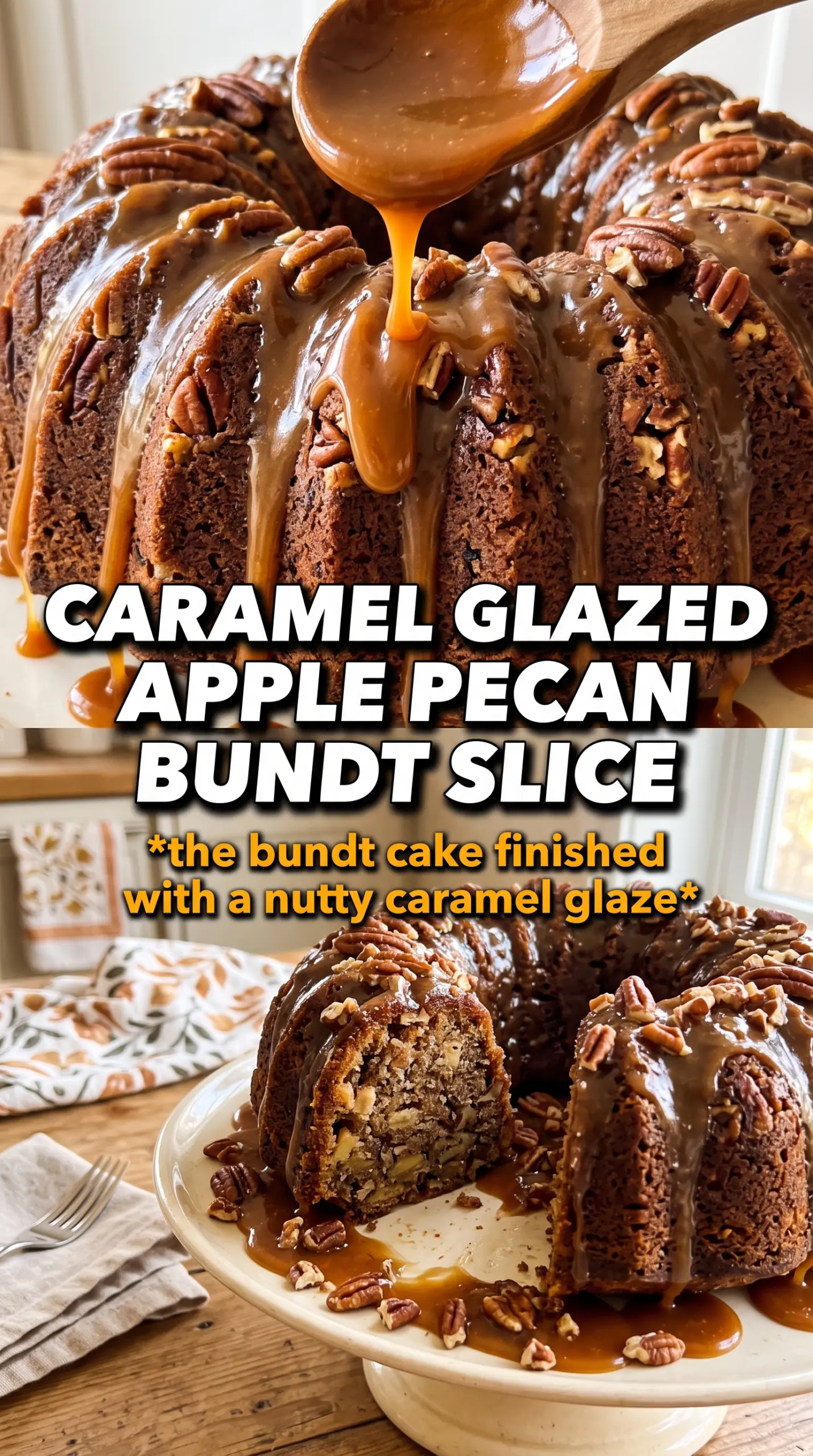
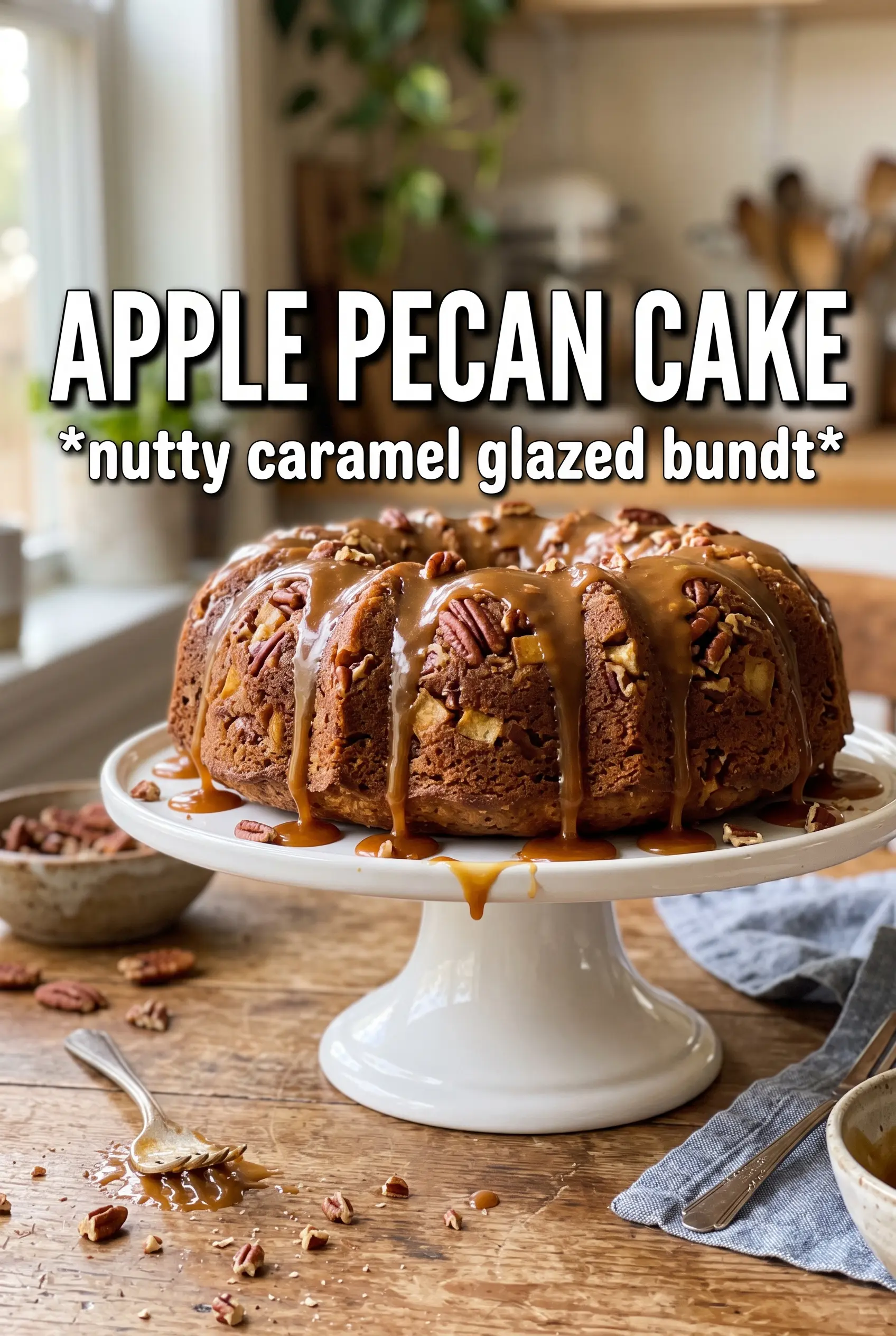
Apple pecan cake has a way of staying tender for days, with a crumb that stays moist without turning heavy and a caramel glaze that sinks into every ridge of the bundt pan. The apples bring little pockets of softness, the pecans add a clean crunch, and the brown sugar keeps the whole cake tasting deep and warm instead of just sweet. When it’s done right, you get slices that hold together neatly but still feel plush on the fork.
The trick is keeping the batter thick enough to support all those apples and nuts without overworking it. Oil does the heavy lifting for moisture here, and the brown sugar adds a little chew and richness that plain white sugar can’t give you. The glaze matters too: it should simmer just long enough to thicken slightly, then go on warm so it runs over the cake instead of setting into a brittle shell.
Below, I’ll show you how to keep the cake from baking up dense, when to glaze it, and how to swap the nuts or make it without dairy if you need to.
The cake baked up with a soft, even crumb and the caramel glaze ran right down the ridges instead of pooling in the middle. I loved how the pecans stayed crunchy even the next day.
Pin this apple pecan bundt cake for the kind of caramel glaze that drips down every ridge and keeps the crumb soft for days.
The Reason This Bundt Stays Tender Instead of Heavy
Apple cakes can go dense fast when the batter gets overmixed or the fruit is too wet. This one stays light enough to slice cleanly because the flour is folded in just until the streaks disappear, then the apples and pecans go in at the end so the batter doesn’t get beaten into submission. The oil also helps here; butter would give you more structure, but it can’t keep the crumb this soft for this long.
The other thing that matters is the pan. A 10-inch bundt pan gives the batter room to rise without spilling over, and greasing plus flouring every groove keeps that caramel finish from tearing the cake when you turn it out. If your bundt cakes usually stick, the problem is almost always in the pan prep or trying to unmold too soon.
- Apples — Use firm baking apples if you can. They hold their shape and give you little tender bites instead of turning the cake mushy.
- Pecans — Rough chopping is the sweet spot. You want pieces small enough to distribute well, but big enough to stay crunchy inside the crumb.
- Brown sugar — It brings moisture and a deeper caramel note that white sugar can’t match. In the cake, it softens the crumb; in the glaze, it gives that glossy finish.
- Vegetable oil — This is what keeps the cake plush after it cools. Melted butter won’t give the same stay-moist texture.
How to Keep the Batter Light and the Glaze Glossy
- All-purpose flour — Standard flour gives the right structure without making the crumb tough. Don’t swap in cake flour here; it can make the cake too delicate to support the apples.
- Eggs — They hold the batter together and help the cake rise evenly. Room-temperature eggs blend in faster and keep the batter from looking curdled.
- Cinnamon — It doesn’t overpower the apples; it just gives the cake that warm background note people expect from an apple dessert.
- Heavy cream — This is what turns the glaze from sugary paste into a pourable caramel. Half-and-half will work in a pinch, but the glaze won’t be quite as silky.
- Vanilla extract — Use a real teaspoon in both the cake and glaze. It rounds out the brown sugar and makes the caramel taste fuller.
The Mixing, Baking, and Glazing That Matter Most
Building the Base
Whisk the dry ingredients first so the baking soda and cinnamon are evenly distributed. In a separate bowl, beat the sugars, eggs, and oil until everything looks thick and glossy, then add the vanilla. That early mixing step matters because it dissolves some of the sugar and helps the cake bake with a finer crumb. If the mixture looks a little separated, keep going until it comes together before adding the flour.
Folding in the Apples and Pecans
Add the flour mixture and stop as soon as you don’t see dry streaks. Then fold in the apples and pecans gently, scraping from the bottom so the heavier fruit doesn’t settle in one layer. Overmixing at this point is what gives you tunnels and a tight, gummy crumb. The batter should look thick and chunky, not smooth.
Baking Until the Center Is Set
Pour the batter into the prepared bundt pan and smooth the top lightly. Bake until a toothpick inserted in the thickest part comes out clean or with a few dry crumbs, not wet batter. If the top is browning too fast, your oven may run hot; tent it loosely with foil for the last 15 minutes. Let the cake cool in the pan for 20 minutes so it firms up enough to release cleanly, then invert it onto a rack.
Making the Caramel Glaze
Melt the butter and brown sugar together over medium heat, stirring until the sugar dissolves and the mixture looks smooth. Add the cream, vanilla, and salt, then simmer just two minutes; it should thicken slightly and smell toasty, not turn into a hard candy stage. If you boil it too long, it will set up in the pan before it hits the cake. Pour it over the cake while both the glaze and cake are still warm enough to meet in the middle.
How to Adapt This Apple Pecan Cake Without Losing the Texture
Dairy-Free Glaze
Use a plant-based butter and full-fat coconut cream instead of the dairy butter and heavy cream. The glaze will still pour well and cling to the cake, though it picks up a faint coconut note. If you want that flavor to stay in the background, use an unsweetened dairy-free cream with a neutral taste.
Gluten-Free Version
A good 1:1 gluten-free flour blend can work here, but it needs to contain xanthan gum or another binder. The crumb will be a little more delicate, so let the cake cool fully before slicing. If your blend tends to be gritty, whisk it with the dry ingredients longer so it hydrates evenly in the batter.
Pecan Swap
Walnuts work well if that’s what you have, and they give a slightly earthier finish. Toasted walnuts are the best stand-in because they bring more crunch and a deeper nutty flavor. Skip very finely chopped nuts; they disappear into the cake and don’t give you much texture.
Storage and Reheating
- Refrigerator: Store covered for up to 4 days. The crumb stays moist, and the glaze may soak in a little more by day two.
- Freezer: The cake freezes well without the glaze for up to 2 months. Wrap slices tightly and add fresh glaze after thawing for the best texture.
- Reheating: Warm slices briefly at low power in the microwave or in a 300F oven. Heat only until the cake is just warm; too much heat can dry out the edges and make the glaze sticky.
Questions I Get Asked About This Recipe
Apple Pecan Cake With Caramel Glaze
Ingredients
Equipment
Method
- Preheat the oven to 325°F, then grease and flour a 10-inch bundt pan so the cake releases cleanly after baking.
- Whisk together the all-purpose flour, baking soda, cinnamon, and salt until evenly combined.
- Beat the granulated sugar, brown sugar, eggs, and vegetable oil until combined, then mix in the vanilla extract.
- Fold the flour mixture in until just combined, then fold in the diced apples and chopped pecans (stop as soon as no dry flour remains).
- Pour the batter into the prepared bundt pan and bake at 325°F for 65-75 minutes, until a toothpick comes out clean.
- Cool the cake in the pan for 20 minutes, then invert onto a rack to release it for cooling before glazing.
- Melt the unsalted butter and brown sugar together over medium heat, stirring until smooth.
- Add the heavy cream, vanilla extract, and salt, then simmer for 2 minutes until it thickens slightly.
- Pour the warm caramel glaze over the cooled cake so it cascades down the ridges and sets as it cools.