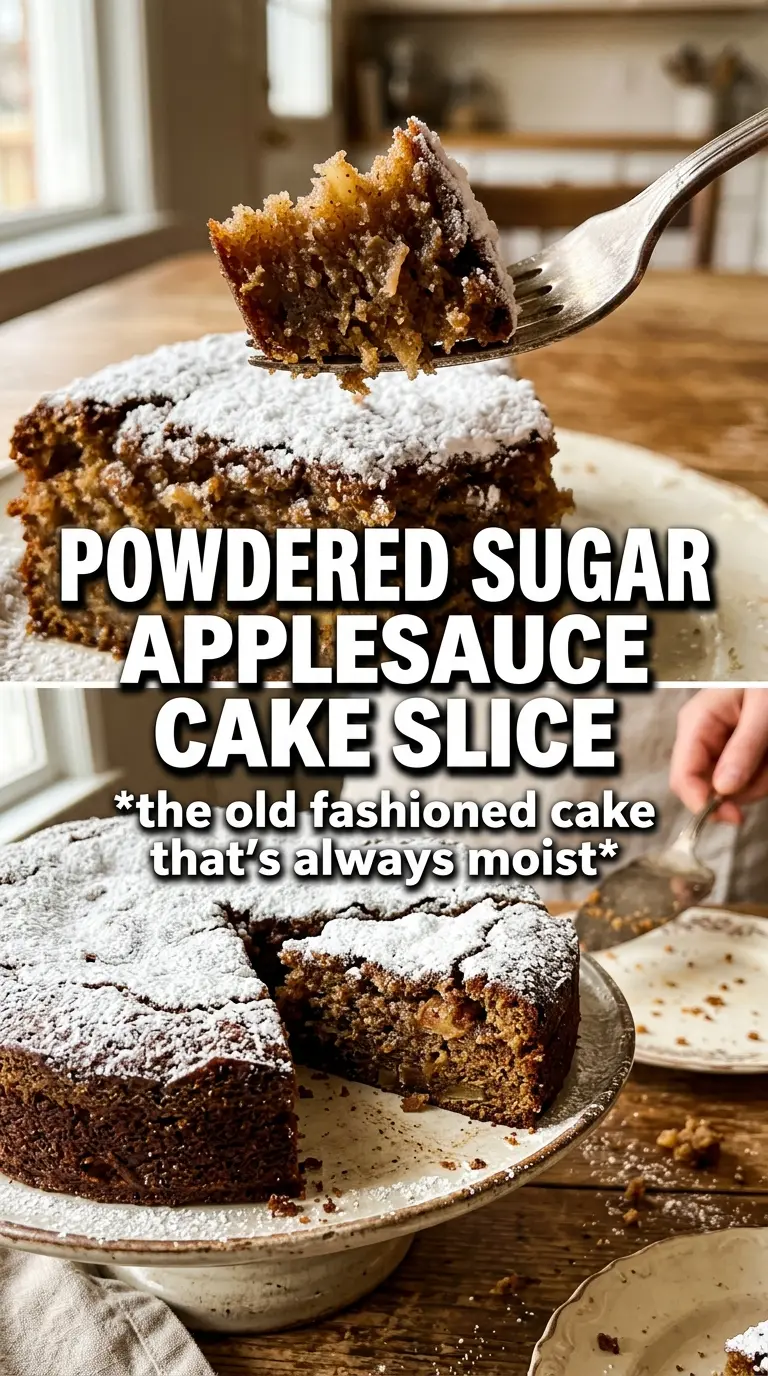
Applesauce cake comes out tender, warmly spiced, and deeply moist without feeling heavy. The crumb stays soft for days, and the cream cheese frosting gives each slice a cool, tangy finish that keeps the sweetness in check. It’s the kind of cake that disappears one neat slice at a time, then suddenly there’s just a few crumbs left on the pan.
What makes this version work is the balance. Applesauce brings moisture and a gentle fruit sweetness, while brown sugar adds depth that plain granulated sugar can’t give on its own. The spices are warm but not loud, so you taste cinnamon, clove, and allspice without turning the cake into a spice bomb. The batter is simple, but the order matters: cream the butter and sugars first, then add the applesauce and dry ingredients just until combined so the crumb stays soft instead of tough.
Below, I’ve included the little details that matter most, from how to keep the frosting fluffy to what changes when you add walnuts or raisins. If you’ve ever had applesauce cake turn out gummy or bland, this version fixes both problems.
The cake stayed incredibly moist for three days, and the cinnamon came through without overpowering the frosting. I added walnuts, and they gave it just the right amount of crunch.
Save this applesauce cake with cream cheese frosting for a soft, spiced dessert that bakes up moist and sliceable every time.
The Part That Keeps Applesauce Cake Tender Instead of Heavy
Applesauce cake can go wrong when it’s treated like a standard butter cake. Applesauce adds a lot of moisture, which is great for tenderness, but it can also make the crumb dense if the batter is overmixed or if the flour is packed in too heavily. The goal is a batter that looks just combined, not perfectly smooth.
The baking soda does important work here. It reacts with the acidity in the applesauce and helps the cake rise, which keeps the texture soft instead of gummy. If your cake comes out sinking in the middle, the most common culprit is underbaking rather than too much applesauce. The center should spring back lightly and a toothpick should come out clean or with a few moist crumbs, not wet batter.
- Applesauce — Unsweetened applesauce gives moisture and apple flavor without making the cake cloying. Sweetened applesauce works in a pinch, but the cake will bake up sweeter and less balanced.
- Brown sugar — This adds moisture and a deeper caramel note that fits the spices. Granulated sugar alone will work, but the cake loses some of its soft, almost old-fashioned richness.
- Spices — Cinnamon, allspice, and cloves are what make this taste like more than a plain snack cake. If you don’t have allspice, use a little extra cinnamon and a tiny pinch more cloves.
- Walnuts or raisins — These are optional, but both add texture. Walnuts bring crunch; raisins make the cake feel a little more classic and even more moist.
What Each Ingredient Is Actually Doing in This Recipe
- Primary ingredient (the star) — Quality matters most. Choose the best you can find.
- Cooking medium (oil, butter, or broth) — This carries flavors and prevents dryness.
- Seasonings (salt, pepper, spices, herbs) — Layer flavors so nothing overpowers. Build depth gradually.
- Aromatics (garlic, onion, herbs) — Cook with fat to bloom flavors. Become the foundation.
- Supporting ingredients — Complement the main ingredient without overpowering it.
- Sauce or liquid (if applicable) — Brings flavors together. Balance richness with acid.
- Acid (lemon, vinegar, wine, or other) — Brightens and prevents flat-tasting results.
- Final finish (garnish, glaze, or sauce) — Prevents one-dimensional taste and adds visual appeal.
How to Build the Batter So It Bakes Up Soft and Even
Start with the butter and sugars
Beat the softened butter with both sugars until the mixture looks pale and fluffy. This gives the cake a little structure before the applesauce goes in, which matters because applesauce alone can’t trap air the way creamed butter can. If the butter is too cold, the mixture will stay gritty and won’t whip up properly, so let it soften at room temperature first.
Add the eggs and vanilla
Mix in the eggs one at a time if you want the smoothest batter, then add the vanilla. The batter should look glossy and cohesive at this point. If it looks curdled, don’t panic; that usually smooths out once the applesauce and flour are added.
Fold in the dry ingredients gently
Stir in the applesauce first, then add the flour mixture and mix only until no dry streaks remain. Overmixing develops gluten and turns this cake chewy instead of tender. If you’re adding walnuts or raisins, fold them in at the very end so they don’t sink or get broken up by too much stirring.
Bake until the center is just set
Spread the batter into a greased 9×13 pan and bake at 350°F until a toothpick inserted in the center comes out clean, usually 35 to 40 minutes. The top should spring back when pressed lightly and the edges will pull slightly from the pan. Cool the cake completely before frosting it, or the cream cheese frosting will melt and slide right off.
Make It Nut-Free Without Losing Texture
Skip the walnuts and the cake still bakes up moist and soft. If you want a little texture back, fold in raisins or chopped dried cranberries instead. That keeps the cake interesting without bringing in nuts.
Turn It Into a Dairy-Free Cake
Use a plant-based butter with a firm texture in the cake, then frost it with a dairy-free cream cheese alternative if you want to keep the tangy finish. The cake itself is forgiving, but the frosting needs a brand that sets up well or it can stay soft.
Bake It as Cupcakes
This batter works well as cupcakes, though the bake time drops a lot, usually to around 18 to 22 minutes. Fill the liners about two-thirds full so they rise evenly. You’ll get a lighter texture at the edges and a higher frosting-to-cake ratio, which is never a bad thing.
Storage and Reheating
- Refrigerator: Store covered for up to 5 days. The frosting holds well, and the cake stays moist, though the crumb firms up a little when chilled.
- Freezer: Freeze unfrosted slices or the unfrosted cake tightly wrapped for up to 2 months. Frosting can be frozen separately, but the texture is better when made fresh.
- Reheating: Bring slices to room temperature before serving, or warm unfrosted cake briefly in the microwave. Don’t microwave frosted slices for long, or the frosting will turn greasy and soft.
Answers to the Questions Worth Asking
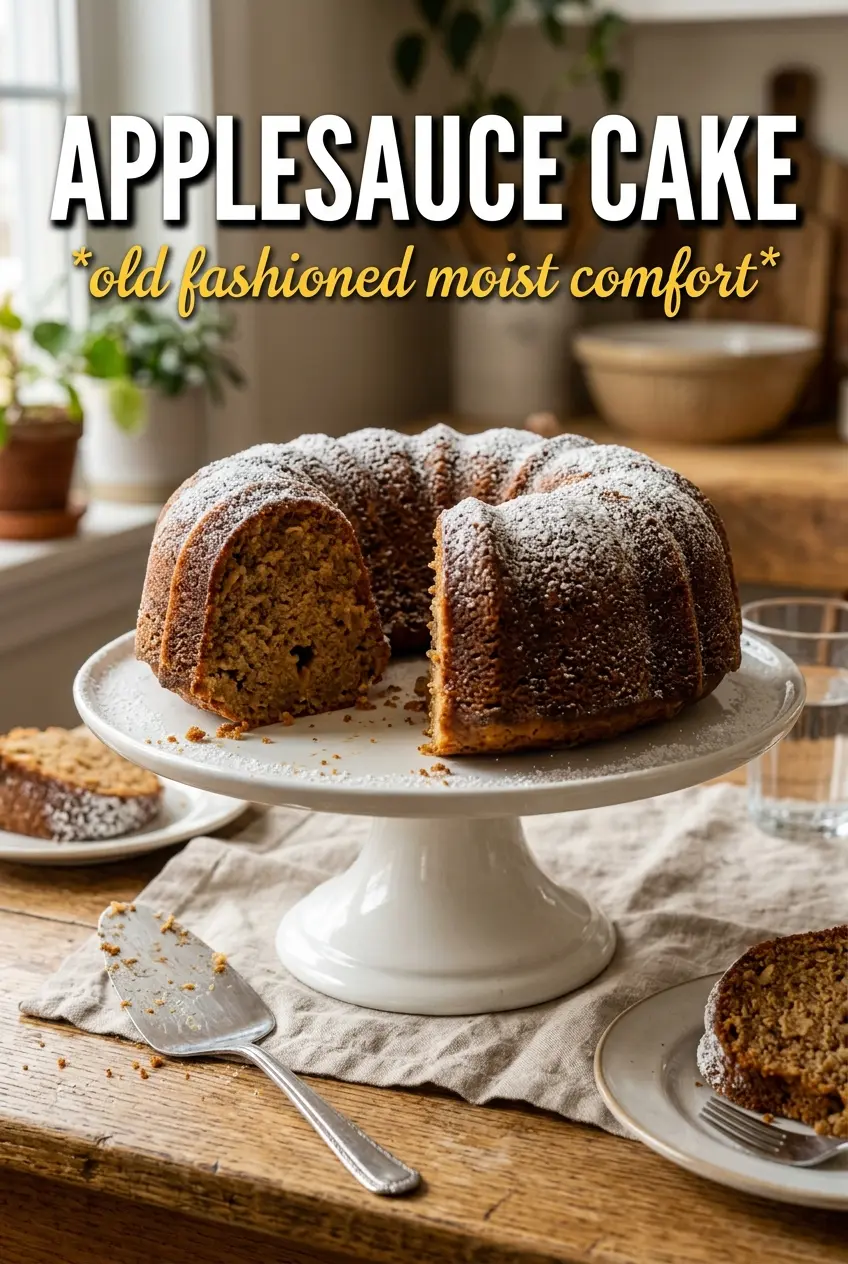
Applesauce Cake
Ingredients
Equipment
Method
- Preheat the oven to 350F and grease a 9x13 pan.
- Whisk together all-purpose flour, baking soda, cinnamon, allspice, cloves, and salt.
- Beat unsalted butter, granulated sugar, and brown sugar until fluffy.
- Add eggs and vanilla extract, then beat just until combined.
- Stir in unsweetened applesauce.
- Fold in the flour mixture until just combined.
- Fold in walnuts or raisins if using.
- Bake for 35-40 minutes, until a toothpick comes out clean.
- Cool the cake completely before frosting.
- Beat cream cheese frosting ingredients until light and fluffy.
- Spread the cream cheese frosting over the cooled cake.