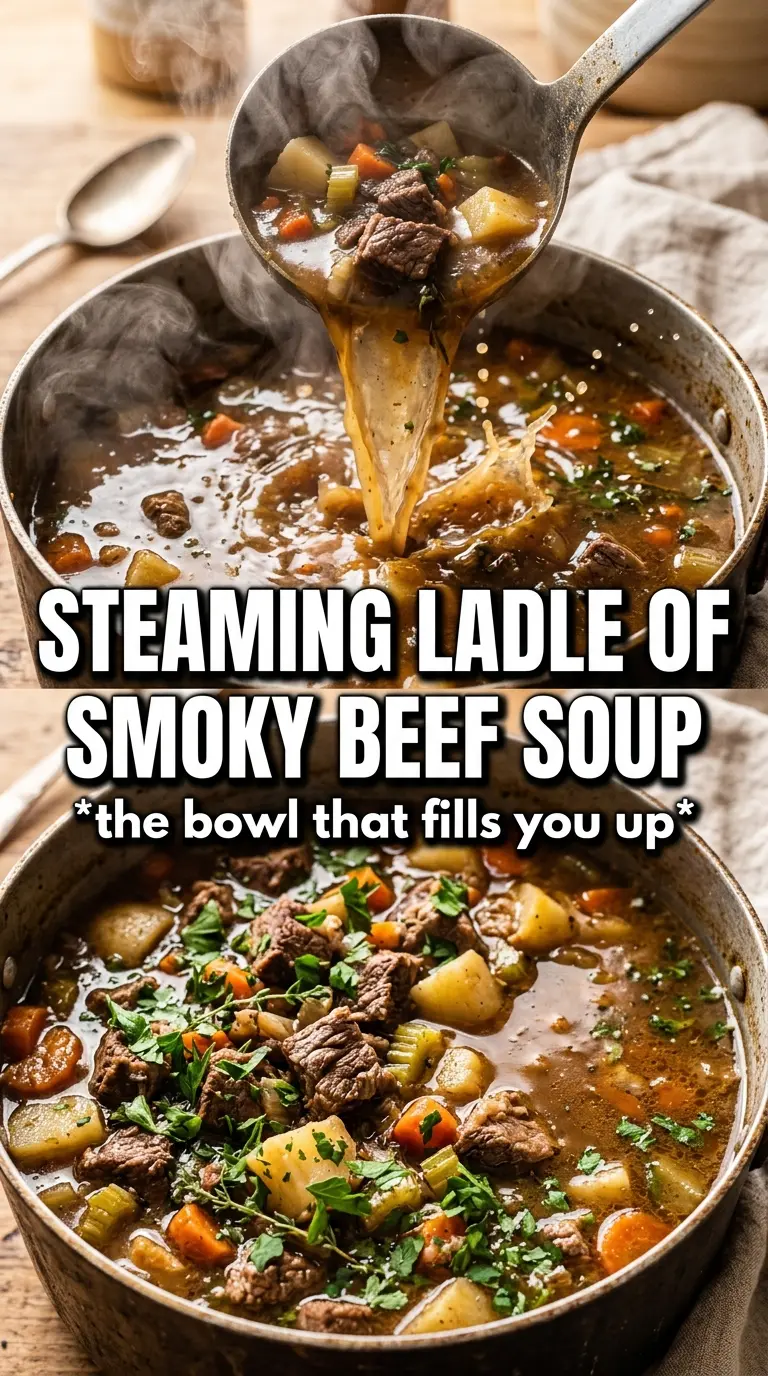
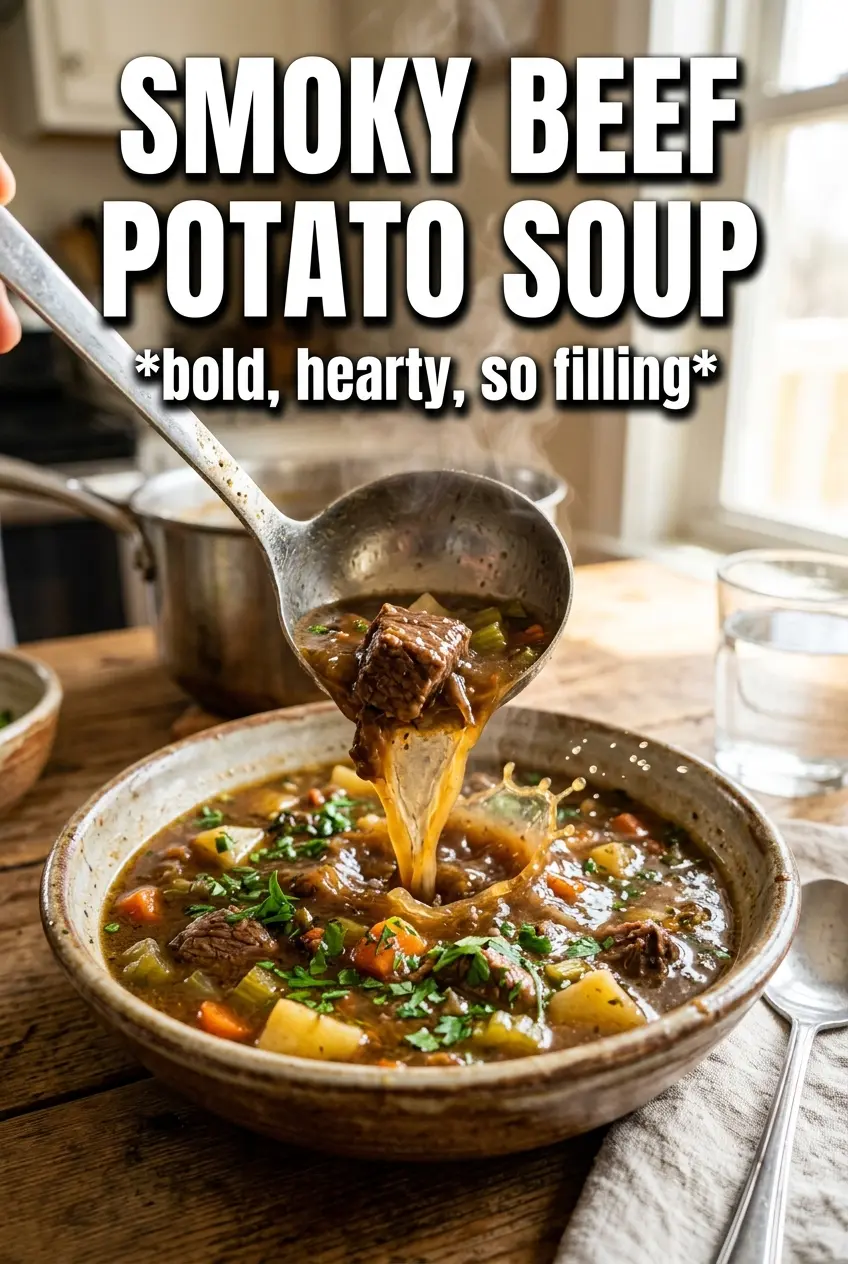
Smoky Beef Potato Soup hits that sweet spot between hearty and brothy, with tender cubes of beef, soft Yukon gold potatoes, and a deep, savory broth that tastes like it simmered all afternoon. The smoked paprika and fire-roasted tomatoes give it a rich, almost mahogany color and a gentle smokiness that keeps every spoonful interesting without turning the soup heavy.
What makes this version work is the layering: the beef gets a hard sear first, then the onions, carrots, and celery pick up the fond left in the pot, and the spices bloom before the liquid goes in. That order matters. It keeps the broth from tasting flat and gives the potatoes something flavorful to soak up instead of just broth and salt.
Below, I’ve included the little details that keep the beef tender, the potatoes intact, and the broth balanced. If you’ve ever had a beef soup that tasted muddy or one-note, this method fixes that fast.
The broth got that deep smoky flavor I was hoping for, and the potatoes stayed creamy without falling apart. My husband went back for a second bowl before I even sat down.
Save Smoky Beef Potato Soup for a cozy, smoky bowl with tender beef, Yukon gold potatoes, and a richly seasoned broth.
The Browning Step That Gives This Soup Its Depth
The biggest mistake with beef soup is rushing past the sear. If the beef goes into the pot pale, the broth has to do all the work on its own, and it usually ends up tasting thin. A deep brown crust on the meat gives you the savory base this soup needs, and those stuck-on bits at the bottom of the pot are pure flavor once the onions go in.
The other place people lose flavor is with the spices. Smoked paprika, cumin, and chipotle powder need a minute in the hot pot before the broth joins them. That quick toast wakes them up and keeps the paprika from tasting dusty. It also helps the fire-roasted tomatoes blend into the broth instead of sitting on top of it.
- Beef stew meat or chuck — Chuck gives you the best texture here because it has enough connective tissue to turn tender during the simmer. If you buy stew meat, check the pieces and trim any large hard-fat pockets so the soup doesn’t get greasy.
- Yukon gold potatoes — These hold their shape better than russets and still turn creamy at the edges. They’re the right potato for a soup that needs body without turning grainy.
- Fire-roasted tomatoes — These matter more than plain diced tomatoes because they bring a built-in smoky note that matches the paprika. If that’s all you have, regular diced tomatoes will work, but the soup will taste a little brighter and less layered.
- Beef broth — Use a broth you’d taste on its own. Weak broth makes the whole pot taste tired, and this recipe doesn’t have a long enough ingredient list to hide that.
What Each Ingredient Is Actually Doing in This Recipe
- Primary ingredient (the star) — Quality matters most. Choose the best you can find.
- Cooking medium (oil, butter, or broth) — This carries flavors and prevents dryness.
- Seasonings (salt, pepper, spices, herbs) — Layer flavors so nothing overpowers. Build depth gradually.
- Aromatics (garlic, onion, herbs) — Cook with fat to bloom flavors. Become the foundation.
- Supporting ingredients — Complement the main ingredient without overpowering it.
- Sauce or liquid (if applicable) — Brings flavors together. Balance richness with acid.
- Acid (lemon, vinegar, wine, or other) — Brightens and prevents flat-tasting results.
- Final finish (garnish, glaze, or sauce) — Prevents one-dimensional taste and adds visual appeal.
Building the Soup in the Right Order
Searing the Beef Until It Really Browns
Season the beef first, then sear it in a hot Dutch oven with enough space for the cubes to brown instead of steam. Work in batches if needed. You’re looking for a deep crust on multiple sides, not just a gray exterior with a few spots of color. If the pan gets crowded, the meat gives off liquid and you lose the browning that makes the broth taste rich.
Softening the Vegetables in the Fond
After the beef comes out, the onions, carrots, and celery go into the same pot. Stir them often and let them pick up the browned bits from the bottom as they soften. Once the garlic goes in, keep it moving for just a minute so it perfumes the oil without scorching. Burnt garlic will make the whole pot bitter, and there’s no fixing that later.
Letting the Potatoes Finish Without Falling Apart
Add the potatoes after the beef has already simmered for a while. They don’t need the full cook time, and if they go in too early, they can collapse before the meat is tender. Keep the soup at a gentle simmer once the potatoes are added. A hard boil can break them down and cloud the broth more than you want.
How to Adapt Smoky Beef Potato Soup Without Losing the Good Part
Make it dairy-free as written
This soup already leans dairy-free, so you don’t need to swap anything in the base recipe. The only thing to watch is garnish; skip sour cream and use parsley, extra black pepper, or a little olive oil on top instead.
Use sweet potatoes for a softer, sweeter bowl
Sweet potatoes work if you want a rounder, slightly sweeter soup, but they soften faster than Yukon golds. Cut them a little larger and start checking early so they don’t disappear into the broth.
Make it spicier without changing the base
An extra pinch of chipotle powder or a diced jalapeño with the onion adds more heat without changing the soup’s structure. Go slowly here; smoked heat builds over a bowl, and it’s easier to add more at the end than to try to cool it down.
Storage and Reheating
- Refrigerator: Keep in an airtight container for up to 4 days. The potatoes will absorb more broth as it sits, so the soup thickens a little overnight.
- Freezer: It freezes well for up to 3 months, though the potatoes may soften slightly after thawing. Cool it completely before freezing in portioned containers.
- Reheating: Warm gently on the stove over medium-low heat, stirring often. Don’t boil it hard or the potatoes can break apart and the broth can taste dull instead of fresh.
Questions I Get Asked About This Soup
Smoky Beef Potato Soup
Ingredients
Equipment
Method
- Season the beef with salt, pepper, and 1 tablespoon smoked paprika, then heat olive oil in a Dutch oven over high heat. Sear the beef until deeply browned on all sides, about 6-10 minutes total, and remove to a plate.
- In the same pot, sauté onion, carrots, and celery over medium-high heat for 5 minutes, stirring for even browning. Add garlic and cook for 1 minute, until fragrant.
- Stir in the remaining smoked paprika, cumin, and chipotle powder and cook for 1 minute. You should see the spices darken slightly and smell toasted.
- Add beef broth, fire-roasted tomatoes, Worcestershire sauce, and the browned beef, then bring the pot to a boil. Scrape up any browned bits from the bottom for extra flavor.
- Reduce the heat and simmer for 25-30 minutes. Add the potatoes and simmer 20 more minutes until the beef and potatoes are tender.
- Season the soup with salt and pepper to taste, then garnish with fresh parsley. Serve hot with a visible mahogany broth and tender chunks throughout.