Remi’s Ratatouille Soup turns a pile of summer vegetables into a bowl that tastes slow-cooked and layered, even though it comes together in under an hour. The broth gets rich from tomatoes and olive oil, the eggplant melts into the base, and the zucchini and yellow squash keep just enough shape to give every spoonful some texture. It eats like a hearty main dish, not a thin vegetable soup trying to be dinner.
The trick is treating the vegetables differently instead of dumping everything into the pot at once. Eggplant gets salted first so it loses some of its bitterness and cooks up silkier. The onions and peppers build sweetness at the start, then the tomatoes simmer long enough to pull everything into one cohesive broth without turning the squash to mush. A final swirl of fresh basil and good olive oil is what makes the whole pot taste finished.
You’ll find a few practical notes below on how to keep the vegetables tender instead of watery, what to swap if you’re short on one of the squash, and how this soup holds up for leftovers.
The vegetables stayed tender without falling apart, and the broth got even better the next day. I used a little extra basil at the end and the whole pot tasted like it had simmered all afternoon.
Save Remi’s Ratatouille Soup for the nights when you want a silky tomato broth and tender Provençal vegetables in one pot.
The Step That Keeps the Vegetables from Turning Mushy
If ratatouille soup goes wrong, it usually happens in the first ten minutes. The pan is too cool, the vegetables steam instead of soften, and by the time the tomatoes go in you’ve already lost any chance at real flavor. This version avoids that by cooking the onion and peppers first in olive oil until they soften and the edges take on a little color. That quick base gives the finished soup sweetness and depth without needing a long simmer.
Eggplant is the other place people get into trouble. Salting it first pulls out excess moisture, which helps it cook up creamier and keeps the soup from tasting watery or greasy. Once the zucchini and squash are added, the pot only needs a few minutes before the tomatoes and broth go in. They should still look like vegetables when the simmer starts; if they go in too early, they disappear.
What Each Ingredient Is Doing in the Pot
- Eggplant — This gives the soup its mellow, almost silky body once it softens. Salting and drying it first keeps it from soaking up too much oil and helps it cook with a better texture.
- Zucchini and yellow squash — These add freshness and tenderness, but they cook fast. Cut them into even dice so they soften at the same rate and hold their shape through the simmer.
- Red bell peppers — They bring sweetness that balances the tomatoes and helps the broth taste rounded instead of sharp. A good dice matters here so they melt into the base without vanishing completely.
- Crushed tomatoes and diced tomatoes — The crushed tomatoes build the broth, while the diced tomatoes leave little pockets of texture. If you only have one type, the soup still works, but you lose some of that layered finish.
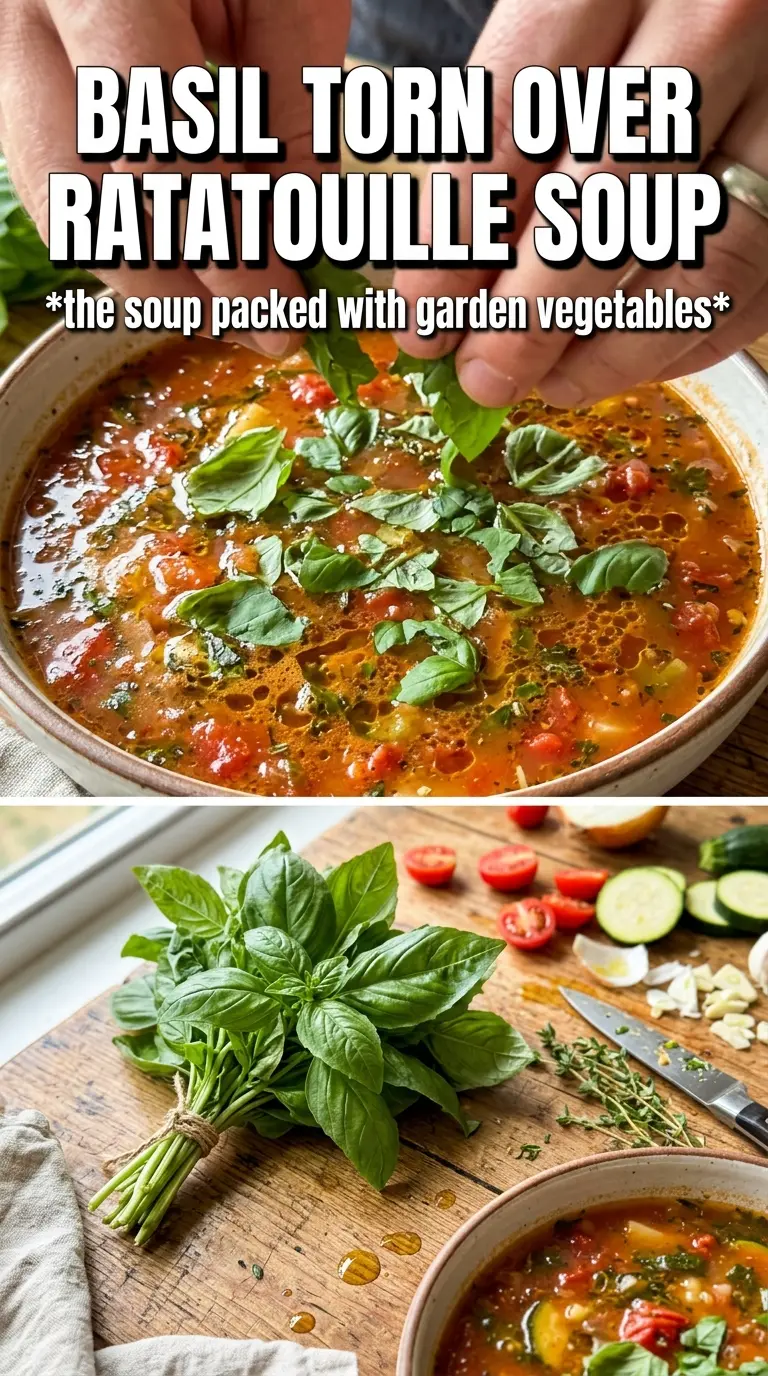
- Herbes de Provence, basil, and thyme — This is where the soup starts tasting French rather than just vegetable-heavy. Dried herbs bloom best in the hot oil and tomato mixture, while the fresh basil goes in at the end so it stays bright.
- Good olive oil — The finishing drizzle matters. Cheap oil can work in the pot, but the final spoonful should be something peppery and clean because it sits on top of the finished soup and carries the aroma straight to the nose.
Building the Broth Without Losing the Vegetable Texture
Salting the Eggplant First
Toss the diced eggplant with salt and let it sit for about 15 minutes, then rinse and dry it well. That step pulls out excess moisture and gives you a softer, less spongy result in the soup. If you skip it, the eggplant can taste blunt and the broth may turn a little muddy. Dry it thoroughly after rinsing so it sears in the pot instead of steaming.
Softening the Aromatics
Start with the onion and red bell peppers in olive oil and cook them until the onion turns translucent and the peppers begin to slump. You’re looking for sweetness and a little sheen on the vegetables, not browning all over. Add the garlic only after the first five minutes; if it goes in too early, it can burn and turn bitter before the other vegetables are ready.
Adding the Faster-Cooking Vegetables
Eggplant goes in next, followed by zucchini and yellow squash a few minutes later. The order matters because eggplant needs a little more time to soften, while the squash should stay intact. Once the tomatoes and broth are in, keep the simmer gentle so the vegetables relax into the broth instead of breaking apart. A hard boil will make the zucchini look ragged before the soup is done.
Finishing with Fresh Basil and Olive Oil
Stir in the fresh basil after the vegetables are tender and the heat is low. That preserves the bright, leafy flavor that dried herbs can’t give you. Taste for salt and pepper at the end, then finish with a drizzle of good olive oil right before serving. That last step makes the soup taste fuller and gives the surface a glossy, restaurant-style look.
How to Adapt This for a Different Pantry or Diet
Make It Vegan Without Losing Richness
The soup is already vegan as written if you skip the parmesan at serving. Keep the olive oil finish, because that final drizzle gives the bowl the richness people often expect from cheese. If you want extra body, stir in a spoonful of white beans with the tomatoes and broth.
Swap the Squash Based on What’s in the Fridge
All zucchini, all yellow squash, or a mix of both all work here. The only thing that changes is the final texture: zucchini softens a little more while yellow squash keeps a slightly firmer bite. Keep the dice even so one vegetable doesn’t disappear before the other.
Add Protein for a More Filling Main Dish
Stir in drained cannellini beans or chickpeas during the last ten minutes of simmering. They’ll pick up the tomato-herb broth without falling apart, and the soup will eat more like a complete meal. Avoid adding anything heavily seasoned, or it will muddy the clean vegetable flavor.
Storage and Reheating
- Refrigerator: Keeps for 4 days. The vegetables soften a little more as it sits, but the flavor deepens.
- Freezer: Freezes well for up to 3 months. Cool it completely first and leave a little room at the top of the container because the broth expands.
- Reheating: Warm it gently on the stove over medium-low heat until hot. A hard boil can break down the squash and make the soup taste flat, so keep the simmer mild.
Questions I Get Asked About This Recipe

Remi's Ratatouille Soup
Ingredients
Equipment
Method
- Toss the diced eggplant with salt and let sit for 15 minutes, then rinse and dry.
- Dice the onion, red bell peppers, zucchini, yellow squash, and mince the garlic so everything is ready to add in sequence.
- Heat 3 tbsp olive oil in a large pot over medium heat, then sauté the onion and bell peppers until softened, about 5 minutes.
- Add the minced garlic and diced eggplant, cooking for 5 minutes until the eggplant begins to soften.
- Add the diced zucchini and yellow squash and cook for 3 minutes to warm them through.
- Add the crushed tomatoes, diced tomatoes, vegetable broth, herbs de Provence, dried basil, dried thyme, and red pepper flakes.
- Bring to a simmer and cook for 20-25 minutes, stirring occasionally, until all vegetables are very tender.
- Stir in the chiffonade fresh basil and season with salt and black pepper to taste.
- Finish with a drizzle of good olive oil and top with parmesan to serve.