Paula Deen chicken noodle soup lands in the bowl with the kind of golden, buttery broth that feels like it’s been simmering all afternoon, even though the method is straightforward and practical. The chicken stays tender, the noodles soak up just enough broth without going mushy, and the vegetables give every spoonful a little sweetness and backbone.
What makes this version work is the two-stage broth. The first simmer pulls depth from the whole chicken and the early vegetables, then the broth gets strained and built back up with fresh carrots, celery, onion, butter, and herbs. That second round keeps the soup tasting clean and rich instead of flat and overcooked. The wide egg noodles go in at the very end, which matters more than people think — they should be tender and plump, not bloated and falling apart.
Below, I’ve broken down the part that matters most so you can avoid cloudy broth, stringy chicken, and noodles that soak up the whole pot before dinner is served.
The broth came out rich and clear, and the noodles held up even after sitting on the stove for a bit. My husband went back for a second bowl and asked if I saved enough for lunch tomorrow.
Save this Paula Deen chicken noodle soup for the nights when you want a rich broth, tender chicken, and wide egg noodles that feel like a proper meal.
The Broth Needs a First Pass Before It Tastes Like Dinner
The mistake most chicken noodle soups make is dumping everything into the pot at once and calling it done. That gives you a broth that tastes muddled, with vegetables that have given up all their flavor and noodles that turn soft before the soup even hits the table. This recipe works because the whole chicken builds the base first, then the strained broth gets refreshed with butter, raw vegetables, and herbs so the finished soup tastes layered instead of tired.
Skimming the foam during the first boil matters. That foam is what makes broth look cloudy and slightly muddy-tasting if you leave it there. Once the chicken is tender, shred it and strain the broth before you move on. That one extra step is the difference between a pot that tastes home-cooked and a pot that tastes like it’s been standing around too long.
- Whole chicken — This is the backbone of the soup. Bone-in chicken gives the broth body that shredded breast meat alone can’t match.
- Butter — It doesn’t just add richness; it rounds out the broth after straining and gives the soup that Paula Deen-style finish. Use unsalted so you can season at the end.
- Wide egg noodles — These hold their shape better than thin noodles and give the soup that old-fashioned texture. Add them last or they’ll drink up too much broth.
- Fresh carrots, celery, onion, and garlic — The first vegetables flavor the stock, but the second batch is what makes the finished soup taste bright and fresh instead of cooked down.
What Each Ingredient Is Actually Doing in the Pot

- Whole chicken — A 3- to 4-pound bird gives you enough meat and enough bones for a broth with real depth. If you use boneless chicken instead, the soup will taste thinner no matter how long you simmer it.
- Chicken broth plus water — The water helps extract flavor from the chicken, while the broth gives the pot an immediate savory base. You can use all broth in a pinch, but the balance in the recipe keeps it from becoming overly salty.
- Butter — Add it after straining, not at the beginning. That keeps the soup rich at the finish instead of greasy on top.
- Bay leaves, thyme, and parsley — Bay leaves support the broth quietly, while thyme and parsley bring the soup back to life right before serving. Dried herbs work fine here because they’re simmered long enough to bloom.
- Wide egg noodles — These are the right shape for a broth like this. They’re sturdy, they don’t disappear, and they hold onto the buttery liquid better than skinny noodles.
Building the Soup So the Broth Stays Clear and the Noodles Stay Tender
Starting the Pot the Right Way
Put the chicken, water, part of the broth, the first vegetables, bay leaves, and salt into a large pot and bring it up to a boil, then lower it to a simmer. A hard boil will push the broth around too aggressively and can make it cloudy, while a steady simmer keeps the chicken tender and the liquid clean. Skim off the foam during the first few minutes, before it has a chance to fold back into the broth.
Shredding and Straining
When the chicken is falling off the bone, pull it out and let it cool just enough to handle. Shred the meat, discard the skin and bones, then strain the broth before returning it to the pot. If you skip the straining, the finished soup will carry little bits of overcooked vegetable and foam that blur the texture.
Refreshing the Base
Add the remaining broth, butter, fresh carrots, celery, onion, and garlic to the strained liquid and simmer until the vegetables are just tender. This second simmer is where the soup regains brightness. The garlic should smell sweet, not sharp, and the butter should melt fully into the broth without leaving a greasy layer.
Finishing with Chicken and Noodles
Stir the shredded chicken back in, then add the thyme and parsley before the noodles go in. Cook the noodles only until they’re tender with a little bite left at the center, because they’ll keep softening in the hot broth. Season at the end with salt and pepper so you can judge the broth after the noodles have absorbed some of it.
How to Make This Soup Work for Different Kitchens and Different Timelines
Use rotisserie chicken when you’re short on time
Skip the whole-chicken simmer and start with about 6 to 7 cups of shredded rotisserie chicken. Use a good low-sodium broth and simmer the vegetables in it with butter and herbs until tender. You’ll lose some of the deep homemade stock flavor, but you’ll still get a comforting soup on the table fast.
Make it gluten-free with the right noodle swap
Use a sturdy gluten-free egg-style noodle or a rice-based pasta that holds up in broth. Cook it separately if the package says it softens quickly, then add it to each bowl instead of the pot. That keeps the soup from turning starchy or breaking apart after storage.
Skip the dairy feel without losing the richness
If you need to avoid butter, use olive oil in the second stage and add a little extra broth for balance. The soup will still be comforting, but it will taste a little lighter and less velvety at the end. A small splash of good chicken fat from a homemade stock also works if you have it.
Storage and Reheating
- Refrigerator: Store for up to 4 days. The noodles will keep absorbing broth, so expect the soup to thicken.
- Freezer: Freeze the broth, chicken, and vegetables without the noodles for best results. Noodles get soft and grainy after thawing, so cook a fresh batch when you reheat.
- Reheating: Warm gently over low to medium-low heat until hot. If it looks too thick, add a splash of broth or water; boiling hard will break the noodles and dull the broth.
Questions I Get Asked About This Recipe
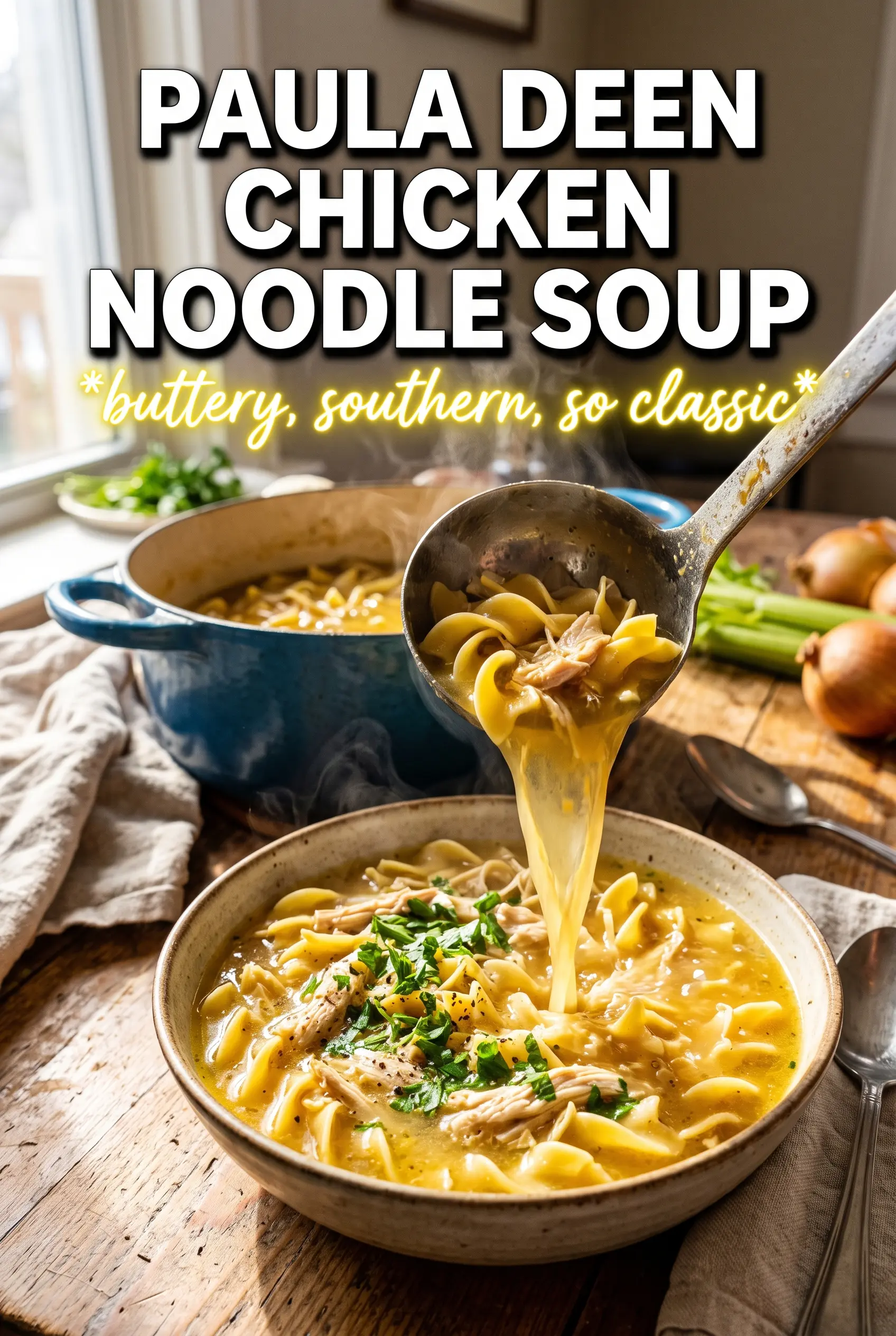
Paula Deen Chicken Noodle Soup
Ingredients
Equipment
Method
- Place the whole chicken in a very large pot and add the water, 2 cups broth, half the carrots, half the celery, half the onion, bay leaves, and 1 teaspoon salt.
- Bring to a boil, skim foam, and simmer 45 minutes until the chicken is fall-off-the-bone tender, with a steady gentle bubbling.
- Remove the chicken and shred all meat; discard the skin, bones, and the used vegetables, then strain the broth through a fine strainer back into the pot.
- Return the strained broth to the pot and add the remaining broth, butter, remaining carrots, remaining celery, remaining onion, and garlic.
- Simmer for 10 minutes until the vegetables start to soften, then stir in the shredded chicken, dried thyme, and dried parsley.
- Add the wide egg noodles and cook 6–8 minutes until tender, stirring occasionally so they don’t stick.
- Season generously with salt and pepper, then garnish with fresh parsley and serve hot.