Instant Pot lasagna soup gives you the same cozy, layered comfort as a pan of baked lasagna, but in a bowl that comes together fast enough for a weeknight. The broth turns rich and tomato-forward, the noodles stay tender with just enough bite, and the sausage gives every spoonful a savory depth that keeps it from tasting flat or brothy. The best part is the cheese dollop melting into the hot soup at the table; that’s what makes it taste like lasagna instead of just tomato soup with pasta.
This version works because the tomato paste gets cooked with the sausage, onion, and garlic before the liquid goes in. That step pulls out the paste’s sweetness and gives the broth a deeper, rounder taste. Pressing the broken noodles under the liquid also matters. If they sit on top, they steam unevenly and can clump together before the pressure builds.
Below, I’m walking through the part that matters most: how to keep the noodles from going mushy and how to adjust the broth if the soup thickens more than you want. The cheese mixture is worth paying attention to, too, because the right ratio gives you that creamy, stretchy finish in every bowl.
The noodles came out perfectly tender and the soup thickened up just enough after a quick simmer. I loved how the ricotta topping melted into the broth and made it taste like real lasagna in a bowl.
Save this Instant Pot lasagna soup for nights when you want all the lasagna comfort without layering a pan.
The Reason the Noodles Stay Tender Instead of Turning Mushy
The biggest mistake with lasagna soup is treating the noodles like they can sit in the pot forever. They can’t. Broken lasagna noodles soften fast under pressure, and if they cook too long they lose their shape and start giving the broth a starchy, thickened texture that feels heavy instead of silky. Four minutes on High is enough for dry noodles to cook through without collapsing.
Pressing the noodles under the liquid matters more than it sounds. Anything left exposed can steam unevenly and stick together, which gives you clumps instead of ribbons. Quick release also matters here. A natural release keeps the noodles cooking longer in the trapped heat, and that’s usually the point where they cross from tender to too soft.
What Each Ingredient Is Actually Doing in This Dish
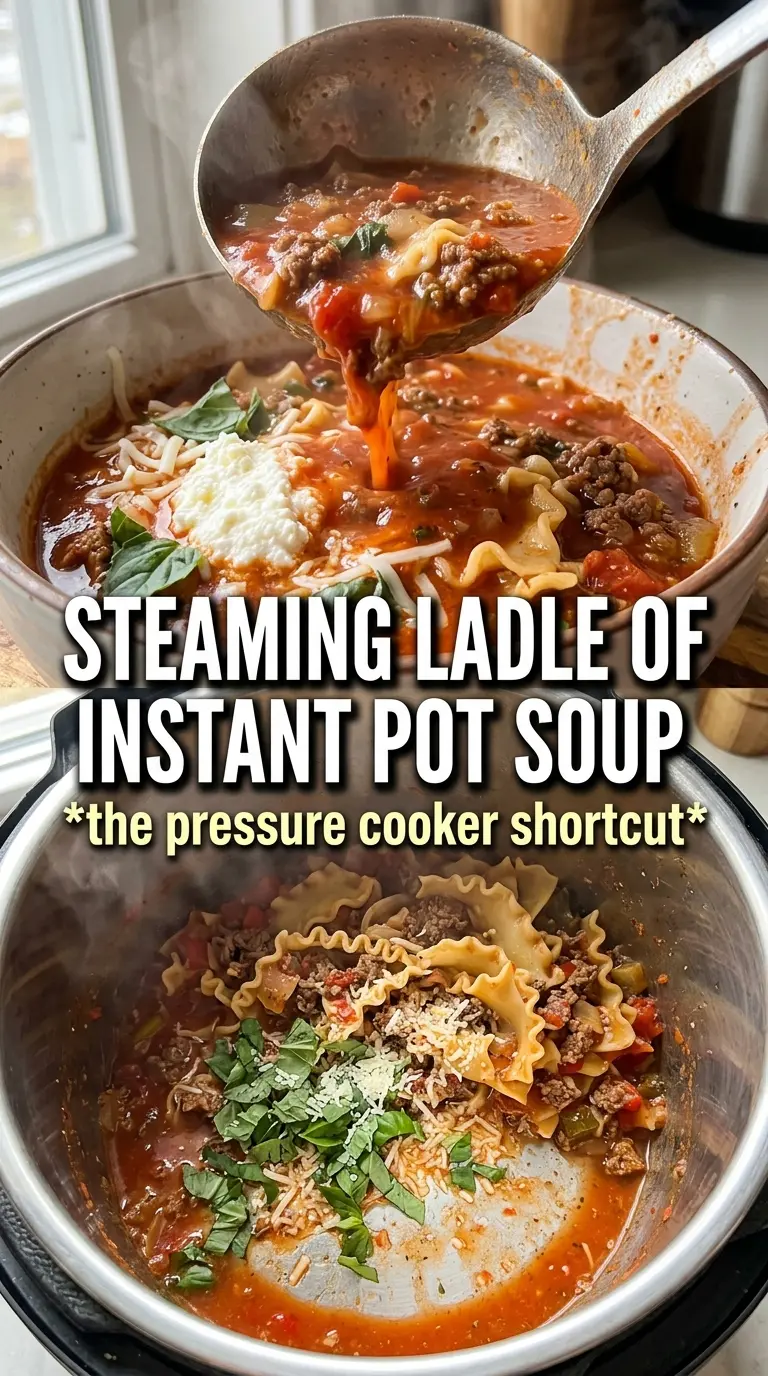
- Italian sausage — This builds the backbone of the soup. It seasons the broth as it cooks, and the rendered fat carries the tomato and herbs in a way lean meat can’t quite match. If you want a lighter version, ground turkey works, but add a little extra olive oil and salt because the soup loses some of its depth.
- Tomato paste — This is not just for color. Cooking it briefly with the sausage, onion, and garlic takes away the raw edge and gives the broth a concentrated, almost simmered-all-day taste. Skip that step and the soup tastes flatter.
- Crushed tomatoes plus diced tomatoes — Crushed tomatoes make the broth smooth and body-rich, while diced tomatoes leave little bursts of texture. If you only have one type, use it, but the mix gives you the best lasagna-like balance.
- Lasagna noodles — Standard dry noodles are the right choice here because they hold up in pressure cooking and still give that familiar lasagna bite. Break them into uneven 2-inch pieces so the bowl looks rustic and the noodles don’t pack together.
- Ricotta, mozzarella, and parmesan — The cheese dollop is what makes the bowl feel like lasagna. Ricotta keeps it creamy, mozzarella melts into the broth, and parmesan sharpens the finish. Stir in a spoonful of chopped basil right before serving so the topping tastes fresh instead of heavy.
Building the Broth in the Right Order
Brown the sausage first
Start with the sausage on Sauté and break it up as it cooks so you get small crumbles instead of big chunks. You want some browned bits left in the pot because they deepen the broth later. If there’s a lot of fat, drain most of it off, but leave a thin coating behind so the onion and garlic can cook in flavor instead of sticking.
Cook the tomato paste until it darkens slightly
Once the onion turns soft and the garlic smells fragrant, stir in the tomato paste and let it cook for about a minute. It should darken a shade and smell sweet, not sharp. If you rush this and dump in the broth too soon, the finished soup tastes more acidic and less rounded.
Pressure cook the noodles just until tender
Add the tomatoes, broth, and seasonings, then press the broken noodles under the liquid before sealing the lid. Cook on High for 4 minutes, then quick release as soon as the timer ends. If you wait too long to vent, the noodles keep softening in the residual heat and the broth can turn overly thick.
Finish with the cheese at the bowl, not in the pot
Stir the soup and check the texture before serving. If it looks too thick, loosen it with a splash of broth; if it looks thin, a short Sauté simmer will tighten it up. Mix the cheese topping separately and spoon it onto each bowl so it melts slowly into the hot soup instead of disappearing into the pot.
Three Ways to Adjust This Without Losing What Makes It Good
Make it dairy-free
Skip the ricotta-mozzarella-parmesan topping and finish each bowl with a spoonful of dairy-free cashew cream or a handful of fresh basil. The soup itself still tastes full because the sausage, tomatoes, and herbs do most of the work. What you lose is that creamy lasagna-style finish, so add an extra drizzle of olive oil at the table for body.
Use ground turkey instead of sausage
Ground turkey works well if you want something lighter, but it needs help because it doesn’t season the soup the way sausage does. Add an extra pinch of salt and a little more Italian seasoning, and don’t skip browning it fully. The result is milder and cleaner-tasting, with less richness in the broth.
Make it gluten-free
Use your favorite gluten-free lasagna-style noodle, but keep a close eye on the texture because some GF pastas break down faster under pressure. If the noodle brand you buy tends to get soft, shave a minute off the pressure time and let the residual heat finish the job. That keeps the soup from turning gummy.
Stir in greens at the end
A few handfuls of baby spinach or chopped kale can go in after pressure cooking. Spinach wilts in under a minute, while kale needs a couple of minutes on Sauté to soften. This adds color and makes the soup a little heartier without changing the base flavor.
Storage and Reheating
- Refrigerator: Store in an airtight container for up to 4 days. The noodles keep soaking up broth, so the soup gets thicker by day two.
- Freezer: It freezes, but the noodles soften more after thawing. For best results, freeze the broth and sausage base without noodles, then cook fresh noodles when you reheat.
- Reheating: Warm gently on the stove or in the microwave with a splash of broth or water. Don’t blast it on high heat, or the noodles can split apart and the dairy topping can turn grainy if you stir it in too early.
Questions I Get Asked About This Recipe
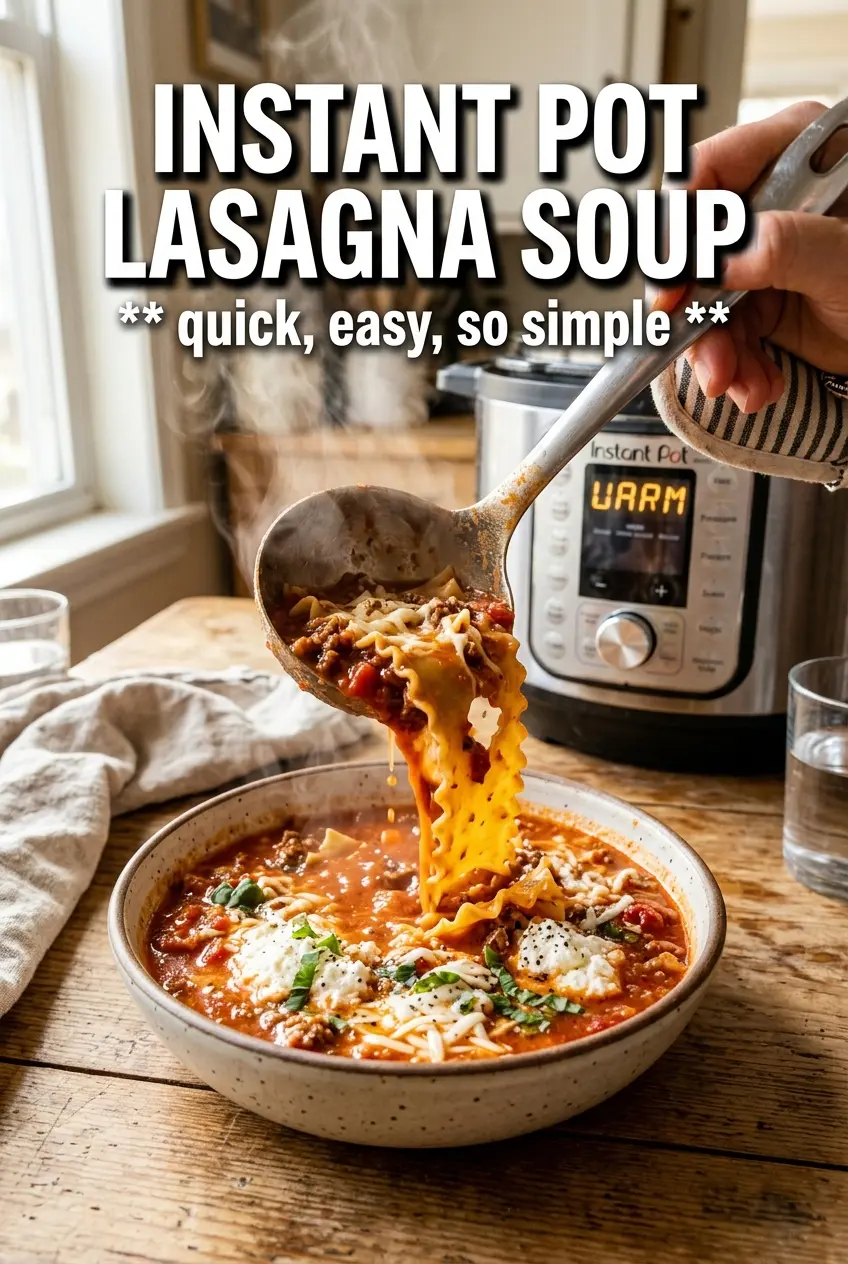
Instant Pot Lasagna Soup
Ingredients
Equipment
Method
- Set Instant Pot to Sauté and brown the Italian sausage until cooked through, then drain excess fat.
- Add diced onion and cook for 3 minutes, stirring until softened.
- Stir in minced garlic and tomato paste and cook for 1 minute, scraping up any browned bits.
- Add crushed tomatoes, diced tomatoes, chicken broth, Italian seasoning, dried basil, and red pepper flakes, then stir to combine.
- Press the broken lasagna noodles under the liquid so they are submerged.
- Seal the lid and pressure cook on High for 4 minutes, then quick release.
- Stir the soup and season with salt and pepper to taste.
- If the soup is too thick, add a splash of broth; if too thin, set to Sauté and simmer briefly until it reaches your preferred consistency.
- Mix ricotta, mozzarella, and Parmesan together for the cheese dollop.
- Ladle soup into bowls and add a generous dollop of the cheese mixture; top with fresh basil so it starts to melt into the center.