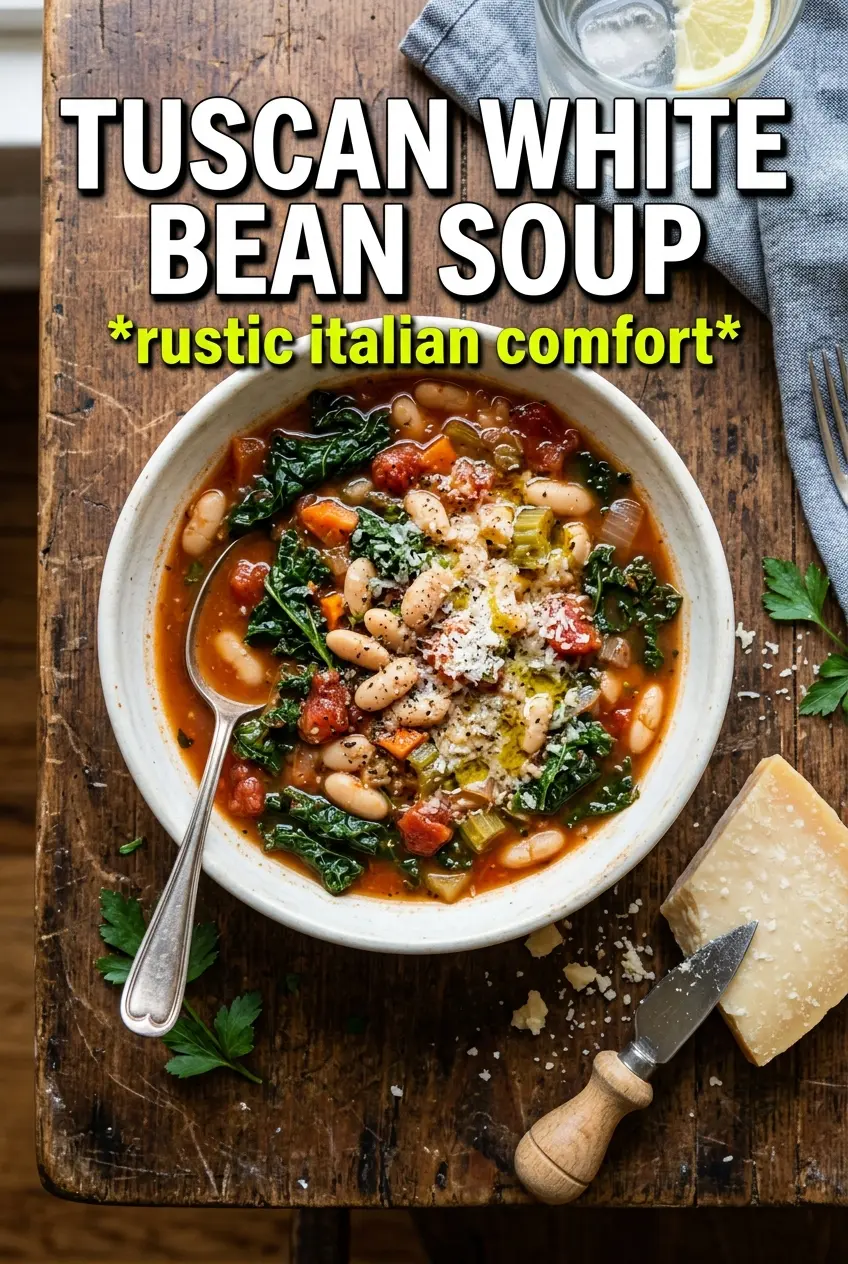
Creamy cannellini beans, a savory rosemary broth, and ribbons of kale turn this Tuscan White Bean Soup into the kind of pot that quietly disappears fast. The beans soften just enough to thicken the broth without turning it heavy, and the pancetta adds a deep, smoky base that makes every spoonful taste like it cooked longer than it did. It’s hearty enough for dinner, but still light enough that a second bowl never feels like a mistake.
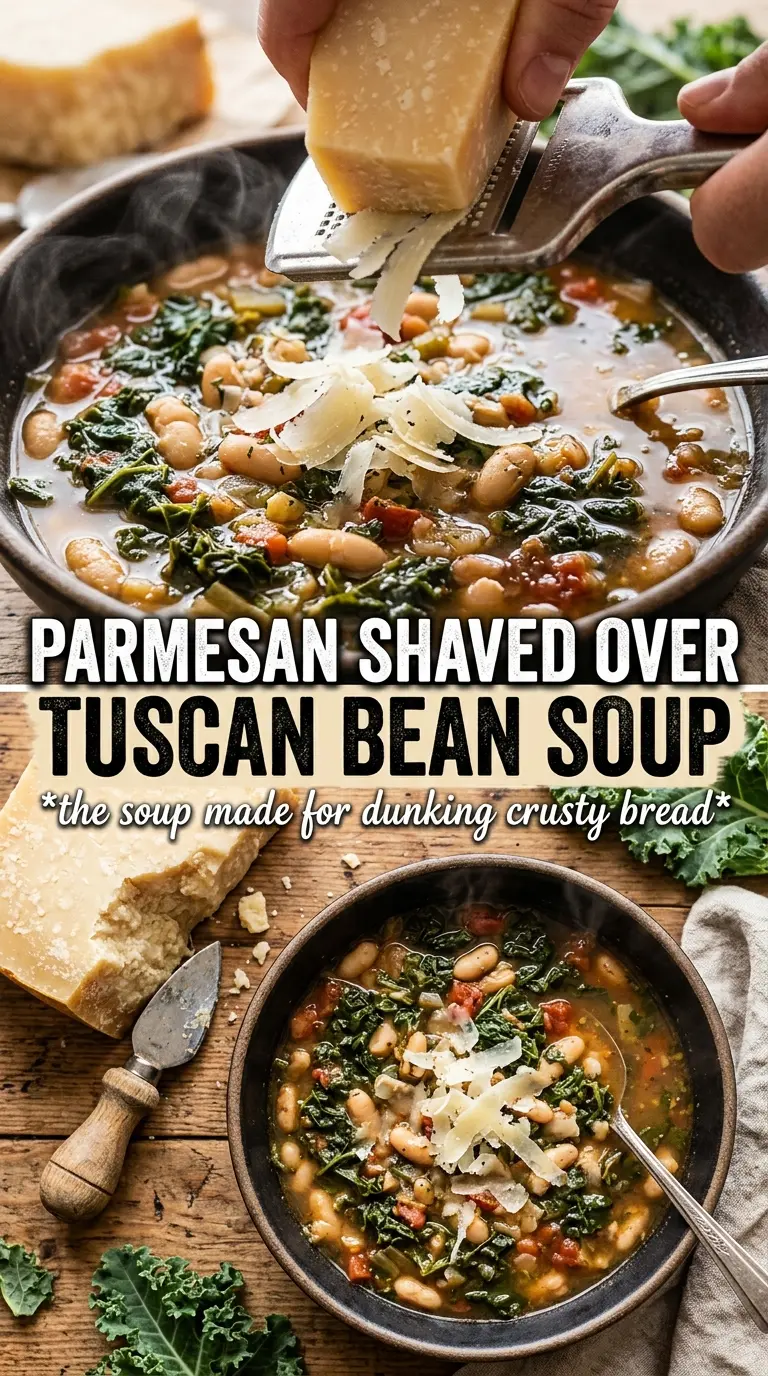
What makes this version work is the layering. The pancetta fat carries the onion, celery, and garlic, so the soup starts with a strong foundation instead of tasting flat. A parmesan rind gives the broth a round, salty depth that you can’t quite fake with grated cheese alone, and mashing a portion of the beans at the end gives you body without cream. That keeps the texture brothy but substantial, with enough richness to cling to crusty bread.
Below, you’ll find the timing that keeps the kale from going dull and the beans from falling apart, plus a few smart swaps for making the pot fit what you’ve got on hand.
The broth thickened up exactly when I mashed some of the beans, and the rosemary flavor was perfect without taking over. I used bacon instead of pancetta and still got that smoky finish everyone wanted a second bowl of.
Save this Tuscan White Bean Soup for a cozy pot with creamy beans, rosemary broth, and kale that stays vibrant.
The Reason the Broth Stays Rich Without Getting Heavy
The big mistake in bean soups is overbuilding them until they taste muddy or flat. This one stays bright because the rosemary simmers gently instead of boiling hard, and the beans are only partly mashed at the end, which gives the broth body while keeping some whole beans for texture. You get a spoonable soup, not a puree.
The other thing that matters is the order. Starting with pancetta means the onion, celery, and garlic cook in seasoned fat, so the base tastes layered before the liquid ever goes in. If you add everything at once, the broth can taste thin no matter how long it simmers. That little bit of fat is carrying the whole pot.
- Pancetta or bacon — Pancetta gives a cleaner, slightly sweeter pork flavor, while bacon brings a smokier edge. Either one works, but you want it rendered until crisp so the fat becomes part of the soup base.
- Cannellini beans — These are the body of the soup. They hold their shape better than softer white beans, and they mash into a creamy texture without turning gluey.
- Parmesan rind — This is optional, but it adds savory depth that grated cheese alone won’t give you during simmering. If you skip it, the soup still works, but it tastes a little less rounded.
- Kale — Add it at the end so it stays green and tender instead of dull and overcooked. Curly kale or lacinato both work; chop it into bite-size pieces so it eats easily.
What Each Ingredient Is Actually Doing in This Recipe
- Primary ingredient (the star) — Quality matters most. Choose the best you can find.
- Cooking medium (oil, butter, or broth) — This carries flavors and prevents dryness.
- Seasonings (salt, pepper, spices, herbs) — Layer flavors so nothing overpowers. Build depth gradually.
- Aromatics (garlic, onion, herbs) — Cook with fat to bloom flavors. Become the foundation.
- Supporting ingredients — Complement the main ingredient without overpowering it.
- Sauce or liquid (if applicable) — Brings flavors together. Balance richness with acid.
- Acid (lemon, vinegar, wine, or other) — Brightens and prevents flat-tasting results.
- Final finish (garnish, glaze, or sauce) — Prevents one-dimensional taste and adds visual appeal.
Building the Soup So the Beans and Greens Land at the Right Time
Rendering the Pancetta
Cook the pancetta in a large pot over medium heat until the pieces are browned and crisp at the edges and enough fat has collected to coat the bottom of the pot. If the heat runs too high, the outside burns before the fat renders, and you lose the savory base the whole soup depends on. Scoop the pancetta out and leave the fat behind.
Softening the Aromatics
Add the onion and celery to the pot and cook them in the rendered fat until they look glossy and the onion turns translucent, about 5 minutes. Stir in the garlic near the end so it smells fragrant, not bitter. If the pot looks dry, add a small drizzle of olive oil rather than letting the vegetables catch on the bottom.
Simmering the Broth
Pour in the tomatoes, broth, rosemary, parmesan rind, and Italian seasoning, then bring everything to a boil before lowering it to a steady simmer. Add the beans and let them cook long enough to pick up the seasoning from the broth, about 20 minutes. A hard boil can break the beans apart before they’re ready, so keep the bubbles gentle once the soup is underway.
Finishing for Body and Freshness
Pull out the rosemary sprigs and parmesan rind, then mash about a third of the beans against the side of the pot with a spoon or potato masher. Stir in the kale and simmer just until it softens and turns a darker green, 5 to 8 minutes. Taste at the end and season with salt and pepper only after the broth has reduced a little, since the pancetta and parmesan already bring salt to the pot.
How to Adapt This Pot Without Losing What Makes It Good
Make It Vegetarian Without Losing Depth
Skip the pancetta and use olive oil to sauté the vegetables, then keep the parmesan rind if you eat dairy. If you want a fully vegetarian pot, leave out the rind and add a little extra salt plus a splash of white wine or a spoonful of tomato paste at the beginning for more savory depth.
Use Bacon for a Smokier Finish
Bacon works anywhere pancetta is called for here. It adds a stronger smoky note and a touch more salt, so taste before seasoning at the end. The texture will be a little crisper and less silky, which some people prefer in a soup like this.
Make It Dairy-Free
Leave out the parmesan rind and finish with good olive oil instead of cheese shavings. The soup still tastes full because the beans do the thickening, and the rosemary plus tomatoes carry enough flavor that you won’t miss the dairy if you season carefully.
Storage and Reheating
- Refrigerator: Store in an airtight container for up to 4 days. The soup thickens as it sits, and the beans soak up more broth.
- Freezer: It freezes well for up to 3 months. Cool it completely first, then portion it into freezer-safe containers, leaving a little room for expansion.
- Reheating: Reheat gently on the stove over medium-low heat with a splash of broth or water to loosen it. Don’t blast it on high heat or the beans can break down too much and the kale will turn drab.
Questions I Get Asked About This Soup
Tuscan White Bean Soup
Ingredients
Equipment
Method
- Cook pancetta in a large pot over medium heat until crispy, then remove and set aside. You should see browned, rendered fat in the pot.
- Sauté onion, celery, and garlic in the pancetta fat for 5 minutes. Stir until softened and fragrant.
- Add diced tomatoes, broth, rosemary sprigs, parmesan rind if using, and Italian seasoning, then bring to a boil. Look for steady bubbling around the edges.
- Add cannellini beans and simmer for 20 minutes. Keep the surface at a gentle bubble.
- Remove rosemary and parmesan rind, then mash about a third of the beans in the pot to thicken. The soup should look slightly creamy with some whole beans left.
- Add kale and simmer for 5-8 minutes until wilted. The leaves should turn bright green and tender.
- Season with salt and pepper, then drizzle with olive oil and top with parmesan and pancetta. Serve with crusty bread alongside.