Fall-apart beef, tender potatoes, and a deep, rich broth are what make crock pot beef stew worth keeping in the regular dinner rotation. The slow cooker does the heavy lifting here, but the real payoff is in the balance: beef chuck that turns silky instead of stringy, vegetables that hold their shape, and a gravy-like broth that tastes like it simmered all day on the stove.
The key is building the stew in layers that protect the vegetables and give the beef time to soften without overcooking everything else. Chuck roast has enough marbling to stay juicy through a long cook, and the tomato paste, Worcestershire, and red wine add depth that plain broth alone can’t give. A final cornstarch slurry thickens the liquid at the end, which keeps the stew hearty instead of watery.
Below you’ll find the simple trick that keeps the broth from staying thin, plus a few swaps that still give you a proper stew even when you’re missing one ingredient.
The beef got so tender it broke apart with a spoon, and the broth thickened up perfectly after the slurry went in. My husband went back for seconds and said it tasted like the kind of stew his mom used to make.
Save this crock pot beef stew for a hands-off dinner with tender beef, soft vegetables, and a broth that finishes thick and savory.
The Trick That Keeps Slow Cooker Stew from Tasting Flat
Slow cooker stew can go wrong in one of two ways: it tastes muddy, or it tastes thin. This version avoids both by using tomato paste, Worcestershire sauce, and red wine in small but important amounts. They don’t make the stew taste like tomatoes or wine. They deepen the beef flavor and give the broth that long-cooked, almost roasted edge people expect from a good stew.
Layering also matters. Putting the potatoes, carrots, celery, and onion on the bottom helps them cook in the broth without turning to mush, while the beef sits above them and slowly softens as the liquid heats around it. If you stir everything together at the start, the vegetables break down faster and you lose that nice contrast between tender beef and intact chunks of potato.
- Beef chuck — This is the cut that gives you tender, spoonable stew after a long cook. Leaner beef can dry out before it turns soft.
- Red wine or extra beef broth — Wine adds depth and a little brightness, but broth works if you want to skip it. Use a dry red if you do add wine; sweet wine will throw the flavor off.
- Tomato paste — A couple tablespoons is enough to round out the broth and add body. Cooking it in the liquid, instead of leaving it out, helps keep the stew from tasting one-note.
- Baby potatoes — Halved baby potatoes hold their shape better than peeled russets. If you only have russets, cut them into large chunks and expect a softer texture.
What Each Ingredient Is Actually Doing in This Recipe
- Primary ingredient (the star) — Quality matters most. Choose the best you can find.
- Cooking medium (oil, butter, or broth) — This carries flavors and prevents dryness.
- Seasonings (salt, pepper, spices, herbs) — Layer flavors so nothing overpowers. Build depth gradually.
- Aromatics (garlic, onion, herbs) — Cook with fat to bloom flavors. Become the foundation.
- Supporting ingredients — Complement the main ingredient without overpowering it.
- Sauce or liquid (if applicable) — Brings flavors together. Balance richness with acid.
- Acid (lemon, vinegar, wine, or other) — Brightens and prevents flat-tasting results.
- Final finish (garnish, glaze, or sauce) — Prevents one-dimensional taste and adds visual appeal.
Building the Broth, Then Thickening It at the End
Seasoning the Beef First
Salt and pepper on the beef before it goes into the slow cooker give every bite better flavor, not just the broth around it. Use enough salt that the cubes taste seasoned before they cook. If you skip this and rely only on the broth, the stew usually tastes dull no matter how long it simmers.
Layering the Vegetables Under the Meat
Spread the potatoes, carrots, celery, and onion across the bottom of the crock pot, then set the beef over them. That keeps the vegetables in the cooking liquid and gives the meat a gentle lift, so it doesn’t sit flat against the base and overcook. The onions will soften and melt into the stew, while the carrots and potatoes stay defined.
Letting the Slow Cooker Do the Long Work
Cook on low for 8 to 10 hours, or on high for 4 to 5 hours if you are short on time. The beef is ready when it pulls apart with a fork and the carrots are tender without collapsing. If the beef still feels tight, it needs more time; stew beef goes from firm to tender slowly, then all at once.
Finishing with the Slurry
Stir the cornstarch and water together until smooth, then pour it into the hot stew after you remove the bay leaves. Turn the cooker to high and let it bubble for 20 to 30 minutes. If you add cornstarch too early, it can lose its thickening power during the long cook, which is why the stew stays thin until the very end.
How to Adapt This Stew Without Losing the Good Part
Skip the Wine and Keep the Depth
Use extra beef broth instead of wine if that’s what you have. The stew will still be hearty, but it loses a little brightness, so the tomato paste and Worcestershire become even more important. If you want to replace some of that missing lift, add a teaspoon of balsamic vinegar at the end.
Make It Gluten-Free
This stew is naturally close to gluten-free, but check your Worcestershire sauce and broth labels. Some brands sneak in wheat-based ingredients. The cornstarch slurry is a good gluten-free thickener, so the final texture stays the same.
Turn It Into a Dairy-Free, Heartier Vegetable Stew
There is no dairy here to begin with, so the main adjustment is just leaning harder into the vegetables if you want a lighter version. Add mushrooms or parsnips with the potatoes for more body and a deeper savory note. The broth stays rich because the beef, wine, and tomato paste do the work.
Storage and Reheating
- Refrigerator: Store for up to 4 days. The broth will thicken as it chills, and the potatoes soften a little more overnight.
- Freezer: Yes, it freezes well for up to 3 months. Cool it completely first, then freeze in airtight containers; the potatoes may be slightly softer after thawing, but the flavor holds up.
- Reheating: Warm it gently on the stovetop over medium-low heat or in the microwave in short bursts, stirring between each one. If it looks too thick, add a splash of broth or water. Reheat slowly so the beef stays tender and the broth doesn’t separate.
Questions I Get Asked About This Recipe
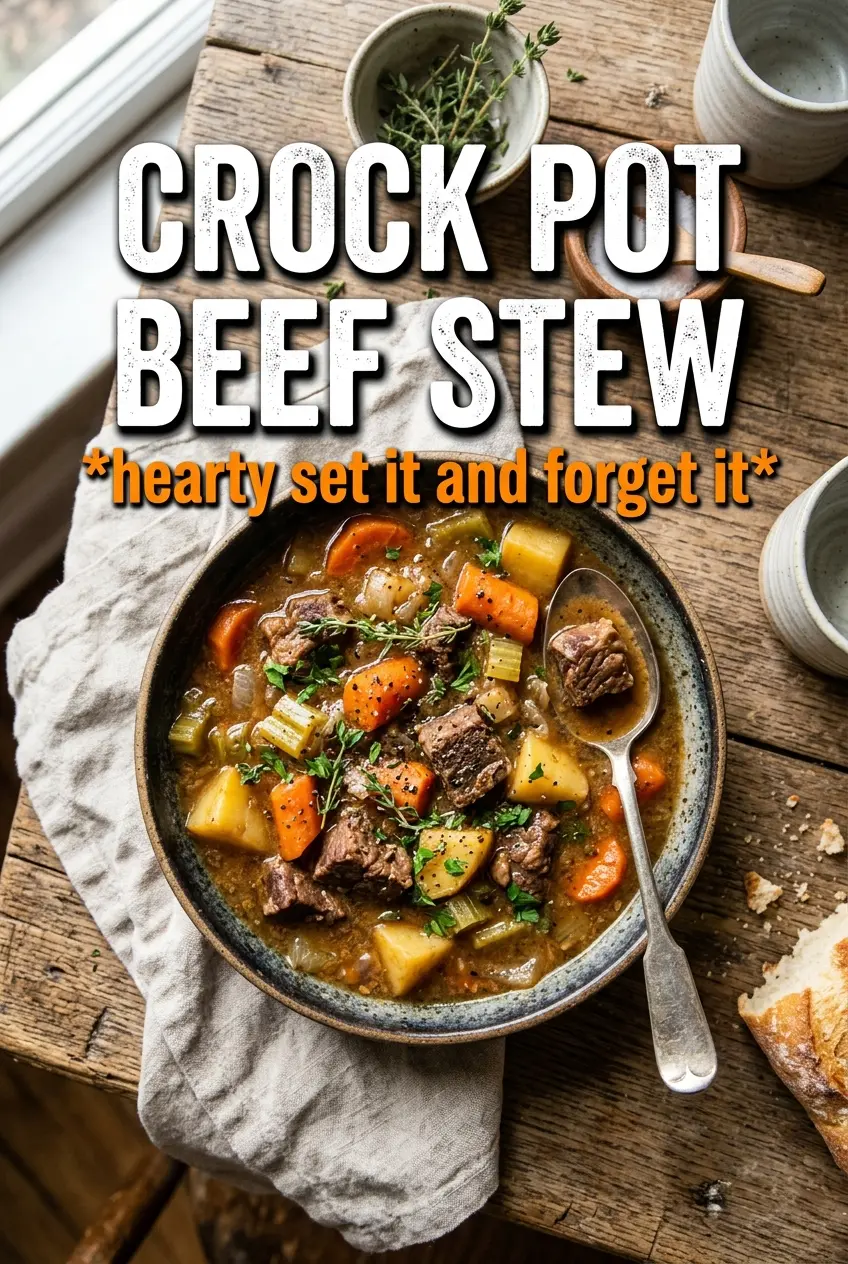
Crock Pot Beef Stew
Ingredients
Equipment
Method
- Season the beef generously with salt and pepper, coating all sides. The pieces should look lightly speckled as you place them into the cooker.
- Add the potatoes, carrots, celery, and onion to the bottom of the slow cooker. Spread them in an even layer so the stew cooks uniformly.
- Nestle the beef on top of the vegetables. Keep the cubes mostly in one layer to help them become tender evenly.
- Add the garlic, beef broth, wine (or extra beef broth), diced tomatoes, tomato paste, Worcestershire sauce, dried thyme, dried rosemary, and bay leaves. Pour the liquid carefully so it surrounds the beef and settles through the vegetables.
- Cook on Low for 8–10 hours, until the beef is fall-apart tender. You should see steady, gentle bubbling around the edges of the slow cooker insert.
- Remove the bay leaves and discard them. Look for the leaves in the broth and ensure none remain in the stew.
- Stir the cornstarch slurry (cornstarch whisked with water) into the stew. The mixture should blend without leaving dry lumps.
- Cook on High for 20–30 minutes until the broth thickens. The stew should coat a spoon and look glossy when you draw a finger line through it.
- Season with salt and pepper to taste. Adjust in small pinches, then stir and taste again.