Creamy Parmesan Chicken Noodle Soup lands in that sweet spot between comforting and substantial. The broth stays silky instead of turning gluey, the chicken stays tender, and the parmesan gives the whole pot a deep savory edge that makes plain chicken noodle soup feel a little more grown-up. The egg noodles soak up just enough of the cream broth without going mushy, so each bowl eats like a full meal.
What keeps this version from feeling heavy is the order of operations. The vegetables soften first, the flour gets cooked long enough to lose its raw taste, and the cream goes in only after the broth has already done the hard work of building flavor. Freshly grated parmesan matters here because pre-shredded cheese tends to melt less smoothly and can leave the soup grainy. Spinach goes in at the end so it stays bright and silky instead of collapsing into the pot.
Below, I’ve included the small things that make the biggest difference: how to keep the cheese from clumping, when to stop the simmer so the cream stays smooth, and the best way to reheat leftovers without breaking the broth.
The broth stayed creamy all the way through, and the parmesan melted in without getting stringy. I loved that the noodles held their texture even after reheating the next day.
Save this Creamy Parmesan Chicken Noodle Soup for the nights when you want a silky broth, tender chicken, and noodles in one pot.
The Trick to Keeping the Parmesan Broth Smooth
The biggest failure point in a creamy soup like this is dumping the cheese into a boiling pot. Parmesan tightens fast when the heat is too aggressive, and that’s how you end up with little clumps instead of a smooth broth. The cure is simple: keep the simmer gentle, pull the heat back before the cheese goes in, and stir until it disappears into the cream.
The other thing that helps is flour, but only if you cook it long enough with the butter and vegetables. That short minute or two takes away the raw flour taste and gives the broth enough body to carry the cream without feeling thin. If the soup ever looks a little too thick after the noodles sit, loosen it with a splash of broth rather than more cream.
What Each Ingredient Is Actually Doing in the Pot

- Chicken breast — Diced chicken breast cooks quickly and stays easy to eat in soup. Cut it into even pieces so it finishes at the same time as the broth; if you prefer darker meat, thighs work too and give you a little more richness.
- Freshly grated parmesan — This is the ingredient that gives the soup its signature body and salty depth. Pre-grated parmesan can be used in a pinch, but it won’t melt as smoothly and can make the broth a little grainy.
- Heavy cream — Cream softens the saltiness of the parmesan and turns the broth velvety. Half-and-half will work, but the soup won’t have the same lush texture and it’s more likely to look thin after the noodles absorb liquid.
- Egg noodles — These hold up well in creamy broth and give the soup that classic noodle-soup feel. Don’t swap in tiny pasta without adjusting the cook time, or you’ll end up with overcooked noodles by the time the chicken is done.
- Flour and butter — This quick roux is what keeps the soup from tasting like seasoned cream floating in broth. Cook it briefly until it smells a little nutty before adding liquid, or the soup can taste pasty.
- Spinach — Spinach adds color and a fresh finish without taking over the pot. Baby spinach is best because it wilts fast; regular spinach should be chopped so the stems don’t feel tough.
Building the Soup Base Without Breaking the Cream
Softening the Vegetables
Start with the butter, onion, carrots, and celery and cook them until the onion turns translucent and the carrots just begin to lose their raw edge. You’re not looking for color here; you want sweetness and a little softness so the soup tastes rounded instead of sharp. If the vegetables are still crunchy at this stage, they’ll stay too firm in the finished bowl.
Cooking Out the Flour
Once the garlic goes in for a minute, whisk in the flour and let it cook briefly before adding broth. The mixture should look pasty at first, then turn into a smooth, thick coating on the vegetables. If you skip this step or rush it, the soup can taste floury and the broth won’t thicken properly.
Simmering the Chicken
Pour in the broth gradually so the pot stays smooth, then add the chicken and Italian seasoning. Keep the simmer gentle and cook until the chicken is just cooked through and no longer pink in the center. A hard boil here can make the chicken stringy and cause the broth to reduce too fast before the noodles even go in.
Finishing with Cream, Noodles, and Cheese
Stir in the cream, then add the egg noodles and cook just until tender. Once the noodles are done, lower the heat and stir in one cup of parmesan until melted before adding the spinach and nutmeg. If the soup boils after the cream and cheese go in, the texture can turn grainy, so keep it at the barest simmer and serve with the remaining parmesan over the top.
Three Ways to Adjust This Soup for Your Kitchen
Make it gluten-free
Swap the flour for a 1:1 gluten-free blend and use gluten-free noodles. The soup will still thicken, but the texture will be a touch less silky, so keep the simmer gentle and check the noodles a minute early because gluten-free pasta can go from tender to soft fast.
Use chicken thighs for a richer bowl
Boneless thighs add more savory depth and stay a little more forgiving if the soup simmers a few minutes longer than planned. They do bring a deeper chicken flavor, which works well here, but the broth will taste a bit richer and less clean than it does with breast meat.
Make it lighter without losing the creamy feel
Replace part of the heavy cream with half-and-half or evaporated milk. The soup will still taste creamy, but it won’t have the same plush finish, so use a little extra parmesan at the end to bring back body and flavor.
Storage and Reheating
- Refrigerator: Store for up to 4 days. The noodles will keep soaking up broth, so expect the soup to thicken as it sits.
- Freezer: It freezes, but the cream and noodles won’t be perfect after thawing. For the best texture, freeze the soup before adding the noodles, then cook fresh noodles when you reheat it.
- Reheating: Warm it slowly over low heat and add a splash of broth if needed. Don’t boil it, or the cream can separate and the noodles can turn soft.
Questions I Get Asked About This Recipe
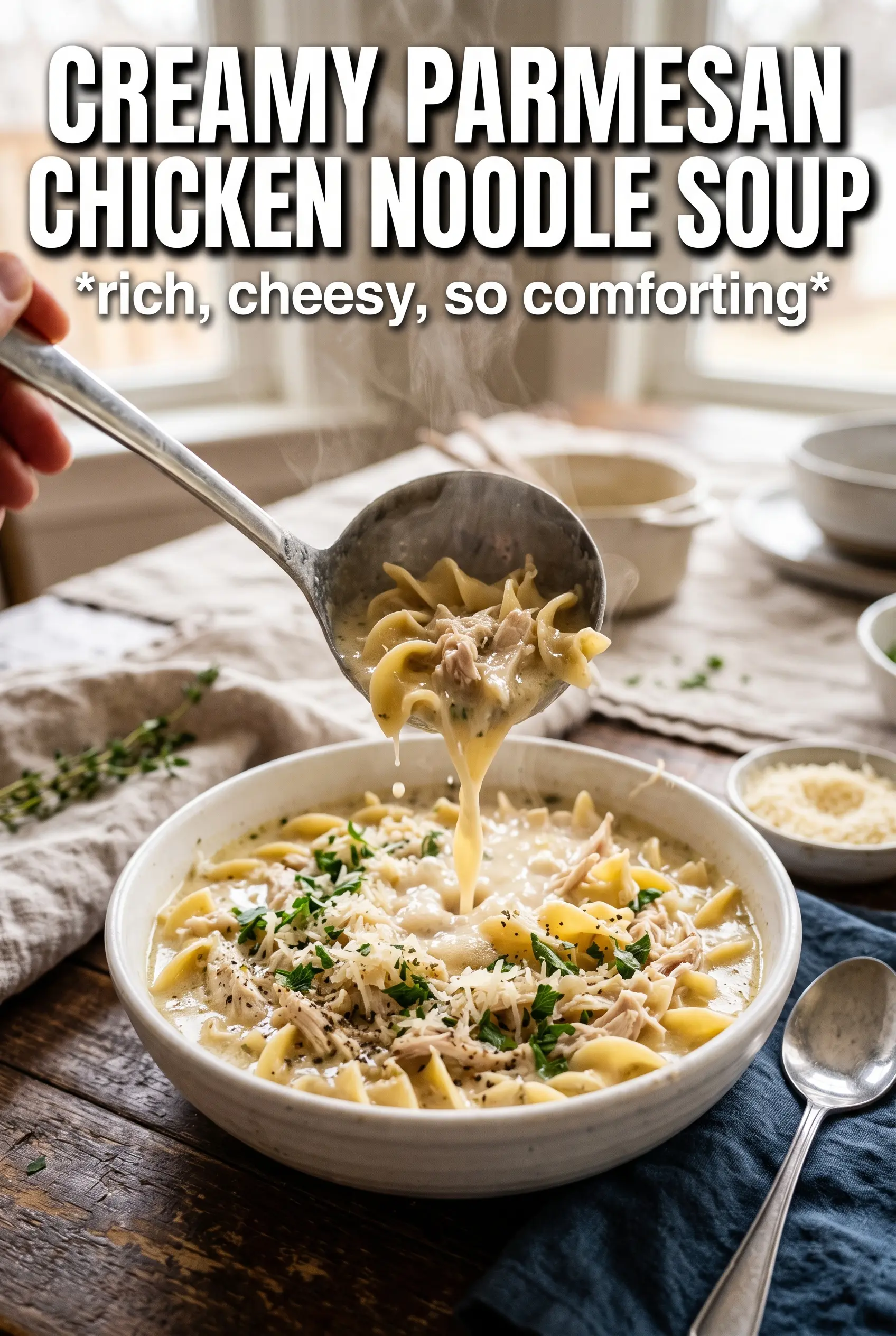
Creamy Parmesan Chicken Noodle Soup
Ingredients
Equipment
Method
- Melt the butter in a large pot over medium heat, then sauté the onion, carrots, and celery for 5 minutes until softened.
- Add the garlic and cook for 1 minute until fragrant, then whisk in the flour and cook for 1–2 minutes to remove the raw flour taste.
- Gradually add the chicken broth, then stir in the diced chicken and Italian seasoning.
- Simmer for 15 minutes, stirring occasionally, until the chicken is cooked through.
- Stir in the heavy cream and bring the soup to a gentle simmer, then add the egg noodles.
- Cook for 6–8 minutes until the noodles are tender.
- Reduce the heat, then stir in 1 cup of parmesan until fully melted and the broth looks silky.
- Add the baby spinach and cook for 2 minutes until wilted, then stir in the nutmeg.
- Season with salt and pepper to taste, then serve hot with the remaining parmesan on top.