Roasted garlic white chicken lasagna soup lands in the bowl with all the comfort of a baked lasagna and none of the layering work. The broth turns silky and rich, the noodles soften into the soup just enough to feel substantial, and the roasted garlic gives everything a mellow sweetness that regular garlic just can’t match. It eats like a full meal, with enough body to feel cozy but still light enough that a second bowl never feels out of place.
The key is building the base in stages. Roasting the garlic first takes away the sharp bite and leaves behind a paste that melts right into the butter and onion. From there, a quick flour roux gives the broth enough structure to carry the cream and parmesan without turning thin or greasy. Broken lasagna noodles are the right choice here because they thicken the soup as they cook, which makes the whole pot feel more like a finished dish than a brothy shortcut.
Below, I’ve included the timing that keeps the noodles tender instead of mushy, plus a few smart swaps if you want to adjust the richness or make the soup stretch a little farther.
The roasted garlic made the broth taste deep and mellow, and the noodles held their texture even after sitting for a few minutes. I topped mine with extra ricotta and my husband asked if we could have it again next week.
Save this roasted garlic white chicken lasagna soup for the nights when you want a creamy, noodle-filled bowl with a ricotta swirl on top.
The Trick to Keeping the Broth Creamy Instead of Grainy
The biggest risk in a white soup like this is rushing the dairy. If the broth is boiling hard when the cream and parmesan go in, the texture can go from silky to slightly broken or dull. A steady simmer is enough for the noodles to cook and for the soup to thicken; you don’t need a rolling boil at any point after the roux is in place.
The flour and butter do the stabilizing work here, but only if the flour has a minute or two in the pot before the liquid goes in. That short cooking time takes away the raw flour taste and helps the soup stay smooth. Once the broth and cream are added, whisk until the base looks fully blended before the noodles go in. Any streaks at that point usually mean the roux wasn’t cooked long enough or the liquid was added too quickly.
What Each Ingredient Is Actually Doing in This Soup
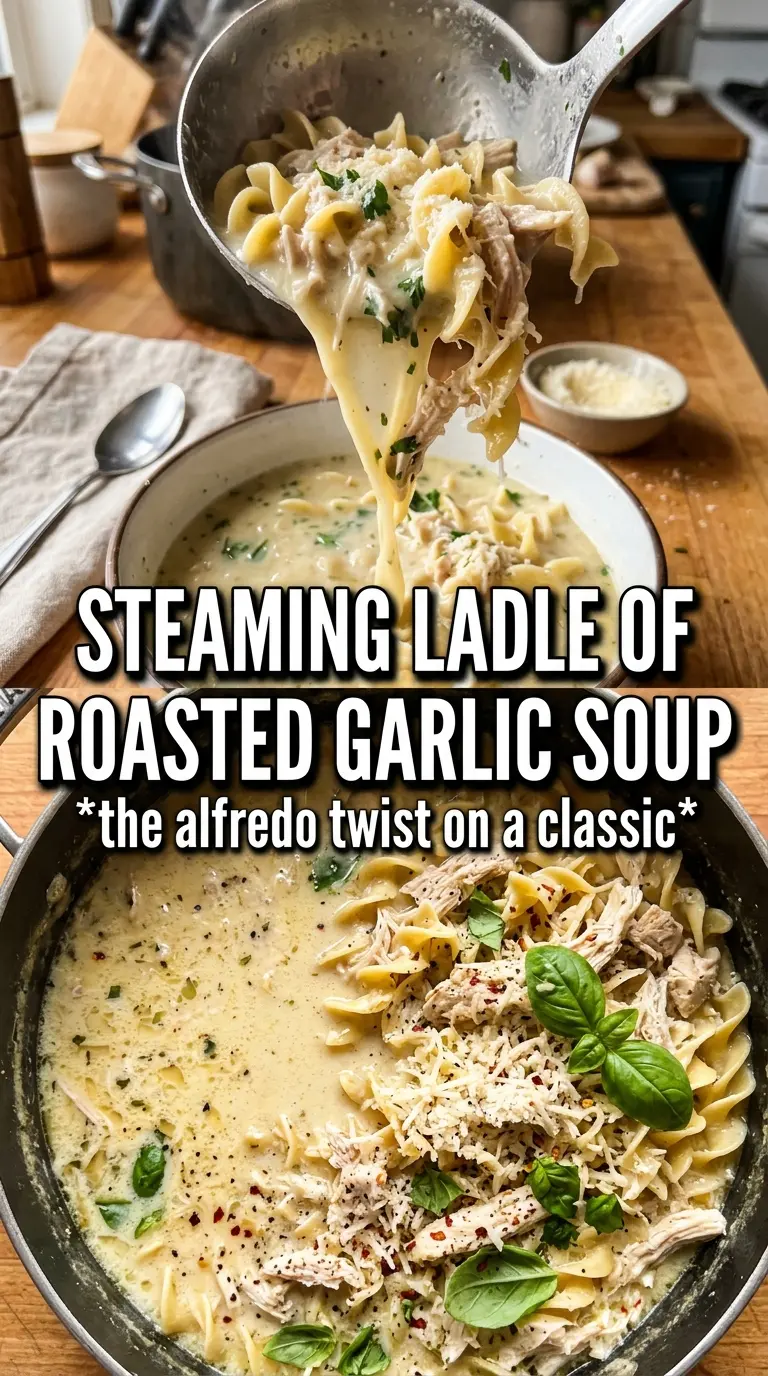
- Roasted garlic — This is the ingredient that gives the soup its signature depth. Raw garlic would taste sharper and more aggressive; roasted garlic turns sweet, soft, and spreadable, then melts into the broth. If you only have pre-roasted garlic from the store, use it, but fresh-roasted still tastes fuller.
- Chicken breast or thighs — Both work, but thighs stay juicier if the soup sits on the stove a little longer. Breast is leaner and shreds neatly, which is great if you want a cleaner bowl. Rotisserie chicken is the fastest swap, and it works well as long as you add it at the end so it doesn’t dry out.
- Heavy cream — This gives the soup its body and keeps the broth from tasting flat. Half-and-half can work in a pinch, but the soup will be lighter and a little less plush. Don’t replace it with milk unless you’re okay with a thinner result.
- Broken lasagna noodles — They give the soup the right texture and help thicken the broth naturally as they simmer. Regular pasta shapes can work, but lasagna pieces make the bowl feel much closer to the real dish. Break them unevenly for a more rustic spoonful.
- Ricotta mixture — The swirl on top is more than garnish. It gives each bowl a cool, creamy contrast and adds that classic lasagna note. If your ricotta is watery, stir it first so the topping doesn’t disappear into the soup.
Building the Soup in the Right Order
Starting with the roasted garlic
Squeeze the roasted cloves from their skins and mash them into a smooth paste before they ever hit the pot. That step matters because large chunks won’t melt in as evenly, and you’ll end up with pockets of garlic instead of a unified broth. Add the paste to the sautéed onion and let it cook for about a minute, just until it smells sweet and nutty. If it starts to brown hard, the garlic was too dry or the heat was too high.
Making the roux and broth base
Once the butter and flour are combined, the mixture should look paste-like and slightly foamy. Cook it for 1 to 2 minutes, stirring often, until the raw flour smell fades. Then add the broth and cream gradually while whisking so the base stays smooth. If you dump in the liquid all at once, the flour can clump before it disperses.
Cooking the noodles without overdoing them
Bring the soup to a gentle simmer before adding the broken noodles. You want small bubbles around the edges, not a hard boil, because aggressive heat can split the dairy and make the noodles go soft before the center is tender. Stir every minute or two so the pasta doesn’t stick to the bottom. Once the noodles are just shy of done, the soup is at the right point to finish with chicken, spinach, and parmesan.
Finishing with chicken, greens, and cheese
Stir in the shredded chicken and spinach near the end so the meat stays juicy and the greens stay bright. The parmesan should go in last, off direct heat if possible, so it melts into the broth instead of clumping. Taste before serving and add salt only after the parmesan has had a chance to season the pot. The cheese brings saltiness of its own, and the soup can go from balanced to sharp fast if you season too early.
How to Tweak It Without Losing the Lasagna Feel
Dairy-Free Version With a Lighter Finish
Use a full-fat unsweetened oat cream or coconut cream in place of the heavy cream, then skip the ricotta swirl or replace it with a dairy-free ricotta. The soup won’t taste exactly the same, and coconut cream adds a faint sweetness, but the roasted garlic still carries the flavor. Keep the parmesan out unless you’re using a dairy-free version, because the cheese is what pushes this back toward the classic lasagna feel.
Gluten-Free Swap That Keeps the Broth Thick
Use your favorite gluten-free lasagna noodles and thicken the base with a 1:1 gluten-free flour blend instead of all-purpose flour. Gluten-free pasta softens faster, so check it a few minutes early and pull the pot from the heat as soon as the noodles are tender. If the soup sits too long, the noodles will keep absorbing liquid, so add a splash of broth when reheating.
Using Rotisserie Chicken for Faster Assembly
Shred the rotisserie chicken and stir it in during the last 2 minutes, just long enough to warm through. This saves time and still gives you a rich, hearty soup, but the chicken won’t bring the same clean flavor as poached or roasted chicken breast. The shortcut works best when the roasted garlic and parmesan are pulling most of the weight.
Storage and Reheating
- Refrigerator: Store for up to 4 days. The noodles will continue to absorb broth, so expect the soup to thicken.
- Freezer: It freezes, but the cream and pasta texture change a little. For the best result, freeze the soup before adding the noodles and ricotta topping, then cook fresh pasta when you reheat.
- Reheating: Warm it gently over low heat on the stove with a splash of broth or water. High heat can split the cream and turn the noodles mushy before the center is hot.
Answers to the Questions Worth Asking
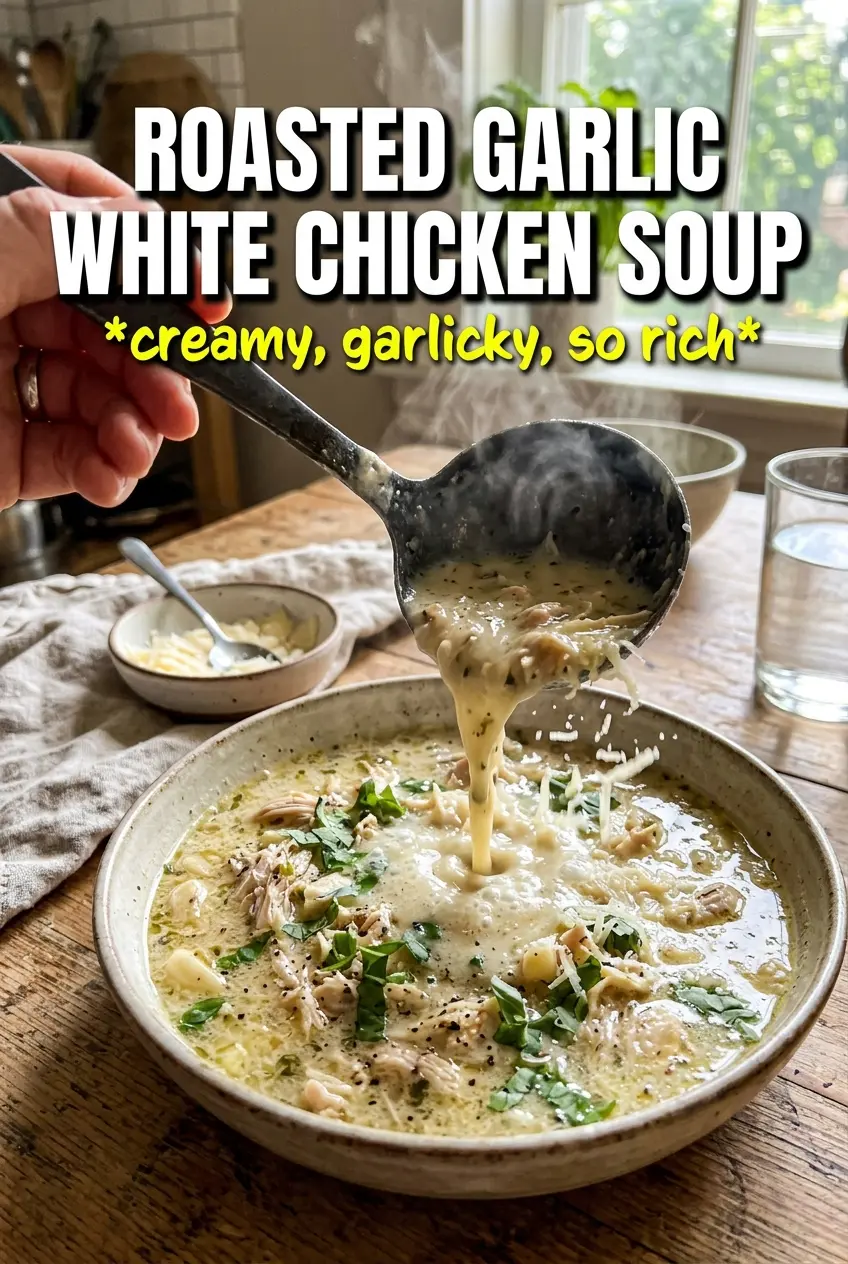
Roasted Garlic White Chicken Lasagna Soup
Ingredients
Equipment
Method
- Wrap 1 head of garlic in foil, drizzle with oil, and roast at 400F for 40 min until the cloves are soft. Let it cool slightly, then squeeze the cloves into a bowl and mash into a paste.
- Melt 3 tablespoons butter in a large pot over medium heat, then sauté 1 diced onion for 4 minutes. Keep stirring until softened but not browned.
- Add the roasted garlic paste and cook for 1 minute, stirring to coat the onion. You should smell the garlic right away.
- Whisk in 3 tablespoons all-purpose flour and cook for 1-2 minutes. The mixture should look slightly thicker and smooth.
- Gradually add 4 cups chicken broth and 2 cups heavy cream while stirring, then add Italian seasoning, nutmeg, and white pepper. Stir until the base is smooth.
- Bring the soup to a simmer, then add the broken lasagna noodles. Stir briefly so the noodles don’t stick.
- Simmer for 10-12 minutes until the noodles are tender. Continue stirring occasionally and watch for thickening.
- Add the shredded chicken and spinach, then cook for 2 minutes. The spinach should wilt and turn bright green.
- Stir in 1 cup parmesan and season with salt to taste. The soup should look silky and well-seasoned.
- Mix ricotta swirl ingredients (ricotta, 2 tablespoons parmesan, and fresh basil) until creamy. Adjust basil to your taste and keep it spoonable.
- Serve the soup with a spoonful of ricotta swirl dolloped on top. Let each bowl show visible swirls.