Beef carbonnade stew lands at the table with beef that pulls apart cleanly, onions cooked down to a dark, jammy sweetness, and a broth that tastes deep and malty without turning heavy. The ale doesn’t just add flavor here; it gives the stew its signature Belgian backbone, especially when it’s scraped through the browned bits left in the pot after searing the beef.
This version works because every layer is given time to develop before the next one goes in. The onions cook all the way to soft and golden, which keeps the finished stew from tasting sharp, and the flour is cooked briefly with the garlic so the broth thickens without a raw, chalky edge. A splash of vinegar and a little brown sugar keep the beer from reading flat or bitter.
Below, I’m walking through the part that matters most: how to build a stew with real depth, not just a pot of beef in liquid. You’ll also find the swaps that still work if you don’t have Belgian ale on hand, plus the storage notes that keep the leftovers just as satisfying the next day.
The onions cooked down exactly like you said, and the stew thickened into this rich, glossy sauce that coated the beef instead of turning soupy. I served it with bread and my husband went back for seconds before I even sat down.
Save this Belgian beef carbonnade for a stew that gets deeper, richer, and more spoonable as it braises.
The Trick to Carbonnade Is Letting the Onions Become Part of the Sauce
Carbonnade fails when the onions stay separate from the broth. You want them cooked past soft and into the stage where they look almost collapsed, glossy, and a little sweet at the edges. That long onion cook time isn’t extra work; it’s what keeps the beer from tasting blunt and gives the stew its round, slow-cooked finish.
Beef chuck is the right cut because it has enough connective tissue to turn silky after a long braise. Leaner beef dries out before the onions are ready to do their job. The other piece people miss is the sear. Deep browning on the beef and dark fond in the pot are what make the broth taste layered instead of one-note.
- Beef chuck — This is the cut that stays juicy through a long braise and turns tender without falling into shreds. If you swap in a leaner stew meat, shorten the cook only if it’s already very tender; otherwise, expect a drier result.
- Dark Belgian ale or stout — Use something with malt depth and moderate bitterness, not a super-hoppy beer. The beer should taste good enough to sip, because its flavor concentrates as it cooks.
- Onions — Thin slices matter here. They break down faster and melt into the sauce instead of staying stringy.
- Dijon mustard and vinegar — These keep the stew from tasting heavy. The mustard adds sharpness and the vinegar brightens the broth after all that slow cooking.
What Each Ingredient Is Actually Doing in This Recipe
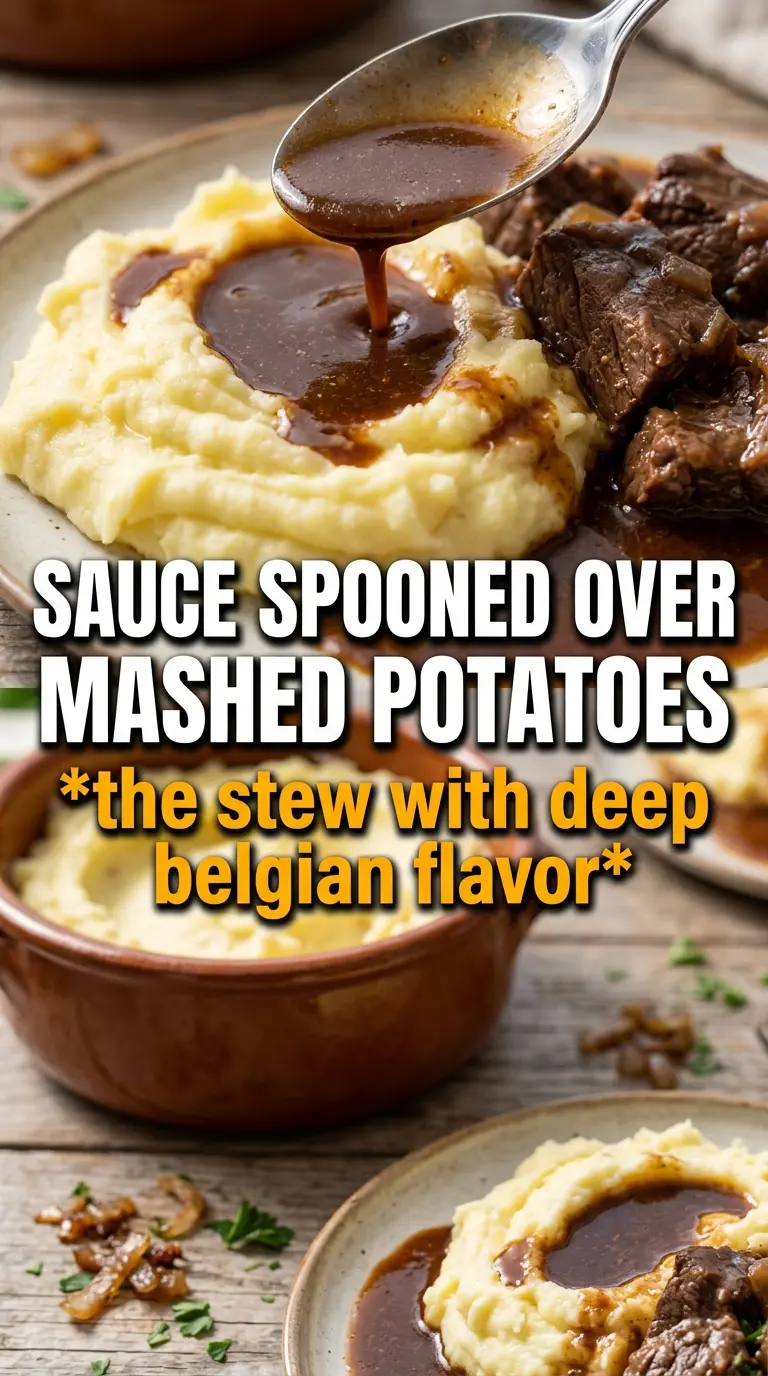
- Primary ingredient (the star) — Quality matters most. Choose the best you can find.
- Cooking medium (oil, butter, or broth) — This carries flavors and prevents dryness.
- Seasonings (salt, pepper, spices, herbs) — Layer flavors so nothing overpowers. Build depth gradually.
- Aromatics (garlic, onion, herbs) — Cook with fat to bloom flavors. Become the foundation.
- Supporting ingredients — Complement the main ingredient without overpowering it.
- Sauce or liquid (if applicable) — Brings flavors together. Balance richness with acid.
- Acid (lemon, vinegar, wine, or other) — Brightens and prevents flat-tasting results.
- Final finish (garnish, glaze, or sauce) — Prevents one-dimensional taste and adds visual appeal.
Building the Pot So the Beer Turns Rich, Not Bitter
Start by seasoning the beef generously and searing it in batches if needed. Crowding the pan steams the meat, and that means less browning and less flavor in the final pot. You’re looking for a dark crust, not a gray surface.
Once the beef is out, give the onions time. They should soften, then turn golden, then take on a deeper color as the moisture cooks off. If they start to stick, the browned residue is good; if the pan looks dry and the onions are catching hard, lower the heat and keep moving them until they sweeten.
Searing the Beef First
Heat the oil until it shimmers, then lay the beef in and leave it alone long enough to form a proper crust. Turn the pieces until they’re browned on several sides, then remove them. If you rush this part or keep turning too soon, the meat never develops the flavor that carries the stew.
Cooking the Onions Down
Add the onions to the same pot and cook them over medium heat until they’re soft, golden, and starting to cling to the bottom. This usually takes the full 20 to 25 minutes, sometimes a little longer. If the onions brown too fast, the heat is too high; you want slow caramelization, not burnt edges.
Pulling the Sauce Together
Stir in the garlic, then the flour, and let that cook for about a minute before adding the beer. The flour needs that brief cook time so it thickens the stew without tasting raw. When the ale goes in, scrape every browned bit from the bottom of the pot, because that’s where the deepest flavor is hiding.
Low, Slow Braising
Add the broth, tomato paste, vinegar, brown sugar, Dijon, thyme, bay leaves, and beef, then bring everything just to a boil before lowering the heat. A gentle simmer is what you want; a hard boil will toughen the meat and make the broth muddy. Cover the pot and cook until the beef yields easily to a fork and the sauce has turned glossy and thick.
What to Change When You Need a Different Beer, a Lighter Pot, or a Wheat-Free Version
If You Don’t Have Belgian Ale
A stout or another dark, malty beer works well here. What you lose without Belgian ale is some of that mellow, rounded sweetness, so add the brown sugar exactly as written and taste the broth before serving to see if it needs one more small splash of vinegar.
Gluten-Free Carbonnade
Use a gluten-free dark beer and swap the all-purpose flour for a gluten-free flour blend or cornstarch slurry. Cornstarch gives a cleaner finish but a slightly more glossy, lighter-bodied sauce, while gluten-free flour keeps the stew closer to the original texture.
A Richer, Deeper Stew
If you want a darker, more intense sauce, let the onions go a little farther before adding the garlic, and use the full amount of tomato paste. That extra minute of browning changes the whole dish from nicely savory to deeply layered.
Storage and Reheating
- Refrigerator: Store in an airtight container for up to 4 days. The flavor gets even better overnight, and the sauce will thicken as it chills.
- Freezer: This freezes well for up to 3 months. Cool it completely first, then portion it into containers so the beef and sauce reheat evenly.
- Reheating: Warm it gently on the stove over low heat with a splash of broth or water if needed. Don’t boil it hard or the beef can tighten up and the sauce can break around the edges.
Questions I Get Asked About This Recipe
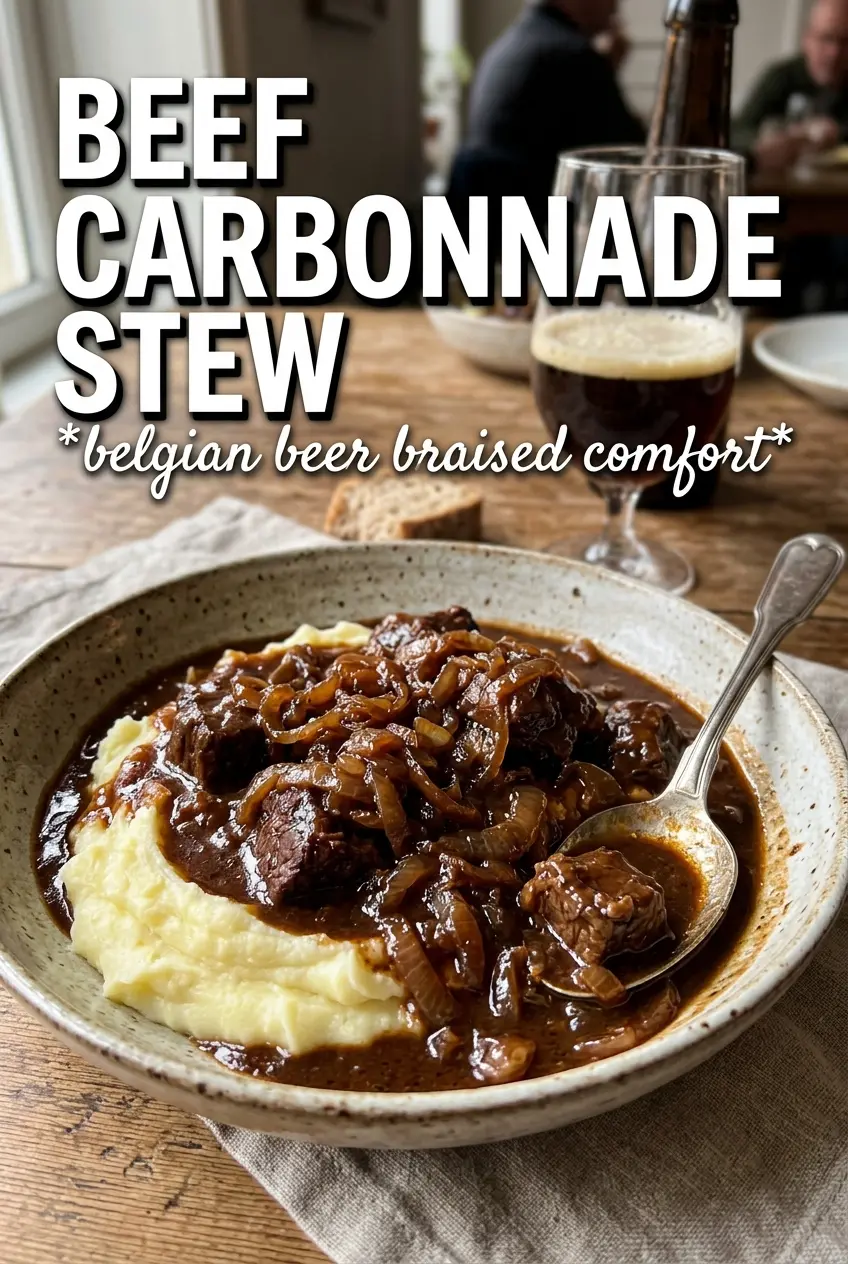
Beef Carbonnade Stew
Ingredients
Equipment
Method
- Season the beef cubes with salt and pepper, then sear in the vegetable oil in a Dutch oven over high heat until deeply browned. Remove the beef to a plate.
- Cook the thinly sliced onions in the same Dutch oven over medium heat for 20-25 minutes until very soft and golden.
- Add the minced garlic and cook for 1 minute, then whisk in the all-purpose flour and cook for 1 minute.
- Deglaze with the dark Belgian ale or stout beer, scraping up all browned bits from the bottom of the pot.
- Add the beef broth, tomato paste, red wine vinegar, brown sugar, Dijon mustard, fresh thyme, bay leaves, and the browned beef. Bring to a boil, then reduce heat, cover, and braise for 2 hours until very tender.
- Remove the bay leaves and thyme, season to taste, and serve the carbonnade stew with crusty bread.