Golden puff pastry wrapped around warm brie turns into one of those appetizers people hover over the second it leaves the oven. The shell bakes up crisp and deeply bronzed while the center goes soft and spoonable, with jam melting into the cheese and toasted pecans adding just enough crunch to keep each bite interesting. It looks elegant on the table, but it’s the kind of dish that disappears fast because every scoop lands with salty, sweet, buttery, and creamy in the same mouthful.
The trick is keeping the brie cold enough to hold its shape while the pastry bakes, then giving the whole thing a short rest so the cheese settles instead of flooding the board the moment you cut in. A thin layer of jam keeps the filling from tasting flat, and a little brown sugar on top helps the pastry take on a glossy, caramelized finish. I like raspberry for brightness, but fig gives it a deeper, quieter sweetness if that’s the direction you want.
Below, you’ll find the small timing details that keep the pastry crisp, plus a few variations if you want to change the filling without losing that molten center.
The pastry came out crisp all the way around, and the brie held together long enough for clean slices after that 10-minute rest. The raspberry jam and pecans made it taste like something from a nice wine bar.
Save this baked brie with jam and pecans for the next time you want a crisp pastry shell and molten cheese in one easy appetizer.
The Reason the Pastry Stays Crisp Instead of Going Soggy
Brie brings plenty of richness, but it also carries moisture, and that’s where most baked brie recipes go sideways. If the pastry sits too long before baking, or if the filling is overloaded with jam, the bottom can turn soft before the top has a chance to brown. Keeping the brie in the center of the dough, sealing the seams well, and baking it seam-side down gives the pastry the best shot at staying structured while the cheese melts inside.
The other detail that matters is the rest after baking. Straight from the oven, the brie is almost lava. Give it about 10 minutes and the center turns silky instead of runny, which means cleaner slices and less flooding on the plate. That short pause is the difference between a pretty appetizer and one that ends up puddled across the serving board.
What Each Layer Is Doing in This Baked Brie
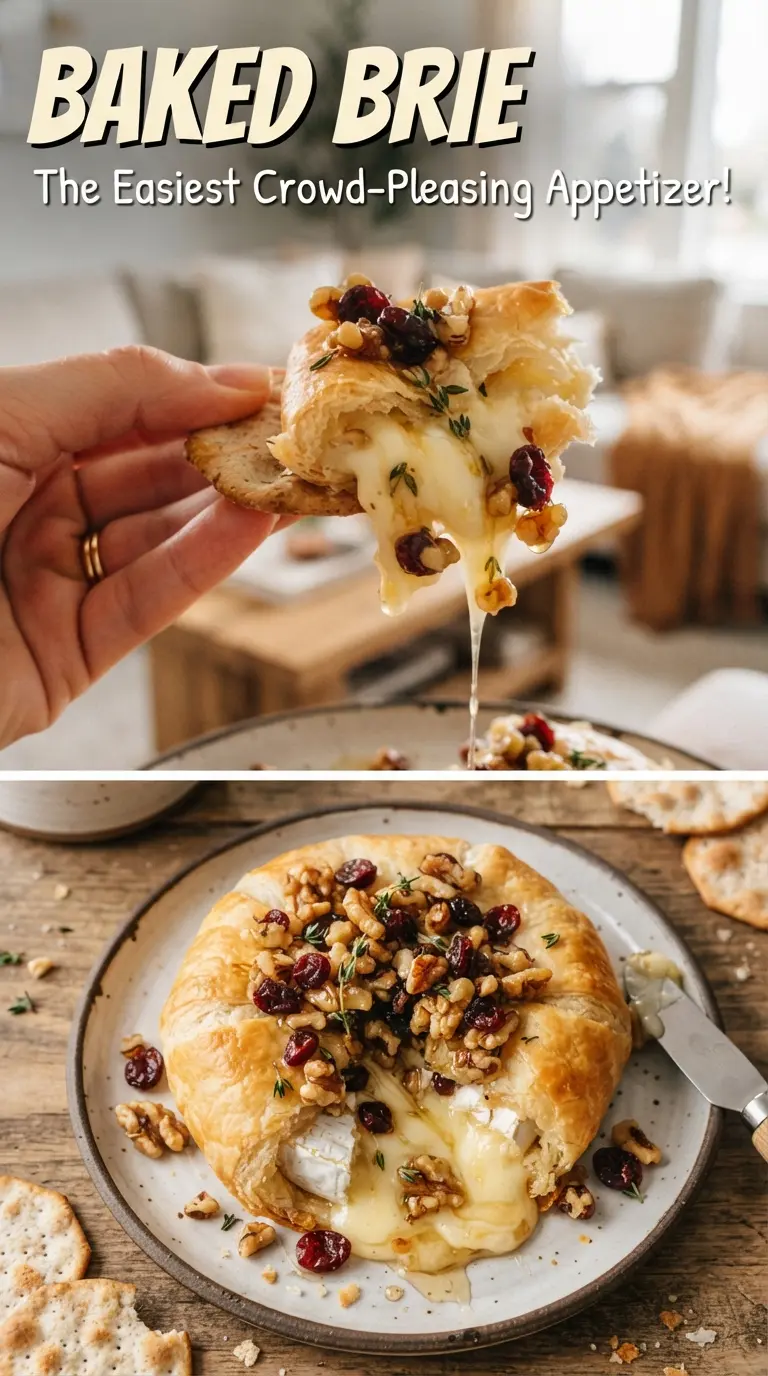
- Puff pastry — This is what gives you the crisp, flaky shell. Store-bought pastry is the right choice here; homemade won’t improve the final result enough to justify the work. Keep it thawed but still cool, because warm pastry gets sticky and won’t seal neatly.
- Brie — Use a whole wheel, not wedges or pre-sliced pieces. The rind helps the cheese hold its shape while it bakes, and the interior turns smooth and spoonable. If the wheel feels very soft, chill it for 15 minutes before wrapping so it doesn’t slump as you work.
- Jam — Raspberry gives brightness and a little tart edge, while fig brings a deeper, almost wine-like sweetness. Either one works, but use a thicker jam so it stays in place instead of soaking into the pastry.
- Pecans and brown sugar — The pecans add crunch, and the brown sugar helps the top caramelize lightly in the oven. Chop the nuts finely enough that they stay put under the pastry and don’t tear the dough when you fold it.
- Egg wash — This is what gives the crust its shine and helps it bake to a deep golden color. Without it, the pastry still cooks, but it looks dull and can finish a shade pale.
Building the Brie Wrap Without Letting the Filling Leak
Rolling and Centering the Cheese
Roll the puff pastry just enough to smooth the seams and give yourself a little more surface area, then place the brie in the center so you have even folds on all sides. If the dough gets too thin, it can split where it meets the bottom of the wheel. Cold dough is easier to handle, so if the pastry starts softening while you work, slide it back into the fridge for a few minutes.
Adding the Jam and Nuts
Spread the jam directly over the top of the brie, then sprinkle the pecans and brown sugar over that. Keep the layer modest; too much filling will ooze out and burn on the baking sheet. The goal is enough sweetness to balance the cheese, not a thick layer that turns the center heavy.
Sealing and Baking to a Deep Gold
Bring the pastry up and over the brie, trimming away bulky excess if needed, then press the seams together firmly. Flip it seam-side down onto the parchment-lined baking sheet so the package can relax in the oven without opening. Bake until the pastry is deeply golden and you can hear the fat in the dough sizzling at the edges; pale pastry means the center may be warm, but the crust won’t have the crisp bite you want.
Letting It Rest Before Serving
Rest the baked brie for 10 minutes before cutting into it. That short wait lets the cheese settle enough to hold together for serving, but it stays molten in the middle. Garnish with rosemary right before bringing it out, then serve with crackers and apple slices so people can choose between crisp, salty, and fresh.
Three Smart Ways to Adapt Baked Brie Without Losing the Melt
Swap the Jam for Fig and Orange
Fig jam gives the brie a deeper sweetness, and a little orange zest stirred in wakes it up without making it sharp. This version tastes a little more grown-up and less candy-sweet than raspberry, which works well if you’re serving wine alongside it.
Make It Nut-Free
Leave out the pecans and add a pinch of flaky salt over the jam before wrapping. You lose the crunch, but the pastry still gives enough texture that the appetizer doesn’t feel flat, and the salt sharpens the cheese nicely.
Make It Gluten-Free
Use a reliable gluten-free puff pastry if you can find one, and keep an eye on the bake since some versions brown faster than regular pastry. The texture won’t be quite as shattery, but you’ll still get a crisp shell and a molten center.
Make It Ahead for Guests
Assemble the wrapped brie up to 8 hours ahead, cover it, and chill it until baking time. Don’t brush on the egg wash until right before it goes into the oven, or the pastry can turn sticky instead of crisping evenly.
Storage and Reheating
- Refrigerator: Leftovers keep for 2 days, though the pastry will soften as it sits.
- Freezer: Not my favorite freezer appetizer once baked, since the crust loses its flake. You can freeze the unbaked, assembled brie for a short time, then bake from chilled.
- Reheating: Warm leftovers in a 325F oven until the pastry crisps again and the center loosens. The microwave will melt the cheese fast, but it turns the crust limp.
Questions I Get Asked About This Baked Brie

Baked Brie
Ingredients
Equipment
Method
- Preheat the oven to 400°F and line a baking sheet with parchment, so the puff pastry bakes evenly and releases easily.
- Roll the puff pastry slightly and place the brie in the center, leaving enough pastry to fold up around the wheel.
- Spread the raspberry or fig jam over the brie, then sprinkle with chopped pecans and brown sugar for a jammy, crunchy center.
- Fold the pastry up over the brie, trimming excess and pressing the seams to seal so the cheese stays contained during baking.
- Flip seam-side down onto the baking sheet and brush with egg wash for a crisp, golden finish.
- Bake 22-25 minutes at 400°F until deep golden brown, with visible puffing and a glossy surface.
- Rest 10 minutes so the cheese sets slightly, then garnish with fresh rosemary and serve with crackers and apple slices.