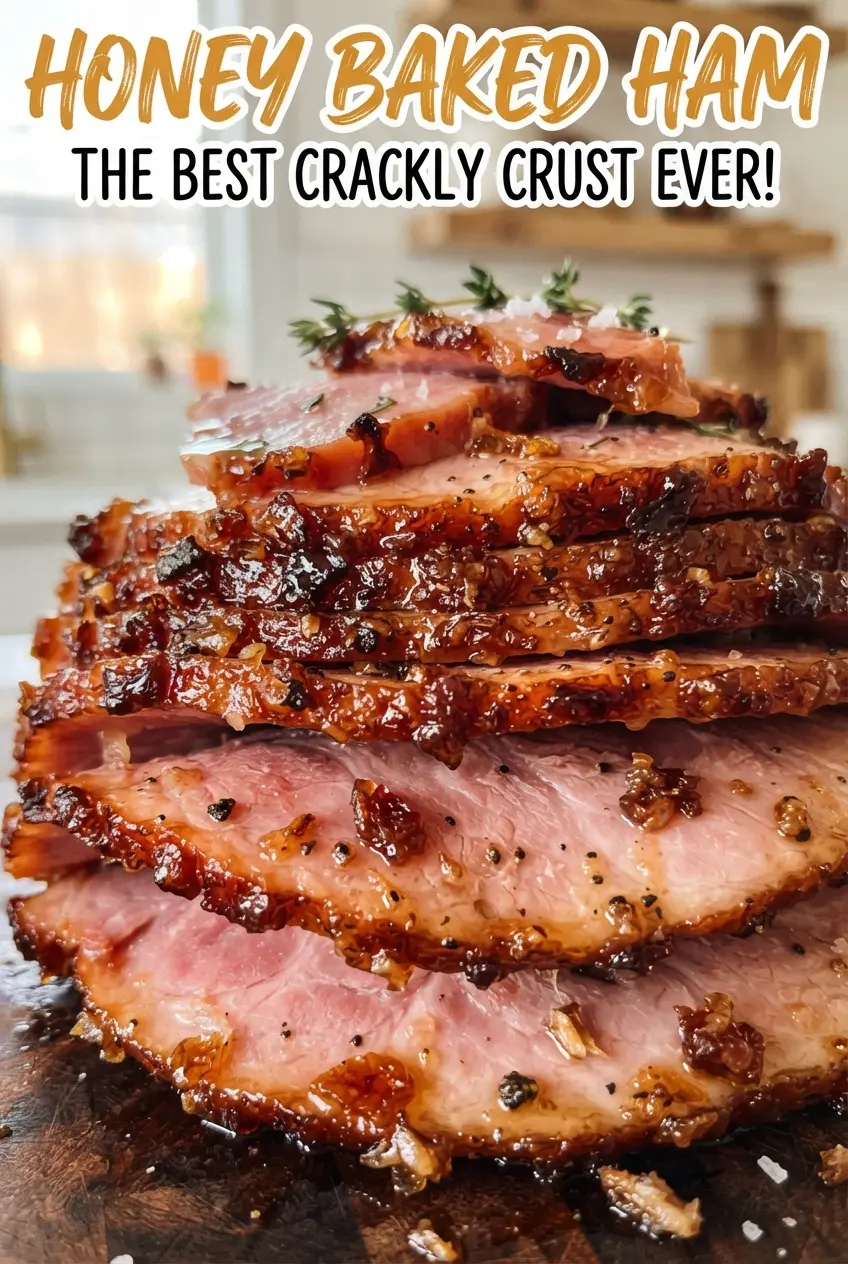
Honey baked ham earns its place at the center of the table because it gives you two things at once: juicy slices underneath and a crackly, lacquered crust on top. The spiral cut does the hard work for you, but the real payoff comes from the sweet-spiced coating that melts, bubbles, and sets into a glossy shell as it bakes. When it’s done right, every slice pulls apart cleanly and the edges catch a little caramelized crunch.
The trick is treating the glaze in layers instead of dumping everything on at once. Honey and butter carry the sugar onto the surface, while the spice mix adds depth so the glaze tastes warm and rounded instead of flatly sweet. Baking the ham low and covered first keeps it from drying out, then the hot finish at the end turns the outside into that classic bakery-style crust.
Below you’ll find the timing that keeps the center moist, the reason the sugar needs a little help from the butter, and a few smart swaps if you’re working with a different size ham or want the crust a little lighter or darker.
The crust turned out crackly and caramelized without sliding off, and the slices stayed juicy all the way through. I followed the low-and-covered first, then the three glaze rounds, and it carved beautifully.
Save this honey baked ham for the next holiday meal when you want a sticky glaze and a crisp, caramelized crust.
The Reason the Crust Stays Crackly Instead of Sliding Off
A good honey baked ham needs heat in stages. If you start hot, the sugar burns before the interior finishes warming, and the glaze can turn hard in patches instead of forming a smooth crust. Baking the ham covered first protects the meat and gives it time to come up to temperature gently, which matters because this is already fully cooked and only needs reheating.
The other mistake is brushing on the glaze once and calling it done. The crust gets that glossy, almost shattery finish because the honey butter and spiced sugar are applied in layers. The butter helps the sugar stick, and the repeated high-heat bursts set each coat before the next one goes on.
- Covered, low heat first keeps the slices moist while the center warms evenly.
- Honey and butter help the sugar adhere and melt into a smooth coating instead of dry grains.
- Three glaze rounds build thickness and color without making the exterior taste burnt.
- The final 400°F blast is what turns the top crackly.
What Each Glaze Ingredient Is Actually Doing Here
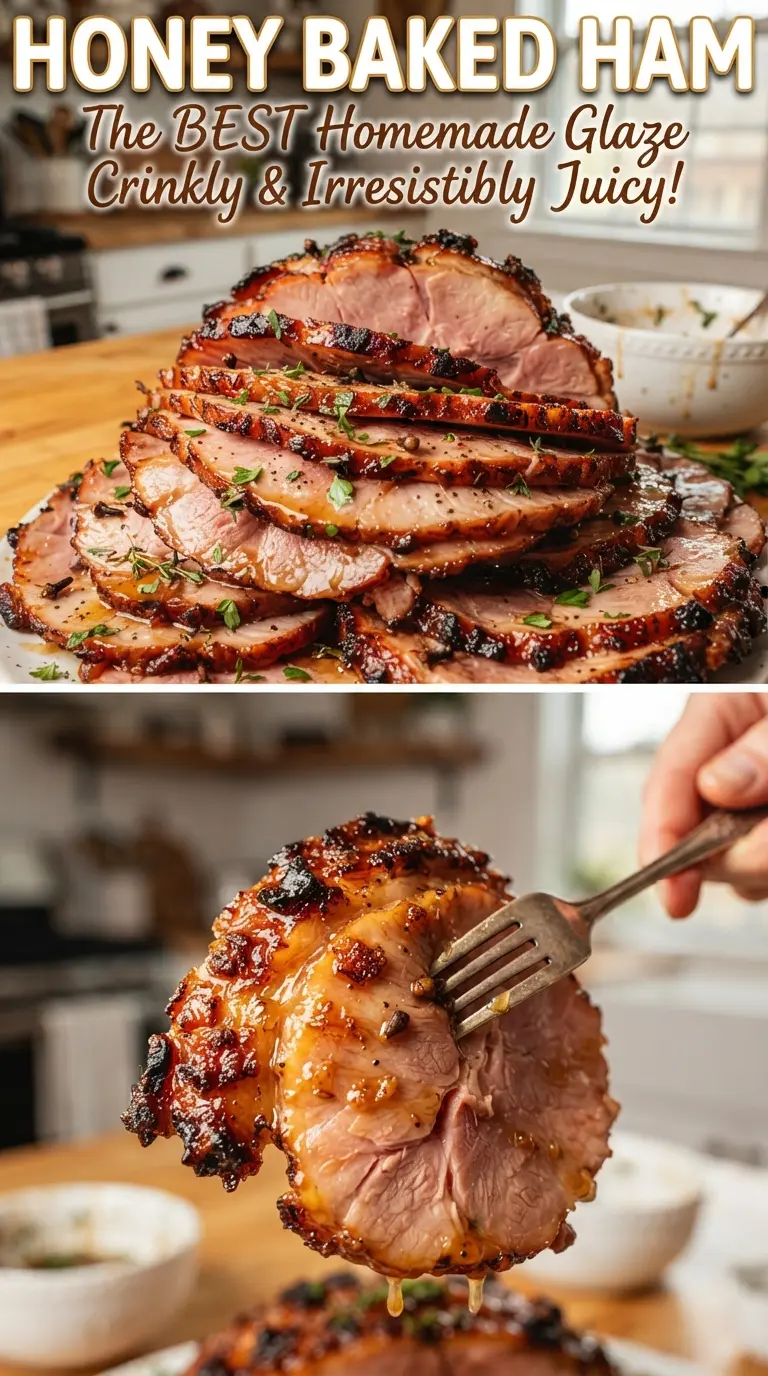
- Bone-in spiral-sliced ham is the backbone of the recipe. The bone adds flavor, and the spiral cuts let the glaze seep between the slices. A boneless ham works in a pinch, but you’ll lose some of that built-in juiciness and the slices won’t hold onto the coating as well.
- Honey gives the glaze its shine and sticky finish. Use a standard grocery-store honey if that’s what you have; a darker, more floral honey adds more character, but it isn’t required.
- Butter keeps the honey from being too stiff and helps the sugar spread evenly. If you skip it, the glaze can clump and won’t brush on as smoothly.
- Brown sugar and granulated sugar work together for both flavor and texture. Brown sugar brings molasses depth, while granulated sugar dries into that classic crackly shell.
- Cinnamon, cloves, ginger, nutmeg, allspice, and paprika give the glaze warmth and balance. Don’t overdo the cloves; they can take over fast. The paprika doesn’t make the ham spicy, but it deepens the color and keeps the crust from looking one-note.
Building the Ham So It Stays Juicy and Caramelizes Cleanly
Starting With the Low, Covered Bake
Set the ham cut-side down in the roasting pan and cover it tightly with foil before it goes into the oven. That position helps the juices stay in the meat instead of running out through the spiral cuts, and the foil traps steam so the ham warms without drying at the edges. Bake it until the center reaches about 120°F; that gives you a head start before the glaze goes on. If you rush this part, the outside will darken before the inside is hot.
Mixing the Glaze for Better Coverage
Melt the honey and butter together, then combine the sugars and spices in a separate bowl. This keeps the dry mixture even, so you don’t get pockets of cinnamon or clumps of brown sugar on one section of the ham. The glaze should look thick enough to cling but loose enough to brush. If it tightens up while you work, warm it for a few seconds and stir again.
Layering on the Crust
Remove the foil, brush the ham generously with the honey butter, and press on a layer of the spiced sugar. Don’t try to dust it lightly; you want a visible coating that can melt and caramelize. Raise the oven to 400°F and repeat the brushing and sugaring two more times. If the pan fills with too much melted sugar, that’s normal — it means the crust is forming instead of dry-rubbing itself into place.
Finishing to the Right Internal Temperature
Keep baking until the crust is deep golden and crackly and the ham reaches 140°F. That temperature is the line between warmed-through and dry, especially with spiral-cut meat. Let it rest for 15 minutes before slicing so the juices settle back into the ham instead of spilling out onto the cutting board.
How to Change the Glaze Without Losing the Texture
Darker, deeper crust
Use all brown sugar instead of splitting it with granulated sugar. The coating will taste a little more molasses-heavy and the crust will come out darker and softer at the edges, which works well if you like a less brittle finish.
Gluten-free and naturally gluten-free
This recipe is naturally gluten-free as written, but check that your ham and spices are certified if you’re cooking for someone with celiac disease. The texture doesn’t change, because the glaze doesn’t rely on flour or thickeners.
A lighter spice profile
Cut the cloves and allspice in half if you want the honey to lead more clearly. You’ll still get warmth and color, but the glaze will taste softer and more classic.
Storage and Reheating
- Refrigerator: Store leftovers covered for up to 4 days. The crust will soften in the fridge, but the flavor stays strong.
- Freezer: Freeze sliced ham in airtight containers or wrapped portions for up to 2 months. Freeze with a little of the pan juices if you have them to help keep the meat from drying out.
- Reheating: Warm slices covered at 300°F with a splash of pan juices or water until just heated through. High heat dries out spiral ham fast, so keep the reheating gentle.
Answers to the Questions Worth Asking
Honey Baked Ham
Ingredients
Equipment
Method
- Preheat the oven to 325°F. Place the ham cut-side down in a roasting pan and cover tightly with foil.
- Bake at 325°F for 12-14 minutes per pound until the internal temperature reaches 120°F, then keep covered if you are waiting before glazing.
- Melt the honey and butter together until smooth. Mix the granulated sugar and brown sugar with the cinnamon, cloves, ginger, nutmeg, allspice, and paprika in a separate bowl.
- Remove the foil and brush the ham generously with the honey butter. Pat on a layer of the spiced sugar so it adheres to the surface.
- Raise the oven to 400°F and bake for 5 minutes until the glaze starts to set. Repeat by brushing with honey butter and patting on more spiced sugar two more times.
- Bake until the crust is deep golden and crackly and the ham reaches 140°F inside. Use the temperature probe in the thickest part, avoiding the bone.
- Rest the ham for 15 minutes before serving so juices redistribute and the crust firms up slightly. Slice and fan out the spiral cuts to show the caramelized glaze.