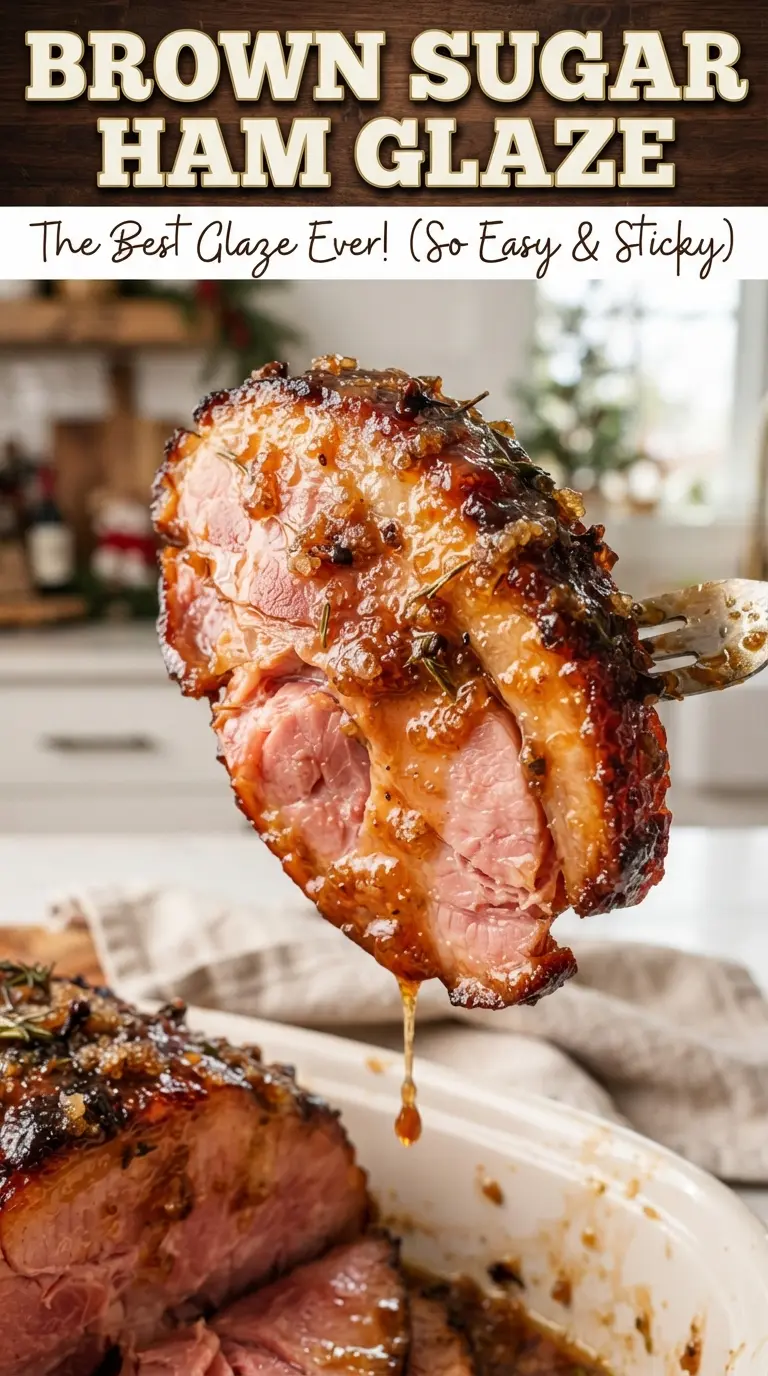
Brown sugar ham glaze turns a good holiday ham into the kind people hover around the counter for. It bakes into a glossy amber coat, settles into the scored lines, and finishes with that sweet-salty edge that makes each slice taste fuller and more polished. The best part is that it comes together in minutes, but it tastes like it had more thought behind it than it actually did.
This version works because the sugar, honey, and juice build sweetness and shine while the Dijon and vinegar keep the glaze from turning flat. Butter rounds everything out and helps the glaze cling to the ham instead of running right off the surface. Cinnamon and cloves bring just enough warmth to make the whole thing smell as good as it tastes.
Below, I’ve included the small timing details that matter most, plus a few smart swaps if you need to work with what’s already in the pantry. The glaze is simple, but there’s a right way to simmer it and a right way to brush it on, and that’s what gives you the thick, lacquered finish.
The glaze thickened up exactly like you said and brushed on in a smooth layer instead of sliding off. I used orange juice, and the ham came out with that sticky edge everyone kept sneaking from the platter.
Brush this brown sugar ham glaze over the scored ham for a glossy, sweet-salty finish with just enough spice.
The Difference Between a Thin Glaze and One That Clings to Ham
Ham glaze fails most often for one simple reason: it never gets reduced enough. If you brush on a mixture that’s still watery, it runs straight down the sides of the ham and leaves the surface patchy instead of lacquered. The goal here is a syrupy glaze that coats the back of a spoon lightly and looks shiny even before it goes in the oven.
The other thing that matters is balance. Brown sugar and honey bring the sweetness, but Dijon and apple cider vinegar keep it from tasting candy-like. That little hit of acid also helps the glaze stay lively after baking, which matters because ham itself is already salty and rich. The spices are there for warmth, not for a pumpkin-pie effect, so keep them measured.
What Each Ingredient Is Actually Doing in This Glaze
- Brown sugar — This is the body of the glaze and the main source of that deep amber color. Packed brown sugar gives you the best thickness; light or dark both work, though dark brown sugar pushes the molasses note a little harder.
- Honey — Honey helps the glaze stay glossy and sticky after it bakes. If you swap it for maple syrup, you’ll get a slightly deeper, woodsy finish, but the glaze will be a touch looser.
- Pineapple or orange juice — The juice loosens the sugar just enough to simmer into a brushable glaze and adds a bright fruit note that keeps the ham from tasting heavy. Orange is a little softer and more rounded; pineapple tastes sharper and a little more classic with ham.
- Dijon mustard — Dijon adds sharpness and a tiny bit of savory depth. Yellow mustard won’t give the same clean bite, and coarse mustard can leave the glaze looking grainy.
- Butter — Butter smooths the texture and helps the glaze cling. Don’t skip it if you want that polished finish; it matters more here than in a sauce that stays on the stove.
- Apple cider vinegar — This keeps the glaze from tasting one-note sweet and helps cut through the richness of the ham. Any mild vinegar can work in a pinch, but apple cider vinegar has the best match here.
- Cinnamon and cloves — These give the glaze its warm holiday character. Cloves can take over fast, so measure carefully; you want a background note, not a spiced dessert aroma.
How to Cook It Down So It Brushed On Like Varnish
Melting the Sugar Base
Combine everything in a saucepan and stir over medium heat until the butter melts and the sugar disappears into the liquid. At first it will look loose and cloudy, then it will turn smoother as the grains dissolve. If you rush this part with high heat, the sugars can scorch on the bottom before the glaze ever thickens.
Finding the Right Simmer
Once the mixture starts bubbling, drop the heat enough to keep it at a gentle simmer. You want small, steady bubbles around the edges and an even glossy look across the surface. Let it go for 3 to 4 minutes, stirring often, until it thickens slightly and coats a spoon instead of slipping right off.
Brushing the Ham During the Last Half Hour
Use the glaze during the last 30 minutes of baking, not from the start. That keeps the sugar from burning before the ham is heated through. Brush on a thin layer, return the ham to the oven, and repeat every 10 minutes so the glaze builds into a shiny coating rather than a sticky puddle.
Serving the Rest Warm at the Table
Spoon the remaining warm glaze over sliced ham right before serving. If it cools too much, it will thicken in the pan, which is fine — warm it gently and stir until it loosens again. The final spoonfuls give every slice that extra glossy finish and catch the edges that didn’t get as much coverage in the oven.
How to Adapt the Glaze When the Pantry Isn’t Exact
Orange Juice for a Softer Citrus Finish
Orange juice makes the glaze a little rounder and less sharp than pineapple juice. It’s the better choice if you want the ham to taste sweet and bright without leaning tropical.
Maple Syrup in Place of Honey
Maple syrup works if that’s what you have, and it brings a deeper caramel note. The glaze may finish a little looser, so simmer it an extra minute if needed until it looks glossy and spoonable.
Dairy-Free Version
This glaze is already close to dairy-free except for the butter. Swap in a plant-based butter with a neutral flavor and the texture will still come together nicely, though the finish may be slightly less rich.
Double Batch for a Large Ham
For a bigger ham or a crowd that likes extra sauce for serving, double everything and simmer it in a larger saucepan. The timing stays the same, but the extra volume gives you enough glaze to brush during baking and still have plenty left for the table.
Storage and Reheating
- Refrigerator: Store leftovers in a covered container for up to 5 days. It will thicken as it chills.
- Freezer: The glaze freezes well for up to 2 months. Freeze it in a small airtight container and thaw it overnight in the refrigerator.
- Reheating: Warm it gently on the stove over low heat or in short bursts in the microwave, stirring between each one. High heat can make the sugar seize or scorch before the glaze loosens.
Answers to the Questions Worth Asking
Brown Sugar Ham Glaze
Ingredients
Equipment
Method
- Combine brown sugar, honey, pineapple or orange juice, Dijon mustard, butter, apple cider vinegar, cinnamon, and cloves in a saucepan. Stir until the mixture looks evenly blended.
- Bring the saucepan to a simmer over medium heat while stirring. Watch for the sugar to dissolve and the surface to show gentle bubbles.
- Simmer for 3-4 minutes, stirring occasionally, until the glaze turns slightly thickened and glossy. When lifted on a spoon, it should coat and look shiny.
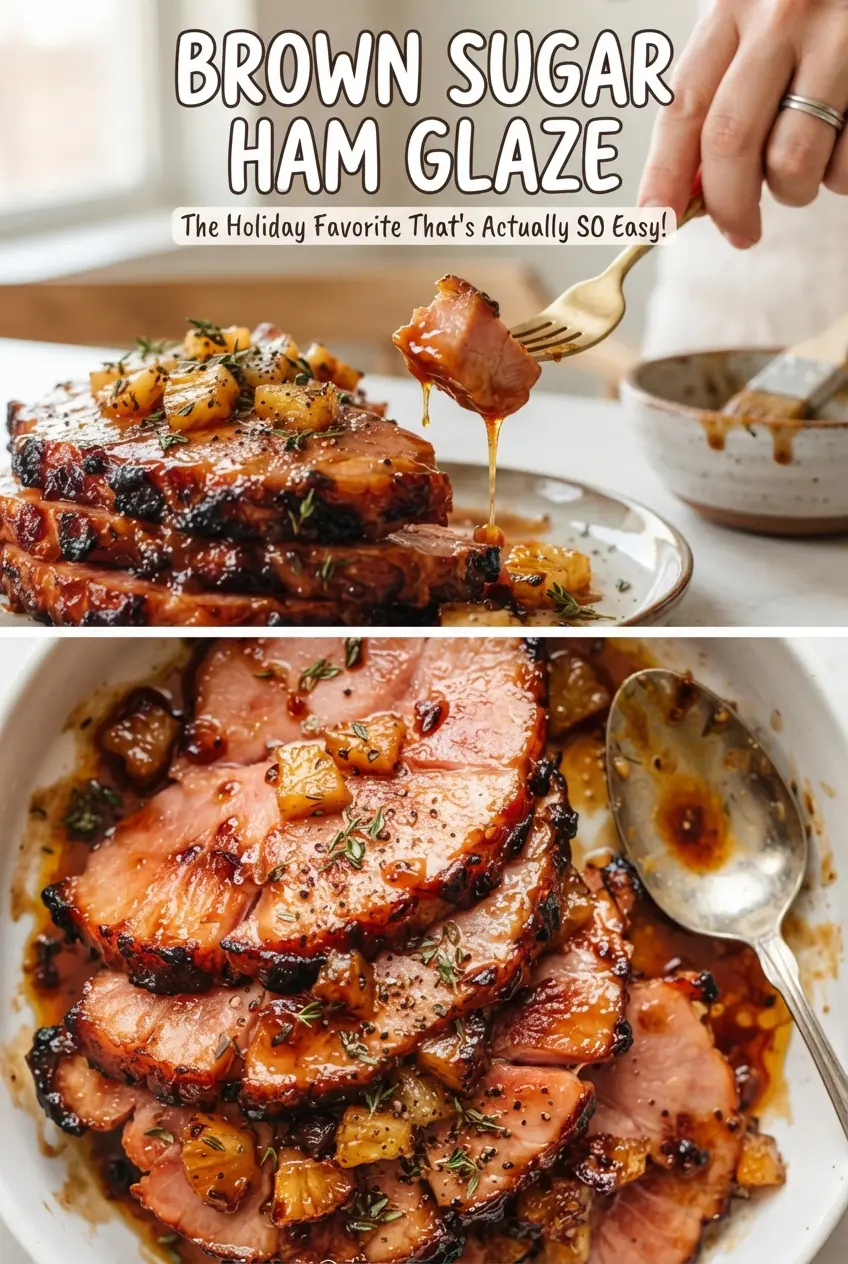
- Brush the glaze over a fully cooked ham during the last 30 minutes of baking. Apply it every 10 minutes so the diamond score gets glossy coverage and amber drips.
- Spoon the remaining warm glaze over sliced ham at the table. Serve while it is warm so it flows lightly over the meat.