Golden roast chicken gets a sharp, glossy finish here: maple turns the skin lacquered, Dijon keeps the sweetness in check, and cranberries burst into a pan sauce that tastes far more complex than the short ingredient list suggests. The chicken stays juicy because the glaze doesn’t go on from the start; it goes on after the skin has already had time to brown, so you get color first and stickiness second.
The butter mixed with rosemary works under and over the skin, which gives the meat flavor where seasoning alone can’t reach. Orange and garlic inside the cavity perfume the chicken from the inside out, while the red onion softens in the pan and catches every drip. That combination gives you a proper roast dinner feel without turning the dish heavy.
Below, I’ve included the timing that keeps the glaze from burning, plus the simplest way to tell when the chicken is done without guessing.
The skin turned deep golden and the cranberries popped right into a glossy sauce. I was surprised how well the Dijon kept the maple from tasting too sweet, and the chicken stayed juicy after the rest.
Save this cranberry maple roast chicken for the nights when you want a glossy roast, tart pan sauce, and minimal fuss in one pan.
The Reason the Glaze Waits Until the Middle of Roasting
The biggest mistake with maple-glazed chicken is putting the sugar on too early. Maple is going to darken fast, and if it sits in a hot oven for the full roast time, the skin can cross from lacquered to scorched before the meat is finished. This recipe avoids that by giving the chicken a head start, then brushing on the glaze once the skin is already taking on color.
That second roast does two jobs at once: it finishes cooking the bird and turns the cranberries into a loose sauce as they burst in the pan juices. The broth keeps the glaze from sticking and burning on the bottom of the pan, and the Dijon helps the maple cling instead of sliding off in thin streaks.
What Each Ingredient Is Actually Doing in the Pan
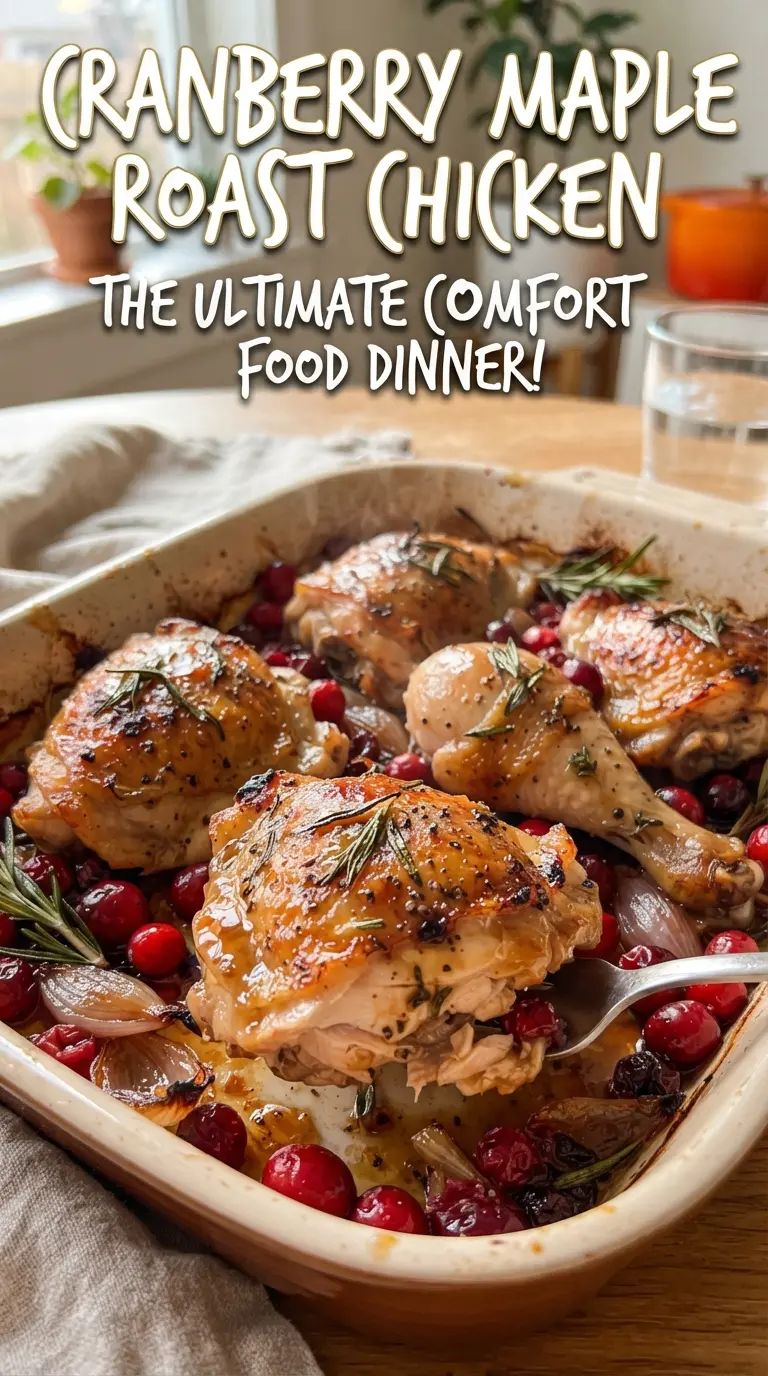
- Whole chicken — A 5-pound bird gives you enough meat for six and enough surface area for the glaze to shine. Patting it dry matters more than almost anything else here; wet skin steams before it browns.
- Butter and rosemary — The butter helps the skin brown and carries the rosemary flavor under the skin, where it can actually season the meat. Softened butter spreads cleanly; melted butter tends to run off before it does much.
- Maple syrup and Dijon mustard — Maple gives the lacquer and sweetness, while Dijon keeps the sauce from tasting flat. If you swap the Dijon for yellow mustard, the glaze gets sharper and less balanced.
- Cranberries — Fresh cranberries burst in the hot pan and thicken the juices just enough to coat a spoon. Frozen cranberries can work in a pinch; use them straight from the freezer so they don’t turn mushy before the chicken is done.
- Orange, garlic, and red onion — These build the aromatic base under the chicken and perfume the pan drippings. The orange softens the maple sweetness, and the garlic and onion give the sauce depth without turning it heavy.
- Chicken broth — This keeps the pan sauce loose enough to spoon and prevents the maple from reducing into sticky spots that scorch. Use a broth you’d drink; thin, salty broth makes the pan juices taste thin too.
How to Roast It So the Skin Turns Glossy, Not Burnt
Seasoning Under the Skin
Work the butter and rosemary under the skin first, then rub the rest over the top so the chicken browns evenly. Salt and pepper on both the inside and outside give the meat itself flavor, not just the skin. If the skin tears a little while you’re lifting it, don’t worry; just keep going and press the butter into the meat as best you can.
Building the Roast Bed
Set the orange halves and garlic inside the cavity, then nestle the bird over the onion wedges in the pan. That keeps the chicken slightly lifted and gives the drippings a cushion of aromatics instead of letting them burn on bare metal. The pan will look crowded, and that’s fine — the chicken needs those juices around it.
Brushing on the Maple Glaze
Roast the chicken until the skin has started to color, then brush on half the maple-Dijon mixture and scatter the cranberries and broth around the pan. The first glaze layer should look shiny, not thick and crusty. If you add it too early, the sugar will darken before the interior is done, and you’ll lose both color and flavor to scorching.
Finishing to Temperature and Resting
Keep roasting until the thigh reads 165F and the juices run clear when pierced near the joint. Brush on the remaining glaze near the end so it sets into a sticky finish instead of drying out. Let the chicken rest for 15 minutes before carving; if you cut too soon, the juices run onto the board instead of staying in the meat.
Three Ways to Adjust This Without Losing the Point
Dairy-Free Version
Swap the butter for a firm dairy-free spread or olive oil. You’ll lose a little of the rich, buttery flavor under the skin, but the rosemary and pan sauce still carry the dish. Olive oil gives a cleaner finish; dairy-free butter gives you a closer match in browning.
Using Chicken Pieces Instead of a Whole Bird
Bone-in, skin-on thighs and breasts work well if you want faster cooking. Start the pieces at 425F, then begin glazing once the skin is deeply golden; the exact timing will be shorter, so use the color of the skin and the temperature at the thickest part as your guide. Breasts cook faster than thighs, so pull them early if needed.
Making It More Savory
Cut the maple back by a tablespoon and add a pinch more Dijon if you want the glaze to lean less sweet. The cranberries will still bring brightness, but the pan sauce will read sharper and more roast-dinner savory than glossy-sweet.
Storage and Reheating
- Refrigerator: Store carved chicken and pan sauce in an airtight container for up to 4 days. The skin softens in the fridge, but the meat stays flavorful.
- Freezer: The chicken meat freezes well for up to 2 months, but the cranberry pan sauce gets looser after thawing. Freeze the meat and sauce separately if you can.
- Reheating: Reheat covered in a 325F oven with a spoonful of broth until warmed through. High heat dries out the breast meat fast, and the glaze can turn tacky before the center is hot.
Answers to the Questions Worth Asking
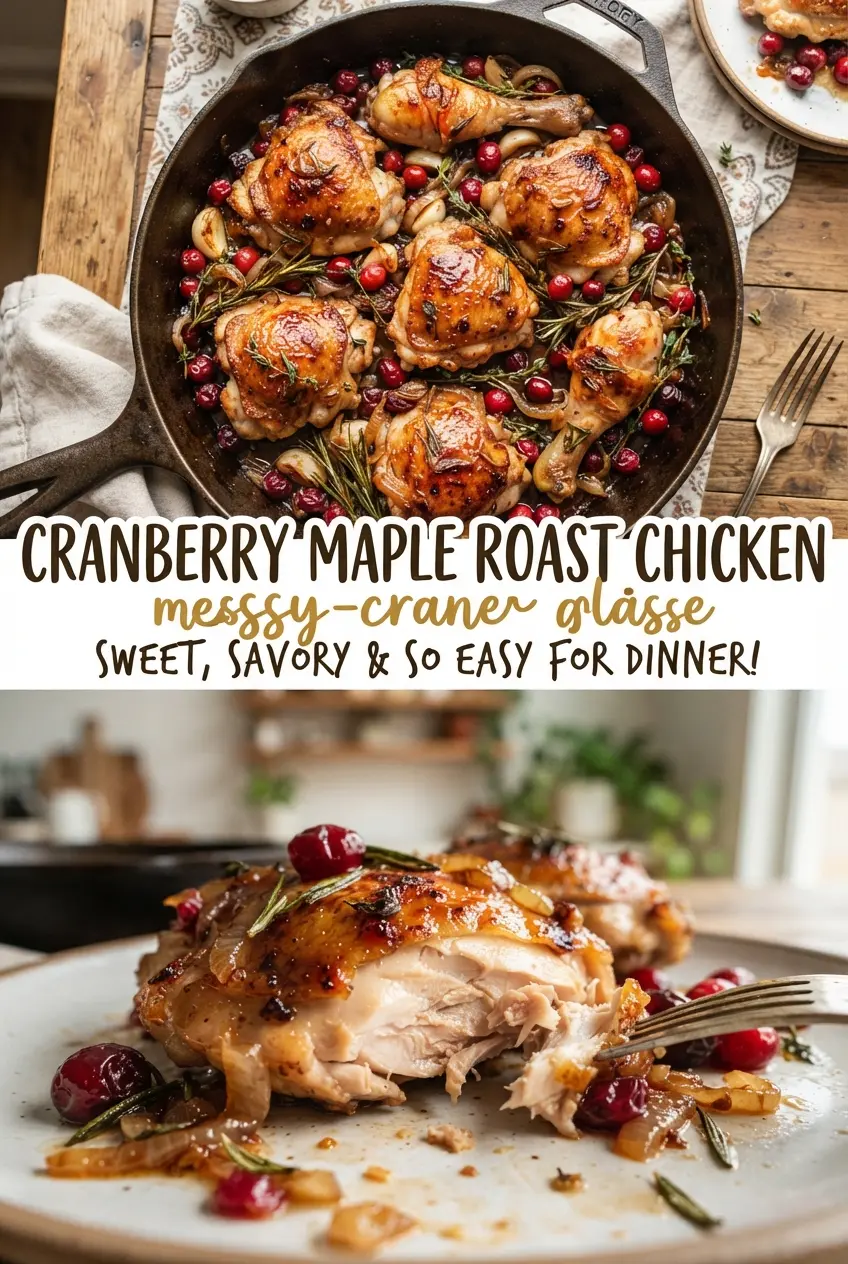
Cranberry Maple Roast Chicken
Ingredients
Equipment
Method
- Preheat oven to 425F and position a rack in the center for even browning, looking for a fully heated oven before the chicken goes in.
- Pat the whole chicken dry, then season inside and out with salt and black pepper and rub the softened butter mixed with chopped rosemary under and over the skin for an even coating.
- Stuff the cavity with orange halves and halved garlic, then set the chicken in a roasting pan and tuck red onion wedges around it so the vegetables roast alongside the bird.
- Roast at 425F for 50 minutes until the skin is starting to turn golden, watching for an active simmer of juices in the pan.
- Whisk maple syrup and Dijon mustard, then brush half over the chicken for a glossy start.
- Add fresh cranberries and chicken broth to the pan for a bubbling cranberry base, then return to the oven.
- Roast 25-30 minutes more, brushing with the remaining glaze once during the final stretch, until the thigh reaches 165F as the cue for doneness.
- Rest the chicken for 15 minutes so juices settle and the glaze stays lacquered, keeping it tented loosely.
- Carve the chicken and spoon the cranberry pan sauce over the top so each serving gets cranberries and maple-Dijon gloss.