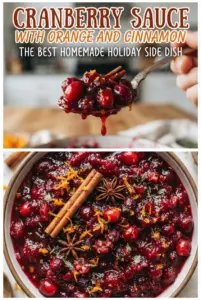
Thick, glossy cranberry sauce with orange and cinnamon is the kind of side dish that quietly steals the whole plate. It sets up with just enough body to mound on a spoon, and the orange keeps the tart berries bright instead of flat. The cinnamon is there in the background, warm and steady, without turning the sauce into dessert.
The trick is starting with the sugar, orange juice, water, and cinnamon before the cranberries go in. That gives the sugar time to dissolve and the spice time to bloom, so the sauce tastes rounded instead of sharp. Fresh orange zest goes in at the end for the cleanest citrus hit, after the heat has done the heavy lifting and the sauce has already thickened.
Below, you’ll find the small timing cues that matter most, plus the reason I leave the cinnamon sticks in while the sauce cools. That extra steeping step is what makes the flavor taste layered instead of one-note.
The cranberries burst right on time and the sauce thickened up beautifully after chilling. I left the cinnamon sticks in while it cooled like the recipe said, and the orange flavor was incredible without being too sweet.
Like this cranberry sauce with orange and cinnamon? Save it for the holidays when you want a bright, make-ahead side with real spice and a thick spoonable texture.
The Part That Keeps Cranberry Sauce from Tasting Thin
The mistake most people make is rushing straight to the berries. If the sugar hasn’t dissolved first, the sauce can taste gritty and the fruit can soften unevenly. Bringing the orange juice, water, sugar, cinnamon sticks, ground cinnamon, and salt to a boil before adding the cranberries gives you a cleaner, smoother base right from the start.
The other thing that matters is timing the simmer. Cranberries need enough heat to burst and release their natural pectin, which is what gives the sauce its body. Pull it too early and it’ll stay loose. Cook it too long and you’ll lose that bright pop that makes cranberry sauce worth serving in the first place.
What the Orange and Cinnamon Are Doing Here
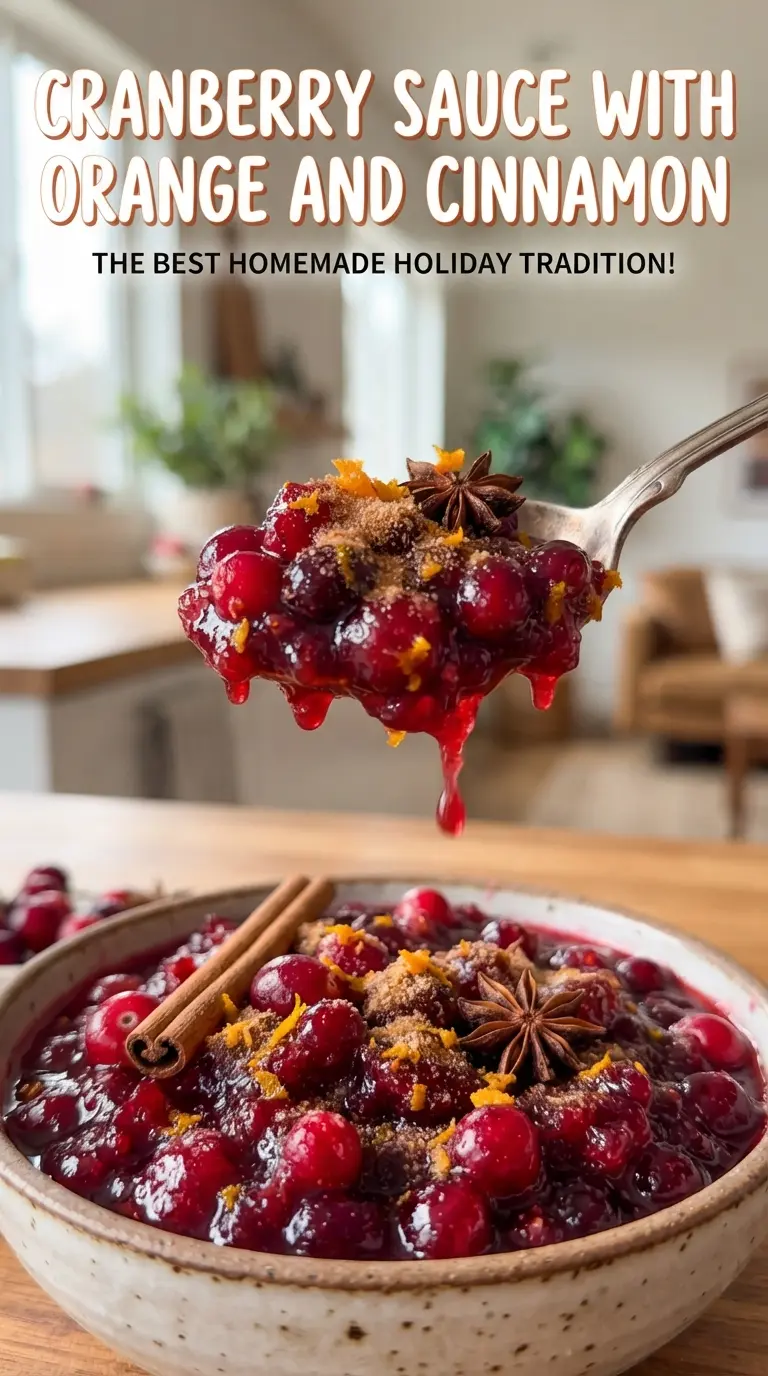
- Fresh cranberries — These are what give the sauce its sharp, clean tang and natural thickening power. Frozen cranberries work too; add them straight from the freezer and expect them to take a minute or two longer to burst.
- Orange juice and zest — The juice softens the tart edge and helps the sugar dissolve into a smooth syrup, while the zest brings a fresher citrus note at the end. Bottled orange juice works in a pinch, but fresh juice tastes brighter and less flat.
- Cinnamon sticks — Whole sticks infuse the sauce without making it dusty or overly spiced. Leave them in while the sauce cools if you want a deeper cinnamon note, then remove them before chilling.
- Ground cinnamon — This adds immediate warmth while the whole sticks are still steeping. The combination gives you spice in layers instead of one blunt cinnamon flavor.
- Sugar — Cranberries need enough sweetness to balance their bitterness and make the sauce taste rounded. You can reduce it a little, but cutting it too far leaves the sauce aggressively tart and less glossy.
Cooking It Until the Berries Burst and the Sauce Turns Glossy
Starting the Syrup
Set the sugar, orange juice, water, cinnamon sticks, ground cinnamon, and salt over medium heat and bring it to a boil. Stir once or twice as the sugar dissolves, then stop fussing with it. You want the liquid clear and fragrant before the cranberries go in, not cloudy and half-melted from constant stirring.
Cooking the Cranberries
Add the cranberries and let the mixture simmer for 10 to 12 minutes. The berries should pop open on their own and the liquid will turn from thin and foamy to thick and jewel-like. If the pan is still aggressively bubbling, lower the heat; too much heat can make the sauce spatter and reduce faster than the berries can break down.
Finishing with Zest
Take the pan off the heat and stir in the orange zest. The zest goes in at the end because its oils are delicate, and high heat can mute that fresh citrus aroma. Leave the cinnamon sticks in while the sauce cools so the spice keeps steeping, then remove them before chilling.
Chilling to the Right Texture
Let the sauce cool, then refrigerate it before serving. It thickens a lot as it chills, so don’t judge the final texture while it’s still warm. If it looks a little loose in the pan, that’s normal; cranberry sauce sets up as the pectin cools.
How to Adjust This Cranberry Sauce Without Losing the Good Part
Make it less sweet
Cut the sugar back by 1/4 cup if you like a sharper sauce, but don’t remove it completely. Cranberries need enough sugar to balance their bite and help the sauce turn glossy instead of sharp and thin.
Use frozen cranberries
Frozen cranberries work without any extra prep. Add them straight from the freezer and give the sauce a couple more minutes on the stove if needed, since they cool the pan down at first.
Make it alcohol-free but deeper tasting
If you want extra depth without changing the recipe structure, swap 2 tablespoons of the orange juice for pomegranate juice. It keeps the same fruit-forward profile and gives the sauce a darker, fuller edge.
Make it ahead for a holiday meal
This sauce tastes better after it rests overnight. The orange and cinnamon settle in, the texture firms up, and the flavor becomes smoother and less sharp by the next day.
Storage and Reheating
- Refrigerator: Store in an airtight container for up to 1 week. It will thicken as it chills and may look firmer than you expect.
- Freezer: It freezes well for up to 2 months. Thaw overnight in the refrigerator and stir before serving.
- Reheating: Cranberry sauce is usually served cold or room temperature, but if you want it warm, heat it gently over low heat with a splash of water. High heat can make it break down too far and turn jammy in the wrong way.
Answers to the Questions Worth Asking
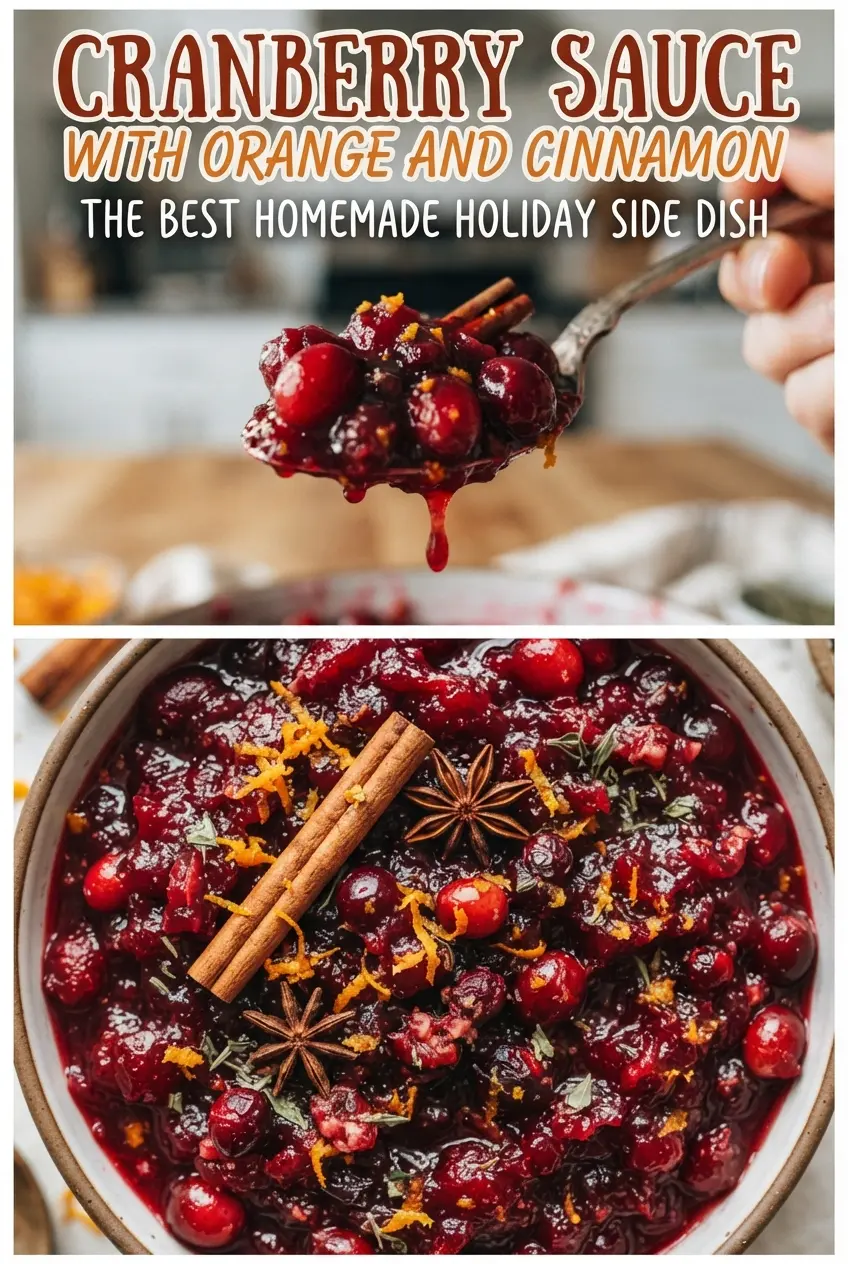
Cranberry Sauce with Orange and Cinnamon
Ingredients
Equipment
Method
- In a saucepan, combine sugar, orange juice, water, cinnamon sticks, ground cinnamon, and salt. Bring to a boil over medium-high heat, then keep it actively bubbling.
- Add the fresh cranberries and simmer for 10–12 minutes until the berries burst. Stir occasionally so the mixture thickens evenly and the skins soften.
- Remove the saucepan from the heat and stir in the orange zest. Let the sauce rest briefly off the burner so the zest tastes bright.
- Leave the cinnamon sticks in as it cools for extra spice, then remove. Watch for a glossy, thickened cranberry texture before you take them out.
- Chill the cranberry sauce before serving. It should set into a thick spoonable consistency when cold.