Easy candied pecans come out with a crisp, crackly shell and a warm cinnamon sweetness that clings to every ridge of the nut. They’re the kind of snack that disappears from the pan before they ever make it to a serving bowl, and they pull double duty as a salad topper, cheese board add-in, or little something to keep on hand when you want a handful of crunch.
The trick here is the egg white coating. It doesn’t make the pecans taste eggy; it gives the sugar something to grab so you get that glossy, sandy crust instead of loose sugar falling off onto the pan. Baking low and slow keeps the sugar from scorching before the nuts dry out, and stirring during the bake helps every piece get evenly coated and toasted.
Below, you’ll find the timing that keeps the coating crisp instead of sticky, plus a couple of smart swaps if you want to change the spice profile or make a bigger batch for gifting.
The coating baked up shiny and crisp, and the cinnamon flavor was spot on. I stirred them every 15 minutes like you said and they cooled into perfect little crunchy clusters.
Love the crackly cinnamon shell on these easy candied pecans? Save this batch for snack jars, salad toppers, and holiday gifting.
The Part That Keeps the Sugar Stuck to the Nuts
The coating on candied pecans can fail in two common ways: it can slide off in sandy patches, or it can turn grainy and dull instead of crisp. The egg white mixture solves the first problem by creating a thin foamy layer that acts like glue. The low oven solves the second by drying the sugar slowly enough for it to set around the nuts instead of melting into a sticky shell.
The other detail that matters is spacing. If the pecans pile up, they steam and clump into soft clusters that never fully dry. A single layer on parchment gives air room to circulate, and stirring every 15 minutes breaks up the early clumps before they harden in the wrong shape.
What Each Ingredient Is Actually Doing in This Batch
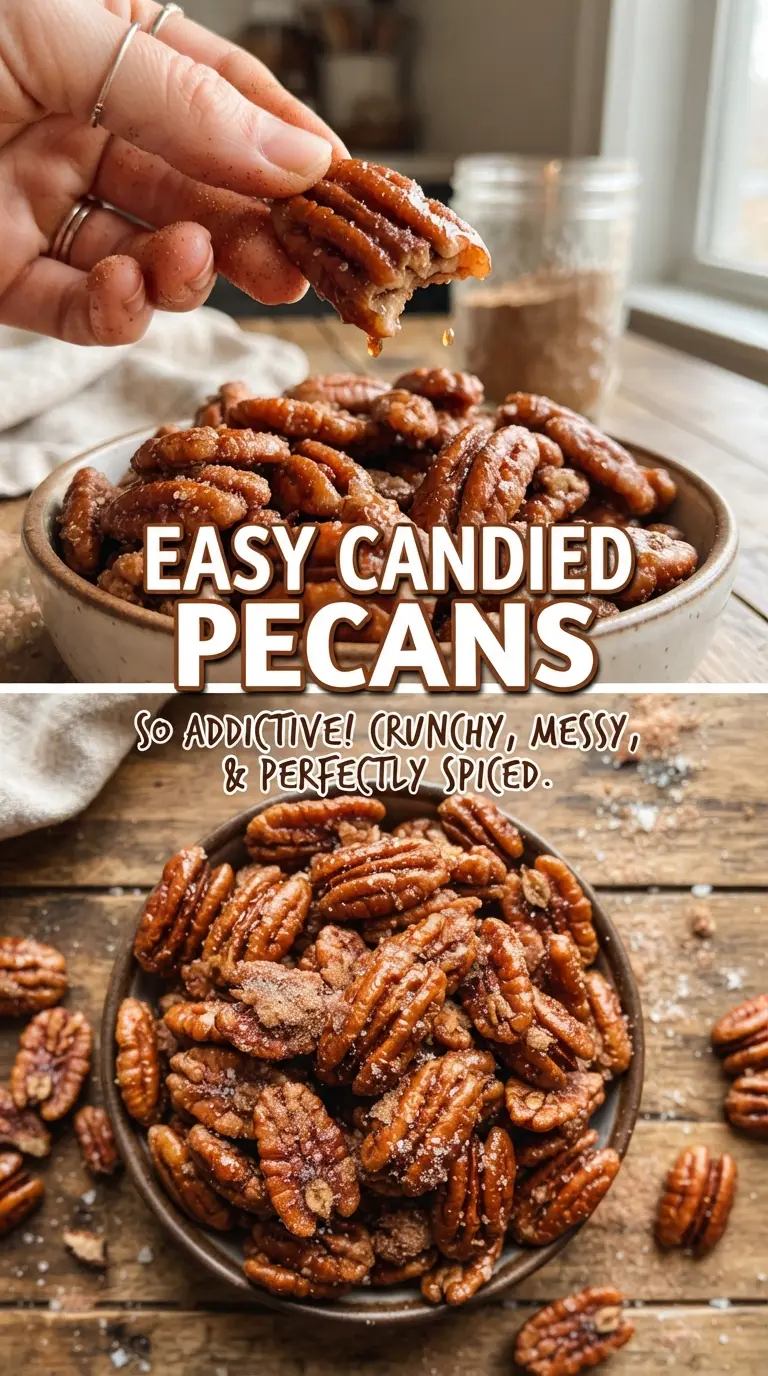
- Pecan halves — Halves give you better surface area for the coating than chopped pecans, and they hold their crunch longer. If you use pieces, the flavor stays the same, but you’ll get more tiny bits and a less dramatic finish.
- Egg white — This is what makes the sugar adhere in an even layer. Don’t skip the frothing step; that little bit of air helps the coating spread instead of pooling.
- Sugar — Plain granulated sugar bakes into the crisp shell. Brown sugar won’t give the same dry snap, and it can leave the pecans tacky once they cool.
- Cinnamon — Ground cinnamon adds warmth without overpowering the nuts. Fresh spice matters here because it’s one of the only flavoring ingredients in the coating.
- Vanilla extract — Vanilla rounds out the sweetness and keeps the coating from tasting one-note. Use the real extract if you have it; imitation vanilla works in a pinch, but the aroma won’t be as full.
Getting the Coating Crisp Without Burning It
Frothing the Binder
Whisk the egg white, water, and vanilla until the mixture looks foamy and loose, not thick or glossy. That texture tells you the egg white is ready to coat the nuts in a thin film. If it’s still slippery and clear, the sugar won’t cling as evenly, and you’ll see bare patches after baking.
Coating Every Pecan
Toss the pecans until every piece looks lightly wet before adding the sugar mixture. The nuts should look shaggy and coated, not drowned. If there’s too much liquid pooled at the bottom of the bowl, the coating gets heavy and bakes into clumps instead of a crisp shell.
Baking Low and Slow
Spread the pecans in a single layer and bake at 250°F for the full hour, stirring every 15 minutes. The sugar should look drier and more matte as the minutes pass, and the smell will shift from raw cinnamon sugar to toasted and nutty. If the heat runs too high, the sugar browns before the centers dry out, which leaves you with hard, scorched pecans instead of crunchy ones.
Cooling to the Final Crunch
Pull the pan when the coating looks set but not dark, then let the pecans cool completely on the parchment. They crisp as they cool, so don’t judge them too early. If you move them while they’re warm, the coating can feel sticky even when the bake was perfect.
Three Smart Ways to Change the Batch Without Breaking It
Make Them Dairy-Free and Naturally Gluten-Free
This recipe already fits both needs as written. Just check that your vanilla extract is pure and your sugar is free from any unusual anti-caking additives if you’re cooking for someone with a strict sensitivity. The method stays exactly the same, and the texture doesn’t change.
Swap the Cinnamon for a Different Spice Profile
Replace the cinnamon with pumpkin pie spice, cardamom, or a pinch of cayenne for a different finish. Pumpkin pie spice gives a softer holiday-style warmth, cardamom tastes brighter and more floral, and cayenne adds a slow heat that plays well with the sweet shell. Keep the amount modest so the sugar coating stays front and center.
Use Another Nut When Pecans Are Gone
Walnuts work almost the same way, though they taste a little more bitter and need the same low oven to stay crisp. Almonds take the coating well too, but they won’t have the buttery softness that makes pecans feel extra rich. Keep the bake time the same and watch for the coating to dry rather than darken.
Storage and Reheating
- Refrigerator: Store in an airtight container at room temperature instead of the fridge for up to 2 weeks. The fridge can make the coating pick up moisture and soften.
- Freezer: They freeze well for up to 3 months in a sealed freezer bag or container. Thaw uncovered at room temperature so condensation doesn’t make them sticky.
- Reheating: You usually don’t need to reheat them. If they soften a bit, spread them on a sheet pan and warm in a 250°F oven for 5 to 8 minutes, then cool completely again before storing.
Answers to the Questions Worth Asking
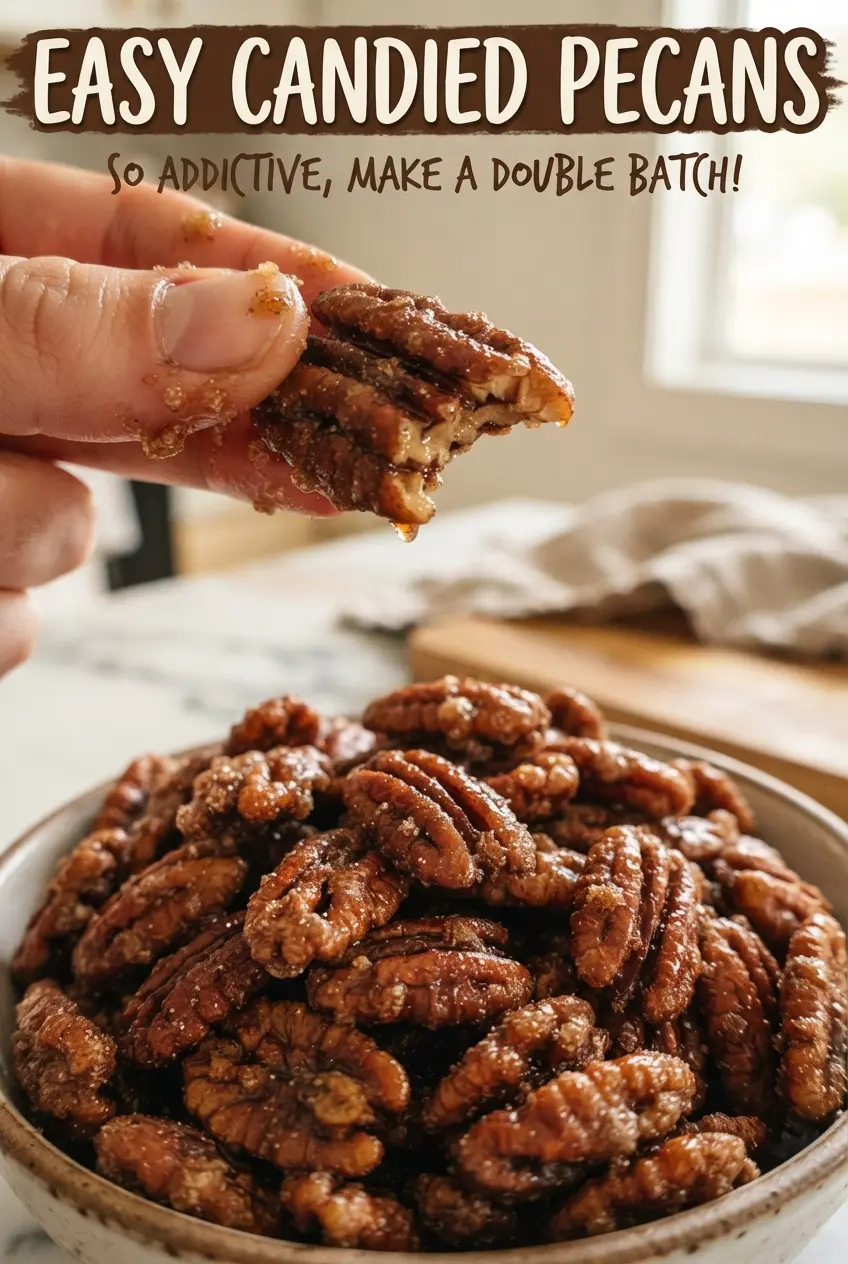
Easy Candied Pecans
Ingredients
Equipment
Method
- Preheat oven to 250°F and line a sheet pan with parchment for nonstick, even candied nuts.
- Whisk egg white, water, and vanilla extract until frothy, then stir until it looks lighter and slightly foamy.
- Toss pecan halves in the frothy egg white until evenly coated, scraping the sides so every nut is glossy.
- Mix sugar, ground cinnamon, and salt, then toss with the pecans until they’re fully dusted in the cinnamon-sugar blend.
- Spread the coated pecans in a single layer so they bake crisp instead of steaming; bake at 250°F for 1 hour.
- Stir the pecans every 15 minutes during baking so the coating browns evenly with a crackly surface developing.
- Cool the pecans completely on the pan until crunchy, then break apart into clusters for the final texture.
- Store the candied pecans airtight once fully cooled to keep the coating crisp.