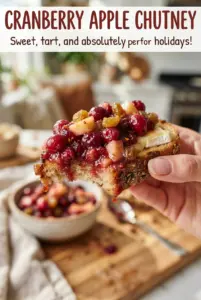
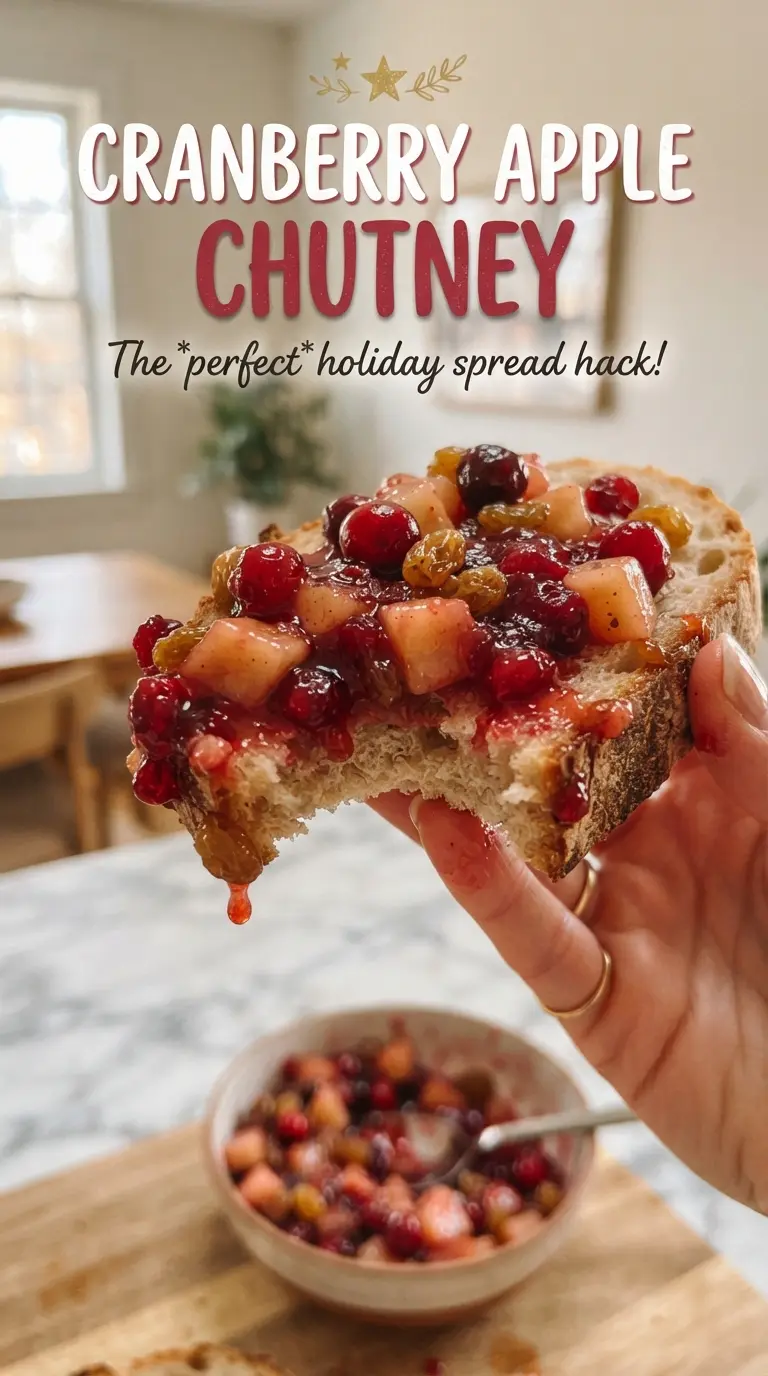
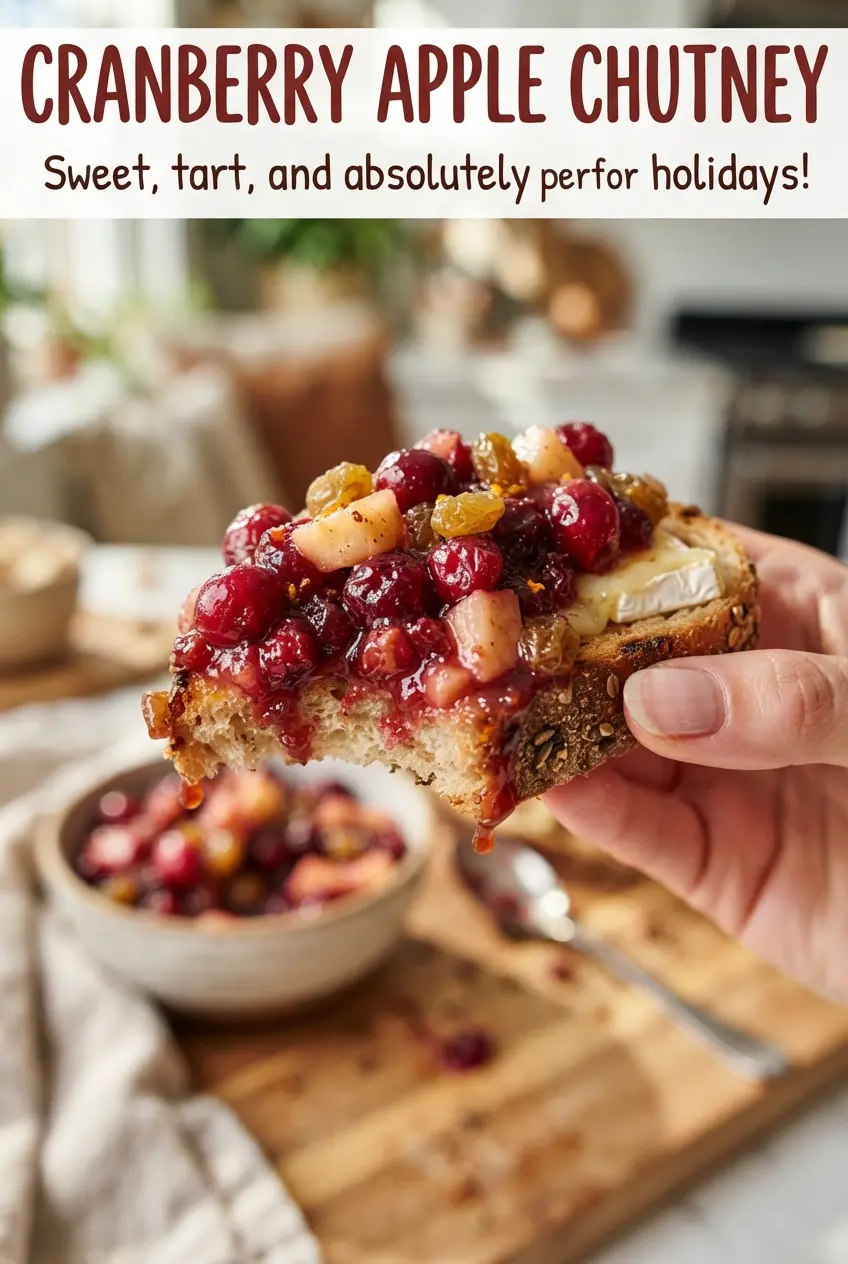
Thick, glossy cranberry apple chutney brings sharp fruit, warm spice, and just enough sweetness to cut through rich holiday food without turning cloying. The cranberries break down into a jewel-toned sauce, while the apples hold a little shape, so every spoonful lands somewhere between jam and relish. It’s the kind of side that wakes up turkey, pork, roast chicken, and a cheese board in one move.
What makes this version work is the balance. Apple cider vinegar keeps the sugar in check, brown sugar rounds out the tart cranberries, and golden raisins add little bursts of chew that make the chutney feel fuller and more finished. The ginger, cloves, and cinnamon don’t read like dessert; they stay in the background and give the fruit a slow warmth instead of a pie-like flavor.
Below, you’ll find the simmering cues that matter, the ingredient swaps worth knowing, and a few practical ways to serve it so it doesn’t get lost on the table.
The chutney thickened up beautifully and the apples stayed tender instead of turning mushy. I served it with pork chops and ended up spooning it over leftovers the next day.
Save this cranberry apple chutney for turkey sandwiches, cheese boards, and the kind of roast dinners that need a sweet-tart bite.
The Part Where Cranberries Stop Tasting Sharp
The biggest mistake with chutney is rushing the simmer. At the beginning, the mixture looks loose and a little thin, and that’s normal. The cranberries need time to burst and release pectin, which is what gives you that thick, spoonable texture instead of a watery relish.
Apple pieces should soften but not disappear. If you cook until every cube melts away, the chutney turns jammy in a one-note way and loses the contrast that makes it interesting. Keep the heat at a steady simmer and stir often so the sugar doesn’t catch on the bottom once the liquid starts reducing.
- Cranberries — Fresh cranberries give the sharp pop and natural thickening this needs. Frozen cranberries also work; add them straight from frozen and expect the simmer to take a few extra minutes.
- Apples — Use a firm baking apple or a crisp sweet-tart variety. Softer apples collapse too fast and make the chutney more saucy than chunky.
- Apple cider vinegar — This keeps the sweetness in check and gives the chutney its backbone. Regular white vinegar is harsher here; cider vinegar tastes rounder and plays better with the fruit.
- Golden raisins — They add chew and a mellow sweetness that plain raisins don’t quite match. If you only have regular raisins, use them, but the color and lighter flavor won’t be the same.
What Each Spice Is Doing in the Pot
- Brown sugar — Adds depth that white sugar can’t, with a light molasses note that fits the cranberries and vinegar. If you swap in white sugar, the chutney tastes flatter and a little less rounded.
- Fresh ginger — This gives the chutney a clean, bright heat. Ground ginger works in a pinch, but it tastes dustier and less lively, so use half the amount if that’s your backup.
- Cinnamon and cloves — These should support the fruit, not dominate it. Measure the cloves carefully; too much and the chutney goes medicinal fast.
- Red pepper flakes — Just enough heat to keep each bite from leaning too sweet. Leave them out if you want a softer, more classic cranberry sauce feel.
Getting the Chutney Thick, Chunky, and Ready to Jar
Building the Syrup Base
Start with the brown sugar, vinegar, and water and bring them fully to a boil before adding anything else. That step dissolves the sugar completely, which keeps the finished chutney from feeling grainy. Once the liquid is bubbling, add the onion, ginger, spices, and salt, then let them simmer until the onion softens and the kitchen smells warm and sharp.
Cooking the Fruit Without Breaking It Down Too Far
Stir in the cranberries, apples, and raisins, then keep the pot at a steady simmer for 20 to 25 minutes. You’ll hear the cranberries popping as they burst, and the mixture will go from soupy to glossy and thick. The most common mistake here is walking away too long; once the sugar concentrates, the bottom can scorch before you notice.
Knowing When to Stop
The chutney is ready when it looks thick and jammy and leaves a slow trail when you drag a spoon through the pot. It will still look a little loose when it’s hot, which is normal. Let it cool completely, and it will set up much more than you expect. If you stop too early because it seems thin, you’ll end up with cranberry soup in the jar instead of chutney.
How to Adjust It for Different Tables
Make It Less Sweet and More Tangy
Cut the brown sugar back to 1/2 cup if you want a sharper chutney that leans more savory beside pork or cheese. The texture stays the same, but the fruit tastes brighter and the vinegar comes forward more clearly.
Use It as a Gluten-Free, Dairy-Free Side
This recipe is naturally both gluten-free and dairy-free as written, which makes it an easy side for mixed holiday tables. Serve it chilled or at room temperature so it keeps its shape and doesn’t slide into everything else on the plate.
Swap the Apples Based on What You Have
Firm Honeycrisp, Granny Smith, or Braeburn apples hold up best. If you use a softer apple, dice it a little larger so it doesn’t disappear before the cranberries finish cooking.
Storage and Reheating
- Refrigerator: Store in a covered container for up to 2 weeks. The flavor deepens after a day, and the texture gets even thicker as it chills.
- Freezer: It freezes well for up to 3 months. Pack it in a freezer-safe container with a little headspace and thaw overnight in the fridge.
- Reheating: Most of the time, you don’t need to reheat it. If you want it warm, use low heat and stir gently just until loosened. High heat can make it stick and turn the fruit jammy in a less pleasant way.
Answers to the Questions Worth Asking
Cranberry Apple Chutney
Ingredients
Equipment
Method
- In a saucepan, combine brown sugar, apple cider vinegar, and water. Bring to a boil over medium-high heat, bubbling across the surface, about 3–5 minutes.
- Add red onion, fresh ginger, ground cinnamon, ground cloves, red pepper flakes, and salt to the saucepan. Simmer for 5 minutes until the onions soften and the spices smell fragrant.
- Stir in fresh cranberries, apples, and golden raisins. Keep the mixture at a steady simmer, so it’s bubbling gently rather than rapidly boiling.
- Simmer for 20–25 minutes, stirring often, until thick and jammy and the chutney coats the back of a spoon. Watch for reduced liquid and a glossy, chunky texture.
- Cool the chutney completely at room temperature until it is no longer steaming. The texture should thicken further as it cools.
- Refrigerate until cold, then serve with turkey, pork, or a cheese board. Keep it covered in the fridge so the flavors stay vivid.