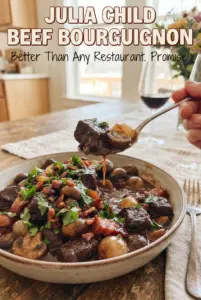
Beef bourguignon earns its reputation the old-fashioned way: by turning a few humble ingredients into a deep, wine-rich stew with tender beef, glossy sauce, and vegetables that taste like they spent all afternoon becoming essential. The bacon gives the pot its first layer of savoriness, but the real payoff comes from the long braise, where the beef softens without falling apart and the sauce takes on that dark, rounded flavor people remember.
This version works because it respects the sequence. The beef is dried well and browned in batches, which keeps the pan hot enough to build real color instead of gray steam. The flour goes in before the liquid, then gets baked briefly with the meat, so the sauce thickens from the start instead of relying on a last-minute rescue. Full-bodied red wine matters here; the dish needs enough structure to stand up to the long cook without tasting flat.
Below, you’ll find the little details that make this dish behave: how to brown the meat without crowding, why the sauce gets strained at the end, and what to do with the pearl onions and mushrooms so they keep their shape and flavor.
The sauce came out silky and deep, and the beef was fork-tender after the full braise. I loved that the mushrooms and pearl onions kept their shape instead of disappearing into the stew.
Save this Julia Child beef bourguignon for the slow-cooked beef, glossy wine sauce, and mushroom-topped finish.
The Step That Keeps the Beef Tender Instead of Stringy
The difference between a luxurious bourguignon and a pot of tough beef usually starts before the liquid goes in. The meat needs room and heat. If the pan is crowded, the surface moisture turns to steam and the beef never gets the dark crust that gives the finished sauce its depth. The quick flouring and brief oven time also matter, because they coat the meat and help the braise thicken evenly instead of tasting thin and separate.
The other quiet safeguard is the order of the vegetables. The carrot and onion go in after the beef has browned, where they pick up the drippings without burning. That gives the sauce a built-in sweetness and body. If you rush this stage, the stew can taste flat even after hours in the oven.
What Each Ingredient Is Actually Doing in the Pot
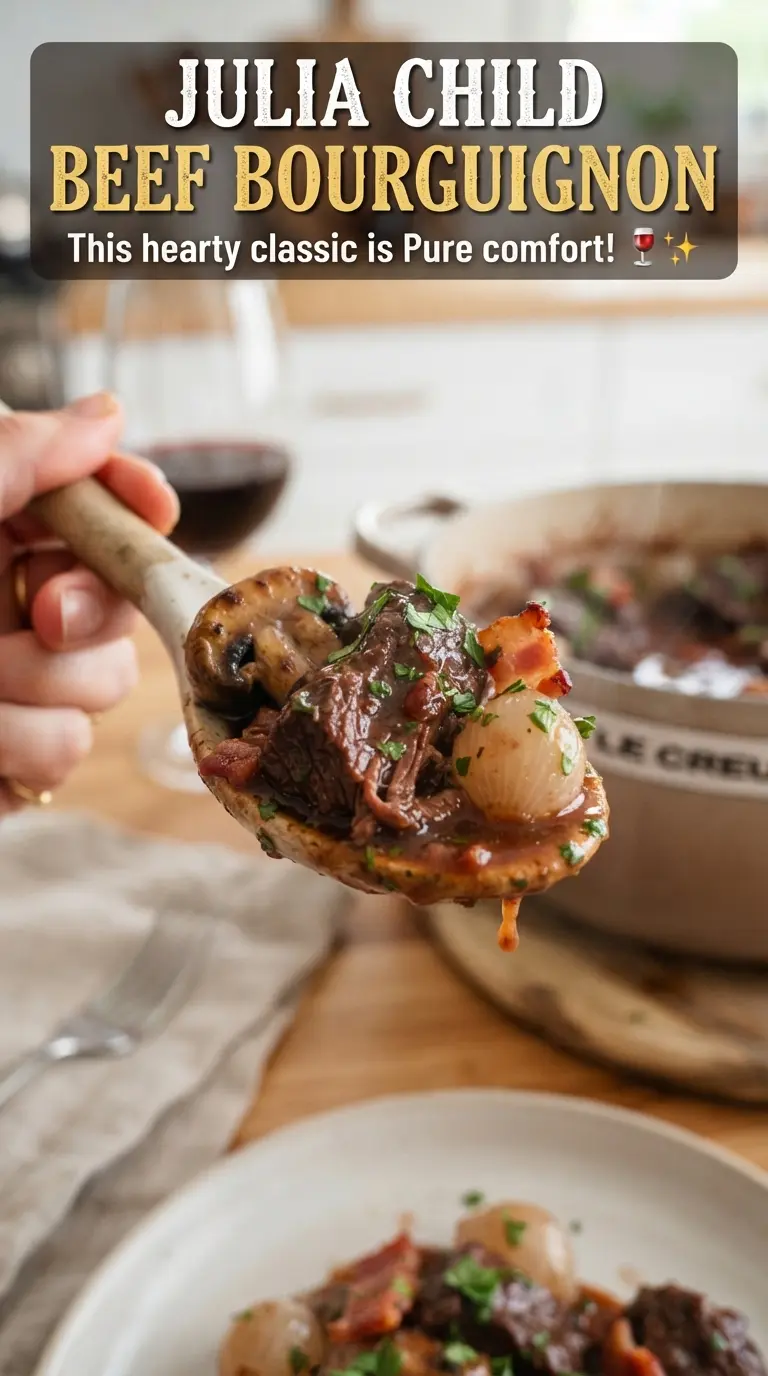
- Bacon — This is the first layer of savoriness and fat. Blanching it before browning keeps the finished sauce cleaner and prevents the whole dish from tasting smoky in a one-note way.
- Lean stewing beef — Chuck or another braising cut needs the full long cook to turn tender. Cut it into even 2-inch pieces so it finishes at the same rate; ragged sizes lead to some pieces shredding while others are still chewy.
- Full-bodied red wine — This is not background liquid. It becomes the backbone of the sauce, so use a wine you’d actually drink. Thin or sharp wine leaves the stew tasting sour instead of rich.
- Beef stock — Use enough to barely cover the meat, not drown it. The sauce should reduce into something glossy and concentrated, not settle into soup.
- Pearl onions and mushrooms — These should be cooked separately and added at the end so they keep their shape and distinct flavor. If they go in too early, they lose their edges and disappear into the braise.
How to Build the Braise Without Losing the Sauce
Getting the Bacon and Beef Browned
Start with a hot casserole and brown the blanched bacon in oil until it has color and some crisp edges. Pull it out, then sear the beef in batches in the same fat. The pan should hiss when the meat hits it; if it quiets down, the pan is crowded and the beef is steaming. Keep the pieces moving only enough to color each side, then leave them alone long enough to build a crust.
Letting the Flour Cook Before the Wine Goes In
Once the beef and aromatics are back in the pot, sprinkle with flour and toss so every piece looks lightly dusted. That flour needs those brief uncovered oven minutes to cook onto the meat and lose its raw taste. If you skip that step, the sauce can taste pasty or grainy after the braise instead of smooth and savory.
The Long Oven Time
After the wine, stock, tomato paste, garlic, thyme, and bay leaf go in, cover the pot and let it braise at 325°F until the beef gives easily to a fork. Don’t chase the clock too hard; tough cuts need tenderness, not just time. If the liquid starts to look too low before the meat is done, add a splash more stock. The goal is a gentle simmer in the oven, not a boil.
Finishing the Sauce the Right Way
Strain the cooking liquid, skim the fat, and simmer it until it coats the back of a spoon. That reduction is what gives the dish its restaurant-style finish. Stir the sauce back into the beef with the braised onions and sautéed mushrooms only after it has thickened, or they’ll sink into a thin broth and lose their distinct texture.
Make It Gluten-Free
Use a gluten-free flour blend in place of all-purpose flour, or skip the flouring step and thicken the strained sauce with a slurry at the end. The first option gives you a closer texture to the original; the second keeps the sauce cleaner but needs a little more careful simmering so it doesn’t taste thin.
For a Deeper Wine Sauce
Choose a wine with dark fruit and moderate tannin, such as Burgundy-style pinot noir or another dry red with structure. A lighter wine can still work, but the sauce will taste softer and less layered. Avoid anything sweet; sweetness becomes cloying after a long braise.
Make-Ahead for the Best Flavor
Bourguignon tastes even better the next day. Make the stew through the sauce reduction, then cool it and refrigerate it before adding the mushrooms and pearl onions if you want them to stay especially lively. Reheat gently and finish with the vegetables just before serving.
Storage and Reheating
- Refrigerator: Keeps well for 3 to 4 days, and the flavor deepens as it sits. The sauce may thicken after chilling.
- Freezer: Freezes well for up to 3 months. Cool completely before freezing in airtight containers, and leave a little space for expansion.
- Reheating: Warm slowly over low heat on the stovetop or in a covered oven dish. High heat can tighten the beef and scorch the sauce before the center is hot.
Answers to the Questions Worth Asking
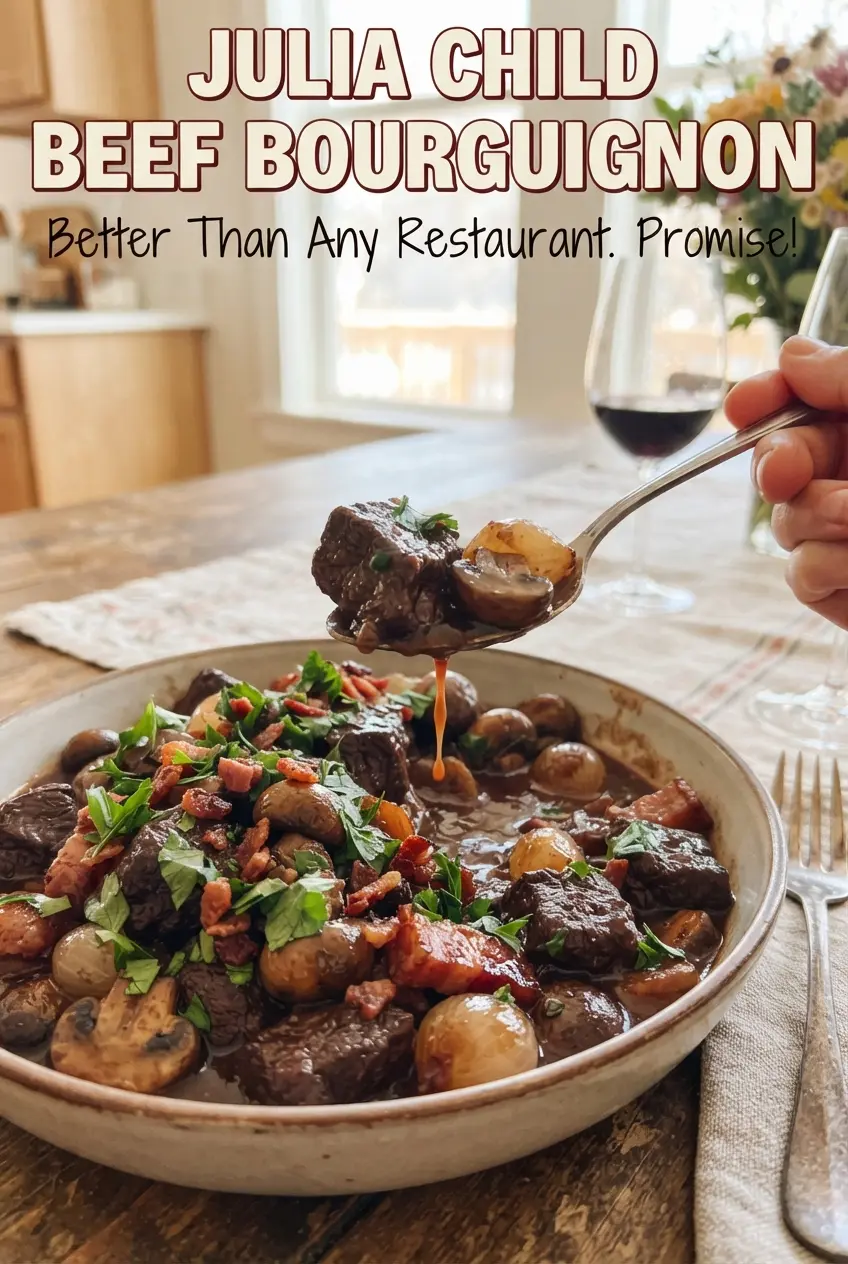
Julia Child Beef Bourguignon
Ingredients
Equipment
Method
- Preheat oven to 450F. Brown the blanched bacon in the olive oil in a casserole, then remove the bacon.
- Sear the patted-dry beef in the hot fat a few pieces at a time, then brown the sliced carrot and onion in the same pan.
- Return beef and bacon to the casserole. Season with salt and black pepper, sprinkle with all-purpose flour, toss, bake uncovered 4 minutes, toss again, and bake 4 minutes more.
- Reduce oven to 325F. Stir in the red wine and enough beef stock to barely cover, then add the tomato paste, mashed garlic, dried thyme, and bay leaf.
- Cover and braise for 2 1/2-3 hours until the beef is fork-tender.
- Strain the sauce, skim the fat, and simmer to thicken until glossy.
- Pour the sauce back over the beef. Add the braised pearl onions and sautéed mushrooms, then garnish with fresh parsley.